
TLDR
- Standard SEPA Credit Transfers settle in one business day at best, and many still queue overnight. SCT Inst delivers funds in seconds, any time of year, with no batch windows.
- Reachability is the first filter: not every eurozone bank participates in SCT Inst, so your payout API’s reach percentage determines how often you fall back to slower rails.
- The ECB’s mandatory SCT Inst regulation requires all eurozone PSPs that offer standard SEPA credit transfers to also offer SCT Inst, with full compliance deadlines phased through 2025. Coverage gaps are shrinking but not gone.
- The right provider depends on three things: whether they hold a direct SCT Inst clearing connection or ride a correspondent, what their transaction limit is, and how they handle exceptions and returns programmatically.
- Nine providers are compared below, covering direct bank connections, BaaS layers, and payment-API aggregators, each with different tradeoffs on reachability, limit caps, and return handling.
The nine SEPA Instant payout API providers worth shortlisting are Banking Circle, Modulr, Mangopay, Adyen, Stripe, Numeral, Finom, Swan, and ClearBank. Each holds or accesses SCT Inst clearing through different structural paths. The practical differences are limit caps per transaction (the scheme ceiling is €100,000), reachability across receiving banks, and how their API exposes return codes and status webhooks. Provider-issued IBAN structures, sandbox fidelity, and correspondent versus direct clearing all affect which one fits a given platform’s operational profile.
What Is SCT Inst and Why Does the Rail Choice Matter for Payouts?
SCT Inst is the SEPA Instant Credit Transfer scheme, governed by the European Payments Council. Transfers settle in up to ten seconds, 24 hours a day, 365 days a year, with a per-transaction cap that the EPC raised to €100,000 in 2024 (up from the previous €15,000 ceiling, per the EPC’s SCT Inst scheme rulebook). That cap applies at the scheme level. Individual PSPs can set lower internal limits, which is one of the first things to check in any vendor evaluation.
Standard SEPA Credit Transfers still settle the next business day at best and are batch-processed, meaning a payout triggered at 4:45 PM on a Friday might not credit until Monday morning. For gig platforms, insurance payouts, earned wage access, or marketplace seller disbursements, that gap is a product problem, not just a finance problem. If your platform promises fast payouts and routes through standard SEPA, you are delivering a slower experience than your contract implies.
The mandatory SCT Inst regulation the ECB and European Parliament adopted requires all eurozone PSPs that offer standard SEPA credit transfers to also offer SCT Inst by phased deadlines across 2025. That regulation accelerated reachability significantly, but participating does not mean every bank has fully enabled inbound instant receipt. Reachability data from your clearing provider is the number to verify, not assume.
How Should Platforms Evaluate a SEPA Instant Payout API Before Signing?
The FintechSpecs SCT Inst Shortlist Framework compresses vendor evaluation into four sequential gates. A provider that fails any gate is eliminated before the next is checked.
Gate 1: Clearing path. Does the provider hold a direct TIPS (TARGET Instant Payment Settlement) connection, or does it route through a correspondent? Direct connections give the provider more control over availability and limit policies. Correspondent routing introduces an additional failure point and may add latency beyond the scheme’s ten-second ceiling.
Gate 2: Reachability percentage. What share of eurozone IBANs can receive an instant transfer through this provider today? Ask each provider to supply their current reachability figure for the specific countries where your recipients hold accounts. The EPC and ECB publish aggregate participation data periodically, but provider-level reachability depends on their specific clearing path and correspondent relationships. A provider routing through a single correspondent bank will have different coverage than one with a direct TIPS seat or multi-bank routing. Get this number in writing, not as a verbal estimate during a demo.
Gate 3: Per-transaction limit. Does the provider pass through the full €100,000 scheme limit, or have they set a lower internal cap? Some BaaS layers cap at €15,000 or €25,000. That is fine for consumer gig payouts but inadequate for B2B supplier payments or large marketplace disbursements.
Gate 4: Return and exception handling. When a transfer is rejected or returned, does the API surface a structured return reason code synchronously or via webhook? Manual return reconciliation at scale is an operational liability. Providers that return scheme-standard reason codes programmatically are significantly easier to build on.
SCT Inst Eligibility, Reachability, and Limit Comparison Table
| Provider | SCT Inst Access | Clearing Path | Transaction Limit | Return Handling | Best For |
|---|---|---|---|---|---|
| Banking Circle | Direct participant | Direct TIPS | Up to €100,000 (scheme max, verify with provider) | Programmatic reason codes via API | High-volume platform payouts, fintech infrastructure |
| Modulr | Indirect (via sponsored access) | Correspondent | Confirm directly; product-specific | Webhook status updates | UK/EU platforms needing multi-rail orchestration |
| Mangopay | Indirect | Correspondent | Confirm directly; product-specific | Status callbacks | Marketplaces and platforms with split-pay workflows |
| Adyen | Direct participant | Direct TIPS | Up to €100,000 (scheme max) | Webhook notifications with reason codes | Enterprise platforms already on Adyen acquiring |
| Stripe | Indirect (via banking partners) | Correspondent | Varies by account; confirm with Stripe | Webhook events | Platforms already on Stripe Connect |
| Numeral | Multi-bank routing | Correspondent (multi-bank) | Up to €100,000 (scheme max via bank partners) | Full status lifecycle via API | Payment ops teams routing across multiple banks |
| Finom | Indirect | Correspondent | Confirm directly; tier-dependent | Standard status updates | SME-focused platforms, lower-volume disbursements |
| Swan | Direct (EMI with TIPS access via sponsor) | Sponsor bank / direct | Confirm directly; product-specific | Webhook events with status codes | Platforms embedding financial accounts |
| ClearBank | Direct participant | Direct clearing | Up to €100,000 (scheme max, verify with provider) | Programmatic return codes | Banks, EMIs, and fintech infrastructure builders |
Limits and reachability figures change as the mandatory SCT Inst regulation is enforced and as providers update their internal policies. Treat this table as a shortlisting filter, not a contract. Verify current figures directly with each provider before building.
Banking Circle: Direct TIPS Access for High-Volume Infrastructure
Banking Circle holds a European banking license and maintains a direct connection to TARGET Instant Payment Settlement. When you send an SCT Inst through Banking Circle’s API, there is no correspondent in between adding latency or imposing additional caps. The company positions itself explicitly as infrastructure for other financial institutions and large platforms, not as a consumer product.
Their API exposes outbound SCT Inst with structured return handling, and they publish an IBANs product that lets platforms issue euro IBANs directly. This combination makes Banking Circle worth evaluating for platforms that need both the payout rail and the account infrastructure behind it. Pricing is not publicly listed; it is negotiated based on volume.
Modulr: UK-Originated BaaS with EU Rail Access
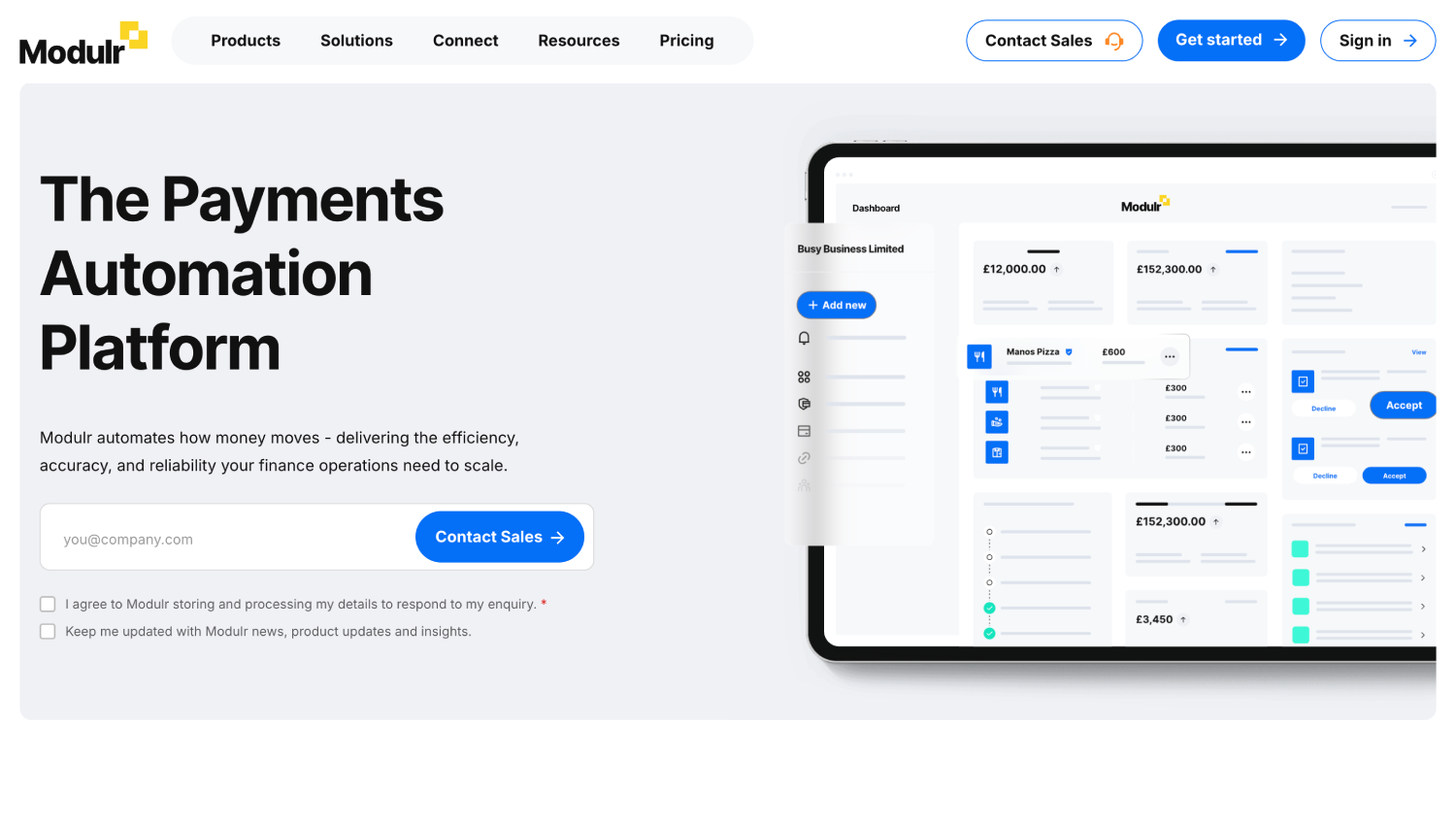
Modulr started as a UK payments infrastructure provider and expanded EU coverage through its EU entity. For SCT Inst, Modulr routes through correspondent banking relationships rather than holding a direct TIPS seat. For most platform use cases that path is reliable, but availability during edge-case incidents depends partly on its banking partners.
The platform’s strength is multi-rail orchestration. Platforms building UK and EU payout flows in parallel get value from Modulr’s unified API that covers Faster Payments, BACS, and SEPA rails in one integration. For a platform where the EU payout volume is secondary to UK volume, that consolidation reduces engineering overhead. For pure-EU SCT Inst at scale, a direct participant may be worth the separate integration.
Mangopay: Marketplace-Native with Embedded Instant Payouts
Mangopay targets marketplaces and platforms that need split payments, wallet ledgers, and regulatory compliance baked into one stack. Their SEPA Instant payout API sits inside a broader product that includes KYC, beneficiary management, and wallet-to-bank disbursement. That embedded compliance layer is the differentiator.
For a marketplace paying thousands of sellers across France, Germany, and Spain, Mangopay handles the KYC on beneficiaries and the payout in one flow. The tradeoff is that Mangopay is a thicker layer. Platforms that want a thin, low-latency payout rail only will pay for features they do not use. Pricing is not publicly disclosed; expect negotiated pricing based on volume and product mix. Platforms evaluating Mangopay should also look at how they handle marketplace payout splits and seller onboarding to understand the full workflow implications.
Adyen: Enterprise Rail With Direct TIPS Clearing

Adyen holds a Dutch banking license and participates directly in SCT Inst clearing through its own TIPS connection. Adyen controls its own availability and limit policies without depending on a third-party correspondent. They support the full €100,000 scheme ceiling.
The case for Adyen’s SCT Inst API is strongest when you are already running acquiring through Adyen. The unified reconciliation across inbound card payments and outbound SEPA Instant transfers is genuinely cleaner than stitching two providers together. For a platform evaluating Adyen purely for the payout rail with no acquiring relationship, the onboarding process and commercial minimums may not be justified. Adyen does not publish per-transfer pricing publicly; enterprise contracts are negotiated.
Stripe: Broad Network, Indirect SCT Inst Access
Stripe reaches SCT Inst through its European banking partnerships rather than a direct TIPS seat. For platforms already using Stripe Connect for marketplace payouts, the ability to send SCT Inst to EU recipients without leaving the Stripe network has real integration value. The developer experience is well documented, and Stripe’s API documentation covers payout timing and return handling in detail.
Stripe’s internal SEPA Instant transfer limits are not uniformly published and can depend on the account configuration. Platforms that need guaranteed access to the full €100,000 ceiling should confirm this in writing before building. Stripe is the right choice for teams already on the Stripe stack and running moderate-volume EU payouts, not the first choice for a platform selecting infrastructure purely on SCT Inst performance.
Numeral: Payment Operations API Across Multiple Bank Connections

Numeral takes a different architectural approach. Rather than acting as a PSP with a single clearing path, Numeral connects platforms to multiple banking partners and routes SCT Inst through whichever bank connection is optimal. The API abstracts multi-bank routing into a single integration, and the platform’s payment operations tooling covers reconciliation, return tracking, and status webhooks across all connected banks.
This architecture is valuable for platforms with complex routing needs or those that want redundancy across bank partners. If one clearing path is degraded, Numeral can route through another. The tradeoff is added vendor dependency complexity. Teams evaluating Numeral should ask which specific bank partners handle SCT Inst and what happens to in-flight transfers during a partner bank incident. Numeral’s pricing is not publicly listed.
Finom: SME-Oriented with Basic SCT Inst Coverage
Finom is primarily a business banking product for European SMEs, and SCT Inst is included as part of the account product rather than as a dedicated API for platform payouts. For a small platform with low disbursement volume and recipients primarily in Germany or France, Finom’s coverage is functional. For a platform needing programmatic multi-recipient batch payouts or structured return code handling, Finom’s product scope is insufficient.
The API maturity here is not at the same level as infrastructure-focused providers. Finom is worth considering for platforms at very early stages that need basic instant euro disbursement without a lengthy banking integration process, but it is not a suitable infrastructure choice as payout volume grows.
Swan: Embedded Banking with SCT Inst in the Product Layer
Swan is a French EMI that lets platforms embed banking features, including IBAN issuance and SEPA Instant transfers, directly into their product. The SCT Inst access runs through Swan’s own regulatory infrastructure. For a SaaS platform that wants to give each user or business a real euro IBAN and instant transfer capability, Swan’s embedded approach means you are not stitching together a payout API and a separate account product.
The integration model is more involved than a simple payout API call. Swan requires platforms to handle KYC flows and account lifecycle management through their tooling. That is appropriate if the goal is an embedded banking experience; it is overkill if the goal is simply sending bulk payouts to third-party bank accounts. Teams building embedded financial accounts should evaluate Swan alongside the broader context of European Banking-as-a-Service platforms to compare the full product scope.
ClearBank: Clearing Infrastructure for Fintechs and EMIs
ClearBank is a UK clearing bank that expanded into the EU market and positions itself as infrastructure for other financial institutions, fintechs, and EMIs. Their SCT Inst access operates through direct clearing participation, and their API is built for programmatic payment operations rather than consumer-facing products.
ClearBank’s customer base tells you who it is for: regulated payment institutions, EMIs, and larger fintech platforms that need a banking infrastructure partner rather than a payment gateway. The onboarding process reflects that positioning; expect regulatory due diligence, volume commitments, and negotiated pricing. For a growth-stage platform selecting its first payout API, ClearBank’s onboarding requirements and commercial thresholds make it a poor fit. For a Series B or C fintech that needs a direct-clearing relationship and owns its own regulatory permissions, it is a serious option.
What Happens When an SCT Inst Transfer Is Returned or Rejected?
Returns are where most SCT Inst integrations fail in production. The EPC’s SCT Inst scheme documentation defines specific return reason codes, including AC01 for incorrect account number, AC04 for closed account, AC06 for blocked account, AG01 for prohibited transaction type, and MD07 for deceased end customer. A well-built SCT Inst API surfaces these codes in real time via webhook so your platform can retry, notify the recipient, or escalate without manual intervention.
Providers that surface structured return codes programmatically include Banking Circle, Adyen, Numeral, and ClearBank. Providers that offer only generic status updates force engineering teams to build secondary reconciliation workflows. At low payout volumes that overhead is manageable. At tens of thousands of monthly transfers, unstructured return handling becomes a full-time operations problem. This is a question to ask in every provider demo, not an assumption to make from documentation alone.
The ten-second settlement clock also means refund timing is instant when a return is processed quickly. Platforms should confirm whether their provider’s API supports programmatic recall requests in addition to passive return handling. Some providers support the SCT Inst recall mechanism defined by the EPC; others do not expose it via API and require manual back-office intervention.
How Do SCT Inst Payout APIs Handle Compliance and Sanctions Screening?
Every SCT Inst transfer requires the sending PSP to screen the beneficiary against sanctions lists before execution. How that screening is surfaced to the platform varies significantly. Some providers, particularly BaaS layers like Mangopay and Swan, embed sanctions screening into the payout flow and expose a blocked or pending status via webhook. Others, particularly infrastructure-layer providers like Banking Circle and ClearBank, expect the client platform to handle its own sanctions screening upstream.
Platforms operating under their own EMI or payment institution license typically want control over screening logic and do not want it embedded by the payout provider. Platforms operating under a provider’s license need the screening embedded. Matching the compliance architecture to your own regulatory permissions is as important as matching the API capability. Reviewing how payout sanctions screening works across platforms before the vendor evaluation helps clarify which model fits your regulatory setup.
Frequently Asked Questions
What is the maximum transaction limit for SCT Inst transfers?
The European Payments Council raised the SCT Inst per-transaction ceiling to €100,000 in 2024, up from the previous €15,000 limit under the prior scheme rulebook version. That limit applies at the scheme level. Individual payment service providers can set lower internal limits, and some BaaS providers cap transfers at significantly lower amounts depending on account tier or product configuration. Always confirm the per-transaction limit directly with any provider before integrating, and get the confirmation in writing as part of the commercial agreement.
How fast do SEPA Instant transfers actually settle?
The SCT Inst scheme specifies a maximum settlement time of ten seconds from the moment the payment order is received by the sending PSP, as defined in the EPC’s SCT Inst scheme rulebook. Settlement times for specific transfers depend on whether both the sending and receiving banks are direct TIPS participants or route through correspondents. Transfers routing through correspondents may add processing time but should still fall within the ten-second scheme ceiling. Settlement is final and irrevocable once confirmed.
Can platforms send SCT Inst transfers to any European bank account?
Not yet, though participation has expanded materially since the ECB’s mandatory SCT Inst regulation took effect. The regulation requires all eurozone PSPs offering standard SEPA Credit Transfers to also offer SCT Inst, with compliance deadlines phased through 2025. Non-eurozone EU member states have separate deadlines. Reachability varies by provider’s clearing path and correspondent relationships. Platforms should ask prospective providers for their current reachability statistics across the specific countries where their recipients hold accounts, rather than assuming eurozone-wide coverage is complete.
What is the difference between a direct TIPS participant and a correspondent-based SCT Inst provider?
A direct TIPS participant holds its own settlement account at the ECB’s TARGET Instant Payment Settlement system and routes transfers independently. A correspondent-based provider channels transfers through a bank that holds a TIPS account. Direct participants have more control over uptime, limits, and routing decisions. Correspondent-based providers add one dependency to the settlement chain. For most platform use cases, correspondent access is reliable, but the structural difference matters if you are evaluating providers on SLA guarantees or fault isolation during banking outages.
Do SEPA Instant payout APIs support batch disbursements?
SCT Inst by design is an individual transfer scheme, not a batch scheme. Standard SEPA Credit Transfers support batch file submission; SCT Inst requires individual API calls per transfer. Most providers expose a REST endpoint that accepts individual transfer requests and returns a unique transaction ID per transfer. Platforms building high-volume disbursement flows typically queue and parallelize individual API calls rather than submitting batch files. Confirm with each provider how they rate-limit concurrent transfer requests, as that limit directly affects how fast you can clear a large payout run.
What return reason codes are relevant for SCT Inst platform payouts?
The EPC’s SCT Inst scheme documentation defines a standard set of reason codes used in returns. The most common in platform payout contexts are AC01 (incorrect IBAN format), AC04 (closed account), AC06 (blocked account), AG01 (transaction prohibited for the account type), and MD07 (deceased end customer). A well-built API integration maps these codes to specific platform responses: AC01 and AC04 trigger a request to the recipient to update their bank details, while AG01 may require a compliance review before retry. Confirm that your provider surfaces the full scheme-defined code set, not just generic failure statuses.
How should a platform choose between an infrastructure provider and a BaaS layer for SCT Inst?
The right answer depends on whether you hold your own payment institution or EMI license. If you do, an infrastructure provider like Banking Circle, ClearBank, or Numeral gives you direct rail access with minimal embedded compliance overhead, and you own the regulatory relationship with your payers. If you do not hold a license and are operating under a provider’s regulatory umbrella, a BaaS layer like Modulr, Mangopay, or Swan handles the compliance and account infrastructure, reducing your regulatory burden but adding a commercial dependency. For teams deciding between these paths, the outbound payment API comparison for B2B SaaS covers the structural tradeoffs in more detail.
Which SEPA Instant Payout API Fits Which Platform?
Banking Circle and ClearBank are for platforms that hold their own regulatory permissions and need direct-clearing infrastructure. They are not configured for teams that want a quick API key and sandbox access. Adyen belongs in the same tier but makes the most commercial sense when you are already on their acquiring stack. These three are the enterprise rail options.
Numeral occupies a middle position: infrastructure-grade API, multi-bank routing, and programmatic operations tooling, without the requirement that you hold a direct license. For payment operations teams that want redundancy and routing control without building their own bank relationships, Numeral is the most sophisticated option in the mid-market layer.
Modulr, Mangopay, and Swan are BaaS layers with SCT Inst embedded. The right one depends on whether your platform needs marketplace split payments (Mangopay), multi-rail UK/EU orchestration (Modulr), or a fully embedded account-and-payout product (Swan). Stripe belongs in a similar category for teams already within its stack. Finom is worth considering only at very low volume with simple disbursement needs.
The variable most platforms underweight is return handling. A payout API that cannot surface structured SCT Inst return codes programmatically will generate manual operations work every time a transfer fails. At a few hundred payouts a month that is tolerable. At tens of thousands, it becomes the dominant operational cost of the integration. Build that requirement into your vendor evaluation criteria before demos, not after. For a full framework on vetting any fintech vendor before you sign, the FintechSpecs fintech vendor evaluation framework covers the diligence structure in detail.