
- Stripe Issuing is the right starting point for most early-stage teams: fast sandbox, no volume minimums, and deep integration with existing Stripe infrastructure.
- Lithic is the default choice for startups with real card program ambitions and margin pressure. Its bank flexibility and developer-first pricing structure beat Marqeta at every stage below $10M monthly volume.
- Marqeta makes sense when you cross seven figures in monthly volume, need multi-program complexity, or require exotic program types like push-to-card or specialized debit structures.
- Stripe Issuing cannot support consumer-facing card programs. If your cardholders are consumers rather than employees or business users, Stripe is off the table entirely.
- The biggest mistake early teams make is optimizing for brand recognition. Marqeta’s name recognition does not translate to better terms or faster launch for a seed-stage team.
For most teams launching a card program, the Marqeta vs Lithic vs Stripe Issuing decision breaks down cleanly by stage: Stripe Issuing handles the MVP, Lithic handles the scale-up, and Marqeta handles the enterprise. Stripe’s tight platform integration and zero minimums make it the default for commercial card programs embedded in SaaS products. Lithic wins on bank flexibility, interchange economics, and program control for teams that have outgrown Stripe’s constraints. Marqeta earns its premium at high volume, complex program structures, or when you need its specific bank network and processing capabilities.
Why Card Issuing Is Not a Commodity Decision
Most teams treat issuer-processor selection like choosing a cloud provider: pick the biggest name, move fast. That logic does not hold in card issuing. Your issuer-processor choice locks in your bank relationship, your interchange economics, your program type flexibility, and often your ability to serve consumers at all.
The three platforms people compare most often are Marqeta, Lithic, and Stripe Issuing. They are not equivalent options at different price points. They are built for different stages, different program types, and different operator profiles. Getting this wrong means a platform migration at the worst possible time, typically right when transaction volume starts to matter.
The decision also carries compliance weight. Your issuer-processor sits at the intersection of your BaaS stack, your sponsor bank relationship, and your program controls. For a deeper look at how those layers interact, the fintech infrastructure stack map at FintechSpecs breaks down every layer worth understanding before you sign.
How Do Marqeta, Lithic, and Stripe Issuing Actually Differ?
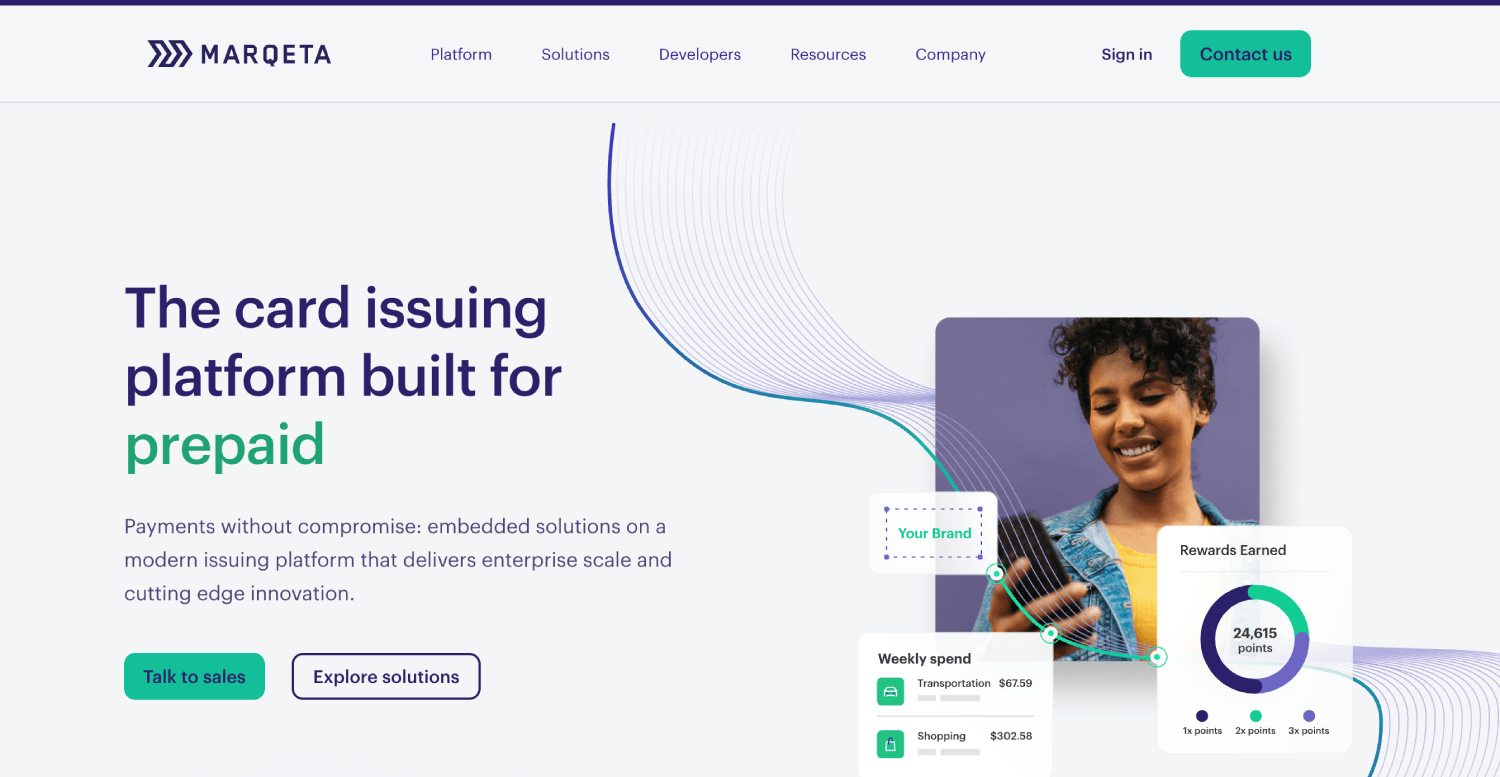
Marqeta is the oldest of the three modern API-driven issuer-processors and built much of its early business on a single bank relationship. According to Marqeta’s S-1 filing (filed in 2021 and covering 2020 operating data), approximately 96% of dollar volumes it processed in 2020 were settled through Sutton Bank. That concentration reflected Marqeta’s program structure at that specific point in time; the company has added bank partners since and the current mix is not publicly disclosed at that level of detail. Marqeta supports debit, prepaid, and push-to-card programs and has a deep feature set for complex program logic, velocity controls, and multi-currency issuance.
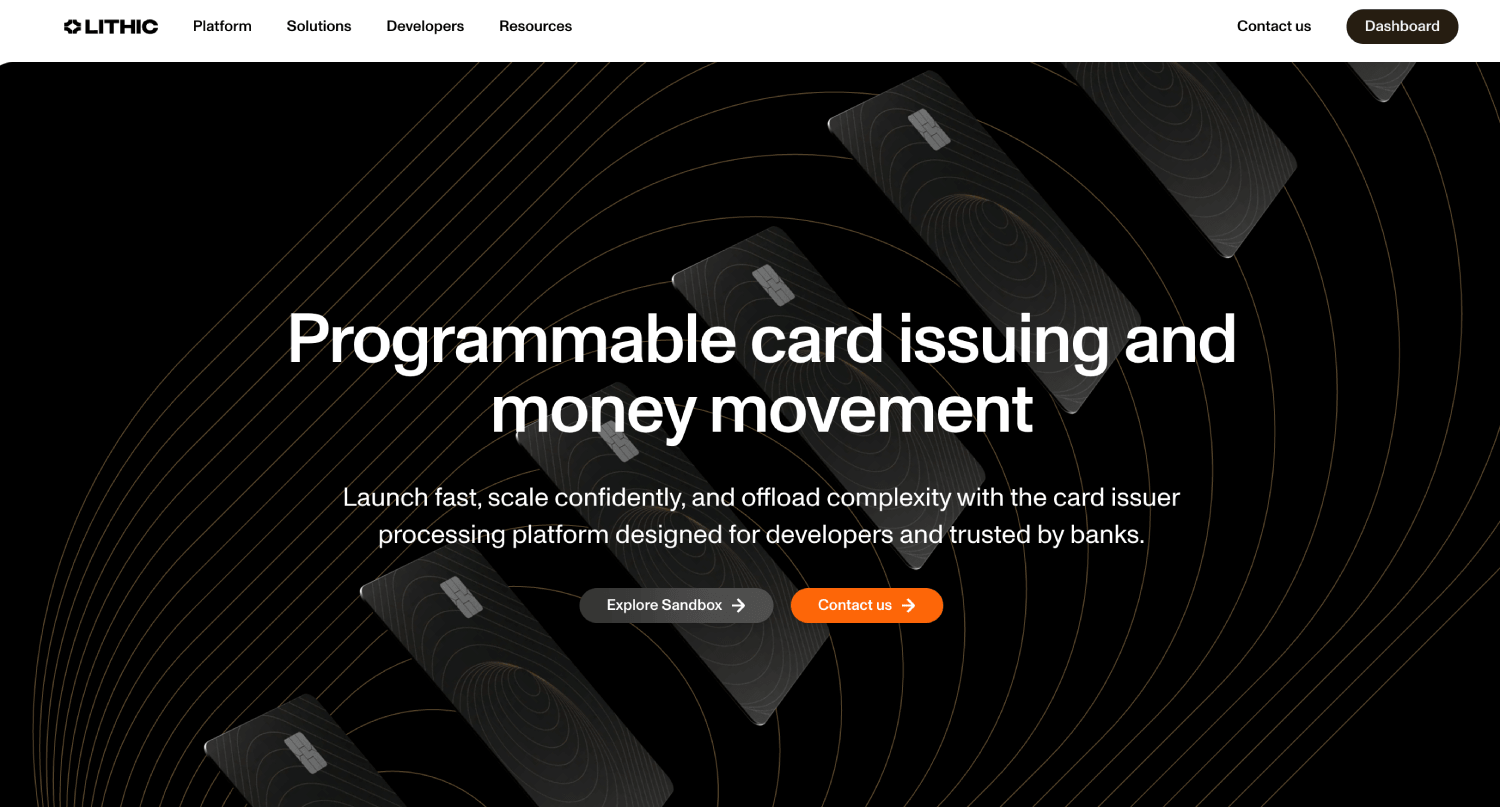
Lithic was built explicitly to address the gaps that Marqeta left for smaller programs. According to Lithic’s published documentation, it operates as both an issuer-processor and, in some configurations, the bank of record through its own bank charter via a subsidiary, which gives it more flexibility on program structure and sponsor bank selection than Marqeta historically offered. Lithic’s developer documentation and sandbox environment are consistently cited by operators as cleaner and faster to integrate than Marqeta’s.
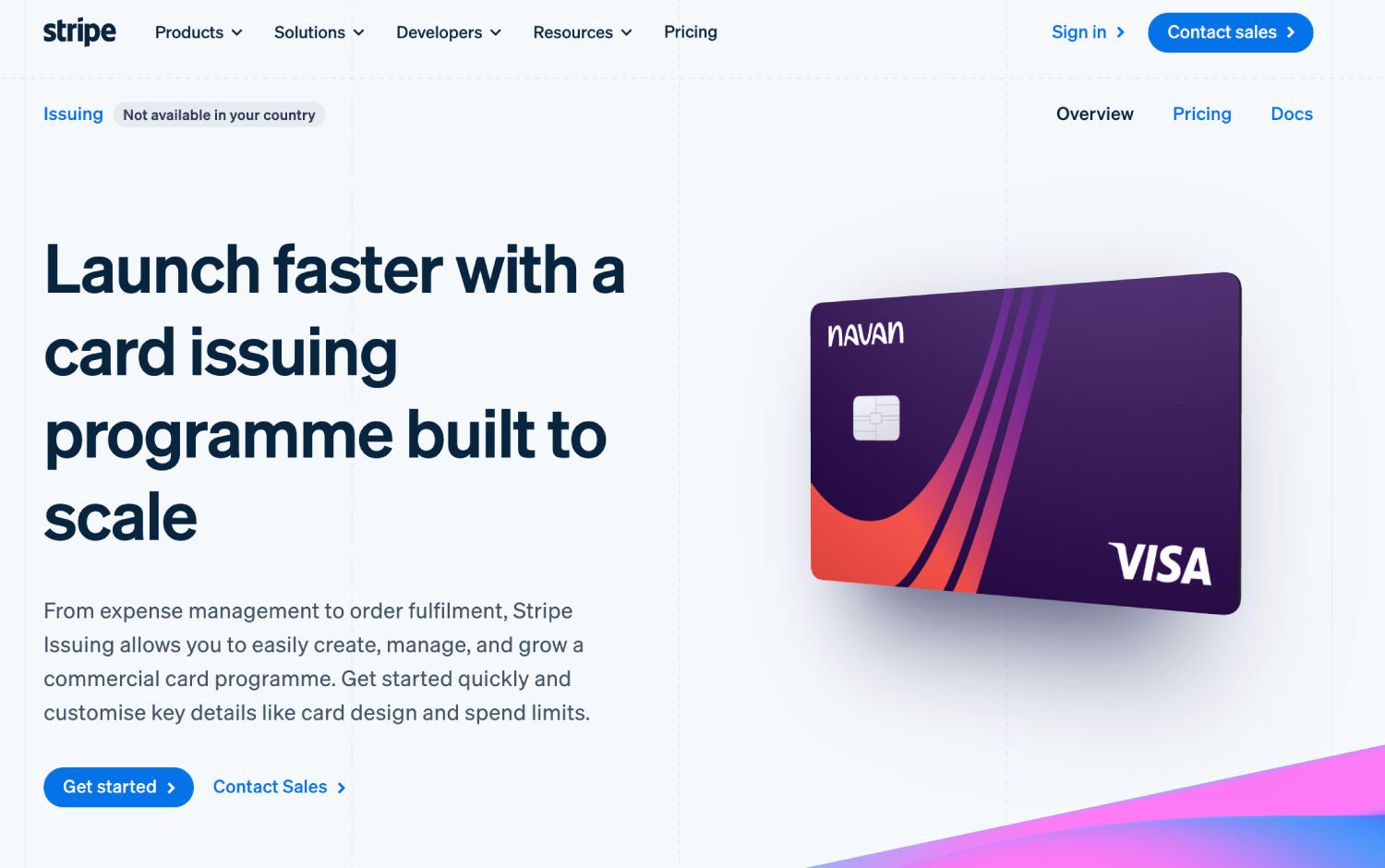
Stripe Issuing is the youngest of the three in terms of market maturity and the most constrained in program scope. It is purpose-built for commercial card programs: expense cards, vendor cards, and cards embedded in B2B SaaS products. It does not support consumer card programs. Its primary advantage is the Stripe platform: if you are already running payments, billing, or Connect through Stripe, adding Issuing requires almost no additional infrastructure work.
What Are the Volume Minimums and Bank Relationships for Each Platform?
| Platform | Volume Minimums | Bank Relationship | Consumer Programs | Physical Cards | Best For |
|---|---|---|---|---|---|
| Marqeta | Negotiated; favorable terms generally require committed volume (no published threshold) | Multiple bank partners; historically concentrated on Sutton Bank per 2021 S-1 covering 2020 data | Yes | Yes | High-volume programs, complex program types, enterprise |
| Lithic | No published monthly minimums; startup-friendly entry | Own bank charter plus partner banks per Lithic’s documentation; more flexibility on bank selection | Yes | Yes | Growth-stage programs, margin-sensitive fintechs, developer teams |
| Stripe Issuing | No minimums; pay-as-you-go | Stripe’s partner banks; not selectable by the program operator | No | Yes (US, UK, EU) | B2B SaaS card programs, expense tools, Stripe-native stacks |
Pricing across all three platforms is not fully public. Marqeta does not publish a standard pricing page; terms are negotiated based on volume and program type. Lithic’s public pricing page lists a card transaction fee structure with no stated monthly minimums, which is one of its clearest differentiators for early-stage programs. Stripe Issuing charges per transaction and per card, with rates listed on Stripe’s public pricing page, making it the most transparent of the three for initial planning.
Is Stripe Issuing Good Enough, or Do You Need Marqeta?
For a B2B SaaS company embedding corporate cards into an expense workflow, Stripe Issuing is almost always sufficient at the MVP stage. The integration surface is small if you are already on the Stripe platform, sandbox access is immediate, and you are not negotiating a contract before you write a single line of code.
Where Stripe Issuing breaks is predictable. First: consumer programs. Stripe Issuing explicitly does not support consumer cardholders. If your end users are individuals rather than employees or business entities, you need Lithic or Marqeta on day one. Second: bank flexibility. Stripe selects the issuing bank; you do not. For some program types, particularly those with specific state licensing requirements or specific interchange structures, this lack of control is a real constraint. Third: interchange economics at scale. Stripe’s issuing interchange rates are what they are. At high volume, the ability to negotiate interchange splits with your sponsor bank, which Lithic and Marqeta both support, can materially change your unit economics.
The question teams ask most often, “Is Stripe Issuing good enough or do I need Marqeta?”, is almost always the wrong binary. Lithic sits between them and beats both for the $500K to $5M monthly volume range.
The FintechSpecs Card Platform Maturity Test
Rather than mapping platforms to company size, which is a crude proxy, the better framework is program maturity. FintechSpecs defines four stages in what we call the Card Platform Maturity Test:
Stage 1: Proof of concept. You are testing whether cardholders will activate and transact. You have no committed volume, no negotiating position, and you need to move fast. Stripe Issuing is the right call here, assuming your program is commercial rather than consumer-facing.
Stage 2: Program validation. You have real cardholders transacting, you understand your fraud profile, and you are starting to see where your program controls need to be more granular. Lithic is the right call here. Its developer tooling, sandbox fidelity, and lack of minimums let you graduate from MVP without a full platform migration. Marqeta at this stage typically requires a sales cycle that outlasts your sprint.
Stage 3: Margin optimization. You are processing enough volume that interchange economics are a meaningful line on your P&L. You need bank flexibility, custom interchange splits, and program controls tight enough to manage fraud at scale. Lithic handles most programs at this stage. Marqeta becomes worth the contract complexity when program logic is genuinely multi-layered.
Stage 4: Program complexity. You are running multiple card programs simultaneously, need push-to-card or specialized debit structures, or have regulatory requirements that demand specific bank relationships. Marqeta’s feature depth earns its premium here.
Most teams reading this article are at Stage 1 or Stage 2. The biggest mistake at those stages is signing a Marqeta contract because the brand feels safer. It is not safer; it is slower and more expensive for a program that does not yet need its capabilities.
What Card Issuing Platform Do Expense Startups Use?
The expense management space is instructive. Companies building Ramp-style or Brex-style workflows tend to start on Stripe Issuing for speed, migrate to Lithic when they need tighter program controls or consumer-adjacent features, and reach Marqeta only if their volume and program complexity demand it. None of this is public roadmap data; it reflects the common migration path operators describe. For context on how the spend management category is actually built, the Ramp vs Brex vs Airbase comparison on FintechSpecs covers the product and infrastructure differences in detail.
Vertical SaaS products embedding cards for the first time almost universally start with Stripe Issuing because the incremental integration cost is near zero. A company already running Stripe Connect and Stripe Billing can add Issuing in days rather than weeks. That speed advantage is real, but it narrows significantly once you hit the program constraints above.
What Is the Cheapest Card Issuing Platform for a Startup?
On a pure transaction fee basis, the honest answer is: it depends on your volume, and you cannot fully model it without a Marqeta quote. What you can model publicly:
Stripe Issuing’s pricing is per-card and per-transaction as listed on Stripe’s pricing page, with no monthly platform fee for most commercial programs. Lithic’s public pricing is similarly transaction-based without stated minimums. Marqeta’s pricing is not publicly listed and requires a sales conversation, which itself tells you something about where it sits in the market.
For very early-stage programs, Stripe Issuing and Lithic are roughly comparable on out-of-pocket cost. The real cost difference emerges at scale through interchange economics. An issuer-processor that gives you meaningful interchange splits on business debit transactions can offset transaction fees entirely at sufficient volume. That is where Lithic and Marqeta pull ahead of Stripe. Understanding how those economics compound is worth reading alongside the hidden economics of Banking-as-a-Service piece on FintechSpecs.
Where Does Stripe Issuing’s Consumer Program Gap Actually Matter?
This is the most underestimated constraint in the Stripe Issuing comparison. Stripe Issuing is explicitly limited to commercial programs, meaning cardholders must be businesses or employees acting on behalf of a business entity. If your product issues cards to consumers directly, whether that is a personal finance app, a rewards card for individual users, or a consumer prepaid product, Stripe is not an option.
Teams discover this constraint at the worst possible moment: after building on Stripe’s sandbox, after integrating the API, and right before user onboarding. Lithic and Marqeta both support consumer card programs. According to Marqeta’s public S-1 filing and regulatory disclosures, Marqeta is not itself an FDIC-insured institution and does not directly issue credit cards on its own charter; it operates through partner banks that serve as the issuing institution. That distinction matters for program design and compliance planning.
If there is any chance your program serves consumers rather than businesses, start with Lithic. The migration cost from Lithic to Marqeta later is far lower than rebuilding a consumer card program from scratch on a new platform after launch. For a fuller look at the compliance requirements that differ between consumer and commercial card programs, the fintech product and compliance readiness checklist covers the relevant regulatory surface.
Which Card Issuing Platform Has the Lowest Volume Minimums?
Stripe Issuing and Lithic both operate without published volume minimums. You can issue your first card without committing to a monthly floor. Marqeta’s model is different. Favorable economics on Marqeta generally require committed volume, and the platform’s sales-led motion means smaller programs do not get favorable terms. This is not a criticism of Marqeta; it is how enterprise-grade infrastructure gets priced.
For seed and Series A programs that do not yet have volume to commit, the practical answer is Lithic or Stripe Issuing. For Series B and beyond, running a comparative quote from Marqeta alongside Lithic is worth the sales cycle time, particularly if your program has complexity that Lithic cannot handle.
Lithic vs Marqeta: Which Issuer-Processor Wins for a Growth-Stage Fintech?
For a growth-stage fintech, Lithic wins on four specific dimensions. Its bank flexibility means you are not locked into a single sponsor bank relationship, which matters for program structure and potentially for interstate licensing. Its developer experience is consistently rated faster to integrate. It has no published volume minimums. And its pricing is transparent enough to model before you talk to sales.
Marqeta wins on program complexity and track record at enterprise scale. If you are running a multi-program debit and prepaid stack, need push-to-card capabilities, or require the specific bank relationships Marqeta has built over its history, the trade-off is different. Marqeta also has a longer public track record as a standalone issuer-processor, which some enterprise buyers weight in vendor diligence. That track record matters less for early-stage programs than most founders assume.
Consider a hypothetical scenario: a Series A company processing $2M in monthly card spend on a commercial expense product. At that volume, Stripe Issuing’s economics are serviceable but you are leaving interchange revenue on the table. Marqeta’s sales cycle and volume expectations make it a difficult fit. Lithic is the natural home: no minimums, better interchange flexibility, and program controls sophisticated enough for a $2M/month fraud profile. These figures are illustrative, not published thresholds, actual breakeven points depend on your negotiated rates and program type. The same company at $15M monthly volume with three distinct program types is a Marqeta conversation worth having, though again the precise inflection point varies by program structure.
For more on how infrastructure choices compound at growth stage, the 10 critical mistakes when choosing fintech infrastructure piece on FintechSpecs is worth reviewing before you finalize any issuer-processor decision.
Frequently Asked Questions
Is Marqeta an issuer-processor?
Marqeta is an issuer-processor but not a bank itself. It processes card transactions and manages program logic through partner bank relationships. According to Marqeta’s S-1 filing (covering 2020 operating data), the vast majority of its volume at that time ran through Sutton Bank as the issuing bank; the current bank mix is not publicly disclosed at that level of detail. Marqeta does not hold FDIC-insured deposits and cannot issue credit cards on its own charter. The issuing bank in any Marqeta program is a partner institution, not Marqeta itself.
Is Lithic an issuer-processor?
Lithic is both an issuer-processor and, in certain program configurations, operates through its own bank charter via a subsidiary, according to Lithic’s published documentation. This dual structure gives Lithic more flexibility than pure issuer-processors on bank relationship selection and program structure. Lithic has published documentation explaining its issuer-processor model and the distinction between programs that use its bank versus those that use external sponsor banks.
Is Stripe an issuing bank?
No. Stripe is not a bank and does not hold a banking charter. Stripe Issuing operates through partner banks that serve as the issuing institution for cards created through the platform. Program operators on Stripe Issuing do not select or negotiate with the issuing bank directly; that relationship is managed by Stripe. This is a meaningful constraint for operators who need specific bank relationships or custom interchange arrangements.
Can Stripe Issuing support a consumer card program?
No. Stripe Issuing is explicitly limited to commercial card programs. Cardholders must be businesses or employees acting on behalf of a business entity. Consumer-facing card programs, personal prepaid cards, or direct-to-consumer rewards cards are not supported on Stripe Issuing. Teams building consumer card products should evaluate Lithic or Marqeta from day one rather than migrating later.
What is the difference between Lithic vs Stripe Issuing for a fintech MVP?
For a commercial card MVP embedded in a B2B SaaS product, Stripe Issuing is faster if you are already on Stripe’s platform. For a consumer card MVP, or any program where you need bank flexibility or plan to serve non-business cardholders, Lithic is the correct starting point. Lithic also has fewer long-term migration costs if your program outgrows the platform because its API design is closer to Marqeta’s than Stripe’s is.
At what point does it make sense to switch from Lithic to Marqeta?
There is no single volume threshold, and any specific figure depends on your program type and negotiated rates. The practical inflection point is when your program complexity outgrows Lithic’s feature set or when Marqeta’s specific bank relationships and enterprise contract terms produce better economics than Lithic can match. Many programs run on Lithic indefinitely without hitting a ceiling that warrants a Marqeta migration.
Which Platform Should You Pick?
The card issuing market rewards teams that match platform to stage rather than picking the most recognizable name. Stripe Issuing is genuinely excellent for what it is: a commercial card product for teams already inside the Stripe stack who want cards without a new vendor relationship. Lithic is the most underrated of the three for growth-stage programs, with bank flexibility and developer tooling that neither Stripe nor Marqeta matches in the $500K to $10M monthly volume range. Marqeta’s premium is real, but so is the threshold at which it becomes worth paying.
One thing most comparison articles miss: the compliance and program design work upstream of platform selection matters as much as the platform itself. Your issuer-processor cannot paper over a weak program structure. The sponsor bank evaluation guide on FintechSpecs is worth reading before you finalize any platform decision, because the bank relationship question and the issuer-processor question are not independent.
If you are launching in the next quarter, start with the Card Platform Maturity Test above. Map your program to a stage, not a brand. Most teams land at Stage 1 or Stage 2, which points to Stripe Issuing or Lithic. The teams that get this right are the ones who pick the platform built for where they are, not where they hope to be in three years. That discipline in infrastructure selection, applied across the full fintech stack, is what separates programs that scale cleanly from ones that spend 18 months on a painful migration.