
- General fraud platforms are built for transaction monitoring, not credit underwriting. They miss the patient, bureau-manipulating behavior that defines synthetic identity fraud.
- Synthetic identity fraud and first-party fraud require models trained on lending-specific signals: tradeline velocity, thin-file patterns, authorized user abuse, and credit cycling.
- The five vendors with the deepest lending-fraud coverage are Socure, SentiLink, Sardine, Prove, and Alloy. Each has a different architecture and a different sweet spot.
- Model explainability is not optional for regulated lenders. Any tool that gives you a score without reason codes creates fair lending and FCRA exposure.
- The right tool depends on whether your fraud problem is at origination, identity verification, or ongoing monitoring. These are different products, not different tiers of the same one.
The strongest application fraud tools for lenders address three distinct fraud types that generic platforms miss: synthetic identity fraud (fabricated identities built on real SSNs), first-party fraud (real people who misrepresent income or intent), and credit fraud involving identity theft. Tools like Socure, SentiLink, Sardine, Prove, and Alloy are built with lending-specific models and provide reason codes required for adverse action compliance. A general fraud detection platform optimized for card transactions will not catch a synthetic identity that spent 24 months building a credit profile before applying for a personal loan.
Why General Fraud Tools Fail at Lending Fraud
Most fraud detection platforms were built to stop card-not-present fraud and account takeover. Those problems happen in milliseconds. A fraudster tests a stolen card number, a real-time signal fires, the transaction is blocked.
Lending fraud works on a completely different timeline. A synthetic identity fraud scheme can take 12 to 24 months of patient credit bureau activity before a fraudster ever submits a loan application. By the time the application arrives, the fabricated identity looks legitimate to every general-purpose tool: it has a credit file, payment history, and a real address. The fraud happened months ago at the bureau level, not at the application window.
First-party fraud adds another layer of complexity. A real person with a real identity submits accurate personal information but lies about income, employment, or intent to repay. No device fingerprint catches that. No velocity check flags it. The fraud is in the underwriting data, not the authentication signal.
This is the core problem with borrowing a fraud stack from your payments team. The signals that stop transaction fraud (device intelligence, IP velocity, behavioral biometrics at login) are largely irrelevant for detecting a synthetic who has been cultivating a credit file since last year. Lenders need models trained on bureau data, tradeline behavior, SSN issuance patterns, and identity network graphs. Very few platforms actually have that.
For a broader look at how fraud tools are categorized across fintech products, the fraud detection and risk tools comparison on FintechSpecs covers the general territory. This article focuses specifically on the lending origination problem.
What Is the FintechSpecs Lending Fraud Signal Stack?
Before evaluating vendors, it helps to understand what signals actually matter for lending fraud. At FintechSpecs we organize these into four layers, which we call the Lending Fraud Signal Stack. Every tool in this list covers at least two of these layers. The strongest cover all four.
Layer 1: Identity Authenticity. Is the identity real? SSN validation, death file checks, SSN-to-age correlation, and OFAC screening live here. A synthetic identity often uses a real SSN issued to a minor or a recently deceased person, with a different name and date of birth attached to it.
Layer 2: Bureau Behavior. How did this credit file get built? Tradeline velocity (how fast new accounts appeared), authorized user abuse (being added to a stranger’s card to inherit their history), thin-file patterns that suddenly spike, and credit cycling all signal manufactured credit profiles. This layer is where SentiLink and Socure have their deepest advantage.
Layer 3: Application Integrity. Does the data on this application match external data sources? Income verification, employment verification, stated address versus verified address, and document authentication sit here. Prove and Alloy have the strongest coverage at this layer.
Layer 4: Network Intelligence. What relationships does this identity have with known fraud? Phone number, email, device, and address linkages to previously confirmed fraud cases. Sardine covers this layer most aggressively.
A tool that only covers Layers 1 and 3 will miss most synthetic identity fraud. A tool that only covers Layer 4 will miss most first-party fraud. The vendor evaluation table below maps each product to these layers.
The 9 Best Application Fraud Tools for Lenders
1. Socure (Sponsored)
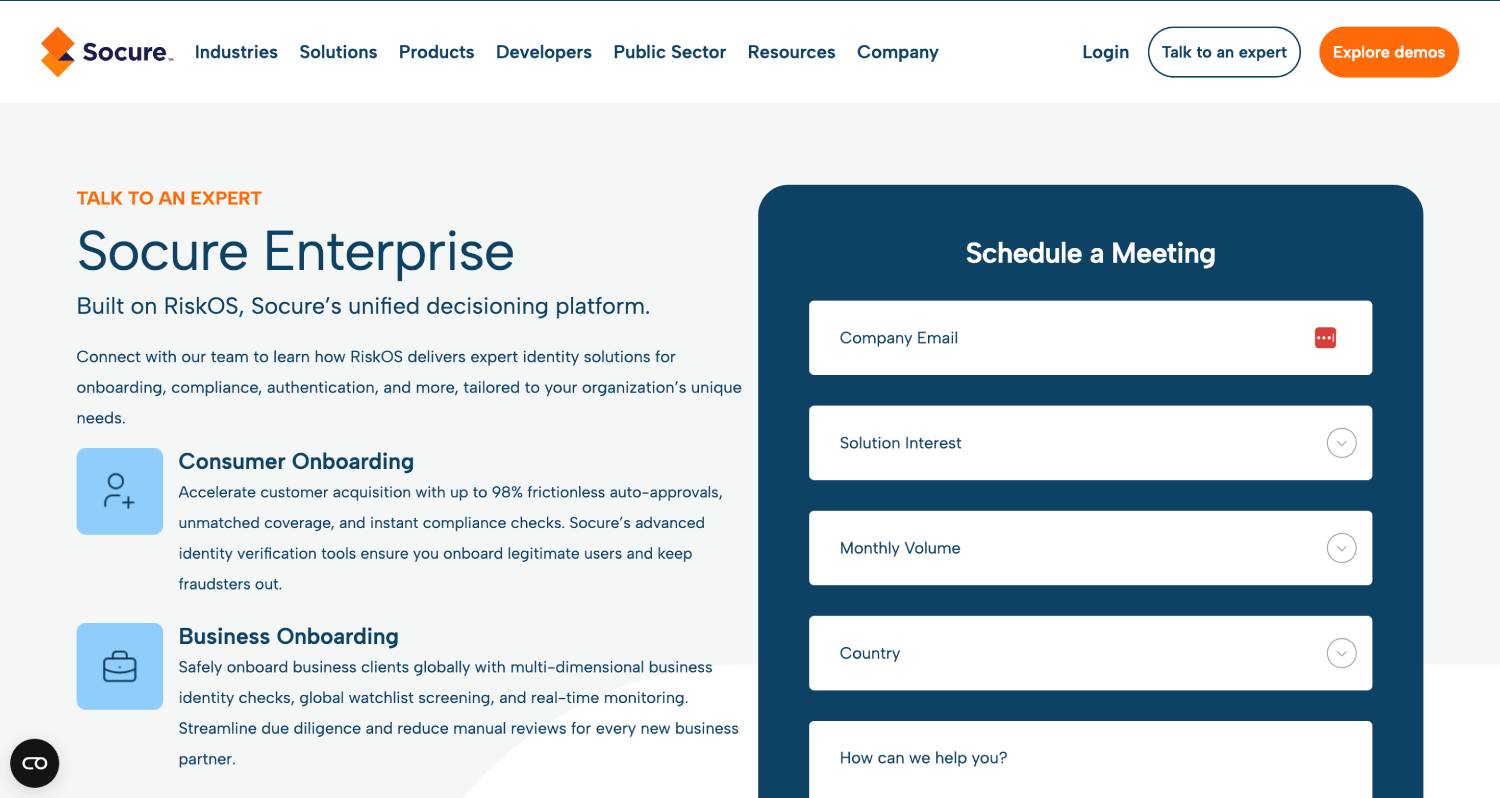
Socure is the most comprehensive identity verification and fraud scoring platform built specifically for financial services. Its Sigma Synthetic product targets synthetic identity fraud directly, using a combination of bureau data, digital identity signals, and document verification to score identity risk at origination.
What separates Socure from general identity tools is the breadth of its predictive model inputs. It pulls from digital footprint data (email age, phone carrier patterns, social presence), document verification, and consortium data from across its customer network. Lenders that are already using Socure for KYC can extend into fraud scoring without adding a second vendor relationship, which simplifies adverse action reason code reporting considerably.
Socure is a strong fit for mid-market and enterprise lenders that want a single platform covering KYC, identity fraud, and synthetic detection. Pricing is not publicly listed. Socure requires a direct sales conversation for contract pricing.
2. SentiLink (Sponsored)
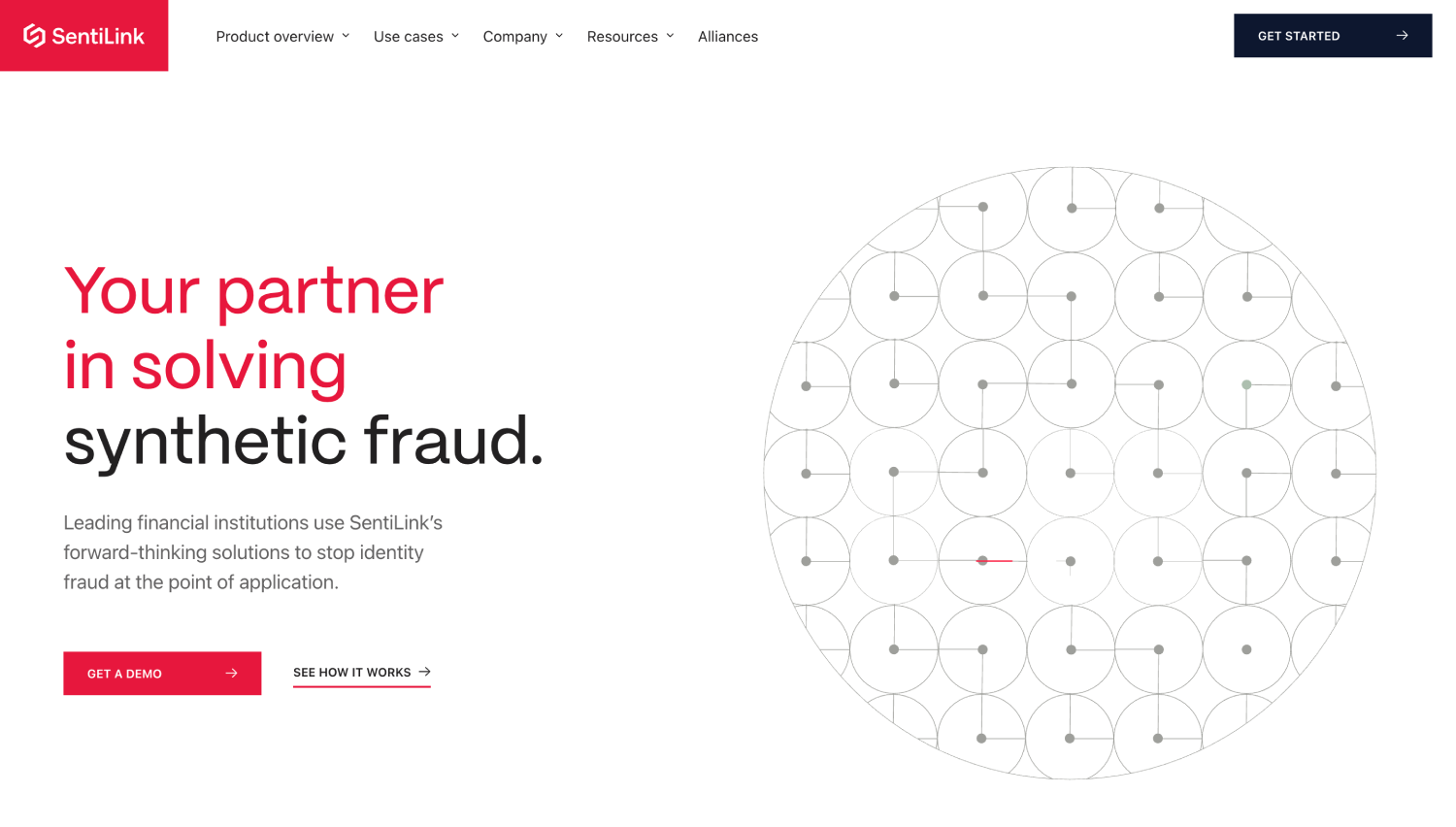
SentiLink has the most focused product in this list. It was built from the ground up to detect synthetic identity fraud and ID theft in credit applications, and that narrow focus is exactly why it performs well in lending environments specifically.
SentiLink’s Synthetic Score evaluates applications against patterns that are invisible to bureau-only checks: SSN issuance anomalies, identity linkage graphs, and the behavioral signatures of manufactured credit profiles. Its ID Theft Score separately addresses third-party identity fraud, which requires different signals than synthetic detection. Lenders using both scores get coverage across the two most damaging fraud types in unsecured lending.
SentiLink integrates through a clean REST API and is designed to sit inside a loan origination workflow, not as a standalone portal. Pricing is usage-based and available through direct engagement. SentiLink is the strongest single-purpose choice for any lender whose primary concern is synthetic identity fraud and credit fraud at origination.
3. Sardine (Sponsored)
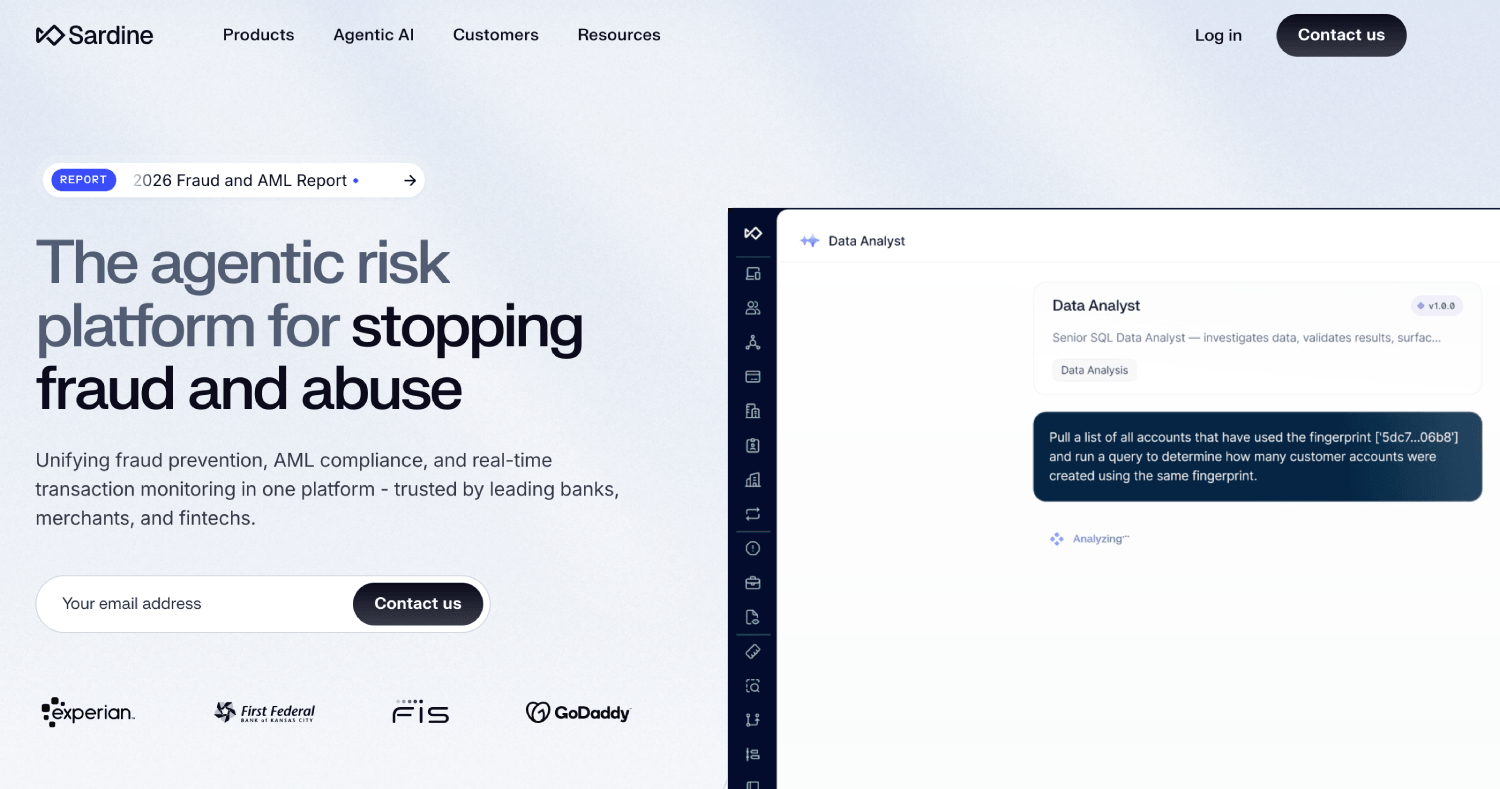
Sardine approaches application fraud from a device and behavioral intelligence angle that the other tools here do not fully replicate. Its platform captures behavioral biometrics during the application session (typing cadence, mouse movement, form fill patterns) and combines that with device intelligence, network signals, and consortium fraud data.
For lenders worried about first-party fraud and identity manipulation during the application itself, Sardine adds signals that pure identity-network tools miss. A real person filling out a loan application with copied-and-pasted income figures, or a device that has been seen submitting multiple applications under different identities, gets flagged by Sardine in ways that a bureau-only tool would not catch.
Sardine also covers ACH fraud and account funding fraud, which matters for fintech lenders that originate and fund loans digitally. It is the best fit for digital-native lenders and neobank-adjacent credit products where the application session itself is a fraud vector. Pricing is available through direct sales.
4. Prove (Sponsored)
Prove (formerly Payfone) leads with phone-centric identity verification and is particularly strong at the identity authentication layer of the Lending Fraud Signal Stack. Its Trust Score and Identity Score products use phone number intelligence, carrier data, and account tenure to verify that the person applying is who they claim to be.
Phone intelligence is underused in lending fraud prevention. A synthetic identity may have a fabricated SSN and a manufactured credit file, but its associated phone number often shows telltale signs: it is a recently ported number, a VoIP line, or a number with no history attached to the claimed identity. Prove surfaces those signals at the application stage, before any bureau pull.
Prove integrates well with existing origination stacks and is designed for high-volume environments. It is the right call for lenders with significant mobile application traffic where phone intelligence adds a fast, low-friction pre-screen before deeper identity checks. Pricing requires direct engagement with their sales team.
5. Alloy (Sponsored)
Alloy is a decision orchestration platform that sits above point solutions and connects to dozens of identity, fraud, and credit data sources through a single API. Lenders configure decision rules and model thresholds inside Alloy’s rules engine, and Alloy routes applications through the right data sources in the right sequence.
For lenders that have already identified their fraud signal needs but lack the infrastructure to orchestrate multiple vendors, Alloy solves the integration problem. It also provides built-in adverse action reason code support, which is a firm requirement for FCRA-compliant lending operations. The platform’s case management tools let fraud analysts review flagged applications with full audit trails.
Alloy is not a fraud model in itself. It is the connective layer that makes SentiLink, Socure, and other point solutions work together without a custom integration project. For a lender building a multi-vendor fraud stack, Alloy is often the layer that holds the whole thing together. The Alloy vs Middesk comparison on FintechSpecs covers its KYB capabilities in more depth. Pricing is contract-based.
6. Feedzai
Feedzai is an enterprise fraud management platform that uses machine learning to analyze behavioral patterns across customer interactions. It is frequently mentioned in the context of application fraud detection for banks and larger lending operations, where it sits alongside core banking systems and processes high volumes of applications and transactions simultaneously.
Feedzai is a stronger fit for established financial institutions than for early-stage lenders. Its implementation requires meaningful data science resources and integration work. The machine learning models perform well when trained on a lender’s own historical fraud data, which means smaller lenders with limited fraud history will see weaker performance out of the box.
7. Experian CrossCore
Experian CrossCore combines Experian’s bureau data with third-party fraud and identity signals through a single decisioning platform. For lenders that already have an Experian bureau relationship, CrossCore offers a relatively low-friction path to adding fraud detection signals to their origination workflow.
The bureau depth is the key differentiator here. CrossCore can pull on credit file patterns, address history, and identity linkages that are baked into Experian’s data infrastructure. That makes it effective at detecting synthetic identities that have been built against the Experian bureau specifically. Its weakness is that it is less effective at detecting synthetic identities that were built primarily through Equifax or TransUnion tradelines.
8. LexisNexis Risk Solutions

LexisNexis Risk Solutions brings public records, alternative data, and identity linkage graphs that go beyond what bureau-only tools see. Its ThreatMetrix device intelligence layer is combined with identity network data from its broader data assets, giving lenders a view into identity connections that span addresses, phone numbers, email addresses, and devices associated with known fraud.
LexisNexis is used widely in mortgage lending and auto lending, where the loan sizes justify more expensive per-application data pulls. It integrates into origination systems through its Instant Verify and IDVision products. Pricing varies by product and volume.
9. Kount (an Equifax Company)

Kount is better known for e-commerce fraud prevention, but its identity trust platform has lending applications through its Equifax integration and identity graph capabilities. After being acquired by Equifax, Kount gained access to bureau-level data that strengthens its identity verification capabilities for lenders that primarily need device intelligence combined with credit identity signals.
Kount is the weakest fit for pure synthetic identity fraud detection compared to SentiLink or Socure, but it adds value for fintech lenders whose fraud exposure spans both payments fraud and lending fraud in a single product (for example, a buy-now-pay-later platform that needs to cover both the application and the transaction layer).
Fraud-Type Coverage by Tool
| Tool | Synthetic Identity | First-Party Fraud | ID Theft / Third-Party | Document Fraud | Model Explainability / Reason Codes |
|---|---|---|---|---|---|
| Socure | Strong | Moderate | Strong | Strong | Yes (Sigma reason codes) |
| SentiLink | Strongest in class | Moderate | Strong | Limited | Yes (score reason codes) |
| Sardine | Moderate | Strong | Moderate | Limited | Partial |
| Prove | Moderate | Moderate | Strong | Limited | Partial |
| Alloy | Orchestrated | Orchestrated | Orchestrated | Orchestrated | Yes (rules-based transparency) |
| Feedzai | Moderate | Strong | Moderate | Limited | Partial (ML model-dependent) |
| Experian CrossCore | Strong | Moderate | Strong | Moderate | Yes |
| LexisNexis Risk | Strong | Moderate | Strong | Limited | Partial |
| Kount | Weak | Moderate | Moderate | Limited | Partial |
Note: “Orchestrated” under Alloy reflects that its coverage depends on which data sources are connected within the platform. Alloy itself does not generate fraud scores.
What Is Synthetic Identity Fraud and Why Is It Hard to Detect?
Synthetic identity fraud is the construction of a fake identity by combining real and fabricated data. The most common pattern uses a real Social Security Number (often belonging to a child, elderly person, or recent immigrant with no credit history) combined with a different name and date of birth. The fraudster then builds credit by being added as an authorized user on a real person’s credit card, opening secured cards, and making consistent payments over months.
By the time the synthetic identity applies for a loan, it looks like a thin-file consumer who has been responsibly building credit. The bureau check passes. The KYC check passes (the SSN is real). The income might be inflated on the application. The fraud is invisible to any tool that only checks whether an identity is consistent and not whether the identity was manufactured.
A common characteristic of synthetic identity fraud is a sudden spike in credit-seeking behavior after a long period of slow, consistent account management. The fraudster reaches a target credit limit across multiple accounts, then “busts out” by maxing everything simultaneously and disappearing. By the time the lender realizes what happened, the loss is already booked.
SentiLink was built specifically to detect these patterns. Its models look at SSN issuance geography versus stated residence, the structure of the credit file build-up, and identity linkage signals that reveal when the same underlying actor has built multiple synthetic profiles. For any lender in unsecured personal loans, BNPL, or credit cards, SentiLink’s Synthetic Score should be on the shortlist.
What Is First-Party Fraud in Lending and How Do Tools Detect It?
First-party fraud in lending is when a real person, using their real identity, submits a credit application with materially false information. Income inflation is the most common form: a borrower states $90,000 in annual income when the actual figure is $52,000. Intent-to-defraud cases are more severe: a borrower applies for a loan with no intention of repaying, knowing their financial situation makes repayment impossible.
First-party fraud is harder to prosecute and harder to detect than identity fraud because there is no stolen identity. The fraud is in the underwriting data itself. Tools that address first-party fraud tend to operate at Layer 3 of the Lending Fraud Signal Stack: income verification through payroll data APIs, bank transaction analysis, and employment verification.
Sardine’s behavioral signals add a pre-bureau layer here. If an applicant’s form-fill behavior suggests copy-pasted income figures, or if the session shows signs of assisted fraud (a third party navigating the form on the applicant’s device), those signals surface before the application reaches underwriting. That does not replace income verification, but it flags applications worth scrutinizing before the lender spends money on a full data pull.
Lenders evaluating data enrichment APIs for underwriting should note that payroll data providers like Pinwheel, Argyle, and Atomic overlap with fraud prevention here. Income verification is both an underwriting signal and a fraud detection signal. The lenders most exposed to first-party fraud are those relying on stated income without verification.
How Should Lenders Stack These Tools Together?
The scenario most lenders face is not “which single tool do I buy” but “how do I layer these without creating a friction nightmare and a compliance headache.”
Consider a Series B fintech lender processing personal loans digitally. At the top of the funnel, a phone intelligence check through Prove costs a fraction of a full bureau pull and eliminates a meaningful slice of synthetic and stolen-identity applications before any hard pull. Those applications that pass move to a SentiLink Synthetic Score check against the SSN and identity graph. Flagged applications go to manual review. Clean applications proceed to full underwriting with an Experian or Equifax bureau pull that feeds an Alloy decision rule. Sardine sits across the session layer, flagging behavioral anomalies throughout.
That stack is four vendors. Each adds a distinct signal layer. Alloy orchestrates the decision and produces the adverse action reason codes required for FCRA compliance. The total per-application cost is higher than a single-tool approach, but the fraud loss reduction in unsecured lending typically justifies it at scale.
For lenders earlier in their build who cannot justify four vendors, SentiLink plus Alloy covers the two highest-priority layers (synthetic identity detection and decision orchestration with reason codes) with a manageable integration footprint. Socure is a reasonable single-vendor alternative if document verification and KYC also need to be covered in one contract.
If you are building out your compliance infrastructure alongside your fraud stack, the fintech product and compliance readiness checklist covers the regulatory touchpoints that fraud tooling connects to, including FCRA adverse action requirements and BSA obligations.
Model Explainability: The Compliance Requirement Most Buyers Miss
Regulated lenders cannot black-box their fraud decisions. When an application is declined or modified based on a fraud signal, the ECOA and FCRA require that the applicant receive an adverse action notice with specific reason codes. “Your application was flagged by our fraud model” is not a compliant reason code.
This rules out any tool that gives you a risk score without reason codes. It also creates a practical preference for rules-based or hybrid tools over pure machine learning black boxes, unless the ML tool is specifically designed with explainability outputs.
Socure provides reason codes with its Sigma scores. SentiLink provides reason codes tied to the specific identity signals that drove the score. Alloy’s rules engine is inherently transparent because the lender writes the rules. Feedzai’s ML models require additional explainability configuration and may not produce ready-to-use adverse action reason codes without implementation work.
Any tool evaluation for a lending environment should include this question explicitly: “Can you produce FCRA-compliant adverse action reason codes from your fraud output?” If the answer is ambiguous, that is a red flag. The FCRA compliance services comparison covers this requirement in more detail for lenders building out their credit data infrastructure.
Frequently Asked Questions
What is an example of application fraud in lending?
A borrower applies for a $25,000 personal loan and states annual income of $95,000. Their actual income is $38,000, but they have manipulated a paystub document to reflect the higher figure. This is application fraud through document manipulation and income misrepresentation. It is a form of first-party fraud because the applicant is using their real identity. Detection requires income verification through payroll data or bank transaction analysis, not just identity verification.
What is a common characteristic of synthetic identity fraud?
Synthetic identity fraud typically involves a credit file that was built slowly and responsibly over 12 to 24 months, often through authorized user tradelines and secured cards, followed by a sudden surge in new credit applications. The SSN used is usually real but associated with someone who has no credit history (a child or recent immigrant). The name, address, and date of birth attached to the SSN are fabricated. Bust-out behavior, where the fraudster maxes out multiple accounts simultaneously, is the terminal signal.
How do I identify synthetic identity fraud at origination?
The most effective signals at origination include: SSN issuance date versus claimed age (a 35-year-old with an SSN issued in 2018 is a red flag), SSN-to-name mismatch across bureau records, authorized user account concentration in the credit file (many accounts where the person is not the primary holder), and identity network linkages showing the same device or phone number associated with multiple identities. Tools like SentiLink are specifically built to evaluate these signals against lending applications.
What is the difference between first-party and third-party fraud in credit?
Third-party fraud is identity theft: a fraudster uses another real person’s identity without their knowledge to open accounts or take out loans. First-party fraud involves a real person misrepresenting their own information to obtain credit they would not otherwise qualify for, or obtaining credit with no intent to repay. Third-party fraud is primarily an identity verification problem. First-party fraud is primarily an underwriting data integrity problem. Most lenders need tools that address both.
Do fraud tools need to provide adverse action reason codes for lending?
Yes. Under the Fair Credit Reporting Act, if a fraud or identity risk signal contributes to an adverse action on a credit application, the applicant is entitled to a specific reason for that decision. A fraud score without reason codes creates FCRA exposure. Any fraud tool used in lending origination should either produce its own reason codes or integrate with a decision orchestration layer (like Alloy) that generates compliant reason codes from combined signals. This is a non-negotiable requirement for regulated lenders.
What are red flags for synthetic identity fraud on a loan application?
Key red flags include a credit file with very few accounts but a clean payment history, high concentration of authorized user accounts, a mismatch between SSN issuance geography and the stated address history, a recently registered phone number or email that does not match the claimed age of the identity, and a surge in new credit inquiries across multiple lenders in a short window. Any single flag is not conclusive, but a combination of two or more warrants manual review or a specialized synthetic identity score.
Which tool is best for synthetic identity detection specifically?
SentiLink is the most purpose-built tool for synthetic identity detection in lending. Its Synthetic Score was designed specifically for credit application fraud and uses SSN validation, identity network analysis, and bureau behavior patterns to identify manufactured identities. Socure’s Sigma Synthetic is a strong alternative, particularly for lenders that also need document verification and KYC in the same platform. For lenders that want to orchestrate both alongside other data sources, Alloy connects to SentiLink and Socure through its platform.
What Should Lenders Actually Do With This Information?
The most important realization from this comparison is that your current general fraud stack almost certainly has a blind spot at the bureau behavior layer. If your fraud tooling does not evaluate how a credit file was built, only whether an identity checks out today, you are missing the primary vector that synthetic identity fraud exploits.
For lenders at the Series A or B stage, the practical starting point is a SentiLink integration at origination combined with a decision orchestration layer that handles reason codes. That combination addresses the highest-severity fraud type in unsecured lending without requiring a full vendor evaluation cycle for every signal layer. From there, you layer in phone intelligence and behavioral signals as volume justifies the cost.
The deeper issue is that fraud tooling decisions for lenders are also compliance decisions. Every signal that touches a credit decision carries FCRA implications, adverse action implications, and fair lending implications. The vendors that understand that operating environment, Socure, SentiLink, Alloy, and Prove among them, are not just fraud tools. They are regulatory infrastructure. Choose accordingly. Treating fraud and compliance as separate problems is, in fact, one of the most expensive risk mistakes fintech founders make, and one of the most avoidable.