
- Unit21 works well for fintech teams that need a single platform combining transaction monitoring, case management, and SAR filing , but buyers leave when pricing scales faster than their fraud volume, or when they need deeper rule customization than Unit21’s no-code builder allows.
- The strongest Unit21 alternatives split into four categories: AML-first compliance platforms, fraud-signal-rich detection engines, developer-native orchestration layers, and enterprise investigation suites , and the right category depends on your company stage and regulatory obligations, not a feature checklist.
- Migration risk is real but manageable: the most common failure point is losing institutional knowledge embedded in existing case notes and alert queues, not the technical integration itself.
- Several alternatives , Sardine, Hawk AI, Flagright, and Alloy , are priced and scoped specifically for growth-stage fintechs, while platforms like NICE Actimize and Feedzai are built for institutions processing billions in transactions.
- One platform in this guide (Flagright) carries a premium profile. It is clearly labeled. The comparative analysis across all ten platforms is editorially independent.
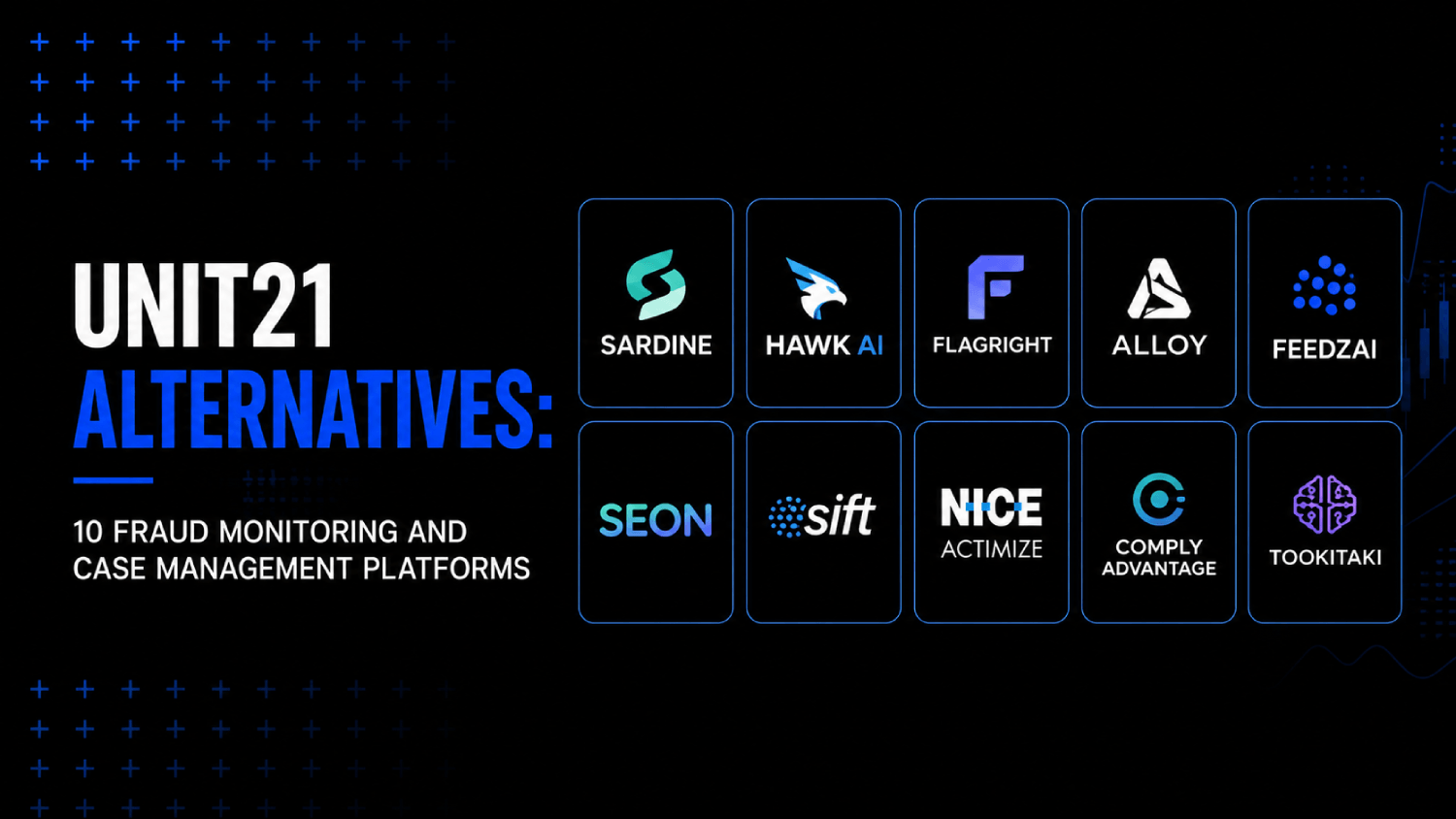
The most credible Unit21 alternatives are Sardine, Hawk AI, Flagright, Alloy, Feedzai, SEON, Sift, NICE Actimize, ComplyAdvantage, and Tookitaki. Each serves a different buyer profile: Sardine suits real-time payments fintechs, Hawk AI fits banks and credit unions needing explainable AI, Flagright targets API-first compliance teams, and NICE Actimize covers large financial institutions with complex SAR workflows. Choosing by stage and regulatory depth matters more than comparing feature counts.
Why Do Buyers Actually Leave Unit21?
Unit21 built its reputation on giving fraud and compliance teams a no-code interface to write detection rules, manage investigation cases, and file regulatory reports without needing engineering resources. That positioning won it customers at Brex, Chime, Crypto.com, and Green Dot. For teams moving from spreadsheets or manual processes, it represented a genuine step forward.
Three friction points generate most of the replacement searches. First, pricing. Unit21 does not publish pricing publicly, which means contract negotiations start opaque and tend to escalate at renewal when transaction volumes grow. Teams that scaled quickly found themselves renegotiating annual contracts under pressure. Second, rule flexibility. The no-code builder is fast to get started with, but fraud teams that need deeply nested logic, multi-entity graph traversal, or sub-100ms real-time decisions often hit its ceiling. Third, AML depth. Unit21’s SAR filing workflow is functional, but teams operating in highly regulated verticals , MSBs, crypto exchanges, lending , sometimes find the typology coverage and watchlist management thinner than dedicated AML platforms.
A fourth driver appears less often but matters for acqui-hire or M&A scenarios: data portability. Buyers who built years of case history inside Unit21 sometimes discovered that exporting structured investigation data in a usable format required custom work. Before evaluating any replacement, that portability question belongs at the top of the due diligence list. The FintechSpecs vendor evaluation framework covers exactly this type of exit-clause and data-ownership check.
How to Segment These Alternatives Before You Read Them
Listing ten platforms in alphabetical order with identical feature bullets is how most comparison pages bury the useful information. The FintechSpecs Use-Case Segmentation Model organizes alternatives into four buckets, each with a distinct buyer profile, so you can skip the buckets that do not apply.
Bucket 1: AML-first compliance platforms. Built for regulated institutions where SAR filing, typology coverage, and audit-trail integrity are the primary outputs. Best fit: banks, credit unions, MSBs, crypto exchanges with FinCEN obligations. Platforms here: NICE Actimize, ComplyAdvantage, Tookitaki.
Bucket 2: Fraud-signal detection engines. Built for high-velocity consumer transaction decisioning where false-positive rates and checkout conversion matter as much as fraud catch rates. Best fit: e-commerce, card issuers, BNPL. Platforms here: Sift, Feedzai, SEON.
Bucket 3: Developer-native orchestration layers. Built for product and engineering teams that want to own the decisioning logic and treat the platform as infrastructure rather than a SaaS application. Best fit: seed-to-Series B fintechs building proprietary risk stacks. Platforms here: Sardine, Flagright, Alloy.
Bucket 4: Investigation and case management suites. Built for fraud operations teams that run large volumes of manual review and need workflow automation, analyst productivity tooling, and reporting. Best fit: mature fraud ops teams at Series C and beyond. Platforms here: Hawk AI, and overlapping coverage from NICE Actimize.
What Is the Migration Risk for Each Category?
Migration risk in fraud infrastructure is not symmetric. Moving from one AML platform to another mid-year creates regulatory exposure if there is any gap in SAR filing continuity. Moving between detection engines is operationally disruptive but carries no direct regulatory penalty. Understanding which type of risk you face changes how aggressively you should negotiate a parallel-run period.
| Platform | Category | Primary Migration Risk | Parallel Run Recommended |
|---|---|---|---|
| Sardine | Developer-native orchestration | Rule logic re-implementation | 60 days |
| Hawk AI | Investigation suite / AML | Model retraining on new data | 90 days |
| Flagright | Developer-native orchestration | API schema mapping, case history export | 30-60 days |
| Alloy | Developer-native orchestration | Workflow reconfiguration, KYC data migration | 60 days |
| Feedzai | Detection engine | ML model calibration period | 90 days |
| SEON | Detection engine | Low , modular, additive deployment common | 30 days |
| Sift | Detection engine | Signal ingestion re-mapping | 45 days |
| NICE Actimize | AML-first / investigation | SAR filing continuity, data warehouse migration | 180 days minimum |
| ComplyAdvantage | AML-first | Watchlist matching reconfiguration | 60 days |
| Tookitaki | AML-first | Typology library onboarding time | 90 days |
The parallel run estimates above are illustrative based on category complexity, not vendor-published SLAs. Validate the specific timeline with your vendor during procurement. Teams at regulated companies should also read the Fintech Product and Compliance Readiness Checklist before committing to a migration window.
Bucket 1: AML-First Compliance Platforms
NICE Actimize
NICE Actimize is the institutional-grade option here. It covers the full AML workflow: transaction monitoring, customer risk scoring, SAR/CTR filing, and case management , with a depth of typology coverage built specifically for Tier 1 and Tier 2 financial institutions. Teams that need OCC or FinCEN audit trails with documented model governance will find it defensible in ways that lighter platforms are not.
The trade-off is implementation weight. NICE Actimize deployments at large banks are measured in months, not weeks, and typically require dedicated professional services engagement. For a Series B fintech, it is likely overkill and cost-prohibitive.
Best for: Banks, credit unions, and large MSBs with dedicated compliance operations teams and a need for regulatorily defensible model documentation.
ComplyAdvantage
ComplyAdvantage differentiates on its proprietary watchlist and adverse media data layer. Where many platforms rely on third-party sanctions and PEP feeds, ComplyAdvantage builds and maintains its own entity graph, which it claims updates more frequently than standard OFAC/UN feeds. For teams where false positives on name screening are the primary pain point, that data freshness argument is worth testing in a proof of concept.
The transaction monitoring module is less mature than the screening capabilities. Teams that need both screening and deep behavioral monitoring sometimes end up using ComplyAdvantage for screening alongside a separate detection layer.
Best for: Fintechs and payment companies where sanctions screening and PEP monitoring are the primary compliance obligation, and transaction monitoring is a secondary need.
Tookitaki
Tookitaki takes a federated learning approach to AML. Its Anti-Money Laundering Suite includes a Typology Repository , a shared, community-updated library of money laundering patterns that clients can apply to their own data without sharing raw transaction records. The model is unusual in the market and directly addresses the cold-start problem new platforms face when their training data is thin.
Onboarding the typology library takes time, and the platform is positioned at regulated financial institutions rather than early-stage fintechs.
Best for: Banks and licensed fintechs that want ML-driven typology detection without building proprietary training datasets from scratch.
Bucket 2: Fraud-Signal Detection Engines
Sift
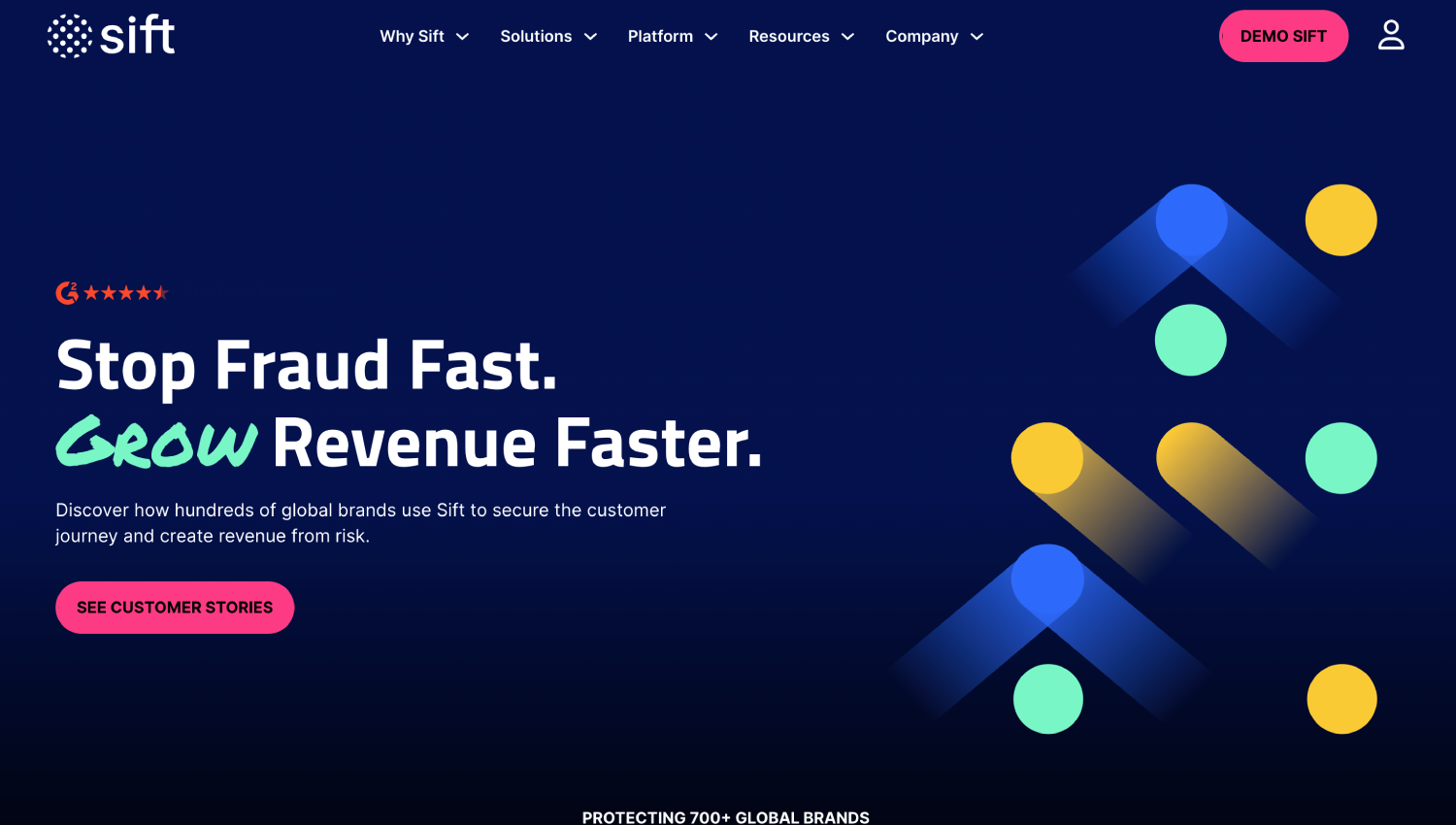
Sift focuses on account-level fraud signals: account takeover, payment fraud, promotion abuse, and content integrity. Its network data spans a large base of e-commerce and consumer app transactions, which gives its models signal density that helps new clients calibrate faster than they would with a clean-slate ML platform.
Sift’s case management and SAR filing capabilities are limited compared to Unit21. Teams replacing Unit21 specifically for its compliance workflow will find Sift covers the detection side well but requires a separate tool for investigation and regulatory reporting. Sift does not publish pricing publicly.
Best for: Consumer fintech apps and marketplaces where account takeover and payment fraud are the dominant risk vectors, and AML obligations are handled separately.
Feedzai
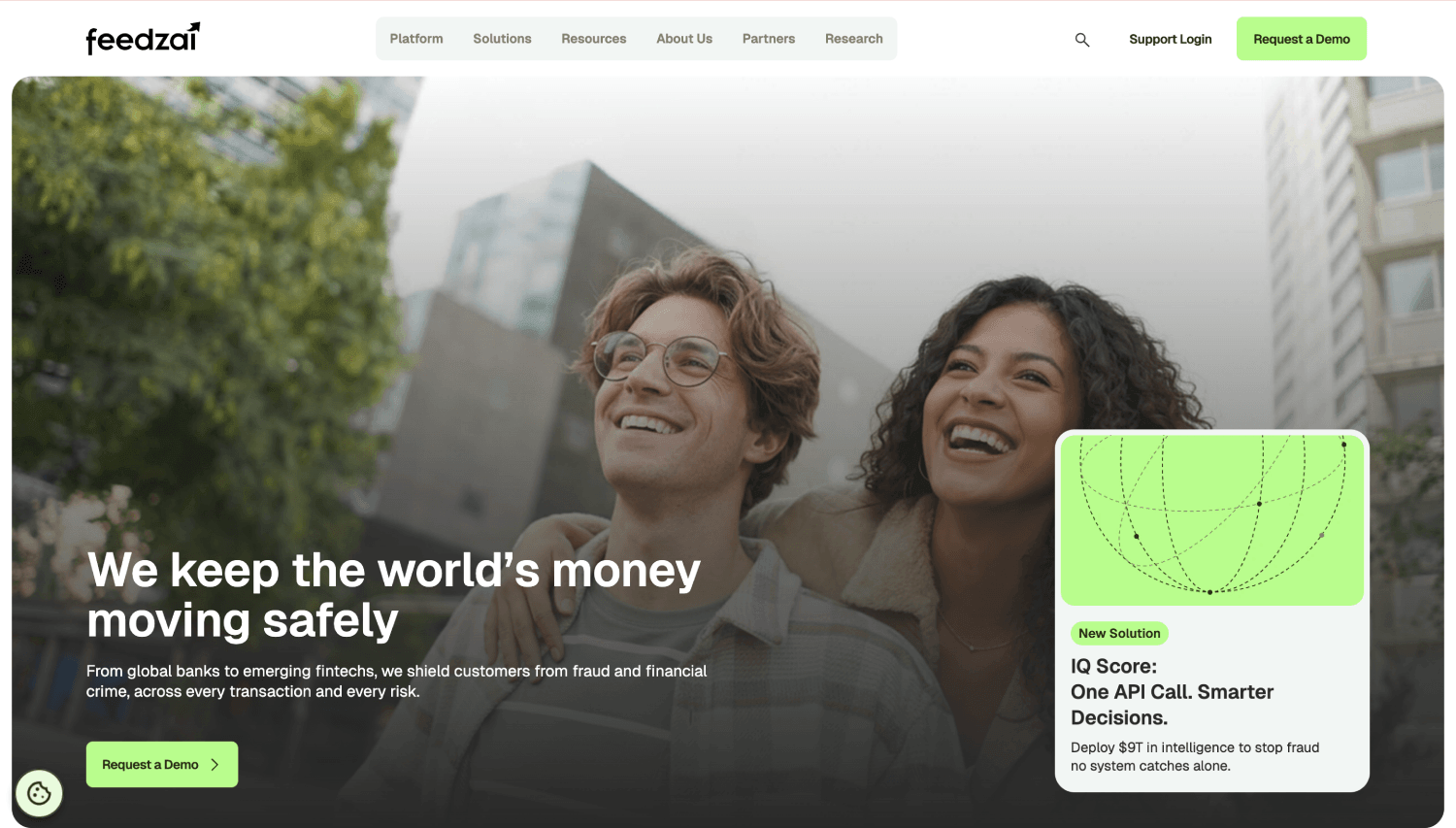
Feedzai is built for high-volume real-time transaction scoring, primarily targeting banks and card networks. Its ML models are designed for sub-100ms decisioning at scale, which matters for card authorization environments where latency directly affects approval rates. Feedzai also publishes explainability tooling for its models, which has become a compliance requirement in some jurisdictions.
The platform is enterprise-oriented. A Feedzai deployment typically involves a professional services engagement and is not designed for self-serve onboarding. Teams at growth-stage fintechs will find the sales cycle and implementation timeline comparable to NICE Actimize.
Best for: Banks, card issuers, and payment processors running real-time card authorization decisioning at high transaction volumes.
SEON
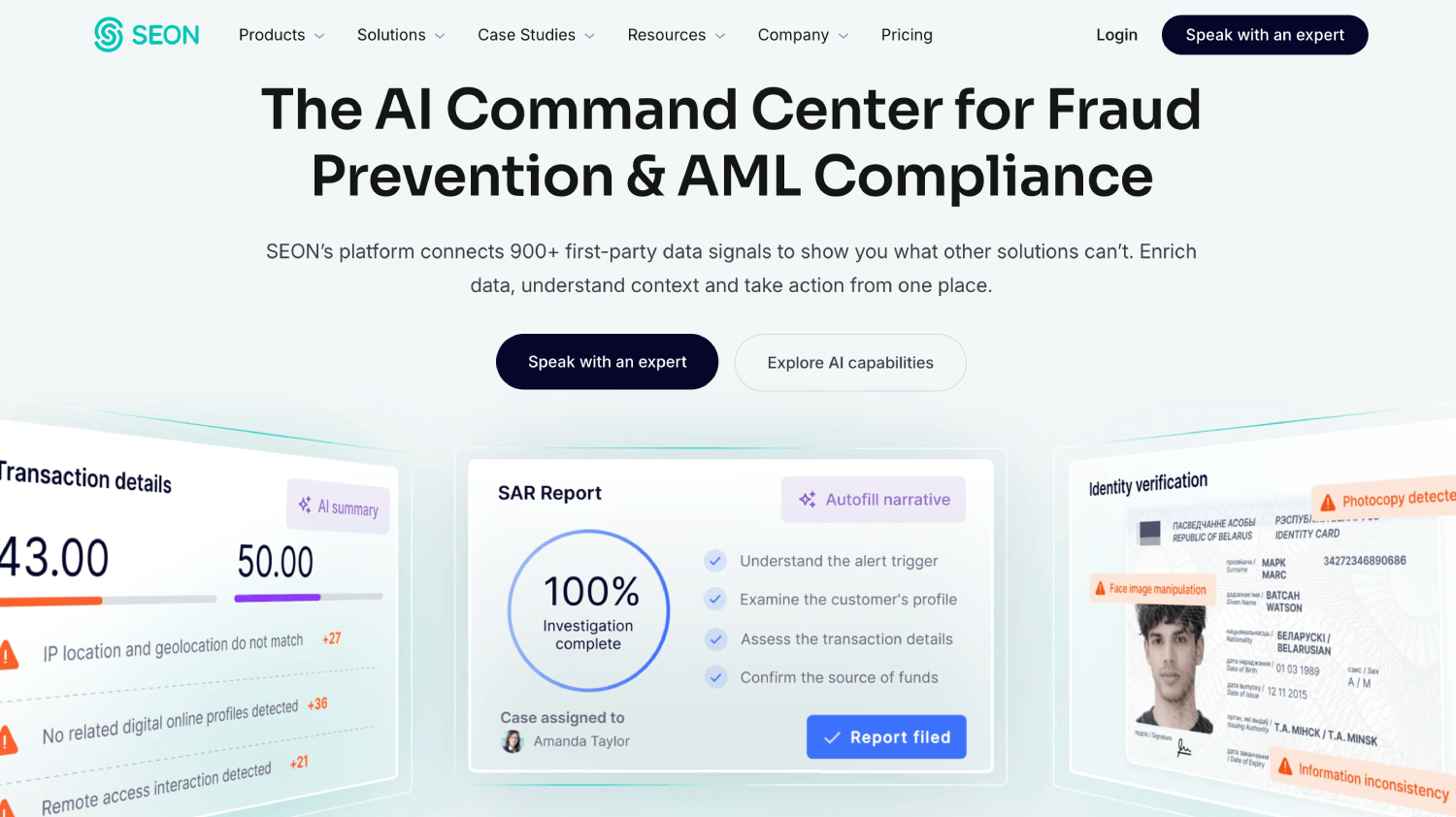
SEON takes a modular, API-first approach to fraud detection, combining device intelligence, email and phone profiling, IP analysis, and behavioral signals into a scoring layer that can be dropped into existing stacks without a full platform replacement. That modularity is its biggest differentiator: many teams add SEON alongside an existing tool to fill a signal gap rather than replacing their entire stack.
SEON publishes a transparent pricing model on its website, with a free tier for low-volume testing and paid plans at rates listed on SEON’s public pricing page. For teams that want to run a proof-of-concept before committing, that accessibility matters. Case management is not a SEON strength , it is a detection layer, not an investigation workflow tool.
Best for: Teams that want to augment an existing fraud stack with additional signal layers, or early-stage fintechs that need fraud scoring without full platform overhead.
Bucket 3: Developer-Native Orchestration Layers
Sardine
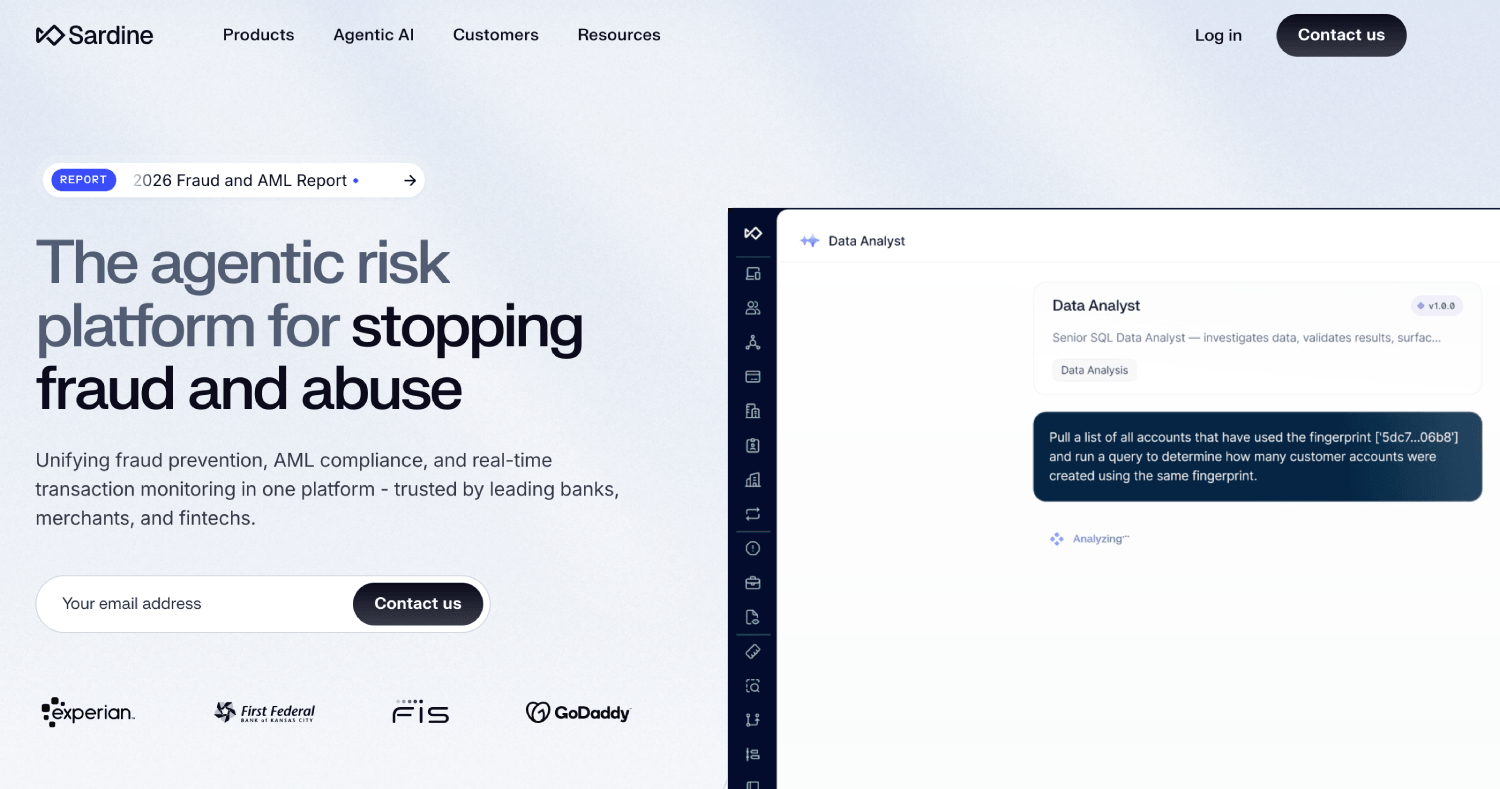
Sardine was built specifically for real-time payments fraud , ACH, crypto on-ramps, and instant transfer use cases where the window for decisioning is measured in seconds and chargebacks are irreversible. Its device intelligence layer captures behavioral biometrics during the session, not just at the transaction moment, which gives it signal depth that snapshot-based approaches miss.
Sardine also covers AML transaction monitoring, making it one of the few platforms in this list that genuinely competes with Unit21’s combined fraud-plus-AML positioning rather than covering only one side. Pricing is not publicly published. The platform is best suited for fintechs processing payments in high-risk corridors where traditional rule-based systems generate unacceptably high false-positive rates.
Best for: Crypto exchanges, real-time payment platforms, and fintech lenders where instant fund movement creates irreversible fraud exposure.
Flagright
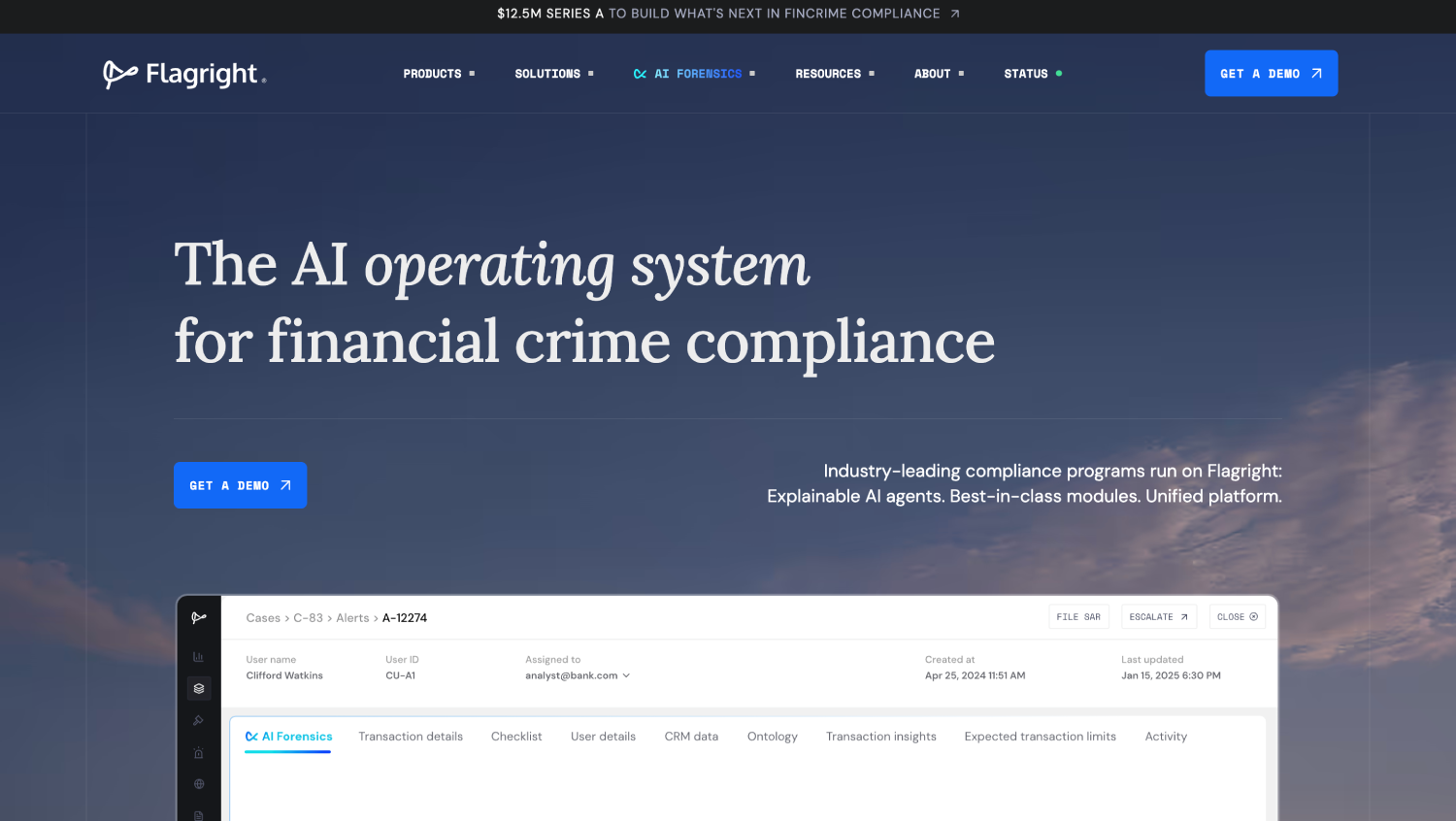
Flagright is a fully API-native AML compliance and fraud detection platform built for fintech companies that want to own their compliance logic without standing up on-premise infrastructure. It covers transaction monitoring, customer risk scoring, SAR case management, and real-time payment screening in a single API-first layer , with a no-code rule builder for compliance teams and a programmable API for engineers who need custom logic.
What separates Flagright from heavier alternatives in this category is deployment speed. The platform is designed for production-ready onboarding in days rather than months, which matters for growth-stage fintechs that cannot absorb a six-month implementation cycle. Its case management workflow includes built-in SAR preparation tools and audit trails structured for FinCEN and FCA submissions.
Flagright’s AML typology library is continuously updated, and its alert queue includes explainability outputs that compliance officers can reference during examiner reviews , a detail that becomes important once a company reaches the Series B stage and starts facing more rigorous regulatory scrutiny. For teams comparing it directly against Unit21, the primary functional difference is Flagright’s API-first architecture: engineering teams can write custom rule logic at the API layer rather than being constrained to a visual rule builder.
Pricing is not published publicly. Flagright targets fintechs at the seed-through-Series B stage, and its contract structure is designed to accommodate companies scaling transaction volumes without punitive tier jumps. Teams evaluating it should ask specifically about volume-based pricing bands and what happens at contract renewal when monthly transaction counts double.
Best for: API-first fintechs at seed to Series B that need combined AML and fraud coverage in a single platform, fast deployment, and compliance workflows that satisfy FinCEN or FCA reporting obligations.
Alloy
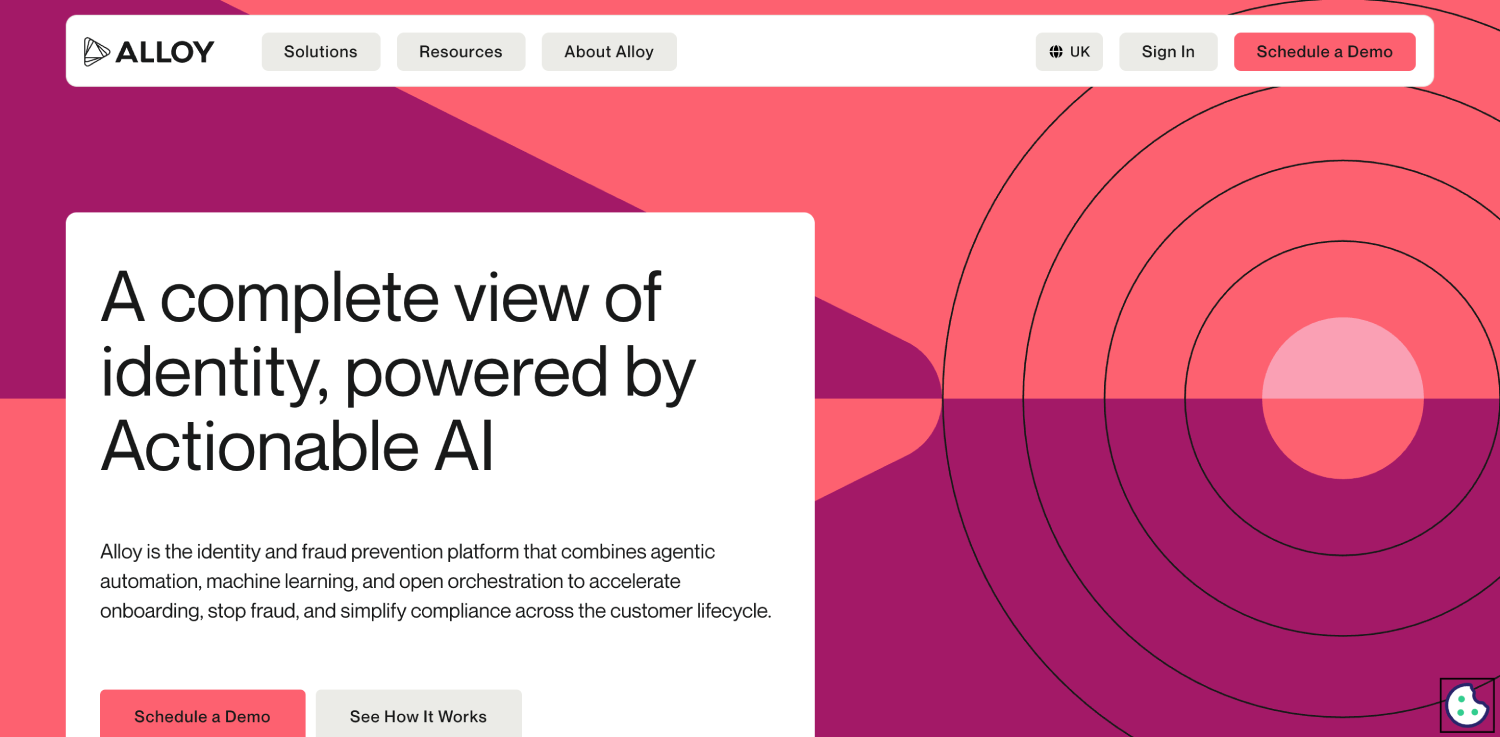
Alloy approaches the space from identity decisioning rather than fraud detection. Its platform orchestrates KYC, KYB, transaction monitoring, and ongoing customer screening through a unified decision engine , which means teams that already use Alloy for onboarding can extend it into ongoing fraud and AML monitoring without adding a second vendor. That single-vendor continuity has real operational value: the customer risk profile built at onboarding stays live and informs downstream transaction decisions.
Alloy is stronger on the identity and onboarding side than on deep fraud behavioral analytics. Teams replacing Unit21 specifically for its transaction monitoring rule engine may find Alloy’s monitoring less configurable for complex behavioral detection. The Alloy vs. Persona comparison on FintechSpecs covers the identity orchestration trade-offs in more detail.
Best for: Fintechs that already use or are evaluating Alloy for KYC/KYB and want to consolidate identity, onboarding, and ongoing transaction monitoring into one vendor relationship.
Bucket 4: Investigation Suite with Hybrid Positioning
Hawk AI
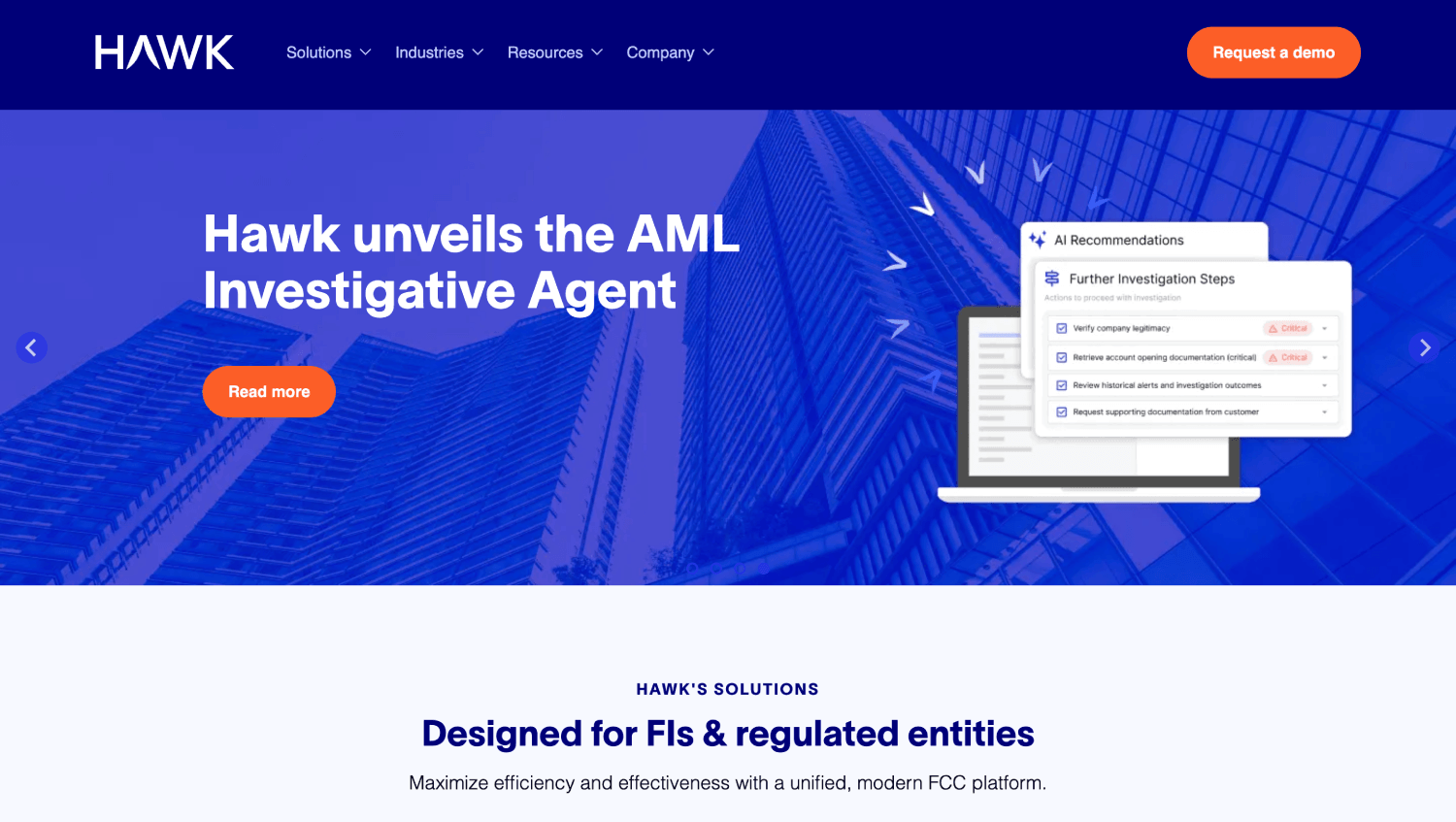
Hawk AI sits at the intersection of AML compliance and analyst productivity. Its platform combines ML-based transaction monitoring with an investigation case management interface built specifically around analyst workflows , alert triage, case escalation, SAR drafting, and regulatory reporting are treated as first-class features rather than bolted-on additions.
Hawk AI’s positioning around explainable AI is notable. Its models generate human-readable rationale for each alert, which compliance officers can include in SAR narratives and produce during regulatory examinations. That explainability output is a differentiator compared to platforms that surface a risk score without a documented reason chain. Hawk AI targets banks, payment institutions, and fintechs in regulated markets.
Best for: AML compliance teams where analyst productivity and audit-defensible model explainability are the primary selection criteria, particularly at Series B and beyond.
Head-to-Head Summary: Unit21 vs the Field
All platforms in this comparison except SEON do not publish pricing publicly , contracts are negotiated directly through sales teams. The table below reflects that consistently. SEON is the only platform with transparent published tiers.
| Platform | Best For | Unit21 Gap It Fills | Where It Falls Short vs Unit21 | Pricing Transparency |
|---|---|---|---|---|
| Sardine | Real-time payments, crypto on-ramps | Behavioral biometrics + AML in one layer | Less mature case management UI | Not public |
| Hawk AI | AML teams needing explainable AI | Analyst workflow + explainability outputs | Smaller customer network for signal density | Not public |
| Flagright | API-first fintechs, seed to Series B | Fast deployment + programmable rule layer | Less established enterprise reference base | Not public |
| Alloy | Fintechs consolidating identity + monitoring | KYC/KYB continuity into ongoing monitoring | Less configurable behavioral detection | Not public |
| Feedzai | Banks, card issuers, real-time auth | Sub-100ms scoring at card-network scale | Heavy implementation, not self-serve | Not public |
| SEON | Augmenting existing stacks | Modular signal layer, fast API integration | No case management or SAR filing | Transparent tiers published |
| Sift | E-commerce, consumer apps, ATO | Network signal density for account fraud | Limited AML / SAR filing workflow | Not public |
| NICE Actimize | Tier 1-2 banks, large MSBs | Regulatory-defensible model documentation | Slow implementation, high cost | Not public |
| ComplyAdvantage | Sanctions and PEP screening focus | Proprietary entity data, fresher watchlists | Transaction monitoring less mature | Not public |
| Tookitaki | Banks needing ML typology coverage | Federated typology library, cold-start fix | Longer onboarding, not startup-friendly | Not public |
What Does Unit21 Actually Cost?
Unit21 does not publish pricing publicly. Contracts are typically structured around a platform fee plus per-alert or per-case pricing, with custom terms based on transaction volume and the modules enabled (transaction monitoring, case management, SAR filing). According to reviews on G2, contract values vary considerably by company stage and transaction volume , buyers consistently note that pricing escalates at renewal as volumes grow.
For any replacement evaluation, the pricing comparison that matters is total cost of ownership across three years, not the first-year contract value. A platform with lower initial licensing fees may cost significantly more when professional services, model tuning, and integration engineering are included. The 15 hidden costs analysis on FintechSpecs covers the categories most fintech teams undercount in vendor contracts.
Which Unit21 Alternative Is Best for a Crypto Exchange?
Crypto exchanges face a specific combination of risks that most traditional fraud platforms were not designed for: blockchain transaction tracing, travel rule compliance, and real-time on-ramp fraud at the fiat-to-crypto conversion point. Sardine was purpose-built for this environment and covers both the on-ramp fraud detection and AML transaction monitoring layers. ComplyAdvantage adds crypto-asset entity coverage in its screening data. For teams that need on-chain analytics alongside off-chain transaction monitoring, neither fully replaces a dedicated blockchain analytics tool , platforms like Chainalysis or TRM Labs handle the on-chain layer separately. The AML and transaction monitoring tools for crypto and Web3 guide on FintechSpecs covers that stack in detail.
Which Alternative Works for a Growth-Stage Fintech with Limited Engineering?
This is where the choice narrows quickly. NICE Actimize, Feedzai, and Tookitaki all require implementation resources that most seed-to-Series A teams cannot supply. Sift and SEON are faster to integrate but do not cover AML obligations. The realistic shortlist for a fintech with a small engineering team and both fraud and AML requirements is Flagright, Sardine, and Alloy , all three offer API-first architectures with documented onboarding paths that do not require a professional services engagement.
Teams building fraud infrastructure at this stage should also be thinking about how compliance capabilities interact with their broader infrastructure choices. The fraud detection and risk tools guide for fintech startups on FintechSpecs covers the broader stack context.
Frequently Asked Questions
What is the cost of Unit21 software?
Unit21 does not publish pricing publicly. Contracts are customized based on transaction volume, the number of platform modules enabled (transaction monitoring, case management, SAR filing), and company stage. Pricing is negotiated directly with their sales team. Buyers should request itemized quotes that separate platform fees from per-alert or per-case charges to make a fair comparison against alternatives.
What is the best fraud case management alternative to Unit21 for fintech teams?
Flagright and Hawk AI are the strongest case management-focused alternatives for fintech teams. Flagright suits API-first companies at seed to Series B that need fast deployment and programmable rule logic. Hawk AI targets compliance teams at Series B and beyond that need explainable AI outputs for regulatory examinations. NICE Actimize is the most defensible option for large regulated institutions but carries significant implementation overhead.
Can SEON replace Unit21 entirely?
No. SEON is a detection and scoring layer, not a full fraud and AML platform. It does not include case management, SAR filing, or AML transaction monitoring in the same way Unit21 does. SEON works well as an additive signal layer alongside an existing compliance platform, or for early-stage companies that need fraud detection before they have regulatory reporting obligations. Teams with FinCEN or FCA requirements need a platform with dedicated AML workflow tooling.
How long does it take to migrate off Unit21?
Migration timelines depend on the destination platform and how deeply Unit21 is embedded in your compliance workflow. Moving to a developer-native platform like Flagright or Sardine typically takes 30 to 60 days with a parallel run period. Moving to an enterprise AML platform like NICE Actimize can take six months or more. The primary risk for regulated companies is maintaining SAR filing continuity during the transition, not the technical integration itself.
Which Unit21 alternative has the most transparent pricing?
SEON is the only platform in this comparison that publishes transparent pricing tiers on its public pricing page. All other alternatives , Sardine, Hawk AI, Flagright, Alloy, Feedzai, Sift, NICE Actimize, ComplyAdvantage, and Tookitaki , use custom pricing negotiated through their sales teams. For budget planning purposes, SEON’s published pricing provides a useful benchmark for the detection-layer component of a fraud stack.
Is Alloy a direct Unit21 replacement?
Alloy is a partial replacement. It covers identity decisioning, KYC, KYB, and transaction monitoring , which overlaps substantially with Unit21’s feature set. Alloy’s strongest differentiation is the continuity between onboarding identity data and ongoing transaction risk scoring. Teams that also need deep behavioral fraud analytics or complex AML typology detection may find Alloy’s monitoring layer less configurable than Unit21’s rule builder, and may need to supplement it with a dedicated detection layer.
What is the best Unit21 alternative for a company that only needs transaction monitoring?
For pure transaction monitoring without the case management and SAR filing overhead, ComplyAdvantage covers AML screening well, and Sardine covers real-time payment fraud monitoring. If the requirement is specifically AML transaction monitoring for FinCEN compliance, Hawk AI and Tookitaki are purpose-built for that workflow. The AML transaction monitoring software guide on FintechSpecs covers this category in more depth.
What Should You Actually Do Next?
The most common mistake in this evaluation is treating all ten platforms as comparable and running an RFP across the full list. That process generates months of sales calls and a decision that often defaults to the most familiar brand rather than the best fit. The more productive approach is to apply the Use-Case Segmentation Model above first: identify your bucket, then run a proof of concept against two or three platforms in that bucket with your actual transaction data.
For growth-stage fintechs replacing Unit21 specifically because of pricing pressure, the negotiating insight that most teams miss is this: the point of influence is not your current volume, it is your projected volume growth. Platforms that price on current transaction counts will renegotiate aggressively at renewal. Any contract you sign should include a pricing cap or a pre-negotiated schedule for volume bands , otherwise the economics that made a platform attractive at signing can deteriorate significantly within 18 months.
If you are at the stage where compliance infrastructure choices compound into larger business risks, the most expensive risk mistakes fintech founders make is worth reading before you finalize a vendor. The platform choice matters, but the contract structure around it often matters more.