
The Independent Community Bankers of America (ICBA) sued the Office of the Comptroller of the Currency (OCC) on Friday, Oct. 2, 2026. The suit asks a federal court to strike down the rule that lets national trust banks run mostly non-fiduciary businesses such as crypto custody, trading, and stablecoin issuer services. If you build on, partner with, or are applying for one of these charters, the legal ground under the model is now contested.
- ICBA filed Independent Community Bankers of America v. Office of the Comptroller of the Currency, Case 1:26-cv-03441, in the U.S. District Court for the District of Columbia on Oct. 2, 2026. Defendants are the OCC and Comptroller Jonathan V. Gould in his official capacity.
- The suit targets the OCC’s National Bank Chartering final rule (91 Fed. Reg. 9977, published March 2, 2026, effective April 1, 2026) and Interpretive Letter 1176 from Jan. 11, 2021.
- It also asks the court to vacate the OCC’s Feb. 13, 2026 preliminary conditional approval for Protego’s proposed National Digital Trust Company (Corporate Decision 1366).
- ICBA asks for vacatur of the rule and the letter, plus an injunction that would bar the OCC from using either one “to grant or conditionally approve any charter.”
- The complaint states the OCC has approved or conditionally approved 21 trust banks under the current administration, at least 13 of them crypto companies.
- Nothing changes on day one. A complaint does not suspend any charter, and the OCC told CoinDesk it “does not comment on litigation.”
For the past year, the national trust charter has been the federal on-ramp of choice for stablecoin issuers, digital asset custodians, and agent-finance startups. FintechSpecs covered the latest batch in OCC Approves Three Digital-Asset Trust Banks in One Day. This lawsuit is the first direct court challenge to the legal theory behind that wave.
For operators, the practical question is narrow. You need to know which charters and business plans the suit could reach, how long it is likely to take, and what to put in contracts while it runs.
What ICBA filed on Oct. 2, 2026
ICBA filed a 39-page complaint under the Administrative Procedure Act (APA). Counsel of record is Hunton Andrews Kurth LLP. The core allegation is that the OCC “has far exceeded its limited statutory authority to charter trust banks that perform certain fiduciary activities.”
Per the ICBA statement, President and CEO Rebeca Romero Rainey said: “Congress did not create the national trust charter as a side door into the banking system for crypto firms seeking the credibility of a federal bank charter.” ICBA argues these banks avoid Community Reinvestment Act obligations, consolidated supervision, capital and liquidity standards, and FDIC insurance that apply to insured depository institutions.
The complaint frames the legal question in one sentence. In ICBA’s reading of the National Bank Act, the OCC can charter only three kinds of national banks: deposit-taking banks, bankers’ banks, and trust banks that provide fiduciary services.
Operator take: The suit attacks the “neither depository nor fiduciary” business model. A charter whose core business lines are non-fiduciary custody, trading, lending, or issuer services sits closest to the argument.
What the OCC rule changed
The final rule amended 12 CFR 5.20 by replacing the phrase “fiduciary activities” with “the operations of a trust company and activities related thereto.” That wording copies the statutory text in 12 U.S.C. 27(a). The OCC’s Bulletin 2026-4 says the rule “would neither expand nor contract the OCC’s authority to charter a national bank.”
The OCC’s reasoning, stated in the Federal Register preamble, rests on four points:
- Congress used “trust company” in section 27(a) and “fiduciary powers” in 12 U.S.C. 92a, so the OCC reads them as different terms.
- National trust banks have long done non-fiduciary custody. The OCC says they hold nearly $2 trillion in custody or safekeeping accounts.
- The OCC supervises about 60 national trust banks, and most are uninsured.
- The OCC will decide whether each proposed activity fits “on a case-by-case basis” during licensing review.
The preamble also anticipates a court fight. Citing Loper Bright Enterprises v. Raimondo (2024), the OCC wrote that any party with standing who disputes a charter’s legality can take it to the courts, which “must exercise their independent judgment.” ICBA has now done that.
The three counts in the complaint
| Count | Target | ICBA’s theory |
|---|---|---|
| Count I | Final rule (91 Fed. Reg. 9977) | Exceeds National Bank Act authority because the OCC cannot charter banks that are neither depository nor fiduciary. ICBA invokes the major questions doctrine and says the rule is arbitrary and capricious for not responding to comments and for denying a change in position. |
| Count II | Interpretive Letter 1176 (Jan. 11, 2021) | Same statutory argument, plus a procedural one: IL 1176 functions as a rule and was issued without APA notice and comment. |
| Count III | Protego’s National Digital Trust Company approval (CD 1366) | The approval exceeds statutory authority because the bank’s core lines are non-fiduciary. ICBA also says the OCC failed to address comments on safety, competition, and separation of banking and commerce. |
The prayer for relief asks the court to declare the rule, IL 1176, and the Protego approval unlawful and to vacate all three. It also asks for orders barring the OCC from using the rule or IL 1176 to grant or conditionally approve any charter.
Why Protego is the named test case
Per Corporate Decision 1366, Protego Holdings Corporation of Seattle plans four core business lines, primarily related to crypto assets: a custody platform, a trading platform, a lending and borrowing platform, and an issuer services platform. The complaint says the OCC’s letter is explicit that these core services will be provided in a non-fiduciary capacity.
The OCC’s conditions in CD 1366 include at least $15 million in tier 1 capital, with the greater of 50% of tier 1 or $7.5 million held in Eligible Liquid Assets. The bank must also hold 180 days of operating expenses in Eligible Liquid Assets. If capital is not raised within 12 months or the bank does not open within 18 months, the approval expires.
The complaint also recounts Protego’s earlier history. It says a prior OCC conditional approval from 2021 expired in 2023 without the bank opening.
Operator take: ICBA picked the approval with the most non-fiduciary core business and the most history. Business plans built around fiduciary custody give the statutory argument less to grab, though only the court can draw that line.
Which charters sit in the blast radius
Only Protego’s approval is named for vacatur. The broader request to bar the OCC from using the rule to “grant or conditionally approve any charter” is what matters for everyone else.
OCC trust charter actions referenced in public records include:
- Dec. 12, 2025: OCC News Release 2025-125 announced conditional approvals for five national trust bank applications. They covered Circle’s First National Digital Currency Bank and Ripple National Trust Bank as new charters, plus conversions for BitGo, Fidelity Digital Assets, and Paxos.
- Feb. 13, 2026: Protego’s National Digital Trust Company received preliminary conditional approval (CD 1366).
- April 2, 2026: Coinbase National Trust Company received preliminary conditional approval (CD 1370).
- July 10, 2026: Circle announced final OCC approval for First National Digital Currency Bank, N.A., to operate as Circle National Trust. Circle says it will offer fiduciary digital asset custody on opening.
- Sept. 18, 2026: Bastion, Catena, and Agora received conditional or preliminary conditional approvals, covered in our Bastion, Catena, Agora explainer.
Our reading of the requested relief: if a court granted it as written, the order could reach charters that still need final OCC approval to open. That is an inference from the prayer for relief. Courts often narrow remedies, and the OCC has not yet responded.
How this collides with GENIUS Act timing
The GENIUS Act lists uninsured national banks chartered by the OCC as one of three types of federal qualified payment stablecoin issuers. That is a big reason the national trust charter became attractive in the first place.
The complaint states the Act takes effect on Jan. 18, 2027, or 120 days after final implementing regulations, whichever comes first. The Federal Reserve has already proposed its rules, which we covered in Fed Proposes GENIUS Act Stablecoin Rules. ICBA argues the GENIUS Act does not amend sections 27(a) or 92a and “could not cure any problem with the charters that the OCC has already issued.”
The Bank Policy Institute did not join the suit, but it published a statement quoted by CoinDesk. Its position is that firms engaging in traditional banking activities “should seek full-service banking charters.”
Operator take: Issuers planning a federal path through an OCC trust bank now carry litigation timing risk on top of GENIUS rulemaking risk. Keep a second path, such as an insured bank subsidiary or a state route, in the plan until the case is clearer.
What happens next in court
APA challenges like this one are usually decided on the agency’s administrative record, often through cross-motions for summary judgment. Under Federal Rule of Civil Procedure 12(a)(2), a U.S. agency generally has 60 days after service to respond to a complaint.
As of Oct. 5, 2026, the public materials we reviewed show the complaint asking for final relief. We did not find a separate motion for a preliminary injunction in ICBA’s posted filings. Any decision on the merits is therefore unlikely to arrive within weeks, and an appeal could follow either way.
Three signals are worth watching:
- Whether the OCC keeps issuing trust charter approvals at the same pace while the case is pending.
- Whether Protego or other charter holders move to intervene.
- Whether ICBA asks for interim relief if the OCC grants more final approvals.
Operator take: what to do this quarter
If a vendor or partner is a national trust bank (or plans to be one)
- Ask for the current OCC status letter and confirm whether approval is preliminary, conditional, or final.
- Ask how the vendor’s core activities split between fiduciary and non-fiduciary work in its approved business plan.
- Add contract language for charter suspension, rescission, or court vacatur, including notice timing and a migration path.
- Keep a named fallback custodian or issuer under a different charter type. Our institutional digital asset custody providers and stablecoin issuance platforms lists are starting points.
If you are applying for a charter
- Expect commenters to cite this complaint in your application file.
- Document the fiduciary component of your business plan, and how each non-fiduciary line relates to trust company operations.
- Keep state licensing alive in parallel. See money transmitter license costs by state for the budget side.
If you run on a sponsor bank today
- ICBA represents community banks, and many sponsor banks are community banks. Expect the competitive argument in this suit to show up in partner conversations about crypto and stablecoin programs.
- Recheck your program agreement for restrictions on digital asset activity. Our sponsor bank guide and sponsor bank shortlist cover how those agreements usually work.
Diligence questions for your team and counsel
- Which of our vendors hold OCC trust charters, and at what approval stage?
- Would any of our critical flows stop if a preliminary approval were rescinded or blocked from final approval?
- Does our GENIUS Act plan assume an OCC trust bank as the issuer of record?
- What notice do our contracts give us if a regulator or court changes a vendor’s charter status?
- Which second path, insured bank, state trust, or state money transmitter, can we stand up within six months?
Contrast map: how this differs from recent FintechSpecs coverage
| Story | What it covers | Buyer question |
|---|---|---|
| ICBA v. OCC (this post) | Court challenge to the OCC trust charter rule, IL 1176, and Protego’s approval | Is my trust bank partner or charter plan exposed to litigation risk? |
| OCC Bastion, Catena, Agora approvals | Three Sept. 18, 2026 OCC charter decisions and their conditions | What did these three banks get approved to do, and on what clock? |
| Fed GENIUS Act NPRs | Federal Reserve proposed rules for payment stablecoin issuers | What reserve, capital, and application rules apply? |
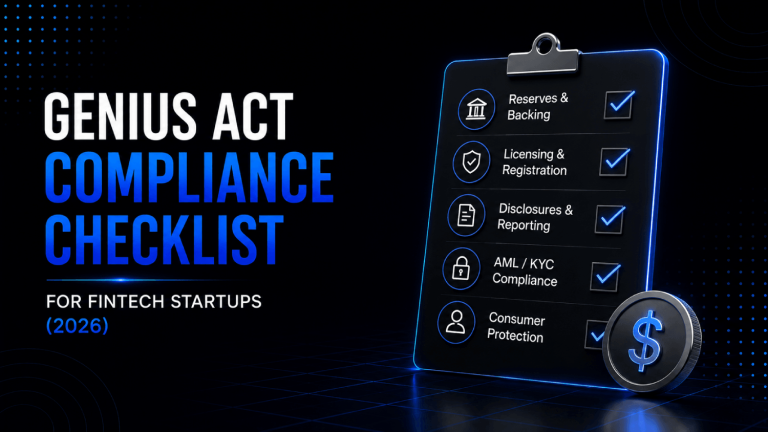
| GENIUS Act compliance checklist | Startup compliance steps under the GENIUS Act | What do I need to build before the Act applies? |
The take: the charter wave now has a court date coming
The OCC built its trust charter expansion on a reading of a 1978 statutory sentence, and it told the public in the Federal Register that courts would have the final word. ICBA has now put that reading in front of a federal judge, with Protego as the test case and every pending approval in the requested remedy.
Operator take: Keep building on live, final-approved infrastructure, contract for status changes, and maintain a second charter or license path. Revisit your exposure when the OCC files its response, likely in early December 2026 if the standard 60-day clock runs from prompt service.
FAQ
What is ICBA v. OCC about?
ICBA argues the OCC lacks authority under the National Bank Act to charter national trust banks that are neither deposit-taking nor fiduciary. The suit, Case 1:26-cv-03441 in the U.S. District Court for the District of Columbia, challenges the March 2, 2026 final rule, Interpretive Letter 1176, and Protego’s conditional approval.
Does the lawsuit suspend existing trust bank charters?
No. Filing a complaint does not suspend or revoke any charter. Any change would require a court order, and the complaint asks for relief at final judgment rather than through an emergency motion in the filings we reviewed.
Which company is named in the lawsuit?
Protego Holdings Corporation. ICBA asks the court to vacate the OCC’s Feb. 13, 2026 preliminary conditional approval of Protego’s proposed National Digital Trust Company in Seattle (Corporate Decision 1366).
Are Circle, Coinbase, Paxos, or Ripple charters directly challenged?
They are not named for vacatur. The complaint does ask the court to bar the OCC from using the rule or IL 1176 to grant or conditionally approve any charter, so pending approvals could be affected if that relief were granted as written.
What does the OCC rule actually say?
It changed 12 CFR 5.20 to describe national trust banks as limited to “the operations of a trust company and activities related thereto,” matching 12 U.S.C. 27(a). The OCC says the change neither expands nor contracts its chartering authority and that it reviews proposed activities case by case.