
- Core banking and BaaS are not the same thing. Core banking is the ledger and transaction engine at the center of a bank. BaaS is a distribution layer that sits on top of someone else’s core.
- Architecture choices made at selection time determine what a platform can do at scale. Monolithic cores retrofitted with APIs behave very differently from systems built as distributed ledgers from day one.
- The right platform depends on whether you are applying for a charter, partnering with a sponsor bank, or running a licensed institution already. These three paths require different systems.
- Mambu and Thought Machine target different buyers. Mambu fits faster, lighter deployments. Thought Machine is built for institutions that need ledger-level control and can invest in implementation.
- The “Big Three” legacy providers (Fiserv, FIS, Jack Henry) still dominate the US market for chartered banks but are rarely the right call for a net-new digital bank or fintech building original products.
The core banking platform providers best suited for modern fintechs and digital banks are cloud-native systems like Mambu, Thought Machine Vault, 10x Banking, Temenos Transact, Finacle, Nymbus, and Galileo. Each runs on a distinct ledger architecture. Selection should be driven by charter status, deployment speed requirements, and the complexity of the financial products being built, not by which platform looks most modern on a product page.
What Is the Difference Between a Core Banking Platform and Banking-as-a-Service?
Most fintech teams conflate these two categories, and that mistake leads to buying the wrong thing. A core banking platform is the system of record for financial accounts. It maintains ledger entries, processes transactions, enforces product rules (interest accrual, overdraft limits, fee schedules), and generates the regulatory reporting that chartered institutions are required to produce.
Banking-as-a-Service (BaaS) is a different layer entirely. A BaaS provider gives a non-bank company access to banking infrastructure, typically sitting on top of a sponsor bank’s charter and that bank’s own core system. You do not control the ledger. You consume it through an abstraction layer.
The practical consequence: if you buy a BaaS product, you are renting ledger capacity. If you buy or build on a core banking platform, you own the ledger design. That distinction determines whether you can offer a new product type, adjust interest calculation logic, or handle a custom settlement cycle without filing a change request with a third party. If you are still working through how BaaS economics actually work, the breakdown of the hidden economics of Banking-as-a-Service covers the cost structure most vendors do not surface upfront.
What Are the Two Ledger Architectures That Actually Matter?
Nearly every modern core banking system belongs to one of two architectural families. Understanding which family a platform belongs to tells you more about its real-world behavior than any feature checklist.
Monolithic cores with API layers
These are systems originally designed as single-process engines, often built in COBOL or early Java, later wrapped in REST APIs. The underlying data model is account-centric: a balance is a number, not a ledger of events. Most of the legacy “Big Three” platforms fall here, as do some of the earlier SaaS-era vendors. They are stable, battle-tested, and deeply embedded in US community bank infrastructure. They are also expensive to customize, because every product change touches shared processing logic.
Event-sourced, distributed ledger cores
These systems record every financial event as an immutable ledger entry. The current balance is always derived from the full event history, not stored as a single mutable figure. This design, borrowed from accounting double-entry principles and event-driven software architecture, means you can reconstruct any account state at any point in time, run retroactive product logic, and build entirely new product types by defining new event types. Thought Machine’s Vault is the most prominent public example of this approach. 10x Banking uses a similar event-sourced model.
The architectural distinction is not academic. A monolithic core that has been around for decades can process millions of transactions reliably. But adding a product that requires custom fee logic, real-time multi-currency settlement, or retroactive interest calculation typically requires a core vendor engagement that takes months and costs more than the original contract implied. An event-sourced core lets engineering teams write that logic themselves, without touching shared infrastructure.
The FintechSpecs Core Selection Filter: Four Questions Before You Shortlist
Rather than evaluating all eight platforms against every dimension at once, this framework narrows the field to two or three candidates based on structural fit. It is called the FintechSpecs Core Selection Filter.
- Charter status. Do you hold a banking license (federal or state), operate under a sponsor bank, or are you actively applying for a charter? Licensed institutions need a core that can produce Call Report data and handle FDIC-required reconciliation natively. Sponsor-bank fintechs often do not control core selection at all. Charter applicants need a core vendor that has gone through de novo bank onboarding before.
- Product complexity. Are you building commodity deposit accounts and debit cards, or do you need multi-currency wallets, dynamic interest tiers, embedded credit, or programmable treasury rules? Simpler products fit simpler cores. Complex products eventually hit the ceiling on lighter platforms.
- Time to first transaction. How quickly does the business need to process live transactions? Cloud-native SaaS cores can get a basic deposit account live in weeks. Full implementation of an event-sourced ledger core at an institution scale typically runs six to eighteen months.
- Engineering ownership appetite. Is the team prepared to write and maintain product configuration logic, or does it need a vendor that ships pre-built product templates? This is not a capability question about the platform. It is a staffing and cost question about your organization.
Run every platform in this list through those four filters before reading the individual assessments below. Two or three will survive. Those are your real options.
Which Core Banking Platform Providers Do Modern Fintechs Actually Use?
| Platform | Ledger Architecture | Deployment | Best-fit buyer | Public pricing |
|---|---|---|---|---|
| Mambu | Cloud-native SaaS, account-centric | Multi-cloud SaaS | Neobanks, digital lenders, BaaS providers | Not publicly listed |
| Thought Machine Vault | Event-sourced, smart contracts | Cloud-native (GCP, AWS, Azure) | Licensed banks, large-scale digital transformations | Not publicly listed |
| 10x Banking | Event-sourced, microservices | Cloud-native | Tier 1 and Tier 2 banks transforming legacy cores | Not publicly listed |
| Temenos Transact | Component-based, real-time | Cloud, on-premise, hybrid | Global banks, wealth management, Islamic finance | Not publicly listed |
| Finacle (Infosys) | Microservices-ready, modular | Cloud, on-premise, hybrid | Tier 2 and Tier 3 banks, emerging markets | Not publicly listed |
| Nymbus | Cloud-native SaaS | SaaS (US-focused) | US credit unions, community banks, neobank operators | Not publicly listed |
| Galileo Financial Technologies | Account and card-ledger, API-first | Cloud (SoFi-owned) | Fintechs building card and deposit products | Not publicly listed |
| Fiserv / FIS / Jack Henry | Monolithic with API wrappers | On-premise, cloud-hosted | US chartered community and regional banks | Not publicly listed |
None of these platforms publish standard pricing. Every contract is negotiated. That matters for budget planning: implementation costs, per-account fees, and support tiers are all variables, not line items.
Mambu vs Thought Machine: What Is the Real Difference for a Neobank?
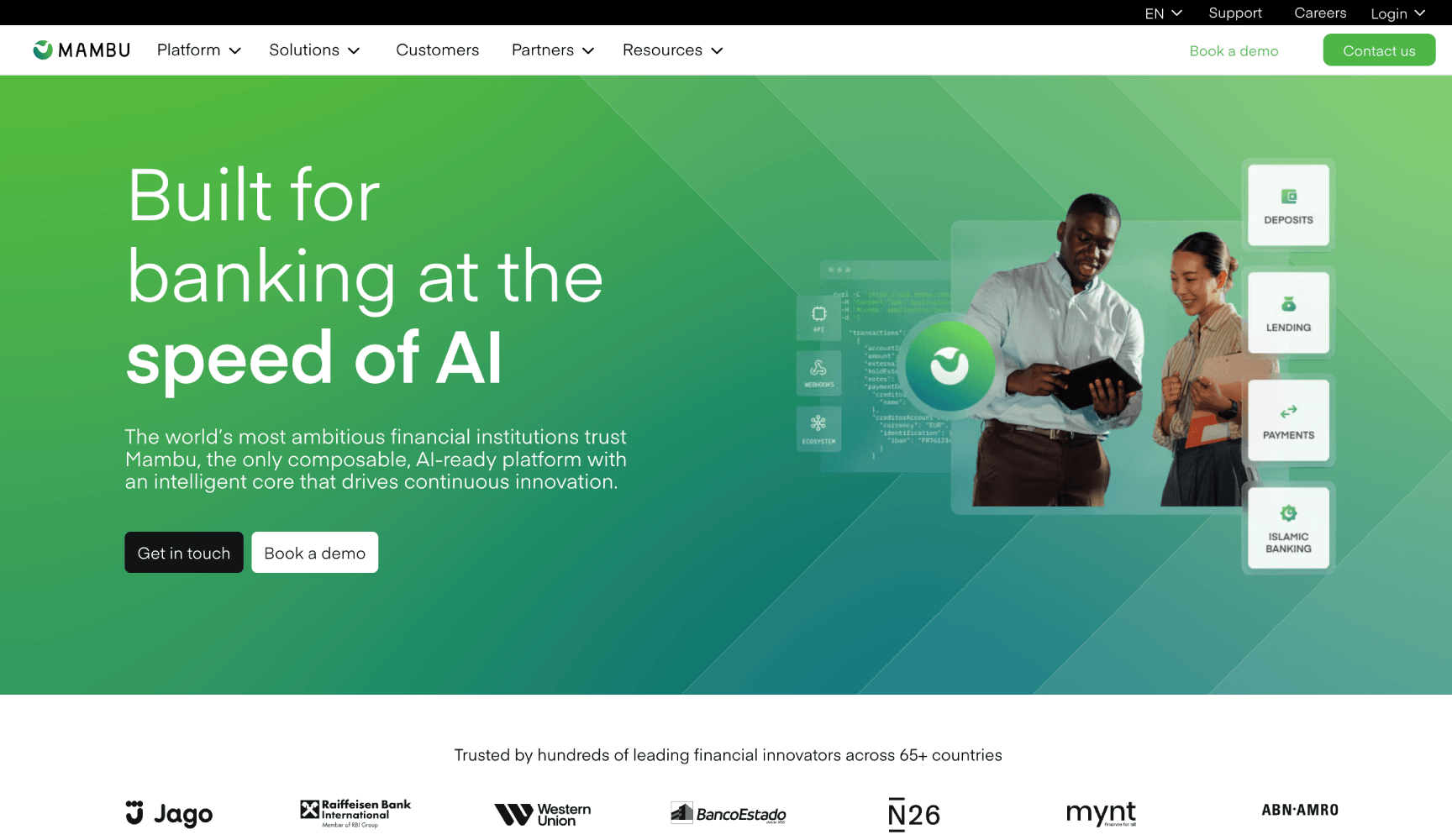
Mambu is a cloud-native SaaS core built around a product engine that lets non-engineers configure loan and deposit products through a configuration interface. It has powered neobanks across Europe, Latin America, and Southeast Asia and is frequently cited in de novo digital bank deployments because it can be stood up quickly and does not require a large platform engineering team to operate. The tradeoff is that the ledger model is account-centric: you configure products within the bounds of what the platform’s data model allows. When a product requirement falls outside that model, customization is constrained.
Thought Machine’s Vault uses a fundamentally different approach. Every financial product is defined in a programming language called Vault Smart Contracts (a Python-based DSL). The ledger records every financial event immutably. The practical result is that any financial product that can be expressed as code can be built on Vault, without waiting for the vendor to build it into the platform. That flexibility comes with a cost: your team needs engineers who can write and test Vault Smart Contracts, and implementations tend to run longer and require more coordination with Thought Machine’s professional services team. Thought Machine does not publicly disclose revenue or profitability figures, so any vendor comparison that cites specific financial performance data for the company should be verified against an official disclosure before being relied upon.
For a neobank launching its first deposit and debit product and trying to reach live transactions in under six months, Mambu is the more practical starting point. For a licensed bank that needs to replace its legacy core and wants to own product logic indefinitely without recurring vendor dependency, Thought Machine is the more defensible long-term choice. These are genuinely different products targeting different organizational capabilities, not just different price points.
What Makes 10x Banking Different From the Other Cloud-Native Cores?
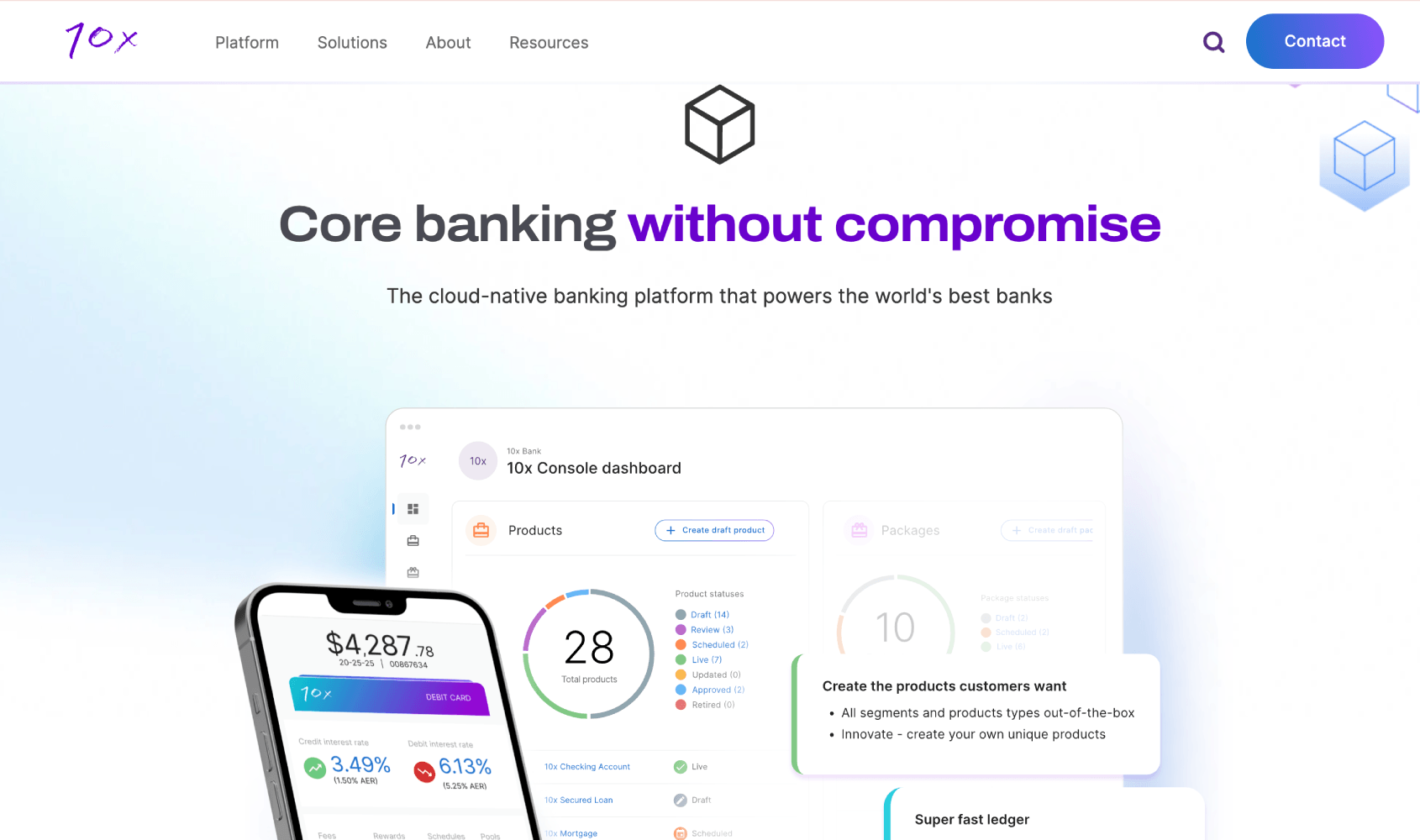
10x Banking was founded by former Barclays CEO Antony Jenkins and is explicitly positioned for incumbent banks running core transformation programs, not de novo fintechs. Its SuperCore platform uses an event-sourced architecture with real-time ledger processing and a customer-centric data model (organizing data around customers rather than accounts, which is architecturally unusual among banking cores).
10x has publicly disclosed partnerships with institutions including JP Morgan for its Chase UK digital bank launch and HSBC. That reference list tells you who it is designed to serve. A 50-person fintech without a charter and without a dedicated platform engineering team is not the target buyer. If you are that fintech and you are evaluating 10x, you are likely looking at the wrong column in the market.
Where Do Temenos and Finacle Fit in the Modern Core Conversation?
Temenos is one of the most widely deployed core banking platform providers globally, according to Gartner Peer Insights rankings that have consistently featured Temenos Core Banking near the top of the category. Its Transact platform supports retail, corporate, and wealth management products across multiple deployment modes, including cloud, on-premise, and hybrid. It is a mature, broad-capability system, which also means it carries legacy complexity in some modules.
Infosys Finacle holds a similar position in emerging markets and among mid-tier banks globally. It covers Islamic banking, trade finance, and treasury alongside standard retail and corporate banking. Like Temenos, its strength is breadth. A bank that needs to support 15 product types across multiple geographies in a single system will find Finacle’s coverage hard to replicate with a newer, narrower platform.
Neither Temenos nor Finacle is the fastest path to production for a net-new digital bank. Both require significant implementation effort and are sold through SI partners in most cases. They belong on the shortlist when the requirement is replacement of a full-service legacy core at an existing institution, not when the goal is standing up a greenfield digital bank product in months.
What Is Nymbus and Who Is It Actually For?
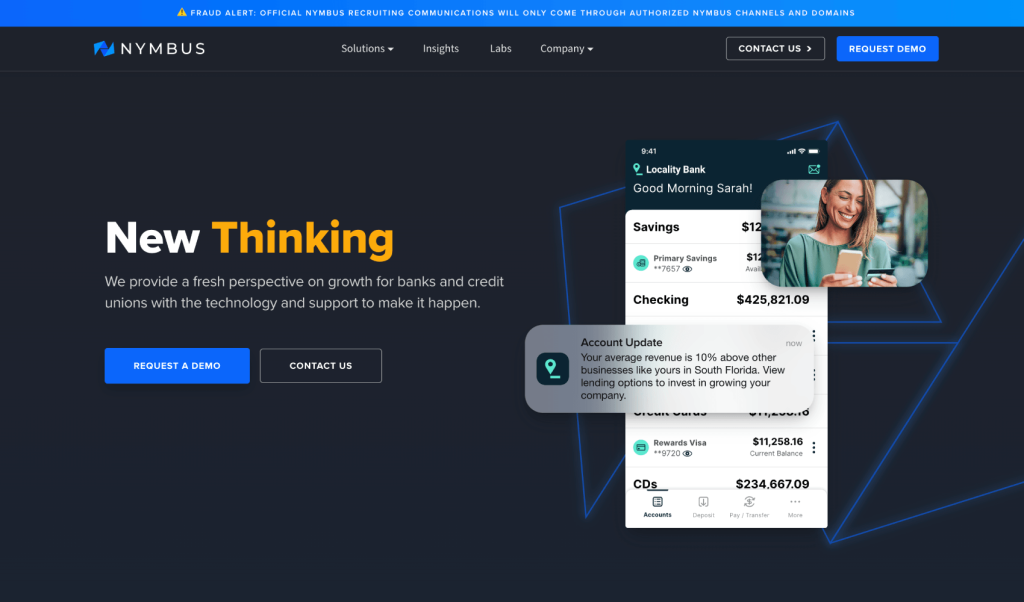
Nymbus occupies a specific niche: US community banks and credit unions that want to operate a separate digital brand without replacing their existing core. Its CUSO (Credit Union Service Organization) model and BaaS-adjacent offerings make it one of the few platforms designed from the ground up for the US chartered institution market at the sub-regional scale.
Nymbus also runs a “neobank as a service” model called Nymbus Labs, where it handles the core, compliance operations, and sponsor bank relationships on behalf of non-bank fintech brands. That places it in an unusual category: it is both a core banking platform and an operational outsourcing partner. For a US fintech that wants to operate under a bank charter partnership without building out a full compliance and operations function internally, Nymbus is one of the few vendors structured to support that model end-to-end.
What Role Does Galileo Play, and Is It a Core Banking Platform?
Galileo Financial Technologies, now owned by SoFi, sits in an interesting classification problem. It is frequently discussed alongside core banking platforms, but it functions more accurately as a card and account processing engine. It provides the ledger infrastructure for card programs and deposit accounts, handles transaction authorization, and exposes APIs for account management. It does not provide the full-service core banking functionality a chartered bank needs for regulatory reporting, general ledger reconciliation, or complex product configuration.
Galileo is reported to power a large portion of US fintech card and deposit products, including early versions of several well-known neobanks. If you are building a deposit account and debit card product on a BaaS model (with a sponsor bank holding the charter), Galileo can serve as the processing layer. If you are running a licensed bank and need a full core, it is not a direct substitute. Understanding that distinction matters when comparing vendor proposals, because the two categories are priced and scoped very differently. The detailed breakdown of the best BaaS platforms for fintech startups covers where Galileo and similar platforms fit within the sponsor bank model.
What Is the Legacy “Big Three” and Should You Consider Them?
Fiserv, FIS, and Jack Henry dominate the US market for chartered bank core systems, according to market structure data and the American Bankers Association’s 2024 Core Platforms Survey, which covered 780 bankers and 15 core providers. Their dominance among existing chartered US institutions is not in dispute. They have deep regulatory compliance tooling, long-term support infrastructure, and integration networks built over decades.
The question for a new digital bank or fintech is whether that depth is worth the cost and implementation timeline. These platforms were not designed for the architectural patterns that make modern digital banking products fast to build and iterate on. A de novo digital bank that selects Fiserv or FIS as its core is committing to an implementation model built for a different era of software delivery. That is not a disqualifying fact, but it should be a deliberate choice with eyes open, not a default because the vendor is familiar.
Illustrative Scenario: What the Core Selection Looks Like for a Series A Neobank
Consider a hypothetical: a Series A company (around 30 employees) building a SMB business banking product in the US, operating under a sponsor bank relationship, aiming to reach live customer accounts within nine months. The product roadmap includes deposit accounts, debit cards, and a basic overdraft facility, with multi-currency accounts planned for year two.
Under the FintechSpecs Core Selection Filter, this company scores as follows. Charter status: no license, operating under a sponsor bank, so the sponsor’s existing core handles some regulatory reporting. Product complexity: moderate, but multi-currency on the roadmap raises the ceiling requirement. Time to first transaction: nine months is achievable on Mambu or Galileo but tight on Thought Machine. Engineering ownership appetite: Series A team with four engineers, no dedicated platform engineers.
That profile points to Mambu for the initial launch, with a migration plan to an event-sourced core documented before the multi-currency requirement becomes a live constraint. Delaying that migration planning until multi-currency is needed is the mistake teams most commonly make. By that point, the cost of migration is much higher than it would have been at the original architecture decision. Choices made at this stage compound over years, which is why the critical mistakes when choosing fintech infrastructure are worth reviewing before any contract is signed.
How Does Deployment Model Affect Total Cost of Ownership?
Cloud-native SaaS cores like Mambu charge on a per-account or per-product basis, with contract minimums. On-premise or hybrid deployments from Temenos or legacy vendors involve license fees, infrastructure costs, and ongoing support contracts. Neither model is inherently cheaper at scale. The variable is operational overhead.
A SaaS core offloads infrastructure management, security patching, and disaster recovery to the vendor. That reduces headcount requirements inside your organization. A self-hosted or hybrid deployment gives you more control over data residency, which matters in jurisdictions with strict localization requirements, and sometimes lower per-account costs at very high volumes. Most digital banks launching today choose cloud-native SaaS for speed and operational simplicity, accepting that per-account fees will become a meaningful cost line as accounts scale into the millions.
The hidden cost that teams consistently underestimate is the implementation and configuration effort. A Mambu deployment without a qualified SI or a strong internal fintech engineering team will run over budget and behind schedule. An event-sourced core without engineers experienced in the platform’s product contract model will stall entirely. Vendor sales cycles are not calibrated to surface these costs clearly. Reading the 15 hidden costs killing fintech SaaS margins before entering a core banking contract negotiation provides useful calibration on where margin erosion starts.
Mambu vs Thought Machine: Side-by-Side Comparison
| Dimension | Mambu | Thought Machine Vault |
|---|---|---|
| Ledger model | Account-centric, configurable products | Event-sourced, programmable smart contracts |
| Product customization | Configuration-driven (no-code/low-code) | Code-driven (Vault Smart Contracts in Python DSL) |
| Engineering requirement | Low to moderate | High (dedicated platform engineers needed) |
| Typical time to first transaction | Weeks to a few months | Six to eighteen months typical |
| Best for | Neobanks, digital lenders, BaaS providers | Licensed banks, complex product portfolios |
| Geographic focus | Global | Global (strong UK and US enterprise presence) |
| Known users | N26, Tandem, and other neobanks that have publicly disclosed Mambu deployments | Lloyds Banking Group, JP Morgan (Chase UK), and SEB, per publicly disclosed partnerships |
| Pricing model | Not publicly disclosed | Not publicly disclosed |
What Are the Compliance Implications of Core Banking Platform Choice?
The core banking system is the source of truth for regulatory reporting. Choosing a platform that does not natively produce the reports your regulator requires means building or buying a reconciliation and reporting layer on top. For US-chartered banks, that includes Call Report data, BSA/AML transaction data feeds, and FDIC reconciliation. For neobanks operating under a sponsor, some of this burden sits with the sponsor, but not all of it.
Platforms like Nymbus are specifically designed for the US chartered environment and include compliance tooling as part of the package. Mambu and Thought Machine both have compliance capabilities but expect the operating institution to configure and validate them against applicable regulations. That is not a weakness. It is an architectural choice that gives more flexibility and puts more responsibility on the buyer. Teams that have not mapped their specific regulatory reporting requirements before selecting a core often discover this gap late, which is why the fintech product and compliance readiness checklist is a useful pre-selection exercise.
Frequently Asked Questions
What is the best core banking platform for a new digital bank?
For a new digital bank without an existing charter, Mambu is the most common starting point because of its relatively fast deployment and configuration-driven product engine. For a licensed institution doing a full core replacement, Thought Machine Vault or 10x Banking are the architecturally stronger choices. The right answer depends on charter status, product complexity, and how much engineering capacity the organization has to own platform configuration.
What core banking systems do modern fintechs use?
Widely deployed platforms among fintech-oriented organizations include Mambu, Thought Machine Vault, Galileo (for card and deposit processing), and Nymbus (US-focused). Larger transformation programs at established banks use Temenos Transact, Infosys Finacle, 10x Banking, and the legacy Big Three (Fiserv, FIS, Jack Henry). The distinction matters because “fintech” covers both licensed banks and non-bank technology companies with very different infrastructure needs.
What is the difference between core banking and BaaS?
Core banking is the ledger and transaction processing engine at the center of a bank. It maintains account records, processes transactions, calculates interest, and generates regulatory reports. Banking-as-a-Service is a distribution model where a non-bank company accesses banking capabilities (accounts, cards, payments) through a provider that sits on top of a licensed bank’s core. With BaaS, you consume ledger capacity. With a core banking platform, you own or operate the ledger directly.
Which banks use Thought Machine?
Thought Machine has publicly disclosed partnerships with Lloyds Banking Group, JP Morgan (for its Chase UK digital bank), SEB in Sweden, and Standard Chartered, among others. These are predominantly large licensed banking institutions rather than seed-stage fintechs, which reflects Thought Machine’s positioning as an enterprise-grade core for complex institutional deployments rather than a fast-to-deploy SaaS tool for new entrants.
How long does a core banking platform implementation take?
Implementation timelines vary significantly by platform and organizational complexity. A Mambu deployment for a single deposit product at a new digital bank can take two to four months with a prepared engineering team. A Thought Machine Vault implementation at a bank doing a full legacy core replacement typically runs twelve to eighteen months, sometimes longer. Temenos and legacy Big Three deployments at established institutions have historically run one to three years. These ranges reflect real projects, not vendor sales estimates.
Is Thought Machine profitable?
Thought Machine does not publicly disclose profitability figures. The company has raised significant venture funding across multiple rounds and operates as a private company. Whether it is currently profitable is not verifiable from public sources. Any specific profitability claim about Thought Machine in vendor comparisons or analyst reports should be treated with skepticism unless it cites a public filing or official disclosure.
What is next-generation core banking?
Next-generation core banking generally refers to platforms built on cloud-native, event-sourced, or microservices architectures, as distinct from legacy monolithic systems built on COBOL or early client-server technology. The defining characteristics are real-time processing at the ledger level, configurability without vendor-managed code changes, and deployment on commodity cloud infrastructure. Thought Machine, 10x Banking, and Mambu are the platforms most commonly cited under this label, though “next-generation” is used broadly enough that it requires verifying the underlying architecture rather than taking the label at face value.
Can a fintech use a core banking platform without a bank charter?
Yes, with important constraints. A non-bank fintech can deploy a core banking platform as its internal ledger and account management system, but it still needs a licensed bank or sponsor bank relationship to offer FDIC-insured deposits, issue payment cards under a card network, or originate loans under a banking license. The core is the technical infrastructure. The license is the legal permission to operate. These are separate requirements that must both be satisfied, regardless of which core platform is selected.
The Architecture Decision You Cannot Unwind Easily
Most infrastructure decisions in fintech are reversible with enough time and money. Core banking platform selection is less reversible than most. Migrating a live ledger with millions of account records, open loans, and active transaction histories from one core to another is one of the most operationally complex projects in financial services. Banks have failed at it. Fintechs have delayed product roadmaps for years while executing it. The cost is not just engineering time. It is customer risk, regulatory exposure during transition, and the staff attention that cannot go toward growth during that period.
That is why the FintechSpecs Core Selection Filter starts with charter status and product complexity rather than with feature comparisons. The features of a platform are largely visible in a sales process. The ledger architecture, and what it forecloses or requires from your team over five years, is not. Every team that has gone through a core migration wishes they had asked different questions at the beginning, specifically about the ceiling on product configuration, the true cost of engineering ownership, and whether the vendor’s professional services dependency was structural or optional.
The fintech infrastructure layer sits below payments, below fraud, below KYC. It is the part that, when it works, nobody notices. When it constrains you at the wrong moment, it is the only thing that matters. Choose the architecture that matches where the business is going, not just where it is today. If you are mapping the full infrastructure stack that core banking sits within, the complete map of the fintech infrastructure stack shows how the layers connect and where the decision points are.