
TLDR
- On Sept. 23, 2026, Reap and Visa announced a collaboration to bring stablecoin-linked Visa credit card programs to 100+ markets, expanding Reap’s issuing stack beyond Asia and Latin America into EMEA and Africa (PR Newswire).
- Reap positions itself as the first Asia-based fintech partnering with Visa to enable global stablecoin credit card issuing at scale, with Reap supplying authorization, processing, compliance frameworks, and program operations.
- Operator surface: partners can use stablecoins as collateral, support stablecoin repayment, fund corporate / cross-border spend, and tap 175M+ Visa merchant locations. Visa cites a $20B annual run rate of global stablecoin settlement volume (15x YoY) and 160+ stablecoin card programs worldwide.
- Reap is also a Visa stablecoin settlement partner in Asia Pacific, settling obligations to Visa in stablecoins outside traditional banking hours, and says it will explore agentic commerce pathways and multicurrency stablecoin card capability.
- This is a network + issuer infrastructure news explainer, not a rewrite of FintechSpecs’ best stablecoin card platforms listicle. Ask which markets are live vs planned, who holds principal risk, and how credit underwriting maps to stablecoin collateral.
If you issue cards, embed spend, or run stablecoin treasury for platforms, Sept. 23, 2026 is a coverage and settlement signal, not another “crypto debit card” demo.
Visa and Reap said they will expand Reap’s Visa credit card issuing infrastructure so partners can launch stablecoin-linked credit programs across 100+ markets, with a stated push from Asia and Latin America into EMEA and Africa (PR Newswire, Sept. 23, 2026).
FintechSpecs readers should care because this sits on the same operator surface as stablecoin card platforms, card issuing APIs, and stablecoin payment APIs. The question is no longer “can a wallet swipe at Visa?” It is “who underwrites the credit line, which markets are actually open, and who owns settlement liquidity when the weekend hits?”
What happened
On Sept. 23, 2026, Visa Worldwide Pte Ltd distributed a PR Newswire release announcing a strategic collaboration with Reap to bring stablecoin-linked Visa credit card programs to over 100 markets, “in compliance with local regulations.”
Verified claims from that release (vendor / network-stated):
- Geographic expansion: Reap’s Visa credit card issuing infrastructure moves beyond Asia and Latin America into EMEA and Africa.
- Positioning: Reap will become the first fintech in Asia to partner with Visa to enable global stablecoin credit card issuing at scale.
- Stack Reap supplies: card network authorization, card processing, compliance frameworks, and operations so partners can focus on product and growth.
- Product mechanics called out: stablecoins as collateral, cardholders able to repay balances in stablecoins, and support for cross-border corporate spending with compliance and program management built in.
- Acceptance: spend at 175M+ Visa-accepting merchant locations.
- Visa metrics in the same release: $20 billion annual run rate of global stablecoin settlement volume (up 15x year-over-year), and over 160 stablecoin card programs globally.
- Category growth claim attributed to Artemis Research: stablecoin-linked card programs growing at a 106% CAGR, vs 5% for peer-to-peer payments. Treat as third-party research cited by the PR, not independently audited here.
- Settlement lane: Reap is a partner for Visa’s stablecoin settlement program in Asia Pacific, settling payment obligations with Visa directly using stablecoins, including outside traditional banking hours / weekend windows.
- Roadmap language: explore agentic commerce capabilities (AI agents executing authenticated payments within user-defined parameters), and plans for multicurrency stablecoin card capability.
Reap Co-Founder Daren Guo said: “Stablecoins opened the door, but the real unlock is the compliant infrastructure pathway that this creates for any company, anywhere in the world, to issue cards and scale through a single partnership.”
Visa Asia Pacific President Stephen Karpin said: “Visa is partnering with innovators like Reap to bring trusted and secure payment infrastructure to more markets and use cases, enabling these businesses to move faster while reaching the global acceptance and reliability they need to grow.”
Context, not today’s news: In May 2026, Reap separately announced Visa Principal Issuer membership in Mexico, adding to its Hong Kong principal membership (Reap newsroom). Today’s release is about program coverage scale and settlement/product pathways, not a restatement of that Mexico license alone.
Flag: The PR does not publish a country-by-country go-live schedule, credit underwriting model details, interchange splits, or which legal entity is principal issuer in each of the 100+ markets. “100+ markets” is a coverage thesis until partners publish live BINs and local licenses.
What Reap, Visa stablecoin cards, and APAC settlement actually mean for builders
Reap as issuing / program infrastructure
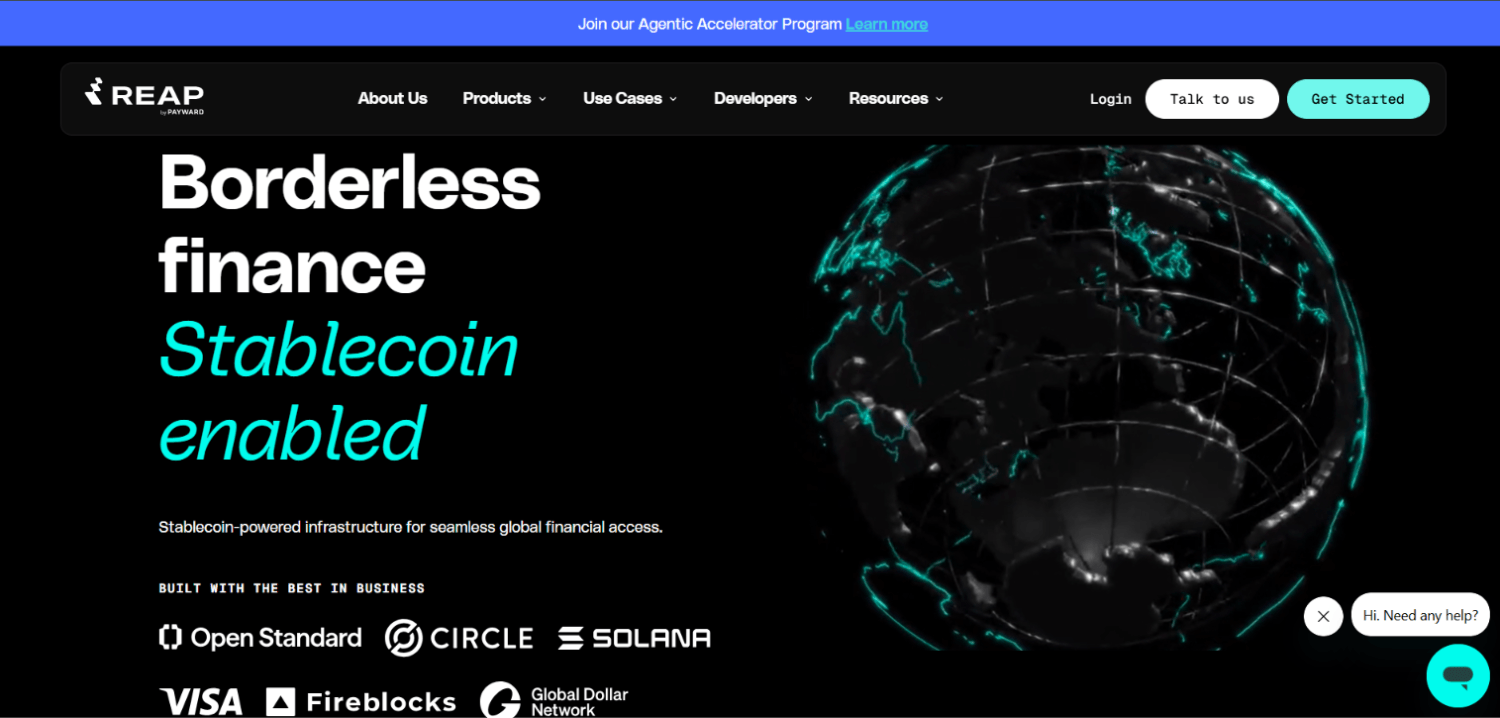
Reap describes itself as stablecoin-enabled infrastructure for businesses (cards, cross-border, embedded finance). Its card issuing product is the commercial surface partners would evaluate against other card issuing APIs and stablecoin card platforms.
Per the Sept. 23 release, the pitch to partners is single-partnership scale: authorization, processing, compliance frameworks, and ops bundled so a fintech or B2B platform can launch branded programs without assembling every layer alone.
Stablecoin-linked credit (not only prepaid debit)
FintechSpecs’ August 2026 stablecoin card platforms guide noted that most live programs behave like prepaid/debit against a balance, with true credit structures still limited. Today’s Visa/Reap framing is explicitly credit card programs where stablecoins fund and manage spending, including collateral and stablecoin repayment.
That is the operator distinction to keep sharp:
- Debit / prepaid mental model: authorize against held stablecoin balance.
- Credit + stablecoin collateral / repayment: underwriting, credit limits, collections, and dispute cycles still apply; stablecoins change funding and settlement options, not the existence of credit risk.
Ask Reap/Visa which product form is live in each market (revolving credit vs charge vs secured credit) before treating “credit” as interchangeable with prepaid.
Visa network acceptance + Visa stablecoin settlement
Two different Visa lanes appear in the same announcement:
- Acceptance lane: card credentials that spend wherever Visa is accepted (stated 175M+ merchants).
- Settlement lane: Reap settling obligations to Visa in stablecoins in APAC, reducing reliance on pre-funded fiat balances and banking-hour windows.
For treasurers, settlement is often the higher-leverage story. Merchant UX stays a normal Visa auth. Issuer liquidity and weekend float are where stablecoin settlement claims matter.
Use cases called out for platforms
The release lists three builder-facing patterns:
- Corporate treasury and cross-border spend: fund cards with stablecoins; manage cross-border expenses.
- Global payouts and vendor spend: platforms supporting business payments/payouts through a card experience with stablecoin settlement flows.
- Embedded finance for B2B platforms: branded card programs with stablecoin funding and repayment inside an existing product.
Those map cleanly to FintechSpecs clusters on embedded payments and issuing. Keep this post as the what shipped layer; use the listicles for vendor shortlists.
How this sits next to FintechSpecs stablecoin card and issuing coverage
Do not treat this as a replacement for category comparisons. Use those posts for depth; use this section for placement.
Category listicles (evaluation depth)
- 7 Best Stablecoin Card Platforms (settlement model, geography, network access)
- Card issuing APIs for SaaS
- 10 Leading Stablecoin Payment APIs
- Best stablecoin infrastructure providers
Practical operator map
| Layer | What Sept. 23 mainly moves | What it does not replace |
|---|---|---|
| Network coverage narrative | Visa + Reap claim of 100+ market credit-program reach into EMEA/Africa | Per-country licensing, BIN availability, and local compliance sign-off |
| Issuing / program ops | Reap as packaged authorization, processing, compliance, operations | Your credit policy, collections ops, and customer support model |
| Funding / collateral | Stablecoins as collateral and repayment option | Credit underwriting standards and loss reserves |
| Settlement liquidity | APAC stablecoin settlement to Visa beyond banking hours | FX conversion at auth, merchant settlement timelines, and treasury accounting |
| Roadmap | Agentic commerce exploration + multicurrency stablecoin cards | Live agent payment controls, dispute evidence, and MCP/agent identity stacks |
Note on the existing platforms list: Reap was not a named vendor in the August 2026 “7 Best” stablecoin card platforms roundup (Rain, Kulipa, Nium, and others). That is a content gap to watch, not a reason to turn this news post into a forced ranking rewrite. If Reap becomes a shortlist vendor for your RFP, evaluate it with the same Settlement Architecture Test in that guide (settlement direction, network access, stablecoin support, compliance bundling).
Risk, controls, and diligence questions for platforms
Stablecoin-linked credit inherits both card-credit risk and digital-asset operational risk.
Controls and promises in launch materials
- Local-regulation compliance framing
- Bundled compliance frameworks and program management
- Stablecoin collateral / repayment options
- Visa acceptance footprint
- Stablecoin settlement to Visa in APAC (liquidity / hours claim)
What operators should still design for
- Credit vs collateral confusion: If the product is revolving credit secured by stablecoins, model liquidation, margin calls, and de-peg scenarios. If it is prepaid marketed as “credit,” your disclosures and capital treatment break.
- Market readiness vs marketing footprint: “100+ markets” can mean network eligibility, partner ambitions, or live issuing. Require a live-market matrix (country, license vehicle, BIN sponsor/principal, product type).
- Principal vs program manager: Reap’s May 2026 Mexico principal membership is relevant history. Confirm whether Reap is principal, co-brand sponsor, or program manager in each new region, because BSA/AML and credit risk allocation follow that answer.
- Settlement finality vs merchant speed: Stablecoin settlement to Visa can improve issuer treasury timing. Merchant settlement still rides Visa rails in local fiat. Do not pitch “instant merchant pay” from this PR.
- Agentic commerce is exploratory: The release says Visa and Reap will explore agentic pathways. That is not a live Agent Pay / Intelligent Commerce integration announcement. Keep it out of your near-term risk register until controls, authentication, and dispute packets are public.
- Artemis / Visa metrics: Use the 106% CAGR and $20B / 15x / 160+ program figures as cited industry context, then ask for the underlying Artemis report and Visa methodology before putting them in a board deck as facts you audited.
Who should care, and what to ask
Prioritize a deep read if you:
- Build B2B embedded cards, expense, or payout products with stablecoin treasury
- Run a fintech or platform evaluating Visa issuing partners for EMEA/Africa expansion
- Own treasury, liquidity, or weekend settlement operations for a card program
- Compare Rain / Kulipa / Nium-class platforms and need a current network coverage signal
Concrete questions for Reap / Visa / your counsel
- Which countries are live for new partner launches this quarter vs roadmap only?
- Is the product revolving credit, charge, secured credit, or prepaid with credit-like UX in each market?
- Who is the principal Visa member and who holds credit risk / chargeback liability?
- Which stablecoins are accepted for collateral, funding, repayment, and Visa settlement (USDC, others), and on which chains?
- What are the operational hours and cutoffs for stablecoin settlement to Visa in APAC, and is that expanding with EMEA/Africa?
- How do local lending / consumer credit rules interact with stablecoin collateral in target markets?
- What is in scope for “agentic commerce” exploration (authentication, spend limits, merchant categories, human override)?
- Multicurrency stablecoin cards: which currencies/stablecoins, and how is FX handled at authorization?
The take: coverage and settlement moved; credit risk did not disappear
Visa partnering with Reap on 100+ market stablecoin-linked credit programs is a distribution and liquidity event. Visa acceptance solves merchant reach. Stablecoin settlement (especially the APAC banking-hours claim) speaks to issuer float. Reap’s packaging speaks to how fast a platform can stand up a branded program.
The operator lesson is sharper: stablecoin rails do not erase credit underwriting, local licensing, or BIN accountability. Treat Sept. 23 as permission to expand the shortlist and pressure-test EMEA/Africa coverage, not as a substitute for the settlement-architecture diligence in FintechSpecs’ stablecoin card guide.
If you are shipping embedded cards for businesses that already hold stablecoins, integrate for reach, then instrument for blame. Know which entity can issue in-market, which wallet holds collateral, which clock your Visa settlement runs on, and which team owns the loss when repayment in stablecoins meets a de-peg week.
For category depth after this news, start with best stablecoin card platforms and card issuing APIs for SaaS.
FAQ
When did Visa and Reap announce the 100+ market expansion?
Sept. 23, 2026, via a PR Newswire release sourced to Visa Worldwide Pte Ltd.
What is Reap?
Reap is a Hong Kong-headquartered fintech building stablecoin-enabled infrastructure for businesses, including card issuing and cross-border payments. More at reap.global.
Is this prepaid debit or actual credit?
The announcement explicitly frames stablecoin-linked Visa credit card programs, including stablecoins as collateral and stablecoin repayment. Confirm product form and underwriting per market; do not assume it matches prepaid stablecoin debit cards.
Which regions expand with this deal?
The release says Reap’s Visa credit card issuing infrastructure expands beyond Asia and Latin America into EMEA and Africa, with a claim of 100+ markets globally, subject to local regulations.
What Visa stablecoin metrics were cited?
Visa is quoted in the release at a $20B annual run rate of global stablecoin settlement volume (15x YoY) and over 160 stablecoin card programs globally.
Does this replace FintechSpecs’ stablecoin card platform comparisons?
No. Those posts compare settlement models and vendors. This piece explains what Visa and Reap announced on Sept. 23, 2026, and which diligence questions operators should ask.
Is agentic commerce live in this partnership?
Not as a shipped product in the release. Visa and Reap say they will explore agentic commerce capabilities as part of an expanded collaboration.
Where can I read prior Reap/Visa principal membership context?
Reap’s May 26, 2026 Mexico Visa Principal Member announcement covers dual principal membership in Mexico and Hong Kong.