
TLDR
- A generic B2B payout API can move money internationally, but it almost never supports cash pickup at agent networks or mobile wallet delivery to apps like M-Pesa, bKash, or GCash , the methods millions of remittance recipients actually use.
- The providers that matter most for consumer remittance apps are Thunes, Nium, TerraPay, Wise Platform, dLocal, Remitly for Business (via API), and Currencycloud , each with different corridor strengths and payout method coverage.
- Corridor depth beats country count: a network claiming 100 countries but only covering bank accounts in 80 of them is useless for corridors where cash pickup or wallet delivery is the dominant receiving method.
- Consumer remittance compliance adds a layer B2B payout APIs skip entirely: OFAC screening per individual sender, state-by-state money transmitter licensing requirements, and consumer disclosure rules under Dodd-Frank Section 1073.
- The right shortlist depends on three variables: your primary send corridor, the payout methods your recipients expect, and whether you want your API provider to carry the compliance burden or expose raw rails you operate yourself.
The best remittance APIs for consumer apps are Thunes, Nium, TerraPay, Wise Platform, and dLocal , providers that combine bank account delivery with cash pickup networks and mobile wallet rails. Stripe, Adyen, and similar B2B payout platforms cover bank-to-bank transfers across dozens of markets but do not operate the agent networks or wallet integrations that define how money actually arrives in corridors like US-to-Philippines, US-to-Mexico, or US-to-India. Choosing the wrong API type means building a product your recipients cannot use.
Why B2B Payout APIs Fail Consumer Remittance Apps
Most founders evaluating infrastructure for a cross-border consumer app start with the API they already know: Stripe, Wise Business, or a generic multi-currency payout tool. Those products handle FX conversion and bank deposits efficiently. What they do not do is connect to the Palawan Pawnshop counter in Manila, the bKash wallet in Dhaka, or the OXXO cash network across Mexico.
The distinction matters because payout method preference is corridor-specific, not universal. In the US-to-Philippines corridor, a significant share of recipients collect transfers through over-the-counter cash agents. In US-to-Mexico, bank account penetration has grown but cash pickup remains widely used. In US-to-Bangladesh, mobile wallets like bKash dominate. A platform that only delivers to bank accounts leaves those recipients behind entirely.
There is also a compliance divergence. B2B payout APIs are typically designed for business-to-business disbursements, where the sender is a verified entity and the transaction is a commercial payment. Consumer remittance falls under Dodd-Frank Section 1073 in the US, which mandates specific pre-transfer disclosures, a 30-minute cancellation window, and error resolution procedures , requirements that a raw B2B payout rail does not fulfill by default. Building those consumer protections on top of a B2B API is possible, but it adds significant compliance engineering that a purpose-built remittance API handles natively. For a fuller picture of how compliance costs compound by stage, the real cost of compliance in fintech SaaS is worth reading before you scope the project.
What Should You Look for in a Consumer Remittance API?
Before comparing providers, use what we call the FintechSpecs Remittance API Stress Test , four checks that filter the real options from the B2B tools dressed up as remittance infrastructure.
Payout method depth: Does the API support bank deposit, cash pickup, and mobile wallet delivery natively, or only one of those? Ask for a list of specific wallet partners (M-Pesa, bKash, GCash, GoPay, etc.) and agent networks (Western Union partnership, own proprietary network, local agent aggregators).
Corridor specificity: Country count is a marketing number. Ask for a corridor-level payout method matrix: US-to-PH broken down by payout type, settlement speed per method, and cut-off times. Providers with genuine depth can answer this without a sales call.
Compliance posture: Is OFAC/sanctions screening built into the API call, or does your team run it separately? Does the provider hold money transmitter licenses in the US states you need, or do you need your own? Some providers operate as licensed entities; others expose rails that require you to hold the paper.
FX transparency: Does the API quote mid-market rates plus a disclosed spread, or is the margin embedded invisibly in the exchange rate returned? Consumer apps live and die by rate transparency , your end users will compare your rate to Google mid-market before every send.
7 Top Remittance APIs for Cross-Border Consumer Apps
1. Thunes
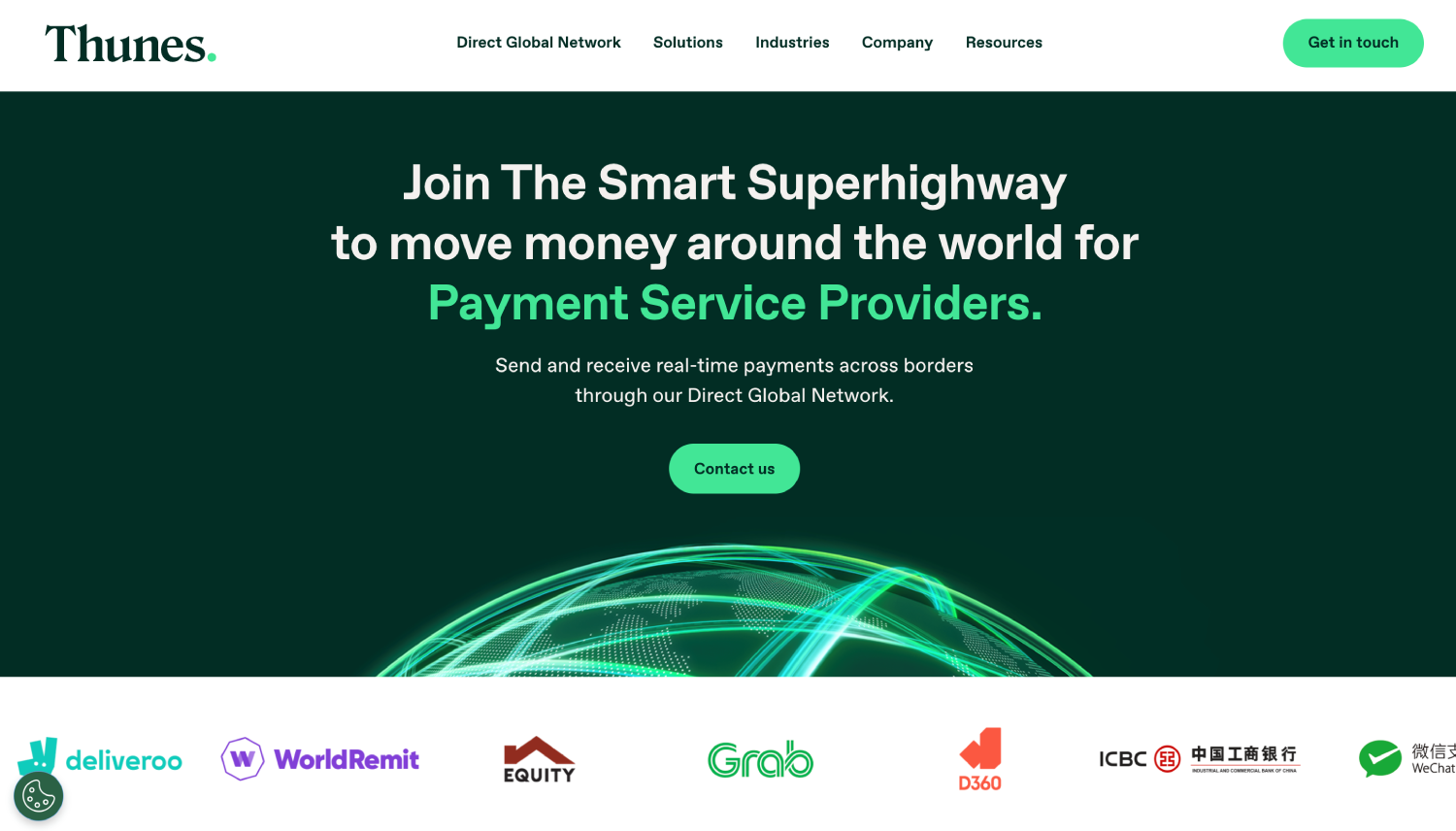
Thunes operates one of the widest proprietary cross-border payment networks, connecting over 130 countries with bank account, mobile wallet, and cash pickup delivery through a single API. Their wallet network includes M-Pesa, GCash, bKash, Wave, and dozens of regional wallets across Africa, Southeast Asia, and South Asia , which is the coverage that matters most for US-originated consumer corridors.
J.P. Morgan’s Payments division partnered with Thunes on cross-border payouts , announced in 2026 as the Xpedite Remit program covering 100-plus corridors , which signals the infrastructure’s institutional credibility. For a consumer app, the practical advantage is the ability to offer wallet-to-wallet and bank-to-wallet transfers in markets where those payout methods dominate, without stitching together separate regional providers.
Pricing is not publicly listed; Thunes negotiates contract terms based on corridor volume. The trade-off is that their API is positioned more toward enterprise and mid-market clients, so early-stage teams with low initial volume may find the onboarding process slower than with more self-serve alternatives. That said, their corridor coverage in Africa and Southeast Asia is difficult to match with a single integration.
2. Nium
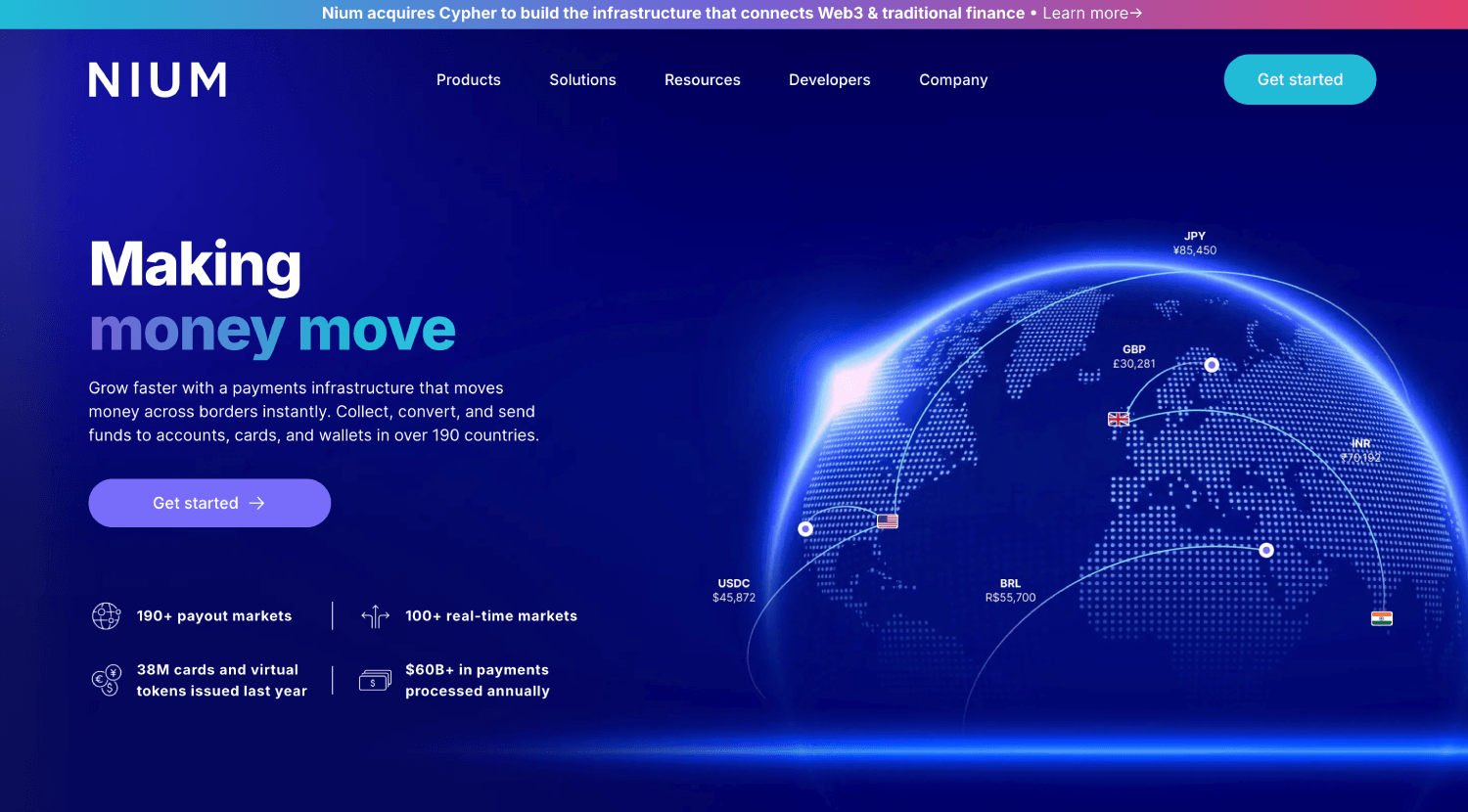
Nium covers payout to bank accounts, wallets, and cards across over 100 countries. Their API is notably developer-friendly compared to older remittance infrastructure, with cleaner webhook structures and sandbox environments that genuinely mirror production behavior. Nium also holds regulatory licenses across multiple jurisdictions, including an e-money license in the EU and licenses in Singapore and Australia, which reduces the compliance surface area for platforms operating in those markets.
For consumer remittance apps specifically, Nium’s strength is the breadth of payout rails combined with FX conversion built into the same API call. You quote, lock, and execute in a single flow rather than chaining separate FX and payout calls. Cash pickup coverage is more limited compared to Thunes, so Nium performs best in corridors where bank account or wallet delivery is the dominant receiving method.
Nium does not publish standard API pricing publicly. For a deeper look at how Nium and Thunes compare on corridor depth and network structure, the Nium vs Thunes infrastructure comparison covers the key differences in detail.
3. TerraPay
TerraPay focuses specifically on mobile wallet interoperability, which makes it the most targeted option for builders whose primary corridors land in markets with high mobile money penetration. They connect to over 700 mobile wallets globally and process transfers to those wallets through a single integration.
The key differentiator is settlement speed for wallet deliveries. TerraPay routes transfers in real-time or near-real-time to connected wallets, rather than batching them through correspondent banking chains. For a US-to-Africa or US-to-South Asia corridor where your recipients primarily use mobile money, that speed difference is visible to end users.
Bank account coverage is narrower than Nium or Thunes, and cash pickup is not a primary offering. TerraPay fits a specific profile: a consumer remittance app targeting wallet-heavy corridors where bank delivery is secondary. If your app needs to serve a recipient population split between wallets and cash agents, you would need to layer a second provider or accept coverage gaps.
4. Wise Platform
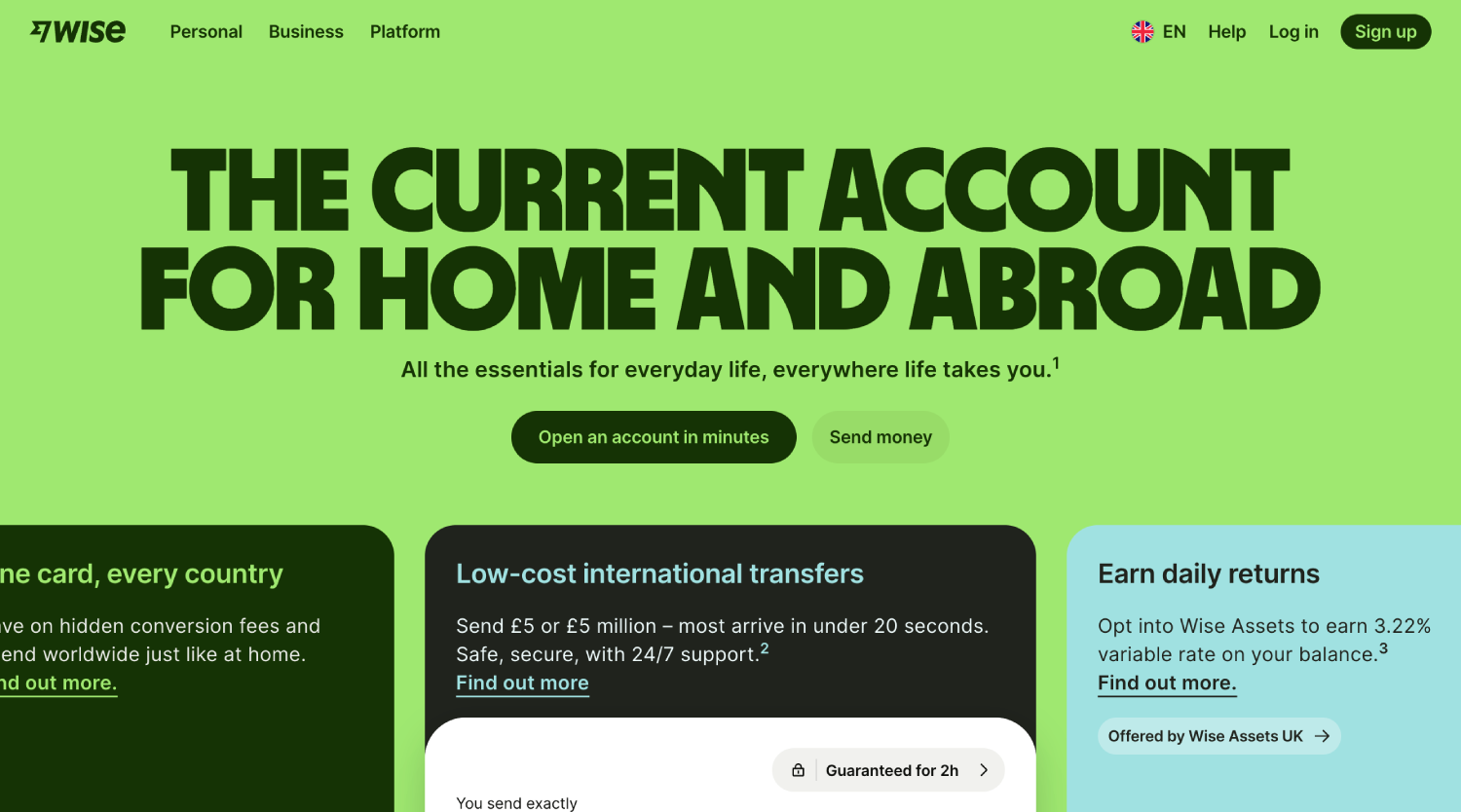
Wise Platform is the API layer underlying Wise’s consumer product, made available to third-party builders. The advantage is obvious: Wise’s consumer-facing transfer service has built rate transparency and low-spread FX into the brand promise, and the Platform API inherits that positioning.
Wise Platform covers bank account delivery in 160 countries and supports multi-currency accounts as a receiving mechanism. Where it falls short for many consumer remittance corridors is cash pickup , Wise does not operate an agent cash network and does not partner with one at the API level. Mobile wallet delivery is available for select corridors but is not the platform’s primary strength.
For corridors where bank-to-bank delivery is dominant , US-to-EU, US-to-UK, US-to-Canada, or US-to-Australia , Wise Platform is a strong option with competitive FX margins and regulatory coverage in the UK (FCA-regulated), EU, US, and other major markets. For US-to-Southeast Asia or US-to-Sub-Saharan Africa with cash or wallet requirements, it is the wrong tool.
5. dLocal
dLocal specializes in emerging markets across Latin America, Africa, and Asia, with an emphasis on local payment method collection and payout. For consumer remittance, dLocal’s payout API covers bank accounts, mobile wallets, and cash pickup through local networks in markets like Mexico, Colombia, Brazil, Nigeria, Kenya, and the Philippines.
The practical advantage dLocal offers over broader global networks is local market expertise: they integrate with country-specific rails (like PIX in Brazil or SPEI in Mexico) rather than routing everything through correspondent banking. That means faster settlement and fewer failure points in markets where correspondent chains are unreliable.
dLocal is better suited for platforms with a concentrated corridor focus in their covered emerging markets rather than platforms needing simultaneous global coverage. If your consumer app primarily serves the US-to-Latin America corridor, dLocal’s depth in that region is a genuine advantage. Pricing is contract-based and not publicly disclosed.
6. Currencycloud (Visa)
Currencycloud, now part of Visa, provides multi-currency accounts, FX conversion, and cross-border payment APIs used by fintech companies to power international transfers. Their API covers over 180 countries for bank account payments and supports 35-plus currencies for conversion.
Currencycloud’s strongest use case within consumer remittance is as a multi-currency infrastructure layer for apps that need to hold balances in multiple currencies, convert at mid-market-aligned rates, and push to bank accounts globally. They do not offer cash pickup or mobile wallet delivery natively, which limits their application to bank-dominant corridors.
The Visa ownership brings network integration potential, but the core API product remains focused on FX and bank account payments. For teams building in corridors where bank delivery is sufficient, Currencycloud’s API documentation and developer experience are well-regarded. Pricing is volume-based and requires a direct conversation with their sales team.
7. Remitly for Business (Passbook API)
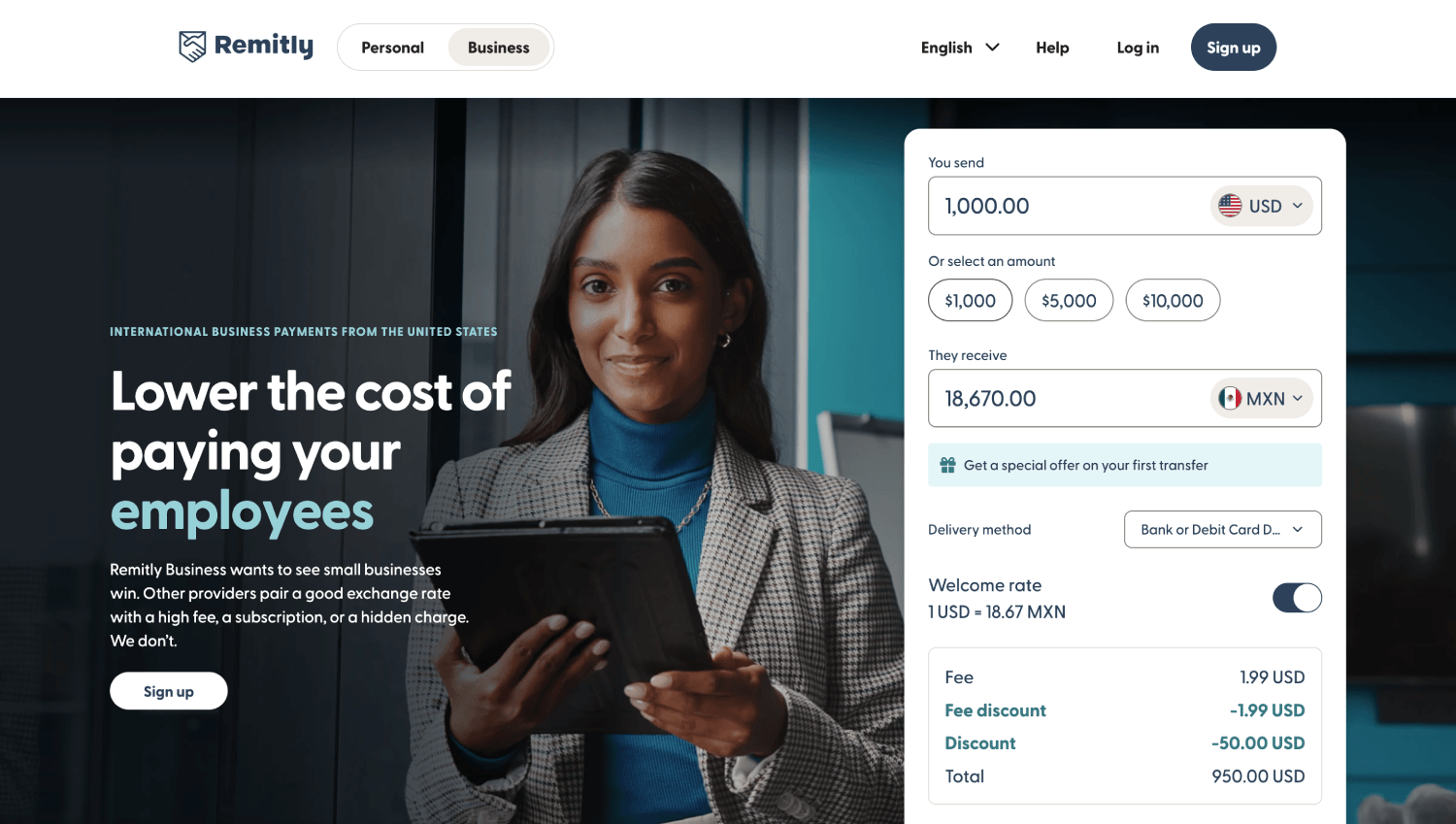
Remitly built a consumer remittance product first and operates its own proprietary delivery network as a result. Through partnerships and direct integrations, Remitly supports cash pickup, mobile wallet delivery, and bank account deposits across its primary corridors: US-to-Philippines, US-to-India, US-to-Mexico, US-to-Guatemala, US-to-El Salvador, and others in Latin America and Southeast Asia.
Remitly’s business API access is more limited in terms of third-party integration than the pure infrastructure providers above , their primary product is consumer-facing, and the B2B offering is narrower in scope. For a team that wants Remitly’s corridor depth without building a competing consumer product, the terms of access require direct negotiation and are not self-serve.
The value of including Remitly on this list is the corridor-specific agent network access. Their cash pickup and wallet delivery in the Philippines, for example, is built on years of direct integration with local partners, which is difficult to replicate quickly through an aggregator. It is most relevant for teams targeting a narrow set of high-volume corridors rather than broad global coverage.
Remittance API Comparison Table: Corridors and Payout Methods
| Provider | Bank Account | Cash Pickup | Mobile Wallets | Primary Corridor Strength | Developer Self-Serve | Public Pricing |
|---|---|---|---|---|---|---|
| Thunes | Yes | Yes | Yes (700+ wallets) | Africa, Southeast Asia, South Asia | Limited | No |
| Nium | Yes | Limited | Yes | Global, strong APAC and EU | Yes (sandbox) | No |
| TerraPay | Limited | No | Yes (700+ wallets) | Africa, South Asia, Southeast Asia | Moderate | No |
| Wise Platform | Yes | No | Select corridors | US, EU, UK, Canada, Australia | Yes | Partial |
| dLocal | Yes | Yes | Yes | Latin America, Africa, Philippines | Moderate | No |
| Currencycloud | Yes | No | No | Global bank delivery, FX-heavy | Yes | No |
| Remitly Business | Yes | Yes | Yes | US to PH, IN, MX, LATAM | No | No |
Which Remittance API Fits Which Consumer App Use Case?
US-to-Southeast Asia (Philippines, Vietnam, Indonesia)
Thunes and Nium are the two strongest single-API options. Thunes covers GCash and other Filipino wallet networks alongside bank and cash, while Nium provides cleaner developer tooling. For a team that prioritizes integration speed, Nium’s sandbox environment is more self-serve. For a team that prioritizes maximum payout method coverage including cash agents, Thunes has deeper roots in this region. TerraPay is worth adding as a secondary wallet provider if you need to maximize wallet coverage without building a second primary integration.
US-to-Latin America (Mexico, Colombia, Guatemala)
dLocal is the clearest primary choice here. Their integration with SPEI in Mexico, local rail access in Colombia and Brazil, and cash network coverage in Central America gives them an edge in settlement speed and payment method breadth that global aggregators often lack. Wise Platform works for bank-to-bank transfers to Mexico, but if your recipient base uses OXXO cash pickup, Wise is not the answer. Currencycloud is not a fit for this corridor given its bank-only delivery model.
US-to-South Asia (India, Bangladesh, Pakistan)
India is a dominant corridor globally. Wise Platform performs well for India bank delivery with competitive FX margins. For Bangladesh, where bKash wallet delivery is widespread, TerraPay or Thunes are more appropriate. Pakistan and Sri Lanka have more complex regulatory environments; Nium and Thunes both cover those markets but require validation of current corridor status, which changes with regulatory conditions. Remitly’s direct partnership depth in India makes their business API worth evaluating for this corridor specifically.
US-to-Sub-Saharan Africa
This is where Thunes and TerraPay hold the clearest structural advantage over any B2B payout tool. M-Pesa in Kenya, Wave in Senegal, MTN Mobile Money across West Africa, and Airtel Money in Uganda are not accessible through standard bank payment rails. Both Thunes and TerraPay have direct connections to these wallets. dLocal covers Nigeria and Kenya with local bank and cash delivery. No single provider covers all of Sub-Saharan Africa optimally, so many consumer remittance apps in this corridor run two providers: Thunes or TerraPay for wallet delivery and dLocal for cash and bank.
What Does a Consumer Remittance Integration Actually Cost?
None of the seven providers above publish standard per-transaction pricing. This is a structural reality of the remittance API market: margins depend on corridor, volume, FX spread negotiation, and settlement speed commitment, so list prices would be misleading even if posted.
To illustrate the cost structure: a consumer app sending $200 average transfers on the US-to-Philippines corridor at 5,000 monthly transactions might , based on illustrative ranges typical of market conditions as of 2024 , encounter a blended rate of 0.5% to 1.5% per transaction for bank delivery, with cash pickup running higher due to agent network costs. Wallet delivery margins vary by wallet partner. These are illustrative ranges, not published rates , the actual numbers require a contract discussion. What teams consistently underestimate is the FX spread layered on top of the transaction fee, which can easily exceed the stated API fee on high-volume corridors.
One cost that is quantifiable before negotiation: compliance overhead. If your provider does not hold the necessary US money transmitter licenses, you need your own. State-by-state MTL licensing can run into hundreds of thousands of dollars in aggregate fees and bond requirements. The money transmitter license costs by state table breaks that down precisely. Some providers , Nium, Wise Platform, and Thunes , hold their own licenses in major US states, which is a real cost offset worth quantifying in your provider comparison.
How Should You Evaluate Remittance API Compliance Coverage?
Consumer remittance compliance is distinct from B2B payment compliance in ways that matter at the API selection stage. Under Dodd-Frank Section 1073, any US company offering remittances over $15 must provide pre-transfer disclosures showing the exact FX rate, fees, taxes, and the amount the recipient will receive in local currency. They must also offer a 30-minute cancellation right and an error resolution process.
Some APIs expose the data fields needed to construct those disclosures but leave the disclosure logic, the cancellation workflow, and the error resolution process to the builder. Others , particularly those positioning toward consumer remittance as a primary use case , provide compliance tooling or guidance for meeting those requirements.
Ask every provider you evaluate three direct questions: Do you hold MTLs in all 50 US states, or a subset? Do your pre-transfer API responses include the data fields required for Section 1073 disclosures? Does your compliance team provide guidance on consumer disclosure requirements, or is that entirely our responsibility? The answers separate purpose-built remittance infrastructure from repurposed B2B payout rails. For teams new to this territory, the fintech product and compliance readiness checklist provides a useful baseline before you start those provider conversations.
KYC and AML are also non-negotiable at the individual sender level. Consumer remittance requires identity verification per sender, ongoing transaction monitoring, and OFAC screening per transfer. Some providers integrate KYC orchestration into the onboarding flow; most do not, requiring you to integrate a separate KYC provider. The KYC provider comparison by UX, cost, and approval rates covers the main options if you are sourcing that layer separately.
Frequently Asked Questions
What is a remittance API and how is it different from a payment API?
A remittance API is infrastructure specifically designed for person-to-person cross-border money transfer, supporting payout methods like cash pickup and mobile wallet delivery that general payment APIs do not cover. A standard payment API moves funds between bank accounts or cards. A remittance API connects to agent networks (for cash), mobile wallet platforms (M-Pesa, GCash, bKash), and local bank rails simultaneously, and typically handles FX conversion, consumer compliance requirements, and corridor-specific settlement speeds within the same integration.
Can I build a consumer remittance app on Stripe or Adyen?
You can collect payments from senders using Stripe or Adyen, but neither platform provides the outbound remittance rails , cash pickup networks, mobile wallet delivery, or corridor-specific bank integrations , that define consumer remittance. You would need a separate remittance API (Thunes, Nium, TerraPay, or similar) for the payout leg. Some teams use Stripe for collection and a dedicated remittance API for disbursement, though that adds settlement complexity and float management requirements to the architecture.
Which remittance API has the best coverage for US-to-Mexico transfers?
dLocal is the strongest single option for US-to-Mexico, covering SPEI bank transfers, cash pickup through local networks, and local payment method familiarity. Wise Platform handles bank-to-bank delivery at competitive FX rates but does not support cash pickup. Nium provides bank delivery to Mexico within its global network. For a consumer app where recipients may split between bank accounts and cash agents, dLocal’s dual coverage is the practical advantage. Verify current corridor status directly with any provider before committing, as settlement networks can change.
Do remittance API providers hold US money transmitter licenses?
Coverage varies by provider. Nium holds MTLs in a substantial number of US states. Wise holds licenses across US states for its consumer product; Wise Platform partners inherit some of that regulatory infrastructure depending on contract terms , confirm the exact scope of coverage applicable to your integration during due diligence, as the licensing arrangement for Platform API clients may differ from what the consumer product carries. Thunes and TerraPay primarily hold licenses outside the US and typically require their API clients to hold their own US MTLs. dLocal and Currencycloud similarly do not cover US sender-side licensing by default. Confirm the exact licensing arrangement , and which states are covered , before any integration agreement.
How long does it take to go live with a remittance API integration?
Timeline depends heavily on the provider’s onboarding process and your compliance readiness. Nium and Wise Platform offer sandbox environments with relatively fast self-serve access, so technical integration can begin within days. Thunes, TerraPay, and dLocal typically require a commercial agreement before API access is granted, which adds weeks to the process. Compliance onboarding , providing your own MTL documentation, AML program evidence, and KYC policy , can extend timelines by one to three months regardless of technical readiness. Building on a new remittance rail before compliance documentation is complete is a common mistake that delays launch significantly.
What payout methods do remittance APIs support beyond bank accounts?
The main payout method categories beyond bank accounts are: cash pickup at agent locations (Western Union agents, local pawnshop networks, retail chains); mobile wallet delivery (M-Pesa, GCash, bKash, MTN Mobile Money, Airtel Money, Wave, GoPay, and dozens of regional wallets); and card delivery (less common in remittance but available through some providers for debit card top-ups). Coverage is corridor-specific , a provider might support GCash in the Philippines but not have wallet coverage in Vietnam. Always verify method availability at the corridor level, not just the country level.
How do remittance APIs handle foreign exchange rates?
Most remittance APIs embed FX conversion into the API call, quoting a locked rate at the time of transfer initiation. The rate includes the provider’s margin above the interbank mid-market rate. Some providers disclose the margin explicitly (Wise Platform is transparent about this); most do not separate the FX spread from the transaction fee. For consumer apps subject to Dodd-Frank Section 1073, you must disclose the exact exchange rate the recipient will receive before the transfer completes, which requires the API to return a confirmed rate and recipient amount at the quote stage. Confirm that the API supports rate locking before building your disclosure flow around it.
The Provider Decision, Simplified
The choice between these seven providers is not primarily about features , most of them can move money internationally. It is about which corridors you are building for first and what payout methods your recipients expect. A team launching a US-to-India bank transfer product has genuinely different infrastructure needs than a team building for US-to-Nigeria with M-Pesa and cash delivery. Getting that first provider selection right matters because corridor agreements, compliance documentation, and integration work are not easy to swap mid-launch.
If you are building for multiple corridors from day one, the realistic options narrow to Thunes and Nium as single-API starting points , both cover enough ground to serve a multi-corridor launch without a secondary provider. If your corridor focus is tighter, dLocal for Latin America, TerraPay for wallet-heavy African and Asian corridors, and Wise Platform for developed-market bank delivery each perform better within their lanes than any single global network.
One thing that does not get enough attention in these decisions is the compliance architecture. The remittance API handles the money movement. The compliance infrastructure , KYC, transaction monitoring, OFAC screening, consumer disclosures , sits on top of it. A team that treats these as separate procurement decisions, rather than building them as an integrated stack from the start, typically spends months fixing gaps that surface at audit. For teams thinking through that full infrastructure picture, the cross-border payout API comparison for US platforms covers the B2B side of the market and clarifies where consumer remittance rails diverge from general payout infrastructure.