
- Appearing in an AI answer is not the same as being cited as a source. The distinction determines whether that visibility drives referral traffic or simply inflates a competitor’s credibility.
- Most fintech marketers track AI mentions through manual prompt testing, which misses citation frequency, source attribution, and competitor gap analysis entirely.
- The tools in this list are organized around three functions: cited-source tracking, prompt library management, and competitor citation benchmarking.
- A fintech brand cited in 40% of relevant ChatGPT responses but sourced zero times has a brand awareness play, not a GEO strategy.
- The right tool depends on whether you need breadth (many AI engines, many prompts) or depth (citation-level attribution, source URL tracking, content recommendations).
The best LLM citation monitoring tools for fintech are Profound, Semrush’s AI Visibility Toolkit, Otterly.AI, Peec.ai, AI Rank Tracker by SE Ranking, BrightEdge, Ahrefs AI Visibility, Search Atlas, Brandwatch, Mention, and Perplexity Spaces (for manual benchmarking). Each tracks a different slice of AI visibility: some focus on citation frequency across ChatGPT, Perplexity, and Google AI Overviews; others surface which competitor URLs are being cited in your place. Fintech teams evaluating LLM citation monitoring tools will find the purpose-built platforms diverge sharply from the broader marketing suites on what they actually measure.
Why Most Fintech Marketers Are Measuring AI Visibility Wrong
Fintech marketing teams running GEO programs often report a number like “our brand appears in 60% of AI answers about payment APIs.” That number sounds good. It tells you almost nothing useful.
Appearing in an AI answer and being cited as a source are structurally different outcomes. When ChatGPT mentions your brand in a response, it may be drawing on training data, repeating something a competitor wrote about you, or hallucinating. When an AI engine cites your URL as a source, it is treating your content as authoritative, and in systems like Perplexity or Google AI Overviews, that citation often generates a direct clickthrough.
The practical gap matters for fintech specifically because buyers in this category, whether they are evaluating fintech APIs for SaaS or assessing fraud tools, are high-intent researchers. They follow citations. A brand that appears but is not cited loses the click to whoever is.
The Three-Layer Citation Problem in Fintech AI Search
Layer one is presence: does your brand appear in the response at all? Layer two is attribution: is your content cited as the source? Layer three is framing: is the citation positive, neutral, or a counter-example to someone else’s product? Most tools on the market handle layer one adequately. Fewer handle layer two well. Almost none handle layer three at scale.
For fintech marketers, framing matters more than in other verticals. An AI response that says “according to [Competitor], [Your Brand] charges higher fees” is technically a citation. It is not the kind you want.
The FintechSpecs Citation Stack Framework: How to Evaluate Any LLM Monitoring Tool
Before comparing specific products, use this four-part evaluation framework, which we call the FintechSpecs Citation Stack, to avoid buying a tool that only covers one layer of the problem.
Source URL tracking: Does the tool report which specific URLs from your domain are being cited, or only that your brand name appeared? Source-level tracking is the difference between knowing you have visibility and knowing which content is driving it.
Prompt library depth: Does the tool run queries against a pre-built library of fintech-relevant prompts, or do you have to build your own? A tool with 50 generic prompts misses the category-specific questions your buyers actually ask, like “which BaaS platform works for neobanks under $5M ARR?” or “best KYC provider for crypto exchanges.”
Competitor citation gap reporting: Does the tool show you which competitor URLs are being cited in responses where you are absent? Without this, you cannot prioritize content creation. You are fixing blindly.
Multi-engine coverage: Does it monitor ChatGPT, Perplexity, Google AI Overviews, Claude, and Gemini separately? Citation patterns differ significantly across engines. A brand cited heavily in Perplexity but absent from Google AI Overviews has a very different content problem than the reverse.
Which Tools Actually Track LLM Citations at the Source Level?
The 11 tools below are organized by primary use case. Some are purpose-built for LLM citation monitoring. Others are broader SEO platforms that have added AI visibility modules. The distinction matters because purpose-built tools tend to have deeper prompt libraries and more granular citation reporting, while platform-native tools have the advantage of connecting citation data to your existing keyword and content workflows. Two tools , Brandwatch and Mention , are included because fintech teams already paying for them frequently ask whether they cover LLM citation monitoring. They do not, in the GEO sense. Their sections explain exactly what they do and do not cover so teams can make a clear-eyed decision without running a separate evaluation.
| Tool | Source URL Tracking | Prompt Library | Competitor Gap | Engines Covered | Pricing Tier | Best For |
|---|---|---|---|---|---|---|
| Profound | Yes | Custom + pre-built | Yes | ChatGPT, Perplexity, Gemini, Claude | Not public (enterprise) | Enterprise GEO teams |
| Semrush AI Visibility Toolkit | Partial | Keyword-driven | Yes | Google AIO, ChatGPT | Included in Semrush plans (~$140 to $500/mo) | Teams already on Semrush |
| Otterly.AI | Yes | Custom | Yes | ChatGPT, Perplexity, Claude, Gemini | ~$99 to $399/mo (public pricing page) | Agencies and mid-market |
| Peec.ai | Yes | Pre-built categories | Yes | ChatGPT, Perplexity | ~$79 to $299/mo (public pricing page) | Brand-focused marketers |
| SE Ranking AI Rank Tracker | Partial | Keyword-driven | Partial | ChatGPT, Perplexity, Gemini | Add-on to SE Ranking plans (~$55 to $239/mo base) | SEO teams expanding to GEO |
| BrightEdge | Yes | Enterprise-scale | Yes | Google AIO, ChatGPT, Perplexity | Not public (enterprise, $2K+/mo range) | Series C+ content operations |
| Ahrefs AI Visibility | Partial | Keyword-driven | Partial | Google AIO | Included in Ahrefs plans (~$129 to $449/mo) | Teams already in Ahrefs |
| Search Atlas | Yes | Custom + templates | Yes | ChatGPT, Perplexity, Gemini | ~$99 to $499/mo (public pricing page) | Growth-stage B2B SaaS |
| Brandwatch | No (brand mention only) | Query-based | No | Web/social (not LLM real-time) | Not public (enterprise) | Brand sentiment, not GEO |
| Mention | No | Alert-based | No | Web/social (not LLM real-time) | ~$41 to $149/mo (public pricing page) | PR monitoring supplement |
| Perplexity Spaces | Manual | Manual | Manual | Perplexity only | Free (Perplexity free tier) | Tactical prompt testing, pre-tool |
Pricing figures above reflect publicly listed plan ranges as of each vendor’s pricing page. Enterprise and custom tiers are noted where pricing is not public. Verify current pricing directly with each vendor before budgeting.
1. Profound
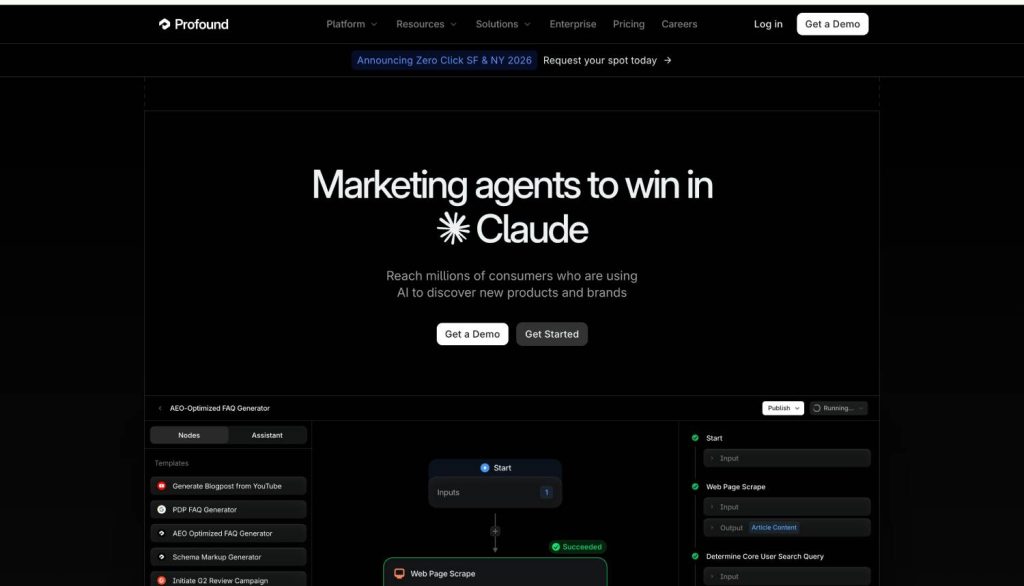
Profound is the most cited purpose-built LLM citation monitoring platform among enterprise GEO teams, and for fintech use cases, its prompt library depth is its main advantage. The platform lets you upload custom prompt sets that mirror the actual questions your buyers ask across ChatGPT, Perplexity, Claude, and Gemini, then tracks which URLs are cited in each response over time.
The competitor citation gap feature is genuinely useful. You can see not just where you are absent but which specific competitor pages are filling that gap, which gives content teams a direct brief rather than a vague directive to “create more GEO content.” Pricing is not publicly listed, which is standard for enterprise GEO software at this depth. Contact their sales team for a quote.
2. Semrush AI Visibility Toolkit
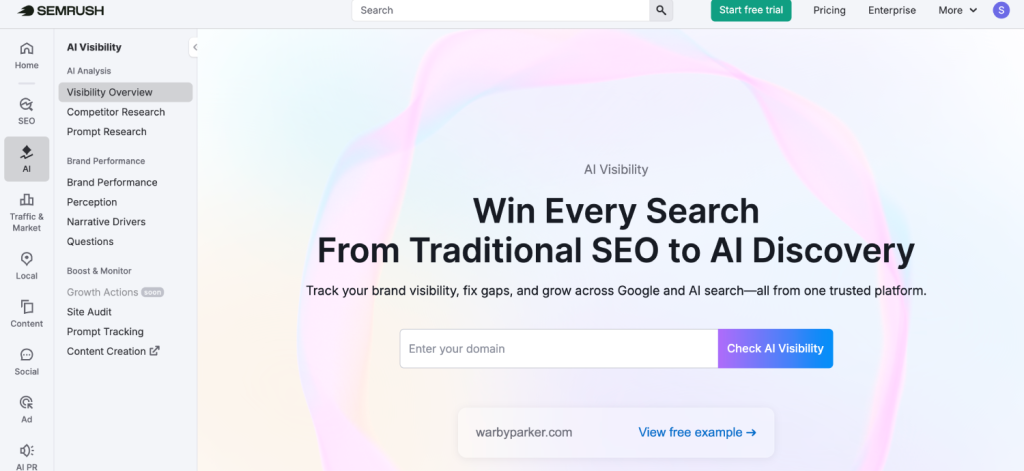
Semrush added AI visibility features to its existing platform, and for teams already paying for Semrush, the incremental cost is low. The AI Visibility Toolkit tracks brand presence in Google AI Overviews and ChatGPT responses, connects citation gaps to organic keyword data, and surfaces which content pieces are being pulled into AI answers.
The limitation for fintech marketers is that the prompt coverage is tied to your existing keyword list. If you have not already mapped the conversational queries your buyers use with AI tools, you will miss coverage. It is a strong supplementary layer but not a standalone GEO measurement platform.
3. Otterly.AI
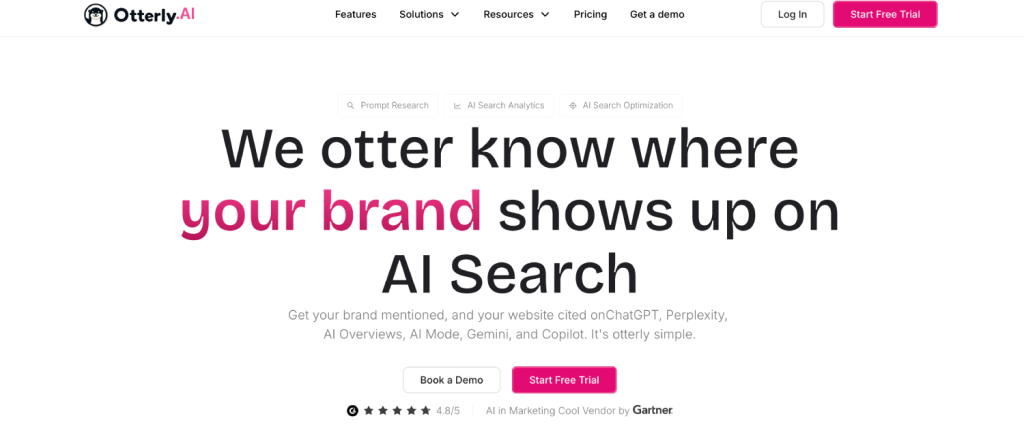
Otterly.AI focuses on citation-level tracking across four major AI engines and is priced for mid-market teams. The dashboard shows citation frequency, the specific URLs cited, and how those citations change week over week. The custom prompt builder lets fintech teams build category-specific queries without needing to know the API.
For agencies managing multiple fintech clients, Otterly’s multi-account structure works well. The competitor benchmarking view shows citation share across a defined set of competitors, which maps directly to the kind of reporting a VP of Marketing or CMO expects from a GEO program.
4. Peec.ai
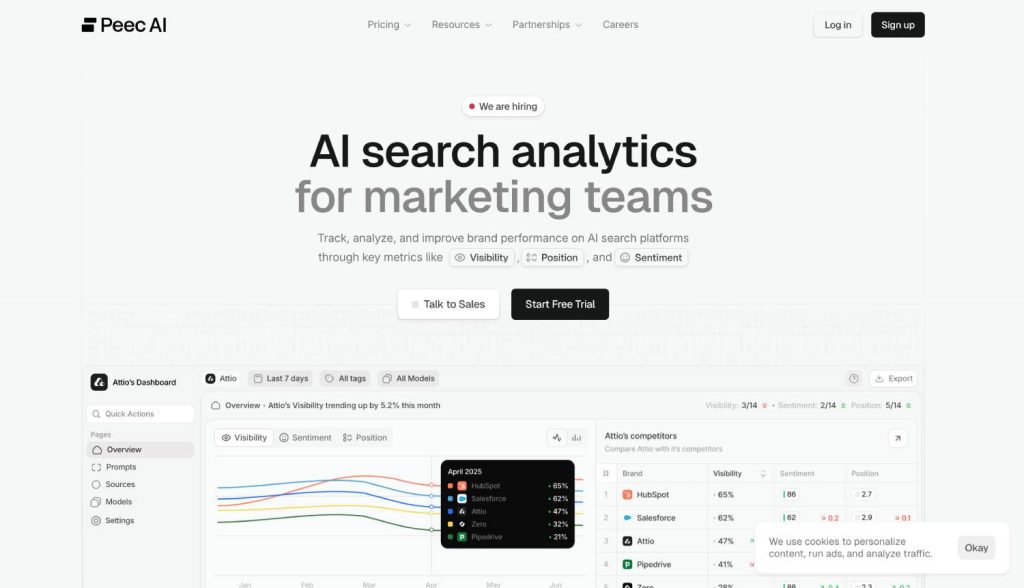
Peec.ai tracks brand citations across ChatGPT and Perplexity and categorizes responses by sentiment and framing, not just presence. For fintech brands where how you are mentioned matters as much as whether you are mentioned, that framing layer addresses the third level of the Citation Stack.
The pre-built category prompts cover financial services, SaaS, and payments, which reduces setup time. The platform does not yet cover Claude or Gemini at the same depth, so teams that see significant buyer activity on those engines will need a supplementary tool.
5. SE Ranking AI Rank Tracker
SE Ranking’s AI Rank Tracker extension monitors ChatGPT, Perplexity, and Gemini responses for keyword-tied queries. It is positioned as an upgrade path for SEO teams moving into GEO measurement, and the UX is familiar to anyone who has used traditional rank tracking.
Source URL reporting is partial, meaning it identifies whether your domain appeared rather than which specific page was cited. For teams that need exact content attribution, this is a gap. For teams that need a fast read on presence across multiple engines without rebuilding their measurement stack, it works.
6. BrightEdge
BrightEdge targets enterprise content operations, and its AI citation monitoring sits inside a broader content performance platform. The advantage for large fintech teams is that citation data connects directly to content briefs, performance forecasts, and SEO recommendations in the same workspace.
The platform covers Google AI Overviews, ChatGPT, and Perplexity, and the enterprise-grade prompt library is the deepest on this list. BrightEdge pricing is entirely custom and not publicly listed. It makes sense for Series C and beyond, or for fintech companies running content at scale across multiple product lines. Earlier-stage teams will find the cost hard to justify against lighter tools.
7. Ahrefs AI Visibility
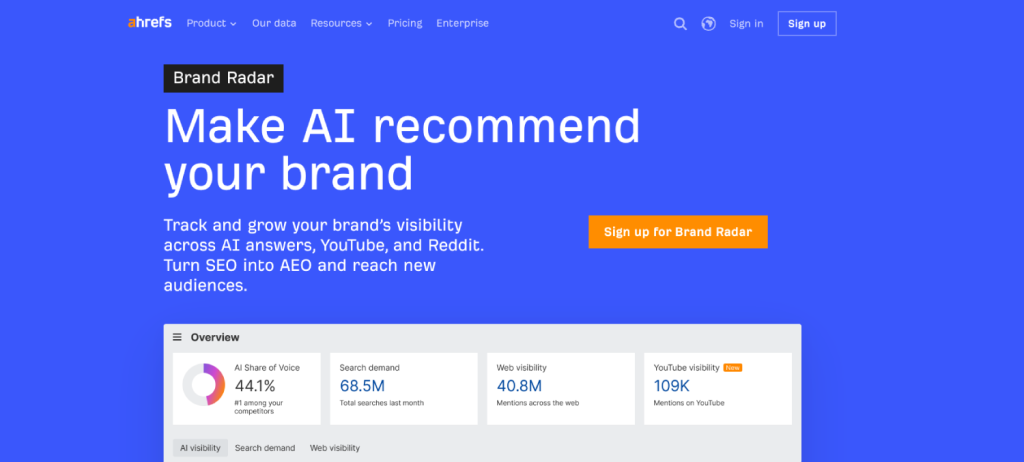
Ahrefs added AI visibility reporting to its existing platform, currently focused on Google AI Overviews. The reporting shows which of your pages appear in AI Overview panels, which competitor pages appear for the same queries, and how that changes over time.
The current limitation is engine coverage. Google AI Overviews is one channel. Fintech buyers also research heavily on Perplexity and increasingly through Claude integrations. Teams already deep in the Ahrefs platform will find this useful as one data point, but it should not be the primary citation monitoring tool for a serious GEO program.
8. Search Atlas
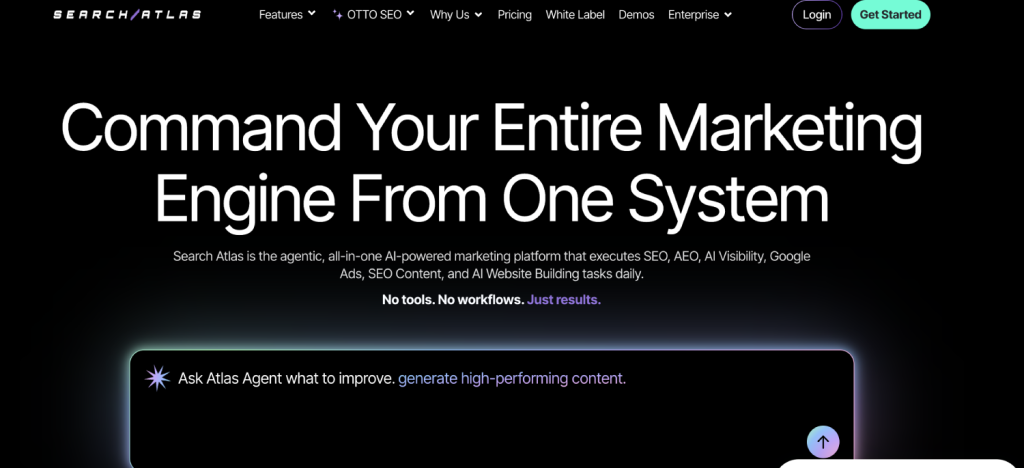
Search Atlas has built out an AI visibility module that covers ChatGPT, Perplexity, and Gemini, with source URL-level citation tracking and a custom prompt template library. The platform is priced for growth-stage B2B SaaS teams, making it one of the more accessible tools with genuine citation depth.
The competitor citation gap report is comparable to Otterly’s and surfaces the specific competitor URLs cited in responses where your brand is absent. For fintech teams mapping their GEO content gaps before a content sprint, this is among the most direct outputs on the list after Profound.
9. Brandwatch
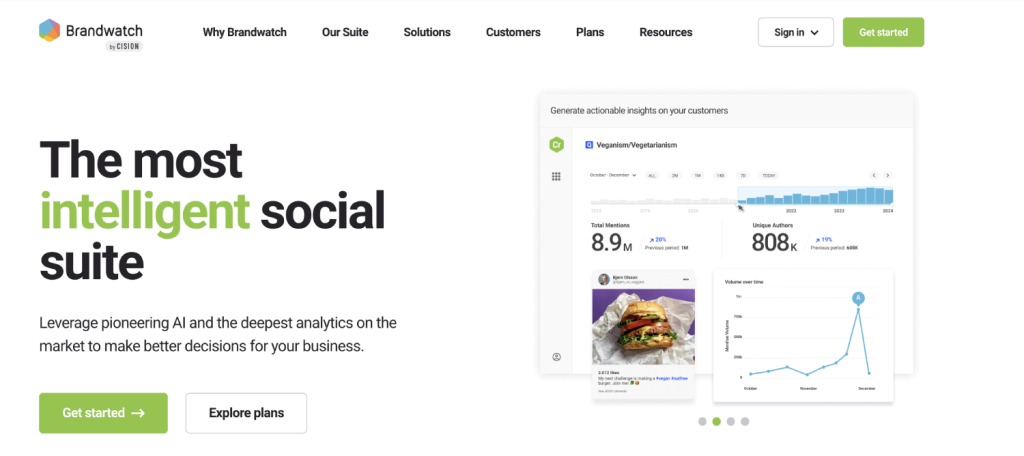
Brandwatch is a brand intelligence platform, not a GEO measurement tool. It does not track real-time citations inside ChatGPT, Perplexity, or any other LLM. What it monitors is brand mentions across the web, including AI-generated content that gets published to external sites , a second-order effect that is categorically different from citation monitoring inside a live AI response.
Fintech teams already paying for Brandwatch sometimes ask whether it covers this use case. It does not. It is useful for tracking whether AI-generated coverage about your brand is spreading across media sites, but it cannot tell you which URL was cited in a Perplexity answer this morning. If that distinction matters for your program , and for GEO it does , Brandwatch should sit alongside a purpose-built tool, not replace one.
10. Mention
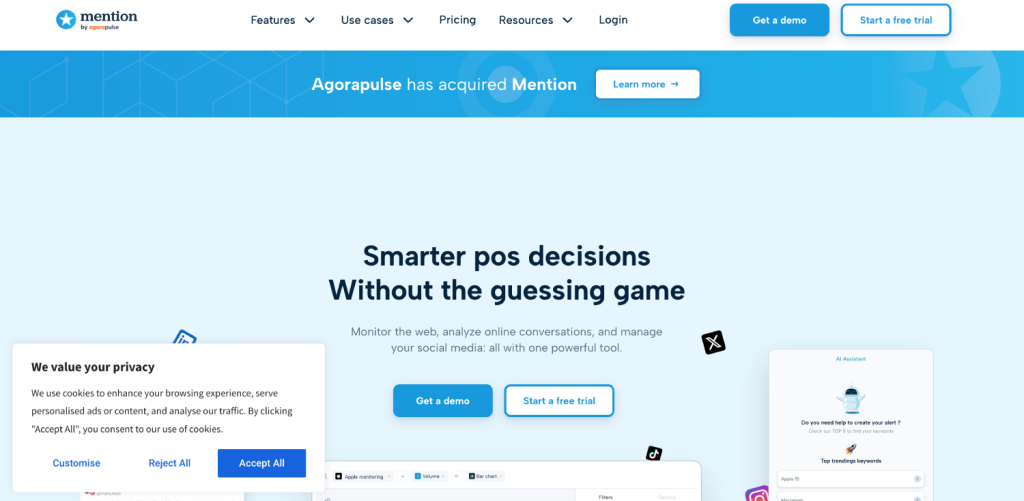
Mention is an alert-based monitoring tool that tracks brand mentions across web, social, and news. Like Brandwatch, it does not monitor real-time citation events inside LLMs. There is no mechanism to query ChatGPT or Perplexity responses and extract cited URLs.
The use case for fintech teams is narrow: monitoring whether your brand is being discussed in coverage that AI engines might subsequently index and cite. That is a second-order effect, not direct citation monitoring. At its public pricing (starting under $50/month), Mention is a reasonable PR complement. It is not a GEO tool.
11. Perplexity Spaces (Manual Benchmarking)
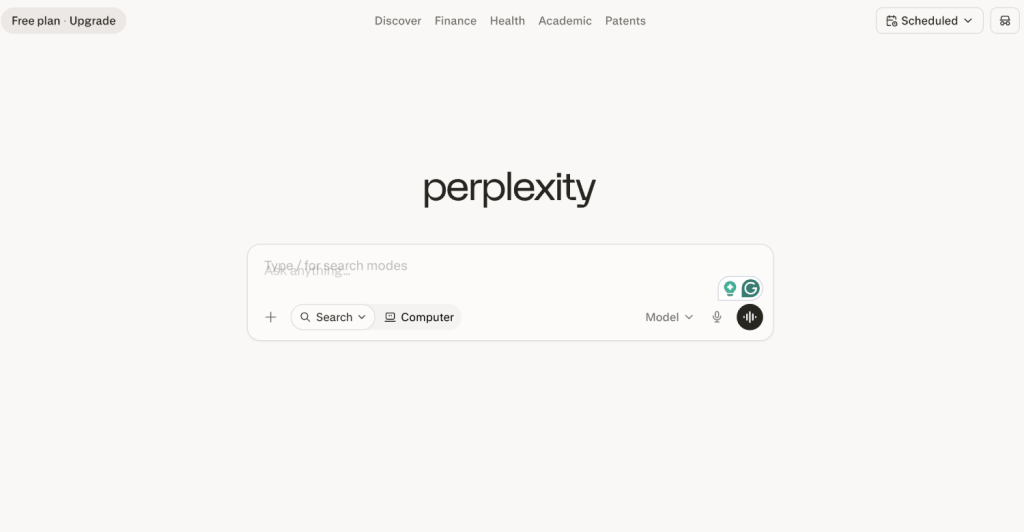
Perplexity Spaces is not a monitoring platform, but it deserves a place on this list because it is the most accessible way to conduct manual citation audits , available on Perplexity’s free tier, with no additional cost. By running a structured prompt library through Perplexity directly, you can document which URLs appear in the citations panel for each query.
For early-stage fintech teams that cannot yet justify platform spend, a structured weekly Perplexity audit using a Google Sheet-tracked prompt library gives you the core citation gap data you need to prioritize content. It does not scale, and it cannot track changes over time automatically, but it beats having no citation data at all. Once the manual process is eating more than a few hours per week, the $99-and-up tier of a purpose-built tool pays for itself quickly.
What Should a Fintech Prompt Library Actually Cover?
The quality of LLM citation monitoring is only as good as the prompts being tested. A tool that runs 20 generic queries like “best payment processor” will miss the specific questions fintech buyers ask when they are two hours into a vendor evaluation.
A well-built fintech prompt library should cover at minimum four query types. Comparison queries (“Stripe vs Adyen for B2B SaaS”), category queries (“best BaaS platforms for neobanks”), problem-led queries (“how to reduce payment failure rates”), and use-case-specific queries (“KYC provider for crypto onboarding under 60 seconds”). Most off-the-shelf tools bias heavily toward category queries and underweight the others.
For fintech teams building their own prompt library, the structural approach to getting ChatGPT to cite your content is a useful starting point. The prompt types that surface citations most reliably tend to mirror the content formats AI engines prefer to cite, including comparison tables, structured definitions, and numbered frameworks.
How Do Competitor Citation Gaps Translate Into Content Priorities?
Competitor citation gap data answers a specific question: when buyers ask a relevant question in an AI engine and you do not appear as a cited source, who does? The answer tells you which content pieces you need to create or improve, not in a generic “we need more GEO content” way, but at the level of a specific URL and a specific query.
Take a fintech payments company that discovers a competitor is being cited in 70% of responses to “how to reduce false positive rates in fraud detection.” That competitor page almost certainly has a detailed, data-rich explainer on that exact topic. The response is not to write a similar post. It is to write a more authoritative one, with clearer structure, named frameworks, and the kind of specificity AI engines can extract and attribute. For context on why structural authority matters, the GEO methodology for fintech SaaS covers the content architecture that citation-hungry AI engines prefer.
The second use of gap data is defensive. If a competitor recently gained citation share for queries where you previously dominated, that is an early signal before any traffic impact appears. Citation monitoring catches competitive content moves before rank tracking does, because AI engines update citation patterns faster than Google crawls and re-ranks pages.
What Metrics Actually Matter in LLM Citation Monitoring for Fintech?
Most tools surface some version of the same four metrics. Citation frequency is how often your brand or URL appears in responses to a defined prompt set. Citation share is your frequency relative to a named competitor set. Source attribution rate is the percentage of brand appearances where your URL is the cited source rather than a paraphrase. Sentiment framing is whether the citation positions you positively, neutrally, or as a counter-example.
For fintech marketers building a reporting cadence, citation frequency and source attribution rate are the two metrics worth including in a weekly dashboard. Citation share gives context for executive reporting. Sentiment framing is worth reviewing monthly, not weekly, because it changes slowly and requires manual interpretation to be useful.
The metric most teams ignore is source attribution rate. A high citation frequency with a low source attribution rate means AI engines are learning about you from competitor content, not your own. That is a structural content problem, not a distribution problem. The GEO reporting tools used by B2B SaaS marketing teams cover how to build a measurement dashboard that separates these signals cleanly.
Frequently Asked Questions
What is the difference between LLM brand monitoring and LLM citation monitoring?
LLM brand monitoring tracks whether your brand name appears anywhere in AI-generated responses. LLM citation monitoring goes further and tracks whether your specific content URLs are cited as sources within those responses. For fintech marketers, citation monitoring is more valuable because a cited URL is attributable, can drive traffic, and signals content authority to the AI engine. Brand mentions without citations may reflect training data, competitor content referencing you, or hallucination.
Which AI engines should fintech marketers prioritize for citation tracking?
Perplexity and Google AI Overviews are the highest-priority engines for fintech B2B buyers because both are heavily used for research-stage queries and both prominently display source citations. ChatGPT is high-volume but less transparent about source attribution. Claude and Gemini are worth including in any enterprise-grade monitoring program, particularly as Claude’s usage among technical buyers in fintech has grown. Prioritize depth on two to three engines over surface coverage of all five.
Can I build a fintech prompt library without buying a dedicated tool?
Yes. A structured spreadsheet of 40 to 80 fintech-specific prompts, run manually through Perplexity weekly and documented with cited URLs, gives you the core citation gap data you need at zero tool cost. The limitation is that manual tracking does not scale past one or two team members, cannot monitor daily changes, and lacks the historical trending that paid platforms provide. It is a valid starting point for pre-Series A teams. Beyond that, the time cost outweighs the platform cost for most tools on this list.
How often do AI citation patterns change for fintech topics?
Citation patterns in competitive fintech categories, such as payments, BaaS, KYC, and fraud prevention, can shift within days following a major content publication, a product announcement, or a competitor gaining a high-authority backlink that causes AI engines to re-weight their source ranking. Weekly monitoring is adequate for most teams. Daily monitoring is worth running for two to four weeks after launching a major content piece to measure its citation uptake.
Do AI citation monitoring tools measure Google AI Overviews separately from ChatGPT?
The better tools do. Google AI Overviews citation patterns differ from ChatGPT and Perplexity in important ways. Google AIO tends to cite pages with strong organic authority in its existing index, while Perplexity weights recent content more heavily. A fintech brand with strong traditional SEO may perform better in Google AIO while underperforming in Perplexity. Tools like BrightEdge, Semrush, and Profound track these engines separately and display citation data by engine, which is the only way to diagnose the actual gap.
What makes fintech content more likely to be cited by AI engines?
Structured content with extractable facts, named comparisons, and clearly attributed data is consistently cited more than prose-heavy editorial content. For fintech specifically, comparison tables between named vendors, structured definitions of regulatory or technical terms, and framework-based explainers with original naming tend to generate higher citation rates. AI engines prefer content they can quote specifically, not summarize vaguely. See the structural challenges of fintech content for a deeper analysis of why this category requires a different approach than general SaaS content.
Should I track competitor citations even if I am not losing citation share today?
Yes. Citation monitoring should be set up defensively before a problem appears, not after. A competitor gaining citation share on mid-funnel comparison queries is an early signal of pipeline risk. By the time that shift shows up in organic traffic or demo volume, the competitor has likely built content momentum that takes months to counteract. Treat a competitor citation surge the way you would treat a sudden increase in their domain rating: a signal worth investigating immediately, not noting for the next quarterly review.
What the Right Tool Actually Buys You
There is a common assumption in fintech marketing that AI visibility is a brand awareness problem. You appear, buyers notice, pipeline grows. The citation data tells a different story. Buyers using Perplexity or ChatGPT to research vendors are clicking the sources. They are going from an AI summary directly to the specific content that backs it up. A brand without citations is a brand in someone else’s footnotes.
The tool choice is secondary to having a clear prompt library and a consistent measurement cadence. The best platform in the world does not help a team that is testing 12 generic queries once a month and calling it GEO reporting. Purpose-built tools like Profound and Otterly pull ahead not because their underlying technology is dramatically superior but because they force teams to structure the measurement problem correctly: specific prompts, engine-by-engine tracking, and citation attribution at the URL level.
For fintech teams building a GEO measurement program, the GEO agencies working in fintech SaaS that have done this well share one common practice: they treat citation gap data as a content brief, not a vanity metric. The gap between where you appear and where your content is cited is exactly the gap between being in the conversation and controlling what the conversation says about you.