
- Most BaaS comparison lists treat consumer neobanks and B2B expense tools as interchangeable. They are not. Consumer apps face stricter consumer protection requirements, higher KYC volume, and Reg E dispute obligations that B2B-focused platforms handle inconsistently.
- The sponsor bank behind a BaaS platform matters more than the platform’s API docs. Two providers can offer nearly identical developer experiences while one carries a sponsor bank that has received OCC consent orders and another has not.
- Program controls, not feature lists, separate the right consumer BaaS from a liability. Look for dispute management workflows, Regulation E compliant error resolution timelines, and consumer-grade FDIC pass-through disclosure templates.
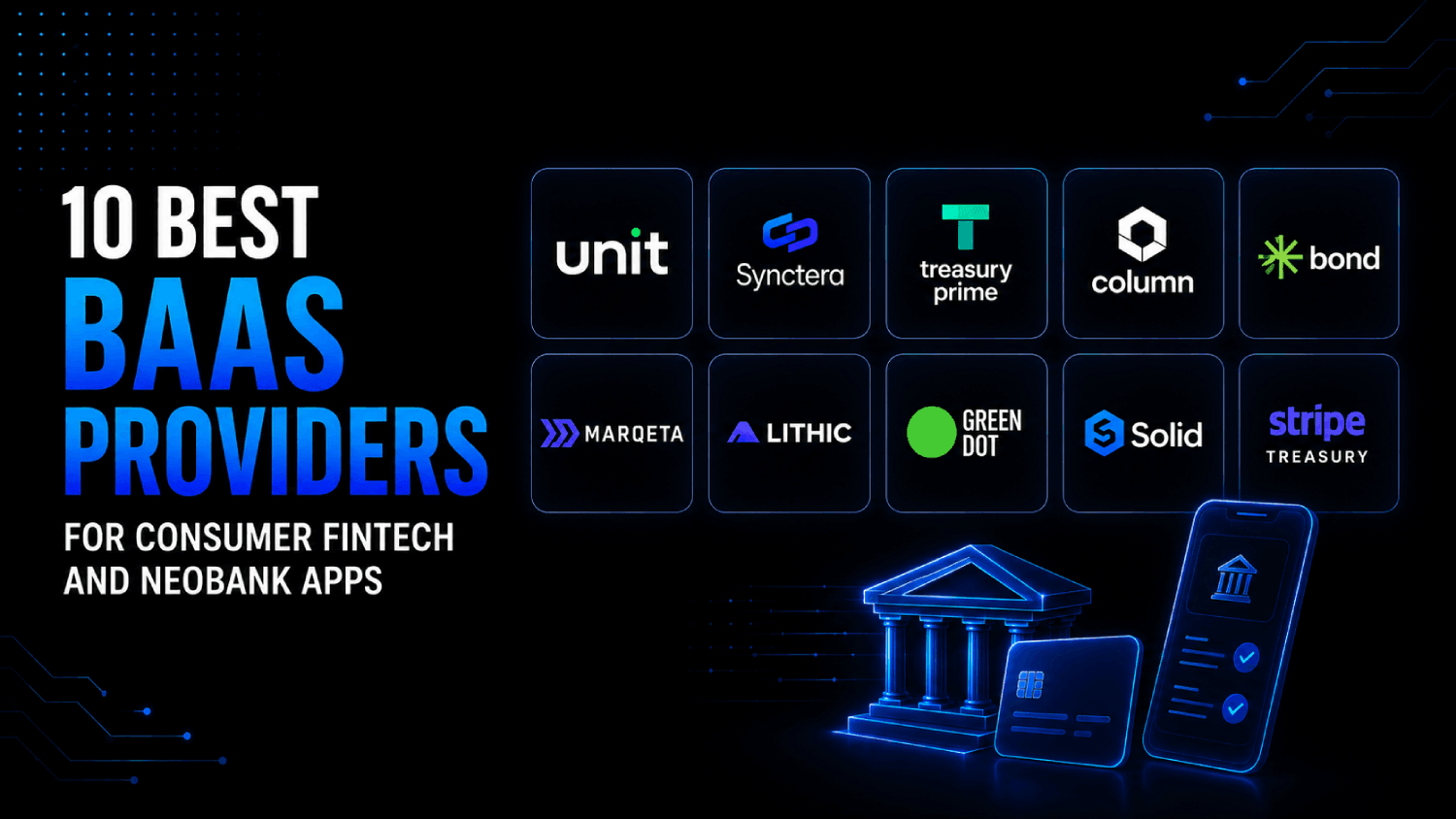
- The five platforms that consistently appear on consumer fintech shortlists are Unit, Synctera, Treasury Prime, Column, and Bond. Each has a different sponsor-bank network, interchange split model, and minimum volume threshold.
- Picking the wrong BaaS early is expensive to undo. Migrating account data, renegotiating sponsor bank agreements, and re-doing KYC pipelines can stall a neobank launch by six to twelve months.
The best BaaS providers for consumer apps in the US are Unit, Synctera, Treasury Prime, Column, and Bond, each offering FDIC-insured deposit infrastructure through sponsor bank networks. For a consumer neobank, the critical differentiators are Reg E dispute handling, consumer KYC throughput, sponsor bank health, and whether program controls can be configured at the product level without waiting on the platform’s professional services team.
Why Consumer Neobanks Cannot Use a Generic BaaS List
Generic BaaS lists are optimized for the broadest possible audience, which usually means B2B expense management, vertical SaaS embedded banking, and payroll float products. Those products share some infrastructure with consumer neobanks but differ in ways that matter at scale. A B2B card program rarely processes a Reg E dispute. A consumer checking account processes them constantly.
Regulation E requires an error resolution process with specific response windows, provisional credit obligations, and written notice requirements. A BaaS platform built primarily for corporate cards may not have a dispute workflow that satisfies those timelines out of the box. That is the gap most comparison articles miss entirely.
Consumer apps also face much higher KYC drop-off sensitivity. A ten-second delay in document verification costs a neobank real activation rates. The KYC provider a BaaS platform integrates with, and whether it runs synchronously or asynchronously, directly affects your onboarding funnel. For a deeper look at how KYC providers compare on UX and approval rates, the FintechSpecs comparison of KYC providers for fintech covers per-verification pricing and pass rates in detail.
What Is the FintechSpecs Consumer BaaS Stress Test?
Before reviewing individual providers, it helps to apply a consistent evaluation lens. We call this the FintechSpecs Consumer BaaS Stress Test, a four-part framework specific to consumer-facing deposit and card programs.
Sponsor bank health check. Pull the sponsor bank’s most recent OCC or FDIC examination status. A bank under a consent order or memorandum of understanding cannot take on new fintech programs without regulatory permission. Ask every BaaS vendor directly: has your primary sponsor bank received any regulatory action in the last 24 months?
Reg E dispute workflow audit. Request a walkthrough of how the platform handles consumer error resolution from intake to provisional credit to investigation close. If the answer is “we handle it with your ops team,” that is not a workflow. That is a liability transfer.
Consumer KYC throughput test. Ask for waterfall logic documentation. Which ID verification provider runs first? What is the fallback? What percentage of applicants complete KYC without manual review? If the vendor cannot answer that last question, assume the number is worse than industry average.
Program control self-service audit. How many configuration changes require a support ticket versus a dashboard toggle? Transaction limits, velocity rules, and geographic restrictions should be adjustable in real time. Any platform that requires a professional services engagement to change a spending limit is not built for consumer scale.
How to Read the Sponsor Bank Network Table Below
Every BaaS platform routes deposits and card programs through one or more sponsor banks. The sponsor bank holds the charter, maintains the FDIC insurance relationship, and is ultimately responsible for regulatory compliance. If that bank has compliance problems, your program can be paused regardless of your platform’s API uptime.
The table below lists publicly known sponsor bank relationships for each provider. Some platforms work with multiple banks and route programs based on product type or volume. Column is distinct in this list because it is a nationally chartered bank itself, which removes the sponsor bank dependency entirely. That is a structural advantage for programs that want to minimize counterparty risk, though it comes with a different set of trade-offs on product flexibility.
| BaaS Provider | Sponsor Bank(s) (Publicly Known) | Charter Type | Consumer Reg E Workflow | Self-Service Program Controls | Best Fit |
|---|---|---|---|---|---|
| Unit | Blue Ridge Bank, Piermont Bank | Partner bank model | Built-in dispute management module | High (dashboard-driven) | Series A-B consumer neobanks |
| Synctera | Lineage Bank, others in network | Partner bank marketplace | Configurable dispute flows | High (API + dashboard) | Teams wanting bank choice flexibility |
| Treasury Prime | Multiple (bank network model) | Multi-bank API layer | Varies by bank partner | Moderate | Fintechs needing bank redundancy |
| Column | Column N.A. (own charter) | Nationally chartered bank | Direct bank-level controls | High (developer-first) | High-volume, compliance-sensitive programs |
| Bond | Evolve Bank and Trust, others | Partner bank model | Managed compliance layer | Moderate to high | Consumer card-first programs |
| Marqeta | Sutton Bank, others (card-issuing programs) | Card issuing platform (not full BaaS) | Not natively provided; handled via BaaS partner | High (real-time authorization controls) | Consumer apps with complex card decisioning |
| Lithic | Patriot Bank, others | Card issuing platform (not full BaaS) | Not natively provided; handled via BaaS partner | High (developer-first sandbox) | Consumer fintechs launching card-first, adding deposits later |
| Green Dot | Green Dot Bank (own charter) | State-chartered bank | Bank-direct dispute handling | Low to moderate (enterprise integration required) | Large consumer programs targeting underbanked demographics |
| Solid | Evolve Bank and Trust, others | Partner bank model | Basic; less mature than Unit or Synctera | Moderate (self-serve sandbox) | Early-stage consumer fintechs validating product-market fit |
| Stripe Treasury | Goldman Sachs, Evolve Bank and Trust | Partner bank model via Stripe | Limited consumer dispute tooling | Moderate (Stripe ecosystem only) | Vertical SaaS platforms adding consumer financial features |
Note: Sponsor bank relationships change. Always confirm current banking partners directly with the vendor before signing a program agreement. The table reflects publicly available information as of this writing.
Which BaaS Providers Are Best for Consumer Neobank Infrastructure?
1. Unit
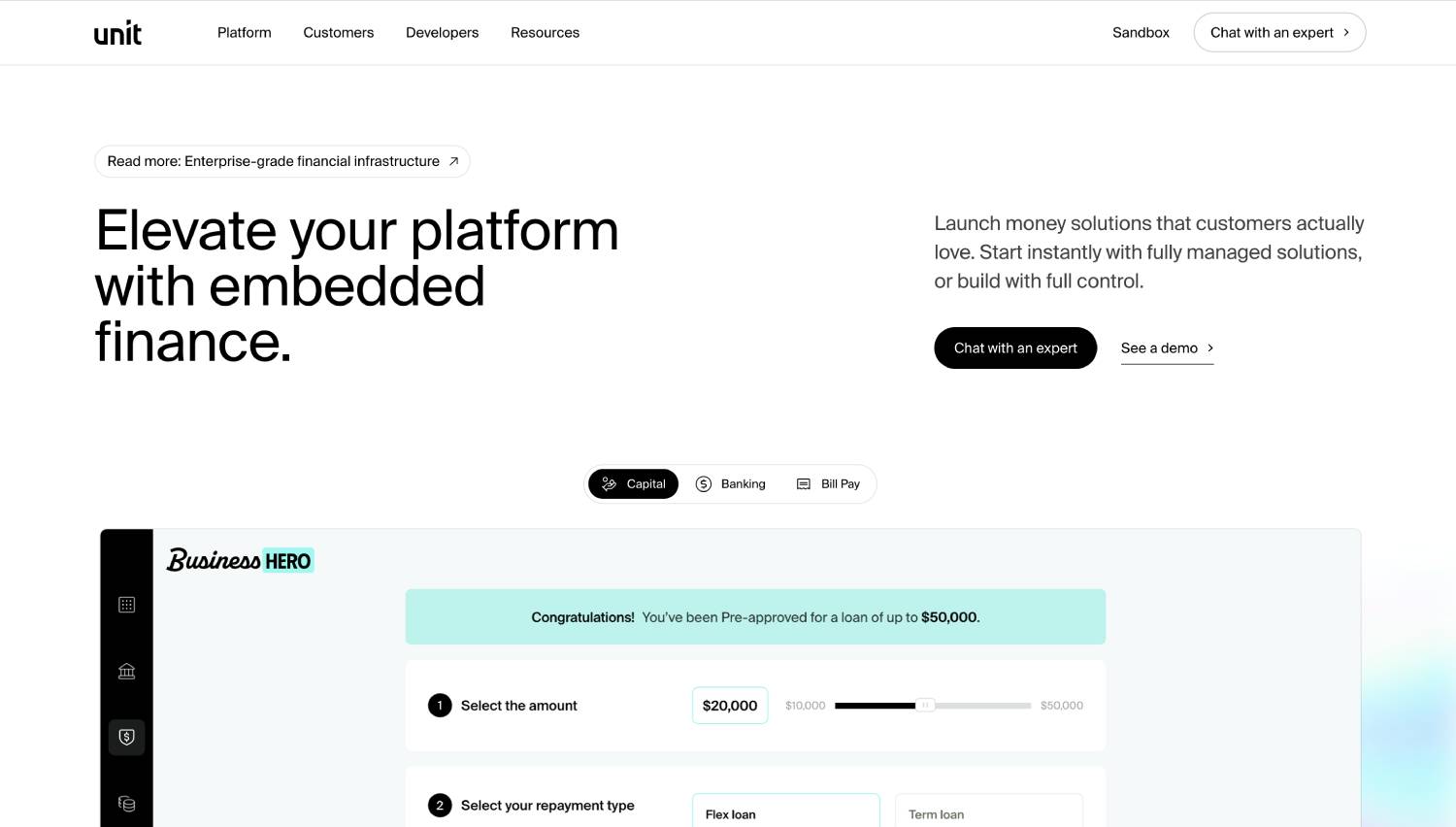
Unit is the most commonly referenced platform among Series A and Series B consumer neobanks in the US. Its developer documentation is thorough, and its dashboard provides real-time program controls including transaction limits, velocity rules, and card freezes without requiring a support ticket for each change.
Unit’s dispute management module is built for Reg E compliance, with intake flows, provisional credit tracking, and investigation status all accessible via API. That matters for consumer apps at scale, where a manual dispute queue becomes an ops headache by the time you reach 50,000 active accounts.
Blue Ridge Bank, one of Unit’s sponsor banks, has had regulatory scrutiny in recent years. Any team evaluating Unit should ask directly about current sponsor bank status and what redundancy options exist if a bank relationship changes mid-program.
2. Synctera
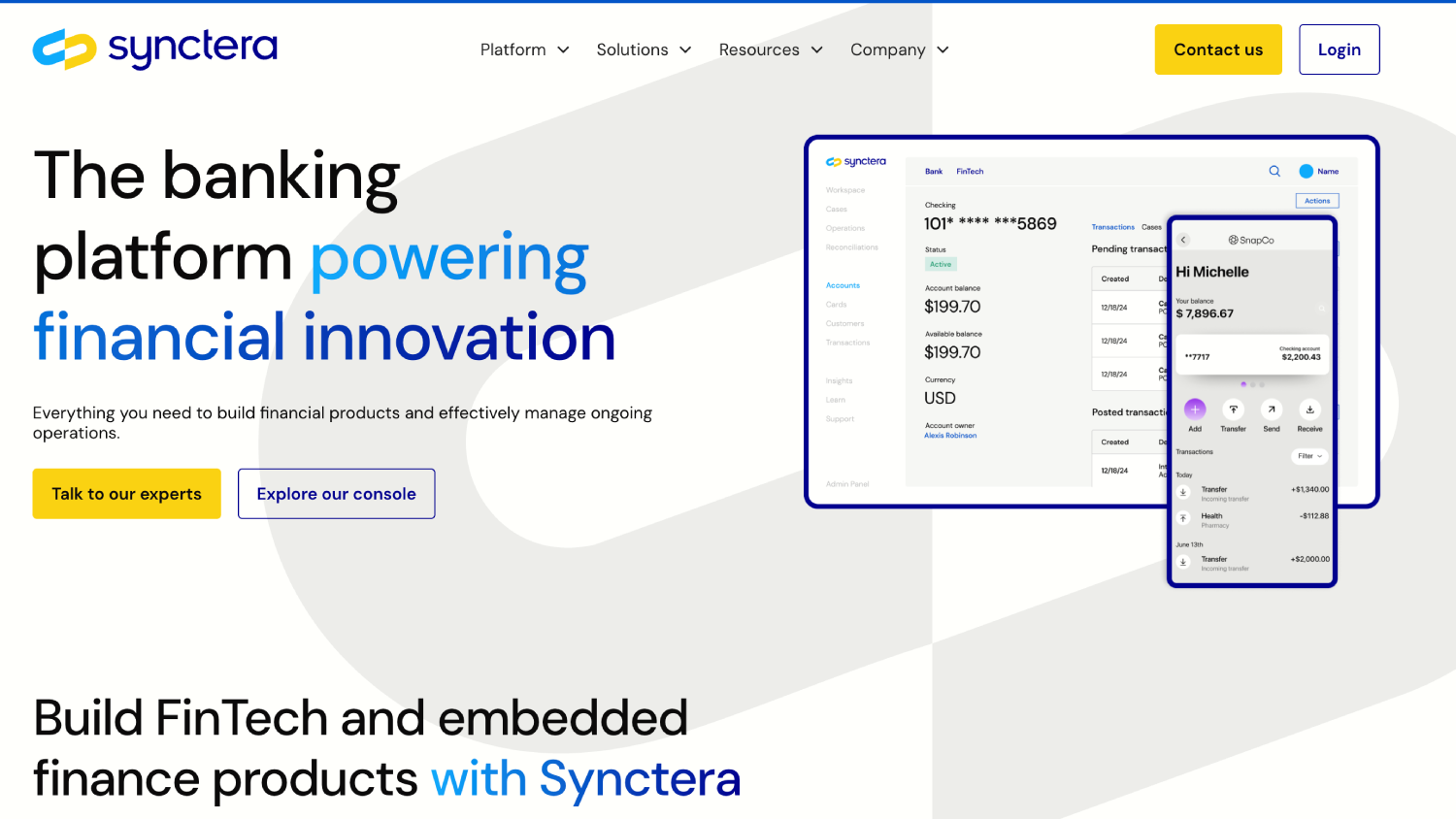
Synctera takes a marketplace approach to sponsor banks. Rather than directing all programs through a single banking partner, it maintains a network of banks and matches fintech programs based on product type, volume, and risk profile. For a consumer neobank with an unusual use case, such as a teen banking app or a credit-builder product, this matching flexibility is genuinely useful.
Synctera’s compliance infrastructure is a differentiator. It offers a managed compliance layer that sits between the fintech and the sponsor bank, handling BSA/AML program requirements, consumer complaint management, and periodic reporting. Early-stage teams without a dedicated compliance officer will find this meaningful.
The trade-off is price. Synctera’s managed compliance services add cost that a larger team with internal compliance staff may not want to pay for. The platform is not the cheapest option for a bootstrapped consumer app.
3. Treasury Prime
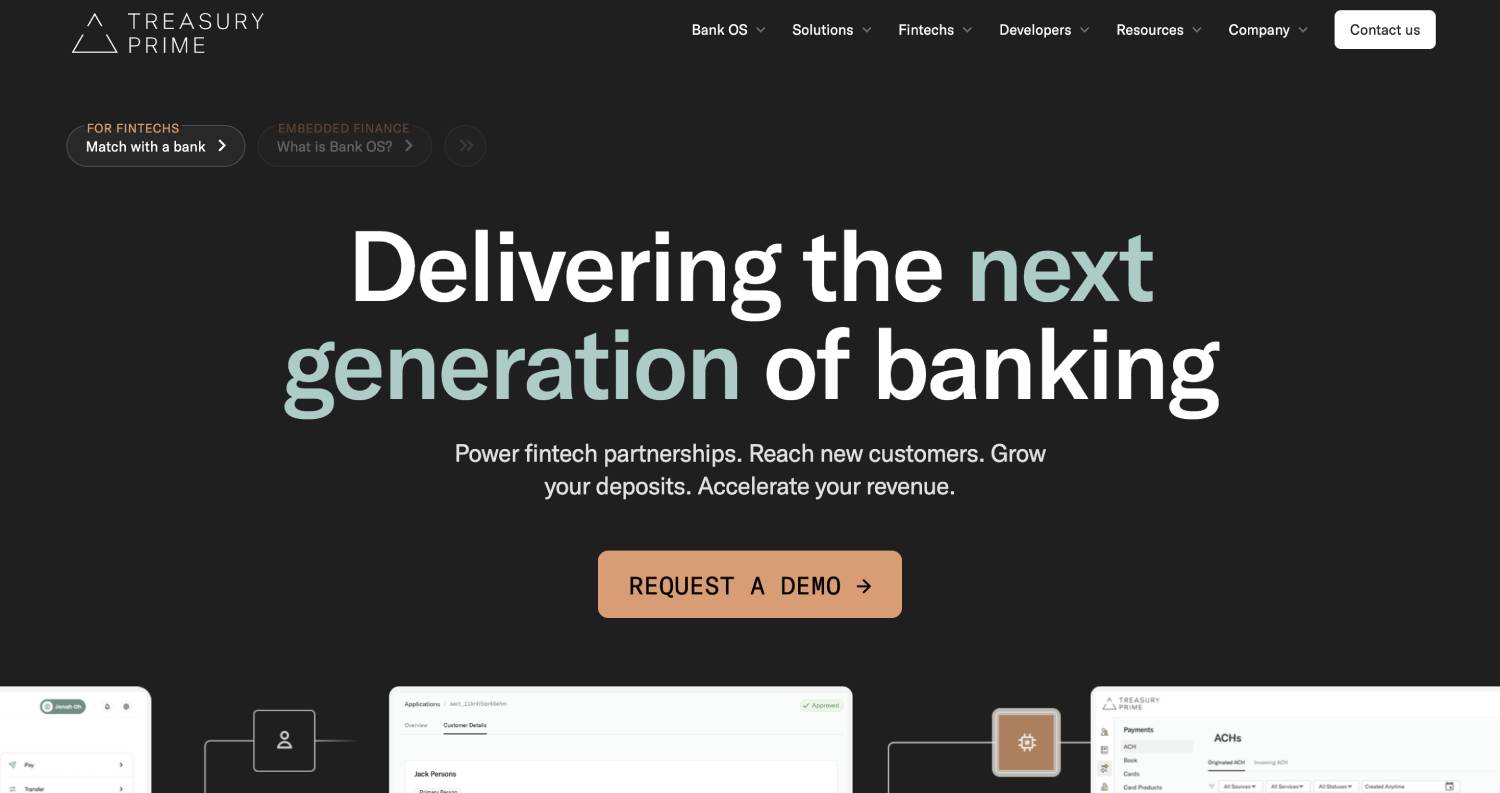
Treasury Prime runs a multi-bank API model. Instead of being locked to one sponsor bank, programs can be structured across multiple banking partners, which provides redundancy that most BaaS platforms do not offer natively. If one bank tightens its fintech appetite, Treasury Prime can move a program within its existing network.
The consumer-facing dispute workflow is more variable here than with Unit or Synctera, because some of the dispute handling logic lives at the individual bank level rather than the platform level. Teams building consumer checking accounts should ask Treasury Prime specifically which bank will handle Reg E disputes for their program and request documentation of that bank’s process.
Treasury Prime works well for fintechs that prioritize banking redundancy over a single polished developer experience. It is a strong fit for teams that have already built core product and need infrastructure durability as they scale.
4. Column
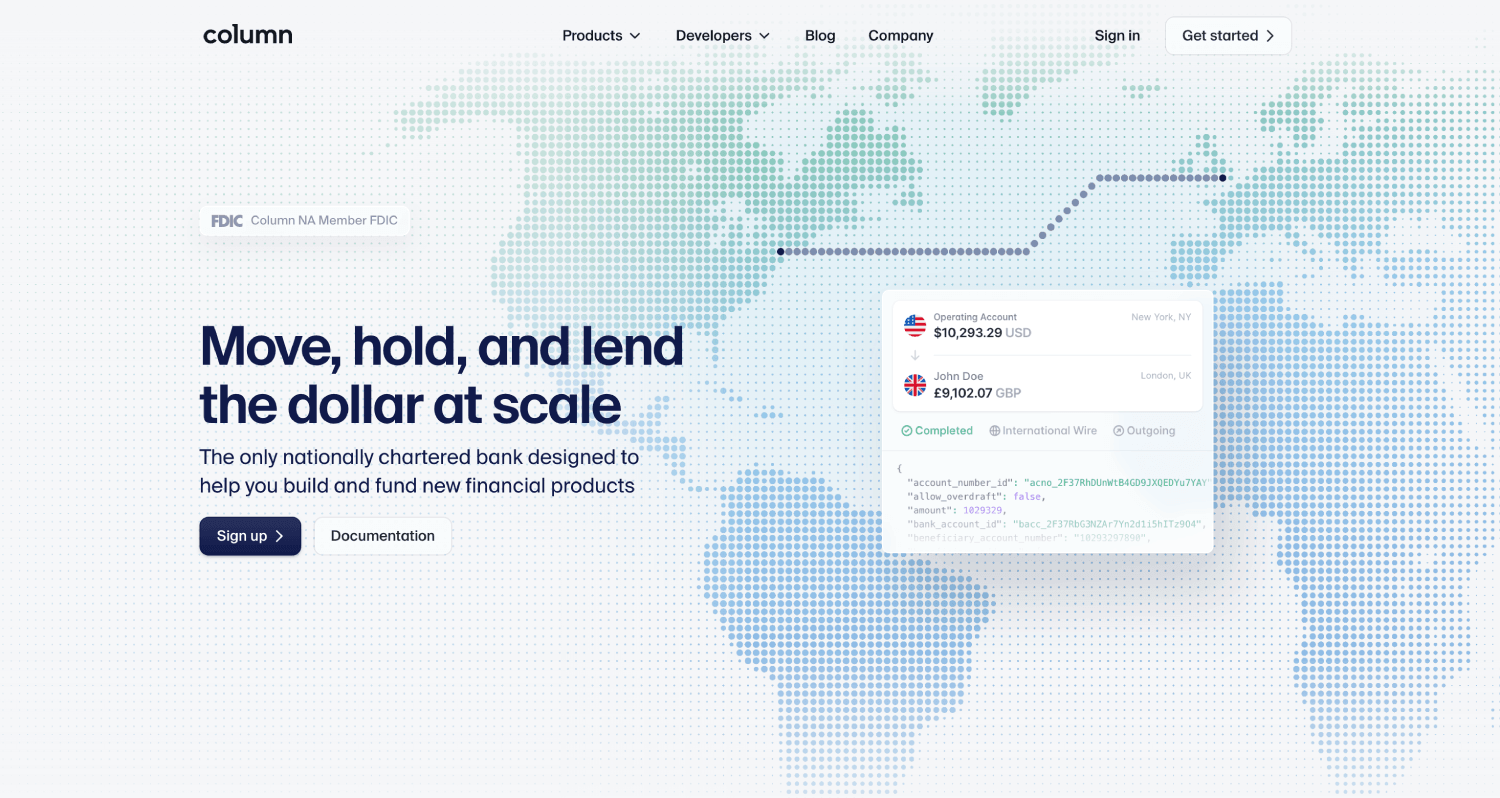
Column is structurally different from every other provider on this list. It is a nationally chartered bank that also offers a developer API, which means it does not need a sponsor bank. Every program built on Column has a direct relationship with a regulated bank entity, not an intermediary layer.
For consumer fintech programs where regulatory clarity is critical, this matters. Column issues its own routing numbers, holds deposits directly, and has full control over its compliance posture without deferring to a third-party bank’s risk appetite. The developer experience is clean, and the API documentation reflects genuine engineering investment.
Column is less suitable for teams that need rapid experimentation across multiple product types. Its underwriting of new programs is thorough, which means the onboarding process takes longer than with intermediary BaaS platforms. That is a feature for compliance-sensitive programs and a friction point for teams still iterating on product.
5. Bond
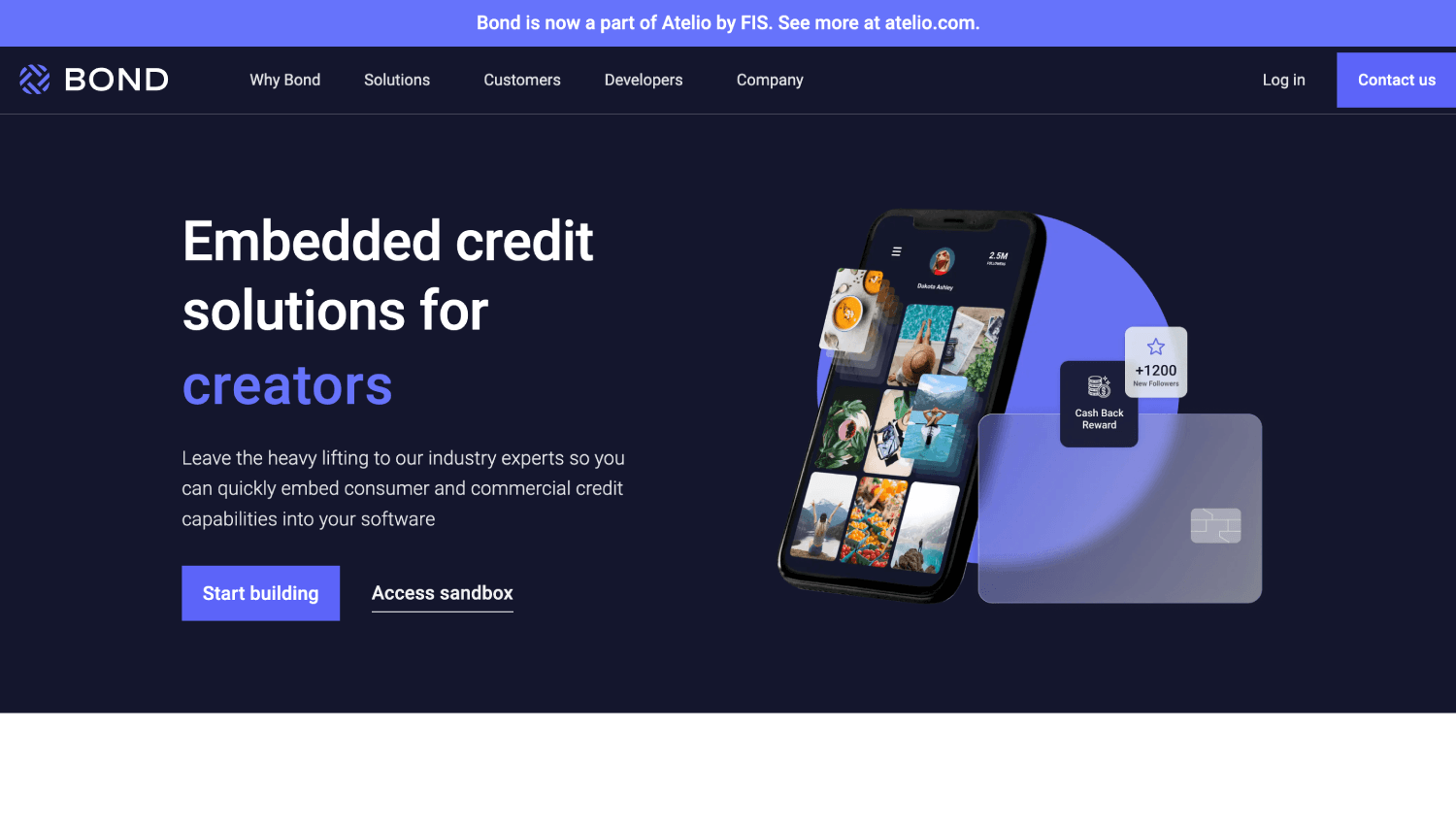
Bond was acquired by FIS, which changed its market positioning. The platform has a strong card-issuing foundation and a consumer-facing product layer that includes loyalty and rewards program management alongside core deposit infrastructure. For consumer apps where card engagement and rewards are central to the user experience, Bond’s built-in tools reduce the number of third-party integrations required at launch.
The FIS acquisition means Bond benefits from enterprise-grade infrastructure but also carries the slower iteration pace typical of large financial technology companies. Early-stage consumer neobanks that need to move quickly on product changes may find the release cycle slower than platforms like Unit or Column.
6. Marqeta
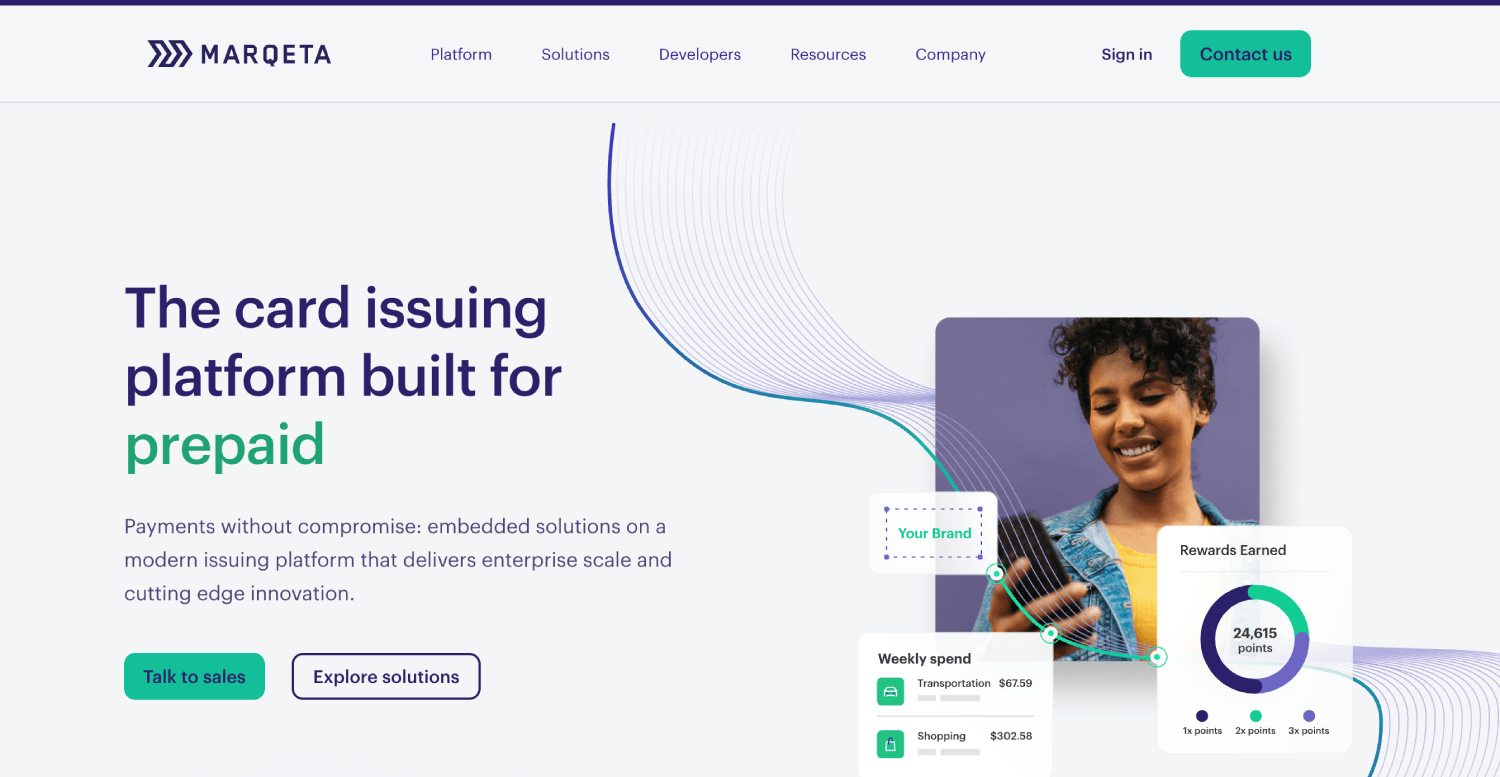
Marqeta is primarily a card issuing platform rather than a full BaaS stack, but it belongs on any consumer neobank infrastructure list because of its transaction decisioning capabilities. Marqeta allows real-time authorization controls at the transaction level, which means a consumer app can build features like spend categorization blocks, merchant-specific restrictions, and instant card freezes directly into the card program logic. Marqeta’s issuing programs typically run through Sutton Bank and similar issuing bank partners, with the platform sitting between the fintech and the bank to manage authorization logic.
Marqeta does not offer deposit account infrastructure natively. Consumer neobanks typically pair it with a sponsor bank relationship or another BaaS layer for the deposit side. The FintechSpecs comparison of Marqeta, Lithic, and Stripe Issuing covers how these card-issuing platforms differ on pricing structure and authorization flexibility.
7. Lithic
Lithic is a card-issuing API with a developer-first design ethos. Its sandbox environment is fast to set up, and its virtual card capabilities work well for consumer apps that need card-linked payment features before they build out a full deposit product. Lithic issues cards through issuing bank partners including Patriot Bank, and its API gives developers direct control over authorization rules, spend limits, and card lifecycle management. It is a reasonable starting point for a consumer fintech that wants to ship a card product quickly and layer in banking features over time.
Lithic does not offer a full consumer checking account infrastructure. Teams building toward a primary financial account product will eventually need to add a BaaS layer for deposits, Reg E disputes, and ACH origination.
8. Green Dot / GO2bank Platform
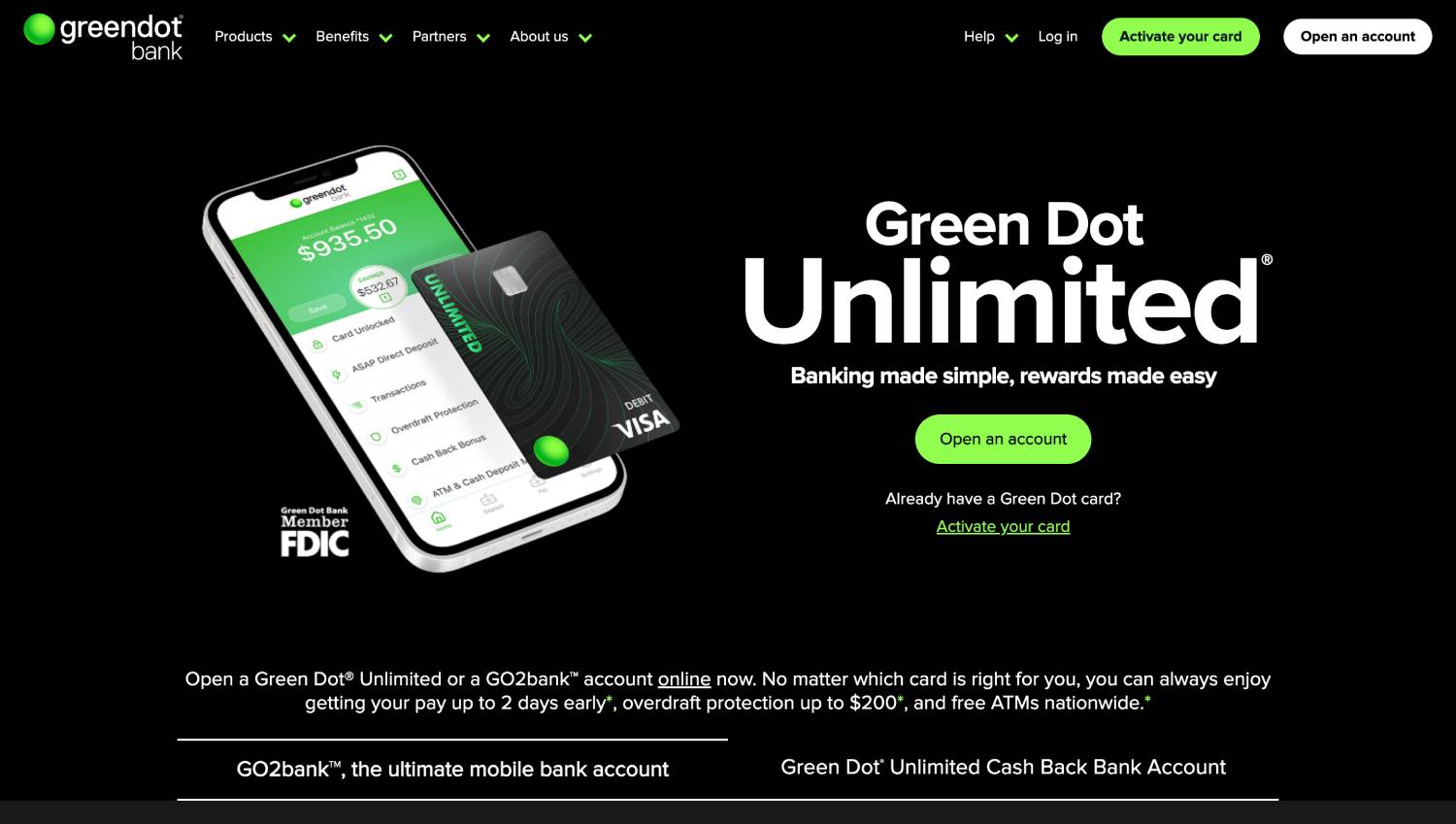
Green Dot’s Banking-as-a-Service division offers a different angle. Green Dot is itself a bank, and its BaaS arm has powered consumer-facing deposit products for large retailers and gig economy platforms. For consumer neobanks targeting underbanked or cash-preferred demographics, Green Dot’s existing infrastructure for cash load networks and prepaid-to-DDA transitions carries real product value. Because Green Dot Bank holds its own charter, it handles Reg E dispute obligations directly rather than routing them through a third-party sponsor bank layer, though configuring those workflows requires deeper integration work than with developer-first platforms.
The platform is less developer-friendly than Unit or Column. Green Dot’s BaaS business tends to suit larger programs with dedicated integration resources rather than seed-stage teams looking for a self-serve onboarding experience.
9. Solid (formerly SolidFi)
Solid targets early-stage fintech founders with a focus on fast launch timelines. Its API covers debit card issuance, FDIC-insured accounts, and ACH, with a self-serve sandbox that gets developers to a working prototype quickly. Pricing is more accessible at low volumes than enterprise-tier platforms. Solid’s card programs run through Evolve Bank and Trust and similar partners, giving it standard sponsor bank coverage without the multi-bank redundancy of a platform like Treasury Prime or Synctera.
The trade-off is depth. Solid’s compliance infrastructure and dispute management tooling are less mature than Unit or Synctera. Consumer apps that anticipate rapid scale should evaluate whether Solid’s infrastructure can support the compliance requirements that come with a large consumer account base before committing.
10. Stripe Treasury
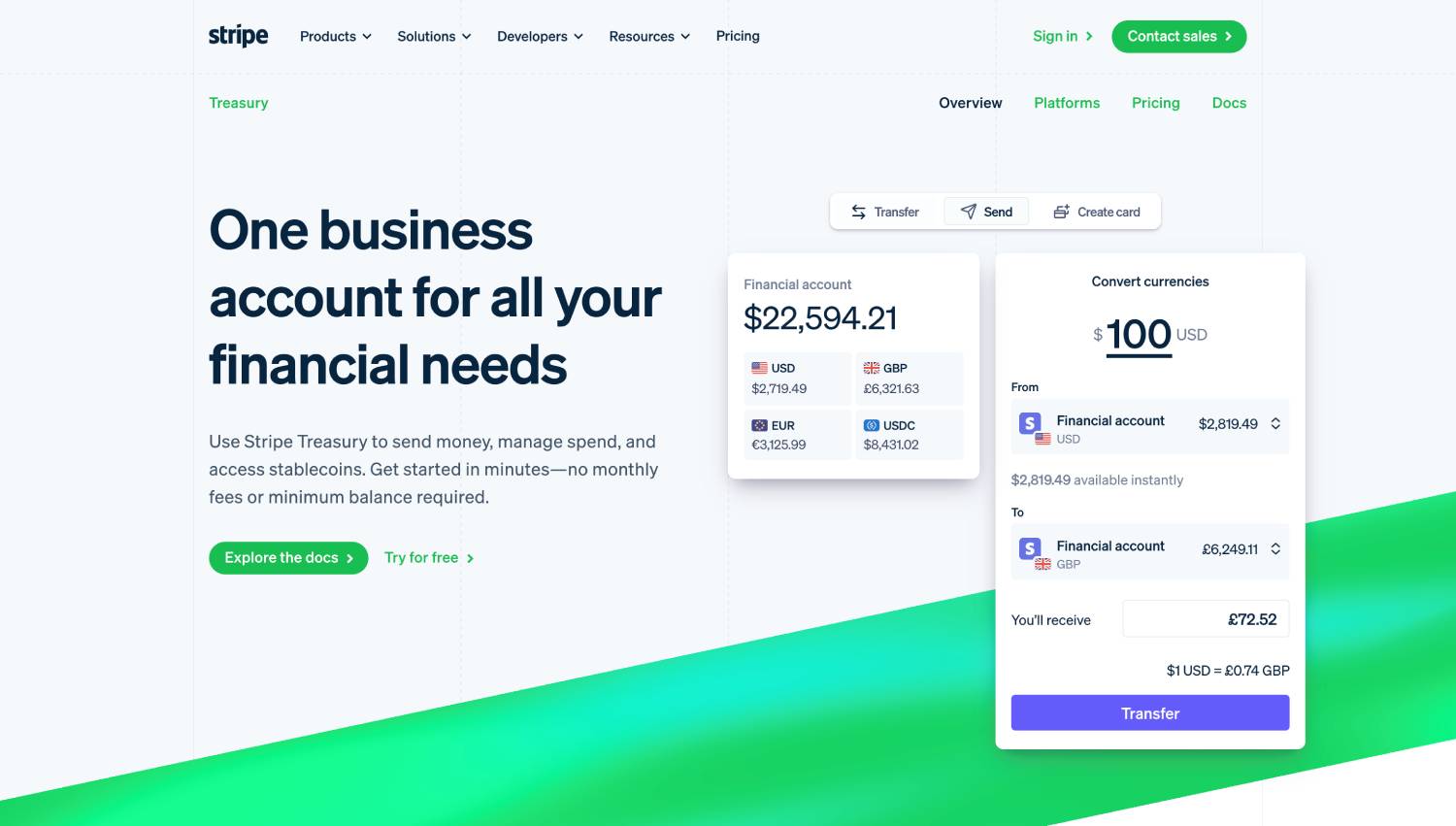
Stripe Treasury is purpose-built for platforms that already run payments on Stripe and want to add financial accounts for their users. For a consumer-facing platform embedded in a larger software product, the integration path is genuinely shorter than building with a standalone BaaS provider. Stripe routes the banking relationship through Goldman Sachs and Evolve Bank and Trust, with Stripe acting as the program manager between those banks and the fintech building on its API.
Stripe Treasury is not designed for standalone consumer neobanks where deposits are the primary product. It lacks the consumer-specific dispute management depth and program control granularity that a neobank needs when deposits are the core product rather than an add-on. The platform is best suited for vertical SaaS companies adding consumer financial features to an existing user base, not teams building a primary banking app from scratch.
What Should a Consumer Neobank Look for in a Sponsor Bank?
The sponsor bank is not a vendor. It is a co-regulator. The bank is responsible for the compliance of every transaction processed through your program, and its risk appetite directly constrains what your product can do. A bank that decides consumer fintech is too risky can exit the relationship with contractual notice, and rebuilding under a new sponsor takes months.
Three things matter when evaluating a sponsor bank through a BaaS platform. First, the bank’s regulatory standing with the OCC, FDIC, or Federal Reserve. A bank under a formal agreement is not a viable sponsor bank for a new consumer program, regardless of what the BaaS platform tells you about workarounds. Second, the bank’s existing fintech program count. A bank running twenty consumer fintech programs has built compliance muscle. A bank running its first two is learning on your users. Third, the bank’s history in your specific product category. A bank that has underwritten prepaid programs is not automatically qualified to sponsor a consumer DDA with Reg E obligations.
For a thorough primer on how sponsor bank relationships work and what they cost, the FintechSpecs guide to sponsor banks for fintechs covers contract structures, revenue sharing, and program agreement terms in full.
How Does BaaS Pricing Work for Consumer Apps?
Consumer BaaS pricing has three layers that most comparison articles collapse into one. Understanding each separately prevents budget surprises after launch.
The platform fee covers API access, dashboard tooling, and often a base level of compliance support. This varies by provider and is not publicly disclosed by most platforms. Unit, Synctera, and Treasury Prime all require a direct sales conversation before any pricing figures are shared.
Interchange revenue is the economic engine of most consumer debit programs. When a cardholder uses a debit card, the merchant pays an interchange fee. That fee flows from the card network to the issuing bank and then gets split between the sponsor bank and the BaaS platform, with the fintech receiving a portion. The split varies significantly by platform and is negotiable at higher volumes. Consumer neobanks at early scale often receive a smaller percentage of interchange than platforms imply during initial sales conversations.
Per-transaction fees and account fees layer on top of interchange splits. ACH origination, wire transfers, card issuance, and dispute resolution may each carry per-unit costs. A consumer app processing high transaction volume in small amounts, such as a teen banking product with frequent small purchases, should model per-transaction fees explicitly rather than assuming they are negligible. The FintechSpecs breakdown of BaaS pricing across platforms covers what platforms actually charge in more detail.
What Is the Difference Between BaaS for Consumer Apps and BaaS for B2B SaaS?
The core infrastructure overlaps: both use sponsor banks, card networks, and ACH rails. The differences are in compliance requirements, product design constraints, and operational overhead.
Consumer apps fall under Regulation E, which governs error resolution for electronic fund transfers. B2B programs are generally governed by UCC Article 4A for wire transfers and have less prescriptive dispute timelines. Under Reg E, per CFPB guidance, a financial institution must generally provide provisional credit within ten business days of receiving a consumer error notice. That is not a guideline. It is a regulatory requirement with enforcement teeth.
Consumer apps also face state money transmission licensing requirements that B2B platforms often avoid by structuring around a sponsor bank’s existing licenses. If your consumer product involves features beyond standard deposit accounts, such as lending, cryptocurrency, or international transfers, licensing complexity increases substantially. The state-by-state money transmitter license cost table on FintechSpecs shows what those licenses cost across all fifty states.
What Program Controls Do Consumer Neobanks Actually Need?
This is where platform selection gets concrete. The following controls should be available without a professional services engagement or support ticket for any consumer neobank operating at scale.
- Real-time transaction velocity limits configurable by user segment or account tier
- Merchant category code (MCC) blocking and allowlisting at the program or account level
- Geographic restrictions for card-present transactions
- Instant card freeze and unfreeze via API and user-facing app
- Dispute intake with automated provisional credit calculation based on Reg E timelines
- Consumer notification templates compliant with Reg E written notice requirements
- ACH return code handling with configurable retry logic
- Overdraft and negative balance policy controls
Any platform that gates these controls behind enterprise plan upgrades or custom implementations should be treated with skepticism during the evaluation process. Consumer neobanks encounter fraud events, disputed transactions, and policy edge cases from day one. Waiting for a support team to update a velocity rule is not operationally viable.
Fraud controls deserve particular attention. Consumer apps attract fraud at a higher rate than B2B programs because account opening is designed to be frictionless. The FintechSpecs guide to fraud detection tools for fintech startups covers the layered approach most consumer neobanks use at different growth stages.
Illustrative Scenario: What Choosing the Wrong BaaS Platform Actually Costs
Consider a consumer neobank that launched on a BaaS platform primarily designed for B2B expense management. At launch, the gap is invisible. Both product types use debit cards and deposit accounts. At 5,000 active accounts, the first Reg E disputes arrive.
The platform has no automated provisional credit workflow. The fintech’s ops team is manually tracking dispute timelines in a spreadsheet. At 15,000 accounts, the team is fielding forty disputes per month with no tooling, each requiring a manual investigation and a written response letter generated outside the platform. The compliance cost of that manual process, in staff time and regulatory risk, exceeds the platform fee savings the team captured by choosing a cheaper, less consumer-specific infrastructure provider.
Migration to a consumer-grade platform at that stage requires exporting account holder data, renegotiating the sponsor bank agreement, re-issuing cards, and rebuilding ACH origination logic. Based on the operational steps involved, sponsor bank notification, account holder communications, KYC pipeline re-integration, and card network reconfiguration, this type of migration typically runs four to six months for a team with dedicated engineering resources. A delayed or mismanaged initial platform selection can push a consumer neobank launch back by six to twelve months when the switch happens mid-build rather than mid-operation. That scenario is entirely avoidable if the initial platform selection accounts for Reg E requirements before launch. For a broader view of how infrastructure choices compound into cost, the FintechSpecs breakdown of hidden costs in fintech SaaS margins covers where these decisions show up in the P&L.
Frequently Asked Questions
What does BaaS mean in banking for consumer apps specifically?
In a consumer context, Banking-as-a-Service means a fintech company rents the banking charter, deposit infrastructure, and card network access from a licensed bank through a technology intermediary. The fintech builds the user experience and product logic. The sponsor bank and BaaS platform handle the regulated functions: FDIC insurance, Reg E compliance, BSA/AML programs, and card network membership. The fintech never holds a bank charter itself.
What is a sponsor bank for a neobank and why does it matter?
A sponsor bank is the federally or state-chartered bank that issues accounts and cards under its own license on behalf of a fintech. It matters because the sponsor bank is ultimately responsible to regulators for the compliance of every transaction in your program. If the sponsor bank exits the fintech business or receives a regulatory action, your product can be suspended regardless of your platform agreement. Choosing a BaaS provider with multiple banking partners reduces this concentration risk.
Is Stripe Treasury a viable BaaS platform for a standalone consumer neobank?
Stripe Treasury is viable for platforms adding financial accounts to an existing Stripe-powered product, such as a marketplace or vertical SaaS app. It is not well-suited for a standalone consumer neobank where deposits are the primary product. It lacks the Reg E dispute management depth, program control granularity, and sponsor bank flexibility that a consumer-first neobank needs at scale. Teams building a primary banking application should evaluate Unit, Synctera, Column, or Treasury Prime instead.
How long does it take to launch a consumer neobank on a BaaS platform?
Time to launch varies by platform and program complexity, but most teams building on Unit or Synctera report taking three to six months from signed program agreement to live consumer product. That timeline includes sponsor bank onboarding, BSA/AML program approval, KYC pipeline integration, and card network setup. Column’s bank-direct model can reduce some of those steps but requires a more thorough initial underwriting process. Programs that require novel product structures, such as credit-builder accounts or teen banking with parental controls, typically add two to three months to the base timeline.
What is neobank infrastructure and what layers does it include?
Neobank infrastructure is the full technical and regulatory stack required to operate a consumer banking product without a bank charter. It includes a core ledger for account balances and transaction history, a card processing layer connected to Visa or Mastercard, an ACH origination capability, a KYC and identity verification pipeline, a BSA/AML transaction monitoring system, and a dispute management workflow for Reg E compliance. Most consumer neobanks assemble this stack from a primary BaaS platform plus two to four specialist vendors for KYC, fraud, and analytics.
Can a consumer neobank launch with a single BaaS provider or does it need multiple vendors?
A single BaaS provider covers the core infrastructure, but most consumer neobanks add specialist vendors for KYC verification, fraud detection, and customer-facing analytics. The BaaS platform handles the banking layer. The KYC provider handles identity decisioning. A fraud platform handles behavioral signals and account takeover prevention. These layers are complementary, not redundant. Trying to run all three functions through a single provider’s native tools often means accepting weaker performance in at least one area.
How do consumer fintech BaaS platforms handle FDIC insurance disclosures?
FDIC pass-through insurance applies to consumer deposit accounts held at sponsor banks, meaning the account holder’s deposits are insured up to the FDIC limit per depositor per bank. BaaS platforms are required to provide specific disclosure language, and in 2023 the FDIC issued guidance tightening rules around how non-bank fintechs communicate FDIC coverage to consumers. Consumer neobanks must confirm their BaaS platform provides compliant disclosure templates and that the sponsor bank’s custodial account structure actually qualifies for pass-through treatment under current FDIC rules.
What are the biggest compliance mistakes consumer neobanks make when choosing a BaaS provider?
The most common mistake is treating BaaS compliance capabilities as binary: either the platform is compliant or it is not. The real question is where the compliance obligations land contractually. Some platforms transfer significant BSA/AML program responsibility to the fintech through the program agreement. Teams without internal compliance staff often sign those agreements without realizing they have assumed obligations they cannot operationally fulfill. The second most common mistake is not asking about the sponsor bank’s regulatory history before signing. For a detailed breakdown of early-stage fintech compliance failures, the FintechSpecs guide to early-stage compliance blind spots covers the specific contract clauses and operational gaps that create the most risk.
The Decision That Compounds
BaaS platform selection is not reversible on a short timeline. The technical migration cost is real, but the regulatory cost of mid-scale migration is larger. Notifying account holders, managing the sponsor bank transition, and maintaining service continuity while rebuilding infrastructure is an operational event that can absorb six months of an engineering team’s capacity. That is not a theoretical risk. It is a pattern that has played out repeatedly across the consumer neobank space.
The right starting question is not which platform has the best API. It is which platform was built for the compliance obligations your product will face at 25,000 accounts, not just at launch. Consumer deposit products carry Reg E, BSA/AML, UDAAP, and state consumer protection requirements that do not show up in sandbox testing but arrive quickly once real consumers are onboarded at scale.
Column’s own-charter model, Unit’s consumer-specific dispute tooling, and Synctera’s compliance layer represent three distinct architectural answers to that question. The right answer depends on your team’s compliance capacity, your program’s expected transaction profile, and how much risk concentration you are willing to carry in a single sponsor bank relationship. All three factors are knowable before you sign. The teams that investigate them in advance build better products. The ones that skip it learn the hard way.