
- Socure’s enterprise contract structure and minimum spend requirements push many seed-to-Series B fintech teams toward alternatives before they have the volume to justify the cost.
- The ten platforms in this comparison cover different strengths: some lead on synthetic identity detection, others on document verification, international coverage, or orchestration flexibility.
- Migration risk is real but manageable. The biggest switching cost is not integration time but model retraining and threshold recalibration on your specific population.
- No single platform beats Socure across every dimension. The right choice depends on your fraud profile, verification volume, and whether you need identity decisioning or just identity data.
- One alternative in this guide carries a sponsored profile. It is labeled clearly, and no competitor’s score was adjusted to make it appear stronger.
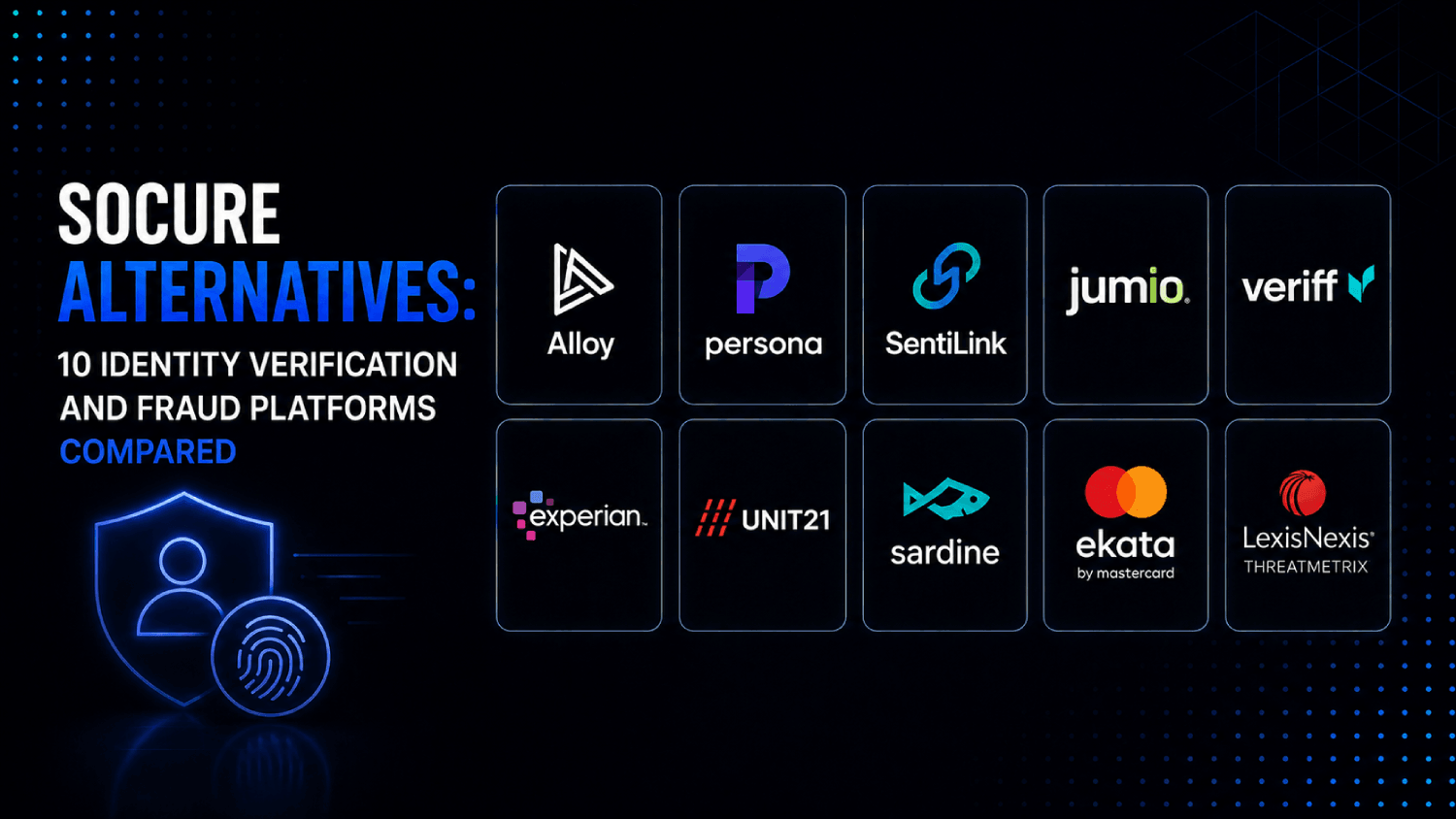
The strongest Socure alternatives for US fintech identity verification include Alloy, Persona, SentiLink, Jumio, Experian CrossCore, Unit21, Veriff, Ekata (a Mastercard company), LexisNexis ThreatMetrix, and Sardine. Each targets a distinct use case: Alloy for orchestration, SentiLink for synthetic identity, Jumio and Veriff for document-heavy onboarding, and Sardine for behavioral fraud signals layered on top of identity. Socure performs well for US consumer identity at scale, but its pricing model and contract terms make it a poor fit for early-stage teams and companies with significant international exposure.
Why Do Teams Actually Leave Socure?
Contract structure is the most common trigger. Socure’s enterprise model typically requires committing to annual volume tiers upfront. For a Series A lender still finding its product-market fit, paying for verification headroom that may never materialize is a margin problem, not a vendor quality problem. The platform itself is capable. The economics just do not compress well at sub-scale volumes.
The second reason is coverage mismatch. Socure’s identity graph is built primarily around US consumer data, which makes it exceptionally accurate for domestic verification. Teams expanding to Canada, Latin America, or Europe find the coverage drops off sharply, and Socure does not position itself as a global document verification play.
The third reason is harder to quantify but shows up repeatedly in operator conversations: model opacity. Socure’s AI scoring produces a sigma score, but the underlying signals contributing to a specific decline or accept decision are not always surfaced in ways that satisfy compliance teams or that can be tuned without vendor involvement. Teams that want to own their decisioning logic eventually hit a ceiling.
How to Evaluate a Socure Alternative Without Getting Burned: The FintechSpecs Migration Stress Test
Before shortlisting any replacement, run what we call the FintechSpecs Migration Stress Test, a four-part check that separates platforms worth evaluating from ones that will create new problems.
Population fit: Does the vendor’s identity graph match your actual user population? A platform with 98% auto-accept rates for prime US consumers may perform poorly on thin-file, immigrant, or younger demographics. Ask for match rate data on a sample of your historical verifications before signing anything.
Threshold portability: Can you import your existing accept/review/reject thresholds, or will you recalibrate from scratch? Recalibration takes time and introduces a period of elevated false positives or false negatives that your compliance team will feel.
Compliance surface: Every vendor change is a vendor risk event under BSA/AML program requirements. Your sponsor bank or compliance officer will want documentation of the new vendor’s SOC 2 status, data retention practices, and adverse action handling. Budget three to eight weeks for this step.
Pricing structure under growth scenarios: Model your cost at 2x, 5x, and 10x current volume. Some platforms charge per verification, some per decision, some per data attribute pulled. The cheapest option at 10,000 verifications per month can be the most expensive at 500,000. For a broader view of how verification pricing actually breaks down across the market, see this analysis of KYC cost per verification pricing benchmarks.
Which Socure Alternative Is Best for Synthetic Identity Fraud?
SentiLink is the clearest answer here. The company was built specifically to detect synthetic identities, the fraud type where a fraudster constructs a persona using a real Social Security number paired with fabricated name and address data. Socure has added synthetic identity capabilities over time, but SentiLink’s model was trained on this specific attack vector from day one, and lenders report materially higher catch rates on synthetic applications at equivalent false positive rates.
SentiLink operates as a point solution rather than a full identity platform, which means it pairs well with a document verification layer like Jumio or Veriff rather than replacing your entire stack. For a detailed comparison of how these two platforms handle synthetic fraud specifically, see the FintechSpecs analysis of Socure vs SentiLink for synthetic identity fraud detection.
For teams that need synthetic identity detection as part of a broader application fraud workflow, Unit21 builds case management and rules around those signals rather than generating the signals itself. It depends on upstream data providers, so it is not a SentiLink replacement but a complementary layer. For the broader category of application fraud tooling, the FintechSpecs roundup of top application fraud and synthetic identity tools for lenders covers this in more depth.
Which Socure Alternative Is Best for Document Verification?
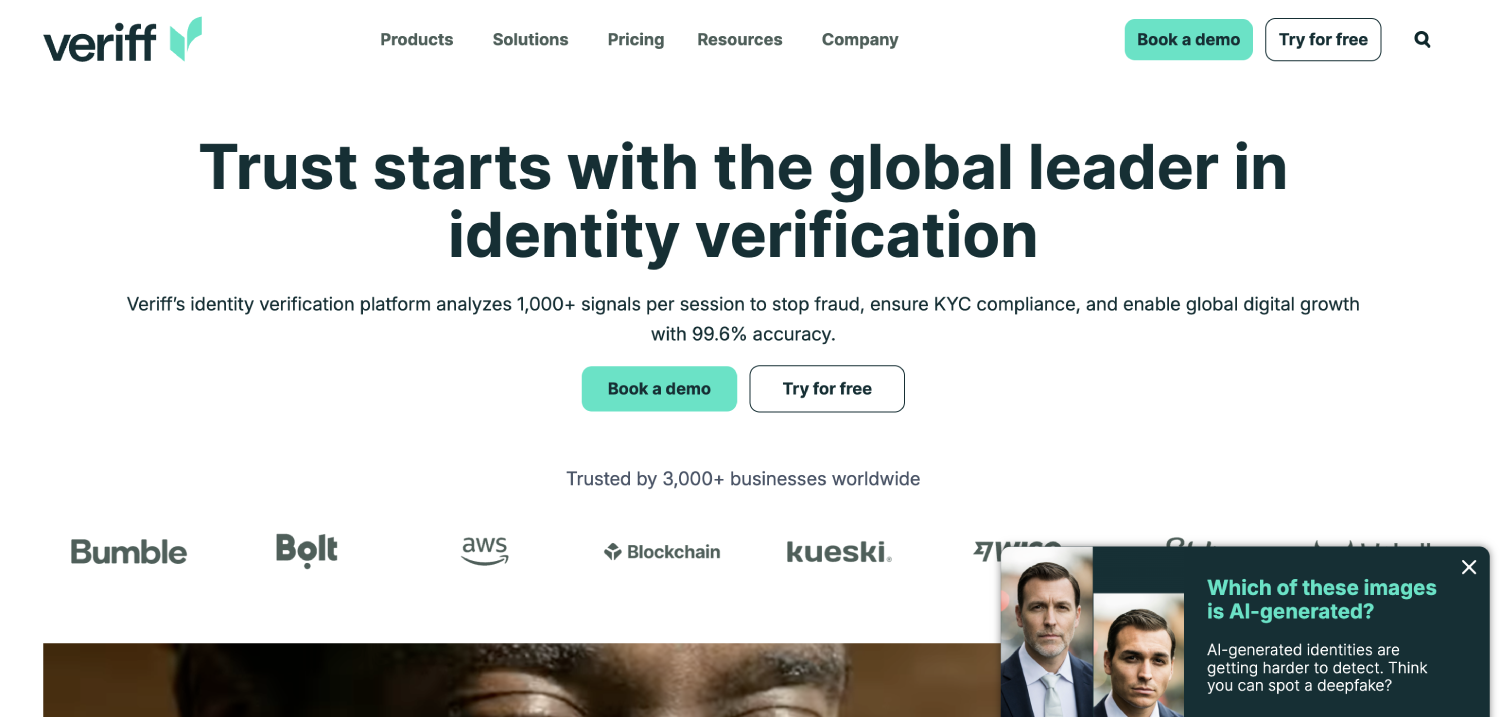
Jumio and Veriff are the two platforms that consistently appear in shortlists where document capture and liveness detection are the primary requirement. Both support a wide range of global identity documents, offer NFC chip reading for biometric passports, and provide real-time decisioning.
Jumio’s primary differentiator is its breadth of supported document types and its long track record with regulated financial institutions. Veriff competes on onboarding conversion rates, with session completion metrics it publishes openly, and has a reputation for faster implementation timelines. Teams optimizing for approval rates in international markets tend to prefer Veriff; teams that need depth of document coverage and have compliance teams comfortable with enterprise contracts often go with Jumio.
Socure does not lead on document verification. Its strength is identity graph matching, not document intelligence. If document fraud is your primary threat vector, either Jumio or Veriff will outperform Socure on that specific dimension regardless of which other signals Socure layers in.
Which Socure Alternative Is Best for Orchestration and Multi-Vendor Identity Decisioning?
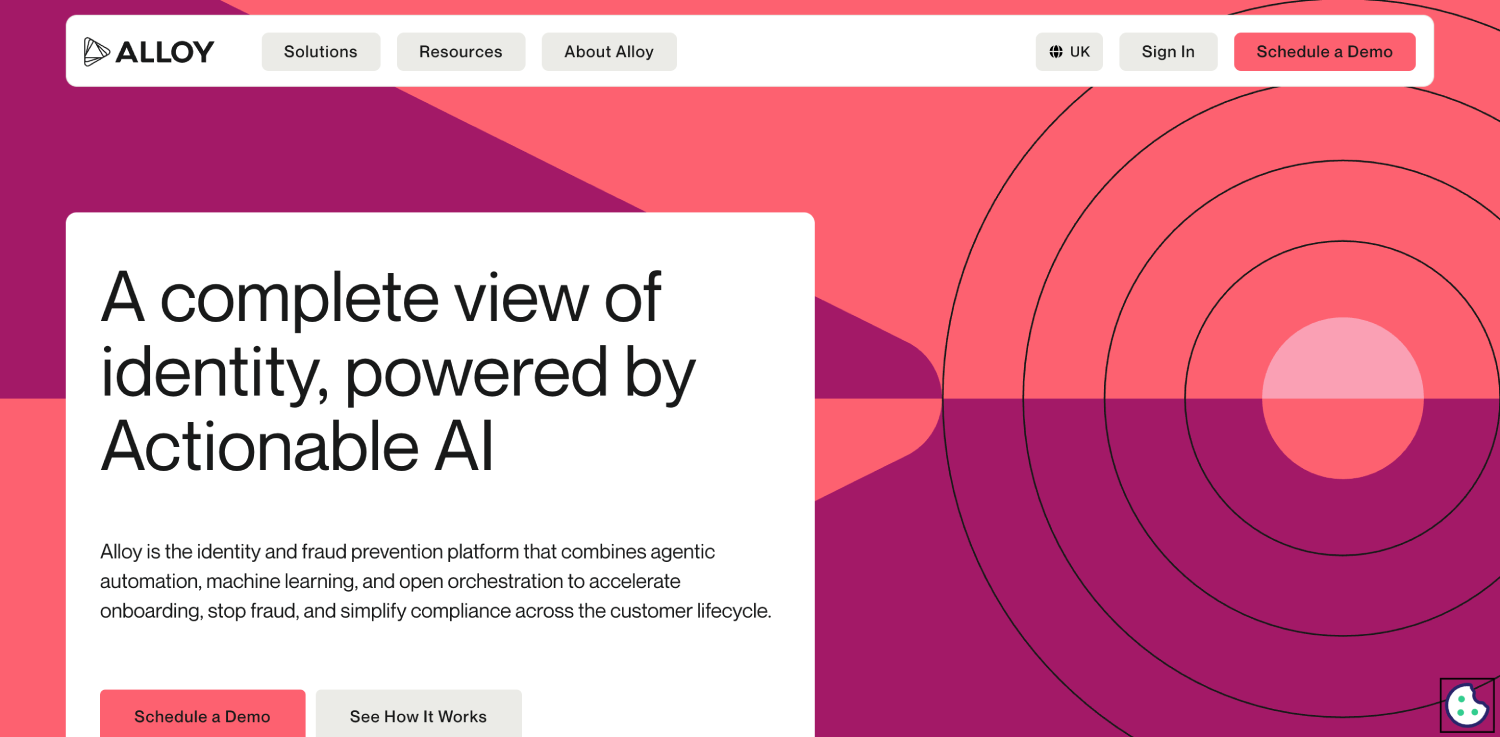
Alloy takes a different approach from every other platform on this list. Rather than generating identity signals itself, Alloy connects to dozens of data providers, including Socure, SentiLink, Experian, TransUnion, and others, and gives compliance and risk teams a workflow engine to define how those signals combine into a decision.
The practical implication: a team that wants to use SentiLink for synthetic identity, Jumio for document capture, and Experian for credit attributes can route all three through Alloy and manage the decision logic in one place. This solves the vendor lock-in problem and gives risk teams auditability that a single-vendor model cannot match. For a detailed head-to-head of how Alloy compares to Persona on orchestration, see the FintechSpecs comparison of Alloy vs Persona for identity decisioning and onboarding orchestration.
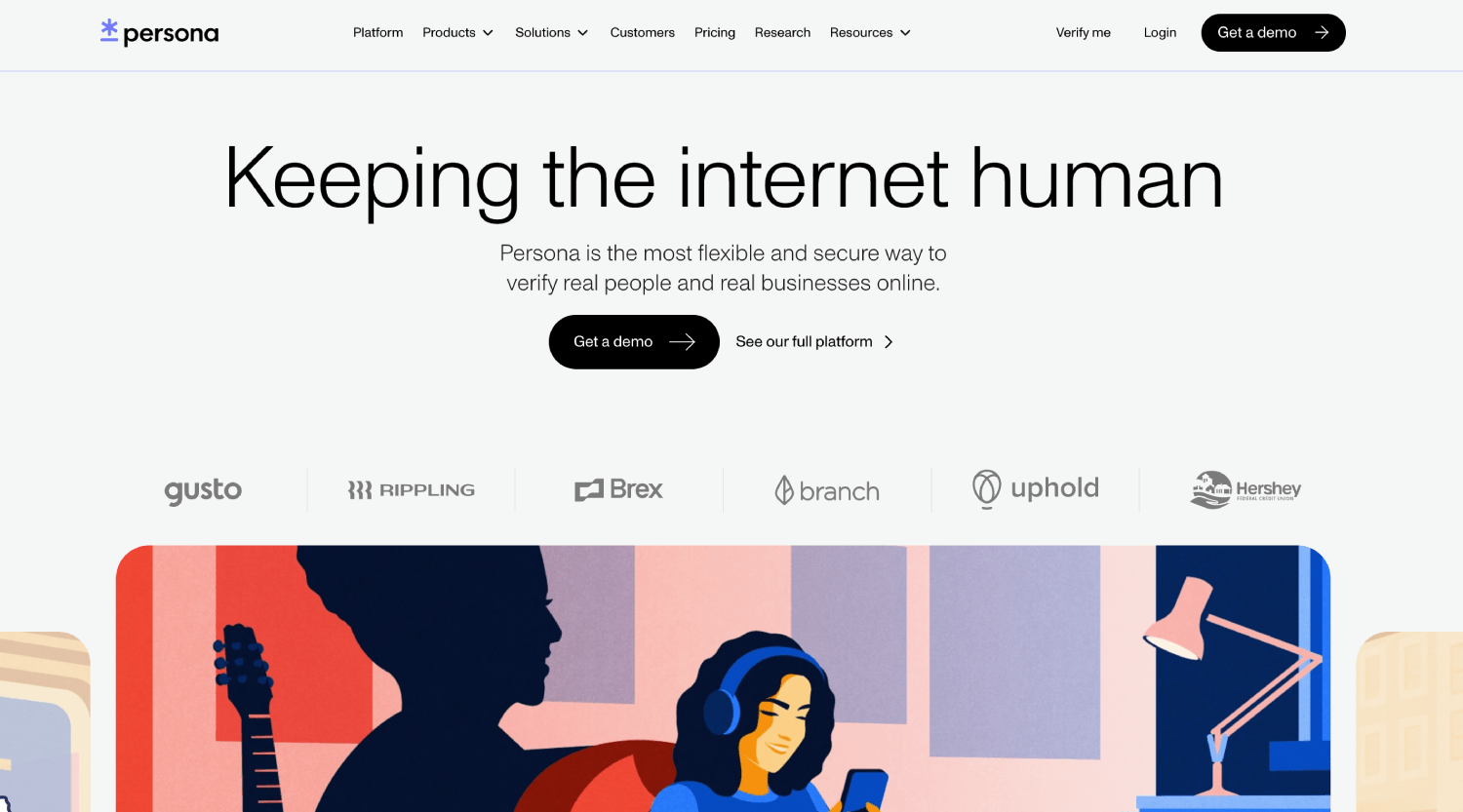
Persona occupies similar territory but with a heavier emphasis on the end-user verification experience and case management tooling. Persona’s strength is building custom verification flows with conditional logic, which makes it popular with companies that have complex tiered onboarding requirements. Where Alloy excels at connecting many data vendors, Persona excels at building the user-facing onboarding experience around those connections.
Which Socure Alternative Is Best for Behavioral and Device Intelligence?
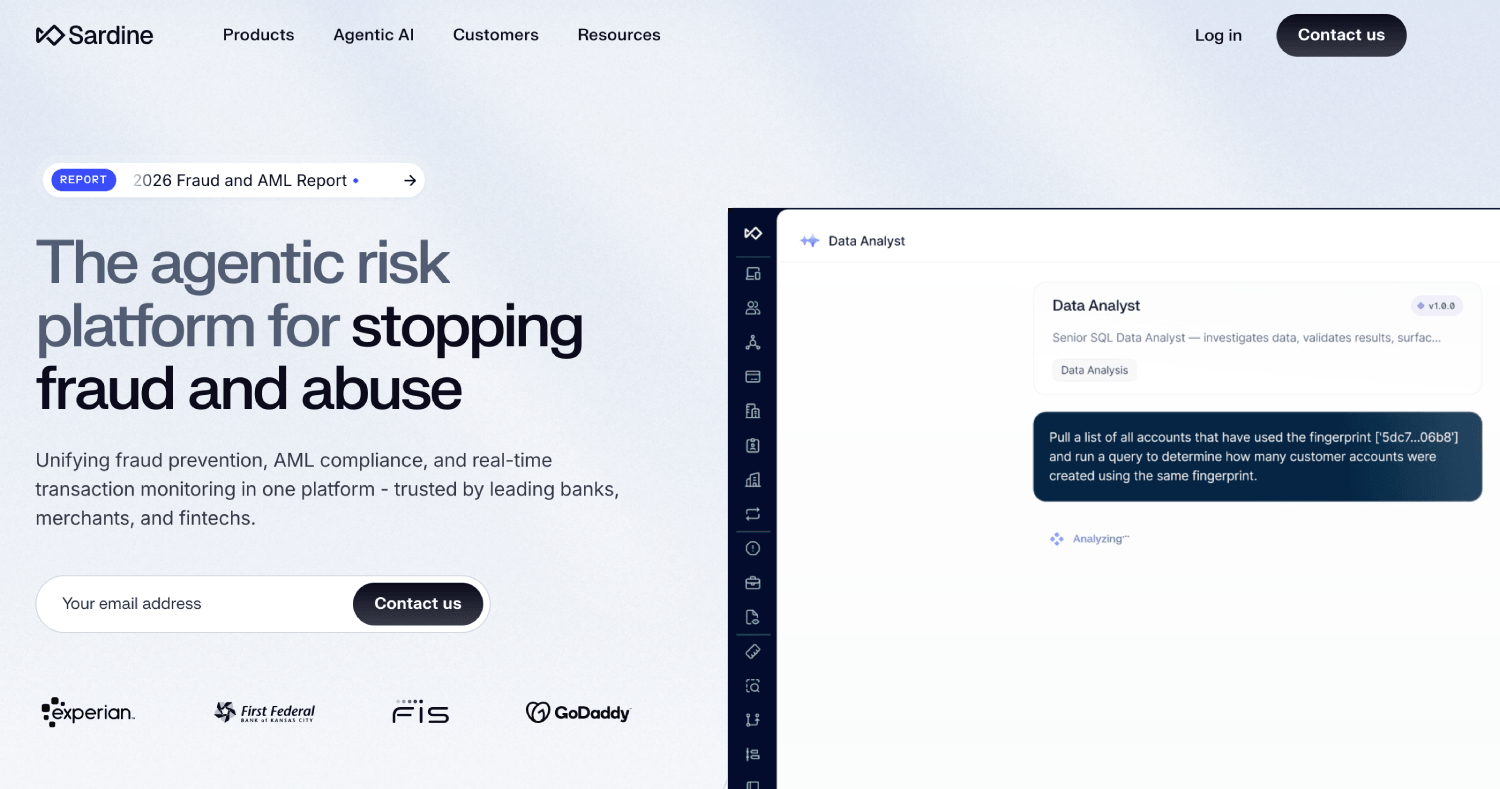
Sardine is the most interesting platform on this list for teams where traditional identity verification is not catching the fraud. Sardine combines device fingerprinting, behavioral biometrics, and identity signals into a single API call, which means it can flag a legitimate identity that is being operated by a bad actor based on how they type, scroll, and interact with a session.
This matters for account takeover, where the identity is real but the session is fraudulent. Socure’s model is built around onboarding decisioning, not session-level behavior. Sardine is not a replacement for KYC at onboarding, but it closes a gap that every identity-first platform leaves open.

LexisNexis ThreatMetrix has been in this space longer than most competitors and operates one of the largest shared fraud intelligence networks in the industry, a consortium of behavioral and device data across thousands of participating businesses. The platform tends to perform better at volume and for established companies where the consortium network effects matter. Early-stage teams may find the implementation complexity and contract structure similar to Socure’s.
Which Socure Alternative Is Best for Experian or Credit Bureau Integration?
Experian CrossCore is the natural choice when your verification workflow needs to sit alongside credit bureau attributes. CrossCore is Experian’s decisioning platform that connects identity verification, fraud detection, and credit risk signals in one orchestration layer, which reduces the number of vendor relationships your compliance team needs to manage.
The trade-off is flexibility. CrossCore is strongest when your business model already relies heavily on Experian’s credit data. Teams that want to mix in non-Experian data providers will find orchestration more constrained than with Alloy or Persona. For lenders specifically, the native integration with Experian’s fraud consortium and FACTA risk attributes is a meaningful operational advantage.

Ekata, now part of Mastercard, provides phone, email, address, and name identity attributes through an API used frequently as a pre-screening layer before triggering a full KYC check. It is not a full identity verification platform, but its attribute coverage is deep and its data quality for US and international records is high. Teams use it to reduce verification costs by filtering obvious mismatches before they hit the more expensive identity verification step.
The Ten Alternatives Side by Side
| Platform | Primary Strength | Best For | US Coverage | International | Migration Risk | Pricing Model |
|---|---|---|---|---|---|---|
| Alloy | Multi-vendor orchestration | Teams wanting decision control without vendor lock-in | High | Via sub-vendors | Medium (requires workflow rebuild) | Platform fee plus per-workflow charges |
| Persona | Configurable onboarding UX | Complex tiered verification flows | High | Good | Low to medium | Per-verification plus platform fee |
| SentiLink | Synthetic identity detection | Lenders with thin-file or credit-building populations | High | Limited | Low (additive layer) | Per-inquiry |
| Jumio | Document verification | Regulated onboarding with global document needs | High | Very high | Medium | Per-verification |
| Veriff | Conversion-optimized document verification | Consumer fintechs optimizing onboarding approval rates | High | High | Low to medium | Per-verification |
| Experian CrossCore | Credit bureau plus fraud orchestration | Lenders already using Experian credit data | High | Medium | High (deep integration) | Custom enterprise |
| Unit21 | Rules-based case management | Risk teams that want to own their rules logic | High | Medium | Medium | Platform fee plus usage |
| Sardine | Behavioral and device intelligence | Account takeover prevention layered on existing identity stack | High | Medium | Low (additive) | Per-session |
| Ekata (Mastercard) | Identity attribute intelligence | Pre-screening layer to reduce full verification costs | High | High | Low (additive) | Per-query |
| LexisNexis ThreatMetrix | Consortium device and behavioral network | High-volume platforms where network effects compound | High | High | High (contract complexity) | Custom enterprise |
Featured Alternative: Alloy (Sponsored Profile)
This section is a paid profile. Alloy’s placement here reflects a commercial relationship with FintechSpecs. No competitor’s assessment in this article was altered to support this placement.
Alloy is the platform that shows up most often when a fintech team outgrows a single-vendor identity model. Its core proposition is simple to describe but hard to build: instead of choosing one identity data source and accepting its limitations, you connect Alloy to multiple data providers and define your own decisioning logic in a no-code workflow editor. Your compliance team can see exactly which signals drove a specific decision. Your risk team can tune thresholds without a vendor change order.
The practical advantage for teams switching from Socure is that Alloy can run Socure as one data source inside its orchestration layer, which means you can gradually shift weight to other providers rather than executing a hard cutover. That staged migration path lowers the operational risk of switching, a meaningful consideration for any team managing active compliance obligations. For teams weighing the product and compliance readiness burden of a vendor change, this incremental approach is often the deciding factor.
Alloy is not the cheapest option at low volumes, and it is not the right choice for a team that just needs a single document verification API. It earns its cost for companies where identity verification is a core risk function, where the team needs to demonstrate decisioning auditability to a sponsor bank or regulator, or where the fraud mix is complex enough that no single data provider covers it adequately.
What Does Switching from Socure Actually Cost in Practice?
Consider a Series B consumer lender processing a high volume of new applications per month. At that scale, Socure’s enterprise tier requires a committed annual contract. The direct API integration typically involves three to six weeks of engineering work to swap SDKs, remap response fields, and rebuild the adverse action logic. That is not a switching cost most teams account for when they start evaluating alternatives.
The harder cost is threshold recalibration. Every identity platform produces scores on a different scale with different distributions. Your existing accept threshold on Socure’s sigma scale does not translate directly to an equivalent value on a different vendor’s output. A period of parallel running, where both vendors score incoming applications without the new vendor’s output triggering decisions, is the safest way to calibrate. That parallel period costs money in API calls and engineering time. Budget four to twelve weeks for the full cycle, not just the integration sprint.
The hidden cost that catches teams off guard is model population drift. If your user population skews toward thin-file or credit-invisible consumers, your calibration data from a Socure-trained threshold may not generalize cleanly to a new vendor whose model was trained on a different population mix. Teams that do not account for this often see their false positive rate spike in the first 30 days after cutover, which creates a compliance noise event at exactly the wrong moment.
Frequently Asked Questions
Who are Socure’s main competitors in US fintech identity verification?
Socure’s primary competitors for US consumer identity verification include Alloy, Persona, SentiLink, Jumio, Veriff, Experian CrossCore, and LexisNexis ThreatMetrix. The competitive set depends on use case: SentiLink competes most directly on synthetic identity, Jumio and Veriff on document verification, and Alloy and Persona on orchestration and decisioning. No single platform matches Socure on all dimensions, which is why many teams run two or three providers in combination rather than replacing Socure with one equivalent.
How much does Socure cost compared to alternatives?
Socure does not publish public pricing. The company operates on custom enterprise contracts with annual volume commitments. Based on publicly available operator accounts, entry-level contracts typically require meaningful minimum commitments that price out pre-product-market-fit startups. Alternatives like Persona and Veriff publish per-verification pricing on their websites. Alloy uses a platform fee plus per-workflow model. Ekata and SentiLink charge per-query. For teams below roughly 10,000 monthly verifications, pay-as-you-go alternatives will almost always be cheaper than Socure’s minimum commitments.
Is Socure better than Persona or Alloy?
Socure outperforms Persona and Alloy specifically on US consumer identity matching from its proprietary graph. If your primary risk is US identity fraud at scale, Socure’s model accuracy is genuinely difficult to match. Persona outperforms Socure on configurability, international document verification, and onboarding UX control. Alloy outperforms Socure when you need to combine multiple data sources and own the decisioning logic. The “better” platform depends entirely on which failure mode matters most to your risk team.
Can I run SentiLink alongside Socure instead of replacing it?
Yes, and this is a common configuration for lenders. SentiLink functions as an additive signal on top of an existing identity stack. Running both means you get Socure’s identity graph matching and SentiLink’s synthetic identity scoring simultaneously, with your decisioning layer combining both signals. This approach costs more per verification but tends to produce better fraud outcomes for lenders with significant synthetic identity exposure. Most teams that add SentiLink do not remove Socure; they add a rule that requires both signals to clear before auto-approving.
What is the biggest migration risk when switching from Socure?
Threshold recalibration is the most underestimated risk. Your existing accept, review, and reject thresholds are calibrated to Socure’s specific model outputs and score distributions. No alternative platform’s score will behave the same way on your population. The safest migration path runs both vendors in parallel for four to eight weeks before cutover, using the parallel period to identify the equivalent thresholds on the new platform. Skipping this step typically produces a false positive spike in the first 30 days that triggers compliance review flags.
Does Socure cover international identity verification?
Socure’s identity graph is primarily optimized for US consumers. International coverage exists but is not a platform strength. Teams with significant Canadian, Latin American, or European user populations consistently report lower match rates outside the US. Jumio, Veriff, and Ekata all carry deeper international document and identity coverage. If your user base is more than 20% international, evaluating a globally-oriented document verification platform alongside or instead of Socure is worth the effort.
What is RiskOS and are there alternatives to it?
RiskOS is Socure’s end-to-end fraud and identity risk decisioning platform that combines its identity verification, document verification, and fraud signals into a unified workflow. It positions Socure not just as a data provider but as the operational layer for risk decisions. The closest alternatives at a platform level are Alloy, which provides similar orchestration across multiple data providers, and Persona, which combines verification flows with case management. Experian CrossCore plays the same role for teams inside Experian’s data environment.
How do I evaluate a Socure alternative without disrupting live operations?
Run a retrospective analysis first. Most alternatives will accept a sample of historical applications and score them without triggering live decisions, which lets you compare how the new vendor’s outputs would have matched your existing decisions. This shows model fit before you touch production. After that, a shadow mode deployment, where the new vendor scores live traffic but your existing logic drives decisions, gives you real-time calibration data. Only after both steps should you begin shifting any actual decision weight to the new vendor. For a broader framework on evaluating fintech vendors before committing, the FintechSpecs guide on how to evaluate a fintech vendor before you sign covers the due diligence process in detail.
What Should You Actually Do With This Comparison?
The teams that make the best identity platform decisions start with a clear-eyed diagnosis of why their current setup is failing before they start evaluating replacements. If the problem is cost, the solution is probably a per-verification pricing model like Persona or Veriff, not a different enterprise platform with the same contract structure. If the problem is synthetic identity fraud, adding SentiLink to your existing stack will likely outperform ripping and replacing everything. If the problem is decisioning opacity or vendor lock-in, Alloy solves that without requiring you to find a new identity data source at all.
Socure is a capable platform. The operators who leave it are rarely leaving because it does not work. They are leaving because the contract model, the coverage limitations, or the decisioning constraints no longer fit their specific situation. That distinction matters because it defines which alternative is actually right for them.
The worst outcome in this evaluation is choosing the alternative with the best marketing and discovering six months later that your calibration period was too short, your population fit was assumed rather than tested, and your false positive rate has quietly climbed in a way your fraud team is only now catching. The FintechSpecs Migration Stress Test exists to prevent exactly that. Run all four checks before you sign, and you will have a defensible decision regardless of which platform you land on.