
TLDR
- Spreadsheet-based consolidation breaks around three entities, not thirty. Intercompany eliminations, multi-currency translation, and minority interest calculations are where manual processes fail first.
- Mid-market consolidation software from vendors like Planful, Cube, DataRails, and Fluence closes the gap between Excel and Oracle at a fraction of the enterprise price.
- The right tool depends almost entirely on entity count, ERP mix, and whether your team needs full-cycle FP&A or consolidation-only functionality.
- Intercompany eliminations software that automates matching at the transaction level reduces manual reconciliation work in companies with five or more entities. The degree of time savings depends on entity count, transaction volume, and how fragmented the source systems are.
- Pricing across this category is not publicly disclosed by most vendors, but implementation cost and ERP connectivity fees often exceed the platform subscription in year one.
The best financial consolidation software for multi-entity companies in 2026 includes OneStream, Workiva, Planful, Prophix, Numeric, Cube, DataRails, Fluence, Vena Solutions, and Oracle FCCS. Each handles intercompany eliminations, multi-currency consolidation, and consolidated reporting differently. The right choice depends on entity count, ERP environment, and whether your finance team needs consolidation only or a full FP&A suite alongside it.
Why Most Multi-Entity Finance Teams Outgrow Spreadsheets Before They Realize It
The trigger is rarely headcount. It is the second subsidiary, the first foreign currency, or the first audit where an external reviewer asks for an elimination schedule. At that point, a spreadsheet that worked fine for one entity becomes a liability: manual intercompany matching, version-control failures, and consolidation errors that consume days of a controller’s time at period end.
The common assumption is that real consolidation software only makes sense at fifty-plus entities and that anything below that threshold is Oracle or SAP territory, expensive and over-engineered. That is not accurate anymore. A category of purpose-built financial consolidation tools now serves companies with three to fifty entities, connects directly to mid-market ERPs like NetSuite, Sage Intacct, and QuickBooks, and handles eliminations automatically. The pricing is mid-market. The implementation timeline is weeks, not quarters.
What separates a good evaluation from a bad one is understanding that consolidation software and FP&A software are related but not identical. Some platforms do both. Some do consolidation exceptionally well but budget planning only adequately. Buying the wrong category wastes both money and the three months it takes to implement.
The FintechSpecs Entity-Count Fit Framework
Before evaluating individual vendors, finance teams need a filter. The FintechSpecs Entity-Count Fit Framework uses four variables to narrow the field before a demo call: entity count, ERP count, currency count, and reporting framework. Run these four checks first.
Entity count determines whether you need a lightweight consolidation layer or a purpose-built statutory reporting engine. Two to five entities: spreadsheet-to-cloud tools like Cube or DataRails. Five to twenty entities: mid-market platforms like Planful, Prophix, or Fluence. Twenty-plus entities: OneStream or Workiva.
The non-obvious implication here is that entity count is a leading indicator of organizational complexity, not a lagging one. A company at eight entities with three different ERPs inherited through acquisitions has a more demanding consolidation problem than a company at fifteen wholly-owned subsidiaries all running the same NetSuite instance. Use entity count as the starting filter, then let ERP count and ownership structure determine whether you move up a tier.
ERP count matters more than most buyers expect. A single NetSuite instance with three subsidiaries is a different integration problem than three separate ERPs across a post-acquisition structure. Multi-ERP environments need a consolidation layer with prebuilt connectors, not a platform that assumes one clean data source. When a vendor shows you a slide listing supported ERPs, the follow-up question is whether the connector is bidirectional, whether it syncs at the transaction level or the GL balance level, and whether it was built by the vendor or a third-party middleware partner , because the answer changes support accountability when the sync breaks.
Currency count determines whether you need functional-to-reporting currency translation at the entity level, or just a simple FX conversion at report time. The former requires platforms that store transactions in local currency and apply FASB ASC 830 or IAS 21 translation rules. The latter any decent spreadsheet can handle.
Reporting framework is the last check. US GAAP consolidation under ASC 810 is the baseline. Companies preparing IFRS group accounts, statutory local filings in multiple jurisdictions, or management accounts alongside legal entity reporting need platforms with multi-framework support, and that narrows the list fast.
What Does Intercompany Eliminations Software Actually Automate?
Intercompany elimination is the process of removing transactions between entities within a group before producing consolidated financial statements. If entity A sells $500,000 of services to entity B, that revenue and the corresponding payable/receivable must be eliminated from the consolidated view, or the group reports inflated revenue and a receivable that does not exist externally.
Manual elimination in a spreadsheet requires matching intercompany balances line by line, reconciling differences from timing or FX, and documenting the journal entries for audit. In a five-entity group with a hundred intercompany transactions per month, that process routinely occupies two to three days per close cycle.
Automated intercompany eliminations software handles three things: it pulls intercompany transactions from source systems, matches them by counterparty and transaction reference, and generates the elimination journal entries automatically. The finance team reviews exceptions, not every transaction. The key question during vendor evaluation is whether the platform eliminates at the transaction level or only at the account balance level. Transaction-level matching is more auditable and catches timing differences that balance-level matching misses entirely.
10 Best Financial Consolidation Software Platforms for Multi-Entity Companies
1. OneStream

OneStream is the enterprise-grade option for companies that need statutory consolidation, management reporting, and planning in a single unified platform. It handles intercompany eliminations, currency translation under GAAP and IFRS, minority interest, and complex ownership structures including partial ownership changes during the period.
The platform’s Extensible Dimensionality architecture lets finance teams run legal entity consolidation and management reporting from the same data model, avoiding the dual-maintenance problem common in legacy systems where statutory and management views live in separate tools. OneStream is priced for enterprises and does not publish pricing; implementation partners report projects starting in the six-figure range for mid-market deployments.
Best for: companies with twenty-plus legal entities, complex ownership hierarchies, or statutory reporting requirements across multiple GAAP frameworks. Overkill for companies under fifteen entities that do not have a dedicated consolidation team.
2. Workiva
Workiva is primarily a financial reporting and compliance platform, and its consolidation capability sits within a broader workflow built around SEC filings, audit trails, and cross-document data linking. It connects financial data directly to regulatory reports, so a change in a source number updates every downstream report automatically.
Where Workiva stands out is audit readiness. Every number in a Workiva document carries a full data lineage trace back to its source. For public companies or those approaching an IPO, that level of traceability is material. For a private company doing management reporting, it may be more infrastructure than the problem requires. Pricing is not publicly disclosed.
Best for: public companies, companies preparing for public markets, or organizations where the consolidation process feeds directly into SEC or regulatory filings. Less well-suited as a standalone consolidation tool for private multi-entity companies.
3. Planful
Planful combines financial consolidation with full-cycle FP&A in one platform. The consolidation module handles intercompany eliminations, multi-currency translation, and minority interest, while the adjacent planning and reporting layers let the same team run variance analysis and rolling forecasts without switching tools.
The practical advantage of this combined approach is that the data model for consolidation and planning shares the same chart of accounts and entity hierarchy. Finance teams at companies that currently maintain separate tools for close and planning often reduce their close-to-board-report cycle by removing the manual handoff between systems. Planful targets mid-market and lower enterprise; pricing is not publicly disclosed but implementation partners position it below OneStream for comparable entity counts.
Best for: mid-market companies with five to thirty entities that want consolidation and FP&A in one product without the cost or complexity of enterprise CPM platforms.
4. Prophix
Prophix is a cloud-based CPM platform with strong consolidation capabilities aimed at mid-market finance teams. It handles multi-entity consolidation, intercompany eliminations, and currency translation, and it integrates with a broad range of ERPs including NetSuite, Sage, Dynamics, and SAP.
Prophix One, the current product, also covers budgeting, forecasting, and reporting on the same platform, similar to Planful in scope but with a different implementation approach. Prophix tends to score well in customer reviews for report customization flexibility. Pricing is not publicly listed; the company sells through a direct sales process.
Best for: mid-market companies with diverse ERP environments that need a consolidation-plus-planning platform with flexible reporting output.
5. Numeric
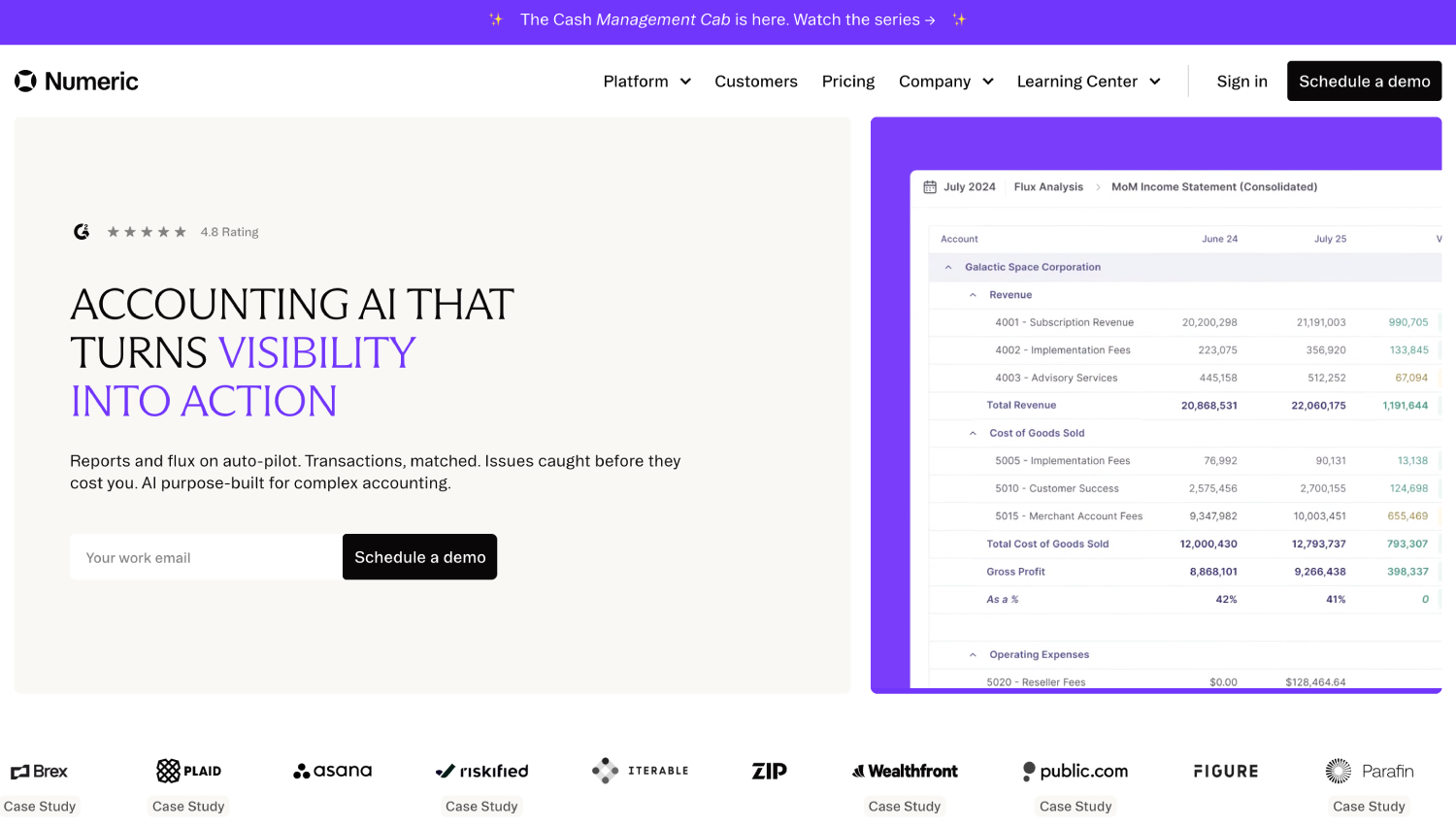
Numeric is a close management and financial consolidation platform built specifically for multi-entity accounting teams using NetSuite or QuickBooks. It is not a planning platform. It focuses on the close workflow: task management, flux analysis, intercompany reconciliation, and consolidated reporting out of the general ledger.
The product takes a deliberately narrower scope than Planful or OneStream, and that scope is the point. For a ten to thirty-entity company that already has an FP&A tool and just needs to close faster with fewer errors, Numeric’s close-focused approach avoids the implementation overhead of a full CPM platform. Pricing is not publicly disclosed.
Best for: NetSuite-native teams with five to thirty entities that want close automation and consolidated reporting without replacing their existing planning tools. Not appropriate for companies needing statutory IFRS reporting or complex ownership structures.
6. Cube

Cube markets itself as an FP&A platform that works in spreadsheets, specifically Excel and Google Sheets, rather than replacing them. The consolidation layer pulls data from ERPs and GL systems, runs intercompany eliminations, and pushes results back into a spreadsheet environment the finance team already knows.
This approach has a real-world advantage: finance teams at small and mid-size multi-entity companies often have deep institutional knowledge built into their existing Excel models. Cube preserves that, adding a data layer that removes the manual pull-and-paste work. The trade-off is that complex ownership structures or statutory reporting requirements push beyond what the spreadsheet-native model handles cleanly. Pricing is not publicly listed.
Best for: companies with two to ten entities that want to automate data consolidation without forcing the finance team to learn a new interface or rebuild their reporting models from scratch.
7. DataRails
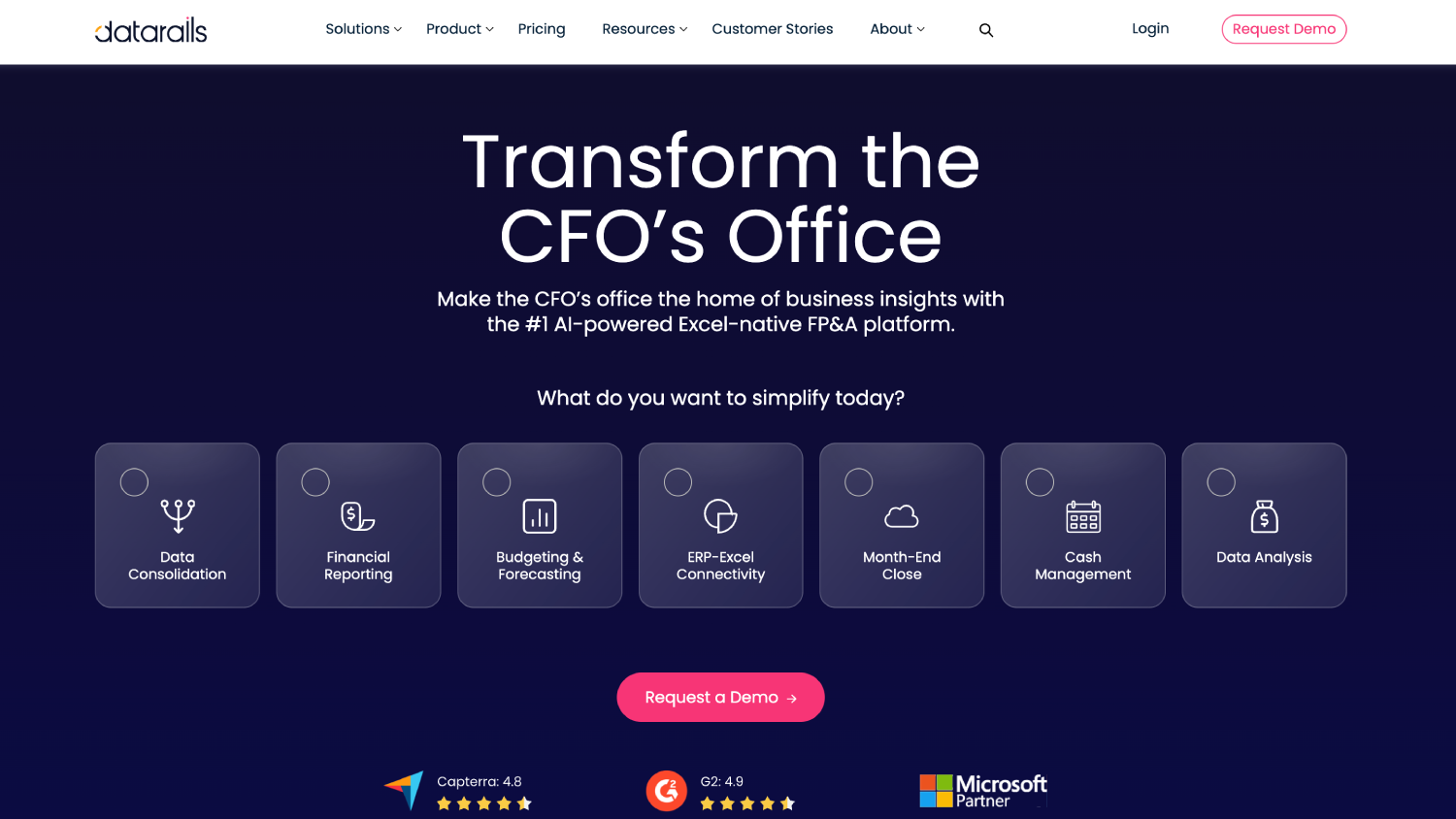
DataRails takes a similar approach to Cube, embedding FP&A and consolidation functionality into Excel while automating the data collection and consolidation logic underneath. It connects to ERPs and GL systems, aggregates data across entities, and surfaces it in Excel-based templates.
DataRails tends to be positioned at smaller companies than Cube, often companies with one to five entities moving off pure spreadsheet processes for the first time. The platform includes FP&A features like rolling forecasts and variance reporting alongside the consolidation layer. Pricing is not publicly disclosed.
Best for: smaller multi-entity companies where the finance team wants to keep Excel as the front end while eliminating manual data pulls and intercompany reconciliation work.
8. Fluence
Fluence is a financial consolidation platform built specifically for mid-market multi-entity companies. Unlike Planful or Prophix, which combine consolidation with broader FP&A in one platform, Fluence focuses on the consolidation and close workflow: intercompany eliminations, currency translation, ownership management, and consolidated financial statements.
The platform includes a prebuilt consolidation engine designed to meet GAAP and IFRS requirements out of the box, which reduces implementation time compared to configuring a general-purpose CPM platform. Fluence connects to ERP systems including NetSuite, Sage Intacct, and Microsoft Dynamics. Pricing is not publicly disclosed.
Best for: mid-market companies with five to fifty entities that want a dedicated consolidation platform rather than a bundled CPM suite, and where the consolidation process itself, not planning, is the primary problem to solve.
9. Vena Solutions
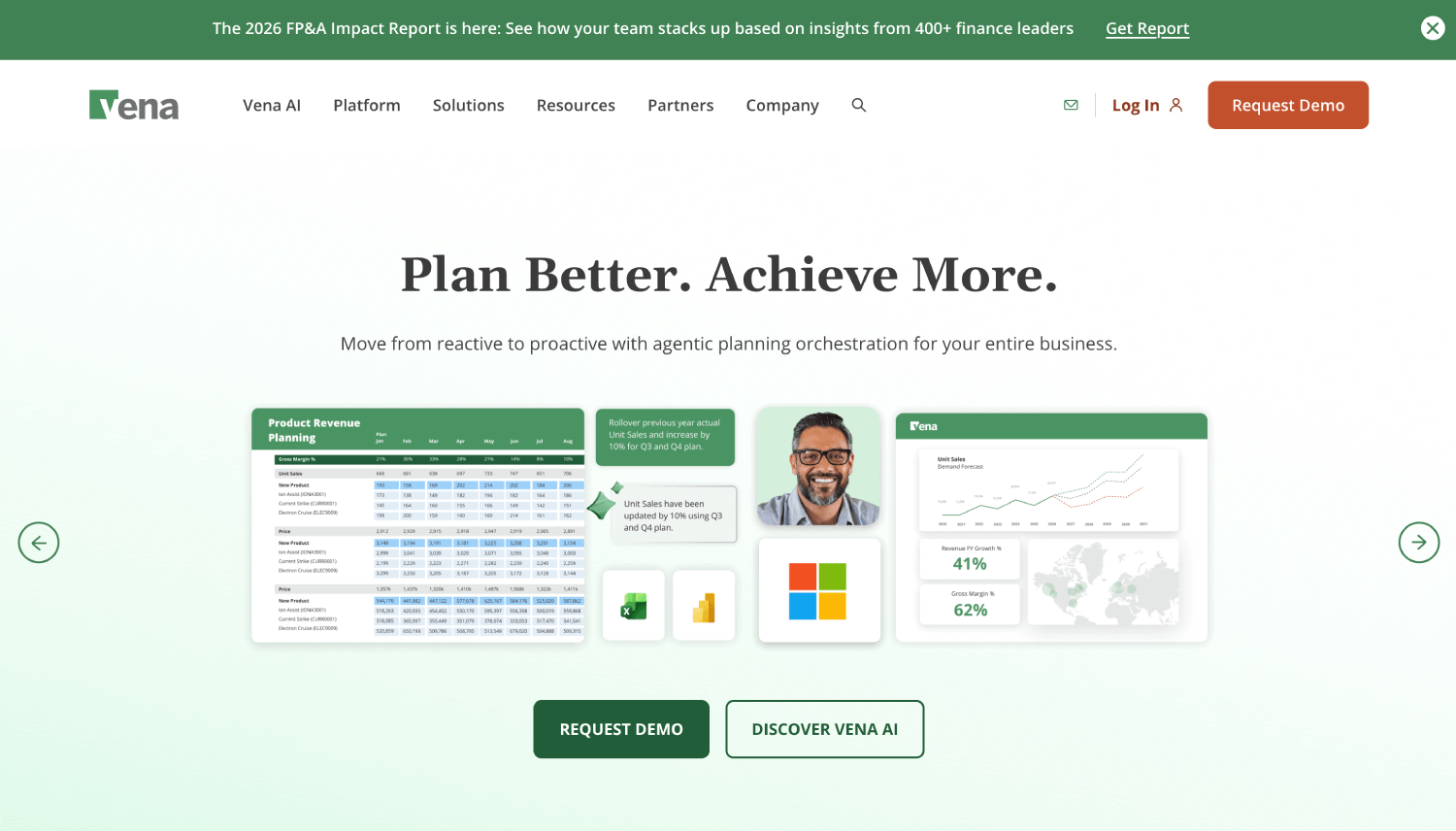
Vena Solutions is a cloud FP&A platform that, like Cube and DataRails, works within Excel. It covers budgeting, forecasting, and financial consolidation for multi-entity companies, with a rules-based intercompany elimination engine built into the platform’s calculation layer.
Vena’s differentiator is its template library, which includes prebuilt consolidation and reporting templates for common GAAP and IFRS scenarios. Implementation time varies by entity count and ERP complexity. Vena targets mid-market finance teams and does not publicly list pricing.
Best for: mid-market finance teams already invested in Excel-based reporting that need consolidation, planning, and reporting in one platform without a full interface change.
10. Oracle FCCS (Financial Consolidation and Close Cloud Service)

Oracle FCCS is Oracle’s cloud consolidation and close platform, purpose-built for statutory consolidation, intercompany eliminations, and regulatory reporting. It handles complex ownership structures, multi-GAAP reporting, and integrates natively with Oracle ERP Cloud and EPM Cloud, while also offering connectors for non-Oracle ERPs.
Oracle FCCS is enterprise-grade and priced accordingly. For companies already running Oracle ERP, it is often the lowest-friction consolidation option because the data model and security structure align natively. For companies on NetSuite or Sage, integration adds complexity and cost. Oracle does not publish FCCS pricing publicly.
Best for: companies running Oracle ERP infrastructure with complex statutory consolidation requirements, or large enterprises needing multi-GAAP reporting across many legal entities. Overbuilt and over-priced for most mid-market buyers.
How Do These 10 Platforms Compare by Entity Count and Use Case?
| Platform | Best Entity Range | Consolidation Focus | FP&A Included | Excel-Native | Multi-GAAP |
|---|---|---|---|---|---|
| OneStream | 20+ entities | Statutory + management | Yes | No | Yes |
| Workiva | 20+ entities | Regulatory reporting | Partial | No | Yes |
| Oracle FCCS | 30+ entities | Statutory consolidation | Partial | No | Yes |
| Planful | 5 to 30 entities | Consolidation + planning | Yes | No | Partial |
| Prophix | 5 to 30 entities | Consolidation + planning | Yes | No | Partial |
| Fluence | 5 to 50 entities | Consolidation-only | No | No | Yes |
| Numeric | 5 to 30 entities | Close + consolidation | No | No | No |
| Vena Solutions | 5 to 25 entities | Consolidation + planning | Yes | Yes | Partial |
| Cube | 2 to 10 entities | Consolidation + planning | Yes | Yes | No |
| DataRails | 1 to 5 entities | Consolidation + planning | Yes | Yes | No |
What Should a Multi-Entity Finance Team Evaluate Beyond Features?
Three evaluation criteria separate a good shortlist from an expensive mistake, and none of them appear on a feature matrix.
The first is ERP connectivity depth. A prebuilt connector to NetSuite that syncs chart of accounts, intercompany transactions, and subsidiary dimensions is not the same as an API connection that requires a third-party middleware tool and custom field mapping. During demos, ask vendors to show the actual sync process for your specific ERP version, not a slide about supported integrations. If you are managing a mixed ERP environment after an acquisition, this question becomes the most important one in the evaluation. For teams also managing expense data across entities, the comparison of multi-entity expense management platforms covers which tools connect to the same ERP stacks.
The second criterion is the ownership hierarchy model. Platforms that store a flat list of entities handle straightforward consolidations. Platforms with a tree-based ownership model handle mid-period ownership changes, partial acquisitions, and step consolidations. If your entity structure is anything other than wholly-owned subsidiaries with a common parent, test the ownership model explicitly before signing.
The third criterion is audit trail granularity. In a close process, every journal entry, every elimination, and every manual adjustment needs to be traceable to a user, a timestamp, and a source record. Platforms vary significantly in how they log changes. For teams running an audit alongside the close, the difference between an exportable audit log and a system-level access report can add days to the audit timeline.
How Much Does Financial Consolidation Software Cost?
None of the ten platforms in this list publish pricing publicly. This is a deliberate market positioning choice: consolidation software is sold through demos and discovery calls, and pricing scales with entity count, user count, module selection, and ERP complexity.
The company does not publicly disclose pricing for any platform in this category. Based on publicly listed implementation partner service tiers and the structure of comparable CPM platform categories, the general market tiering looks like this: enterprise platforms such as OneStream, Workiva, and Oracle FCCS typically start at six figures annually for mid-market deployments. Mid-market platforms such as Planful, Prophix, Fluence, and Vena position between enterprise and lightweight tools on cost. Lighter-touch platforms such as Cube and DataRails are accessible entry points for smaller entity counts. For any specific number, request a direct quote from the vendor , these figures shift with negotiation, entity count, and contract length.
Implementation cost is the number most buyers underestimate. A platform quoted at $80,000 per year often carries $40,000 to $120,000 in implementation services from a certified partner. For a first-time consolidation software deployment, budget implementation at one to two times annual subscription cost in year one. Finance teams evaluating whether software investment is justified will find the breakdown of why SaaS margins are often worse than founders expect useful context for understanding total cost framing.
Which Financial Consolidation Tools Handle Intercompany Eliminations Automatically?
All ten platforms in this list advertise intercompany elimination functionality, but the implementation differs in ways that matter operationally. The distinction to probe is whether elimination runs at the account balance level or the transaction level.
Account-balance elimination means the platform takes the total intercompany receivable from entity A and the total intercompany payable from entity B and eliminates the net difference. This works when both entities close their books at the same time and record intercompany transactions consistently. It breaks when entities are in different time zones, close on different schedules, or record intercompany transactions at different values due to transfer pricing.
Transaction-level elimination means the platform matches individual intercompany invoices to their corresponding payments across entities, identifies unmatched items, and routes them for review before the elimination journal runs. OneStream, Workiva, Oracle FCCS, and Fluence offer transaction-level matching. Cube and DataRails operate primarily at the account-balance level, which is appropriate for the simpler entity structures those platforms target. Finance teams who want to see how automated reconciliation logic plays out in adjacent workflows can review the payment reconciliation software comparison for a parallel view of transaction-matching approaches.
How Does Multi-Currency Consolidation Work in These Platforms?
Multi-currency consolidation under US GAAP requires applying ASC 830, which means translating foreign entity financial statements using the current rate method for balance sheet items and average rates for income statement items, with the cumulative translation adjustment flowing through other comprehensive income. Under IFRS, IAS 21 applies with a similar methodology but different disclosure requirements.
The platforms in this list handle this translation logic, but the configuration depth varies. Enterprise platforms like OneStream and Oracle FCCS store multi-currency data at the transaction level, apply spot and average rates from a rate table, and generate CTA automatically. Mid-market platforms like Planful and Prophix handle the same translation logic but may require more manual rate-table maintenance. Cube and DataRails handle basic multi-currency consolidation adequately for companies with a small number of currencies, but complex FX exposure across many entities stretches their models.
For companies with ten or more foreign currency entities, the rate management process itself becomes a workflow: who enters rates, when, and how are prior-period rates locked for audit purposes. Platforms that allow rate lockdown by period with user-level permissions handle this better than those that allow open rate editing at any time.
What Is the Difference Between Financial Consolidation Software and Financial Close Software?
Financial close software manages the checklist and workflow of period-end close: task assignment, sign-off, flux commentary, reconciliation status. It answers the question “is the close done?” Financial consolidation software takes the closed GL data from each entity and produces a combined set of financial statements. It answers the question “what do the combined financials look like?”
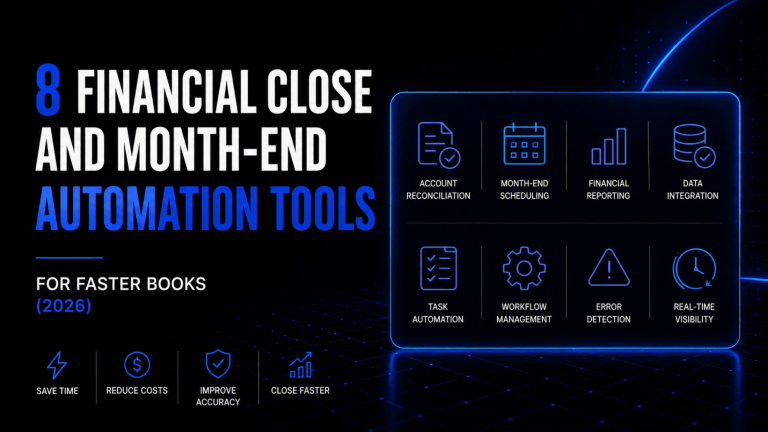
Some platforms do both. Numeric and Workiva handle close workflow and consolidation in the same tool. Planful and Prophix cover consolidation, close reporting, and FP&A. Pure-play close tools like FloQast handle the close workflow but do not produce consolidated financials on their own. Companies that need both functions should evaluate whether a combined platform or a best-of-breed approach fits their architecture better. The financial close and month-end automation tools comparison covers the close-workflow side of this in detail for teams trying to separate the two problems.
Frequently Asked Questions
What is financial consolidation software?
Financial consolidation software aggregates financial data from multiple legal entities, subsidiaries, or business units into a single set of consolidated financial statements. It automates intercompany eliminations, currency translation, and minority interest calculations that would otherwise require manual spreadsheet work. The output is typically a consolidated balance sheet, income statement, and cash flow statement that meets the company’s applicable accounting framework, GAAP or IFRS.
How many entities do you need before consolidation software makes sense?
Most finance teams find that three to five entities is the practical threshold. At two entities, a well-structured spreadsheet with clear intercompany templates is often manageable. At five entities with mixed currencies or different ERP systems, the manual effort compounds quickly enough that the time savings from automation justify the platform cost within the first year. Companies with a single fully-integrated ERP like NetSuite may manage slightly higher entity counts in spreadsheets before the friction becomes material.
What is the difference between consolidation software and FP&A software?
Consolidation software focuses on producing accurate combined financial statements from multiple entity data sources, with automated intercompany eliminations and currency translation. FP&A software focuses on budgeting, forecasting, and variance analysis. Many platforms, including Planful, Prophix, and Vena, combine both in one product. Fluence and Numeric are consolidation-focused without full planning modules. Buying a combined platform makes sense when both problems need solving. Buying a consolidation-only platform makes sense when you already have an FP&A tool and do not want to replace it.
Can financial consolidation software handle partial ownership and minority interest?
Yes, but capability varies significantly by platform tier. Enterprise platforms including OneStream and Oracle FCCS handle partial ownership, step acquisitions, and mid-period ownership changes with dedicated minority interest calculation logic. Mid-market platforms like Planful and Prophix support minority interest but typically require more manual configuration for complex structures. Lighter-touch tools like Cube and DataRails are designed for wholly-owned subsidiary structures and are not appropriate for complex minority interest scenarios.
Does financial consolidation software replace the ERP?
No. Financial consolidation software sits on top of ERP systems, pulling data from them. The ERP remains the system of record for individual entity transactions. The consolidation platform aggregates, eliminates, translates, and reports. Companies running multiple ERPs across subsidiaries need consolidation software precisely because the ERPs cannot talk to each other natively. The consolidation layer is the bridge between them.
How long does it take to implement financial consolidation software?
Implementation timelines depend on entity count, ERP complexity, and the availability of clean chart-of-accounts mapping. For lighter platforms like Cube or DataRails with fewer than five entities and a single ERP, implementation typically runs four to eight weeks. Mid-market platforms like Planful, Prophix, or Fluence with ten to twenty entities typically run three to six months. Enterprise platforms like OneStream or Oracle FCCS with complex ownership hierarchies and multi-ERP environments typically run six to twelve months or longer.
Which financial consolidation tools are best for private equity portfolio companies?
Private equity portfolio companies typically need rapid consolidation across newly acquired entities, often with different ERPs and charts of accounts. Fluence is specifically designed for post-acquisition consolidation scenarios and handles chart-of-accounts mapping across disparate source systems. Prophix and Planful also serve PE-backed multi-entity companies well. OneStream is appropriate where a PE firm is standardizing reporting across a large portfolio. The key requirement is fast onboarding for new entities, which rules out platforms with lengthy implementation cycles per entity.
How does financial consolidation software handle audit requirements?
Audit requirements in multi-entity consolidation center on three things: traceability of every journal entry to a source, a complete record of intercompany matching and elimination logic, and a locked period that prevents post-close adjustments without documented approval. Enterprise platforms including Workiva, OneStream, and Oracle FCCS are built with these requirements as design constraints and provide period-locking, user-level access logs, and full journal entry lineage. Mid-market platforms vary. During evaluation, ask specifically to see the audit trail export and confirm that manual adjustments create a documented override record.
The Decision That Most Buyers Get Backwards
Most finance teams evaluate consolidation software by looking at features first and fit second. They run demos of OneStream and decide it is too complex, then look at DataRails and decide it is too simple, and end up stuck in the middle with no clear path. The Entity-Count Fit Framework inverts this: start with entity count, ERP mix, currency count, and reporting framework, and let those variables disqualify platforms before you ever sit through a demo. That alone eliminates half the shortlist.
The second thing most buyers miss is the distinction between consolidation-only tools and consolidation-plus-FP&A platforms. If the team already has a working FP&A process in Excel or in a planning tool, buying a combined platform means paying for planning functionality twice and managing a tool change that the team will resist. If the team has neither, a combined platform like Planful or Prophix solves both problems in one implementation. The category you buy into determines the implementation scope, the user change management effort, and the total year-one cost. Get that category decision right before the vendor conversations start.
For growing companies thinking through the broader finance infrastructure stack, the question of which consolidation layer fits often connects to adjacent decisions around FP&A tools that replace spreadsheet forecasting and how the close, planning, and reporting layers interact. The tools exist. The real work is sequencing the decisions correctly.