
TLDR
- Lemon Squeezy was acquired by Stripe in 2023 and has since narrowed its focus, making it a less obvious default for indie SaaS founders who need a full merchant of record setup.
- Polar, Paddle, and Creem have moved into the space as strong Lemon Squeezy replacements with meaningfully different fee structures and developer experiences worth comparing before you commit to anything.
- The right pick depends on one variable above all others: whether you need a true MoR that owns tax liability, or just a payment layer with some billing features bolted on.
- Freemius is the strongest option if you are selling WordPress plugins or themes specifically. For everything else, Polar or Paddle will fit better at the indie stage.
- Fee differences between platforms can add up to thousands of dollars annually at modest MRR levels. The math favors shopping around before you commit.
For indie SaaS founders evaluating merchant of record platforms and looking for a Lemon Squeezy alternative, the clearest options are Polar, Paddle, Creem, Dodo Payments, Freemius, Gumroad, FastSpring, and PayPro Global. Polar suits developer-first products with its open-source transparency and low fee structure. Paddle fits founders who expect to grow past $50K MRR and want enterprise-grade tax coverage from day one. Creem and Dodo Payments are newer entrants with competitive pricing designed explicitly for the indie market.
Why Are Indie SaaS Founders Looking Past Lemon Squeezy Right Now?
Stripe acquired Lemon Squeezy in 2023. Since then, the product’s roadmap has visibly shifted toward serving Stripe’s broader infrastructure ambitions rather than the indie developer community that made it popular. New feature velocity has slowed. Some founders who joined expecting an indie-friendly MoR have found themselves with a product that increasingly resembles a Stripe billing add-on rather than a standalone merchant of record.
A true MoR matters for one specific reason: it becomes the seller of record on every transaction, which means it owns the VAT, GST, and sales tax obligations in every jurisdiction where your customers live. Without that, you are personally responsible for registering, filing, and remitting tax across dozens of countries. For a solo founder or a two-person team, that compliance burden is not manageable.
Lemon Squeezy still technically functions as an MoR, but the uncertainty around its product direction has pushed founders to re-evaluate. If you are starting a new SaaS product today, the Lemon Squeezy alternatives below deserve a look before you default to the name you heard in a Slack community two years ago. Our broader merchant of record comparison for B2B SaaS founders covers how these platforms stack up at later stages too.
How Do You Actually Pick a Lemon Squeezy Replacement?
Most comparison articles tell you to weigh “features” and “integrations.” That framing is too vague to be useful. A better approach is what we call the FintechSpecs Indie MoR Stress Test: four questions that filter out the wrong platforms fast.
1. Does it own the full tax liability? Some platforms handle payment processing but leave VAT and sales tax on you. That is not an MoR. It is a payment processor with a billing UI. Check the terms of service, not the marketing page.
2. What is the all-in fee at your current and projected MRR? Most platforms charge a percentage of revenue plus a per-transaction fee. At $2K MRR, a 1% fee difference is $20. At $20K MRR, it is $200. Model the math at both levels before you decide.
3. Can you move off this platform in under two weeks? If a platform locks your customer subscription data behind an export wall or makes it painful to migrate, that is a vendor risk worth pricing into your decision.
4. Is the platform actively maintained? Check the changelog, the GitHub activity if it is open source, and the founder’s public presence. A stagnant product is a liability when a tax rule changes in Germany or Australia.
The 8 Best Lemon Squeezy Alternatives Compared
| Platform | True MoR? | Fee Structure (as of October 2026) | Best For | Indie-Stage Verdict |
|---|---|---|---|---|
| Polar | Yes | 5% + payment processing | Developer tools, open-source products | Top pick |
| Paddle | Yes | 5% + $0.50 per transaction | SaaS with growth ambitions | Strong runner-up |
| Creem | Yes | Competitive flat rate, publicly listed on pricing page | Solo founders, simple subscriptions | Worth a look |
| Dodo Payments | Yes | Not publicly disclosed in detail | Indie founders wanting a newer entrant | Early stage, promising |
| Freemius | Yes | 7% of revenue | WordPress plugin and theme sellers | Category-specific winner |
| Gumroad | Yes | 10% flat fee | Digital products, one-time sales | High fee, limited billing depth |
| FastSpring | Yes | Custom pricing, not publicly disclosed | Software with global distribution needs | Overkill at indie stage |
| PayPro Global | Yes | Custom pricing, not publicly disclosed | Mature software products, enterprise-adjacent | Better at Series A+ |
Polar as a Lemon Squeezy Replacement: Which Is Better for Developer-First SaaS?
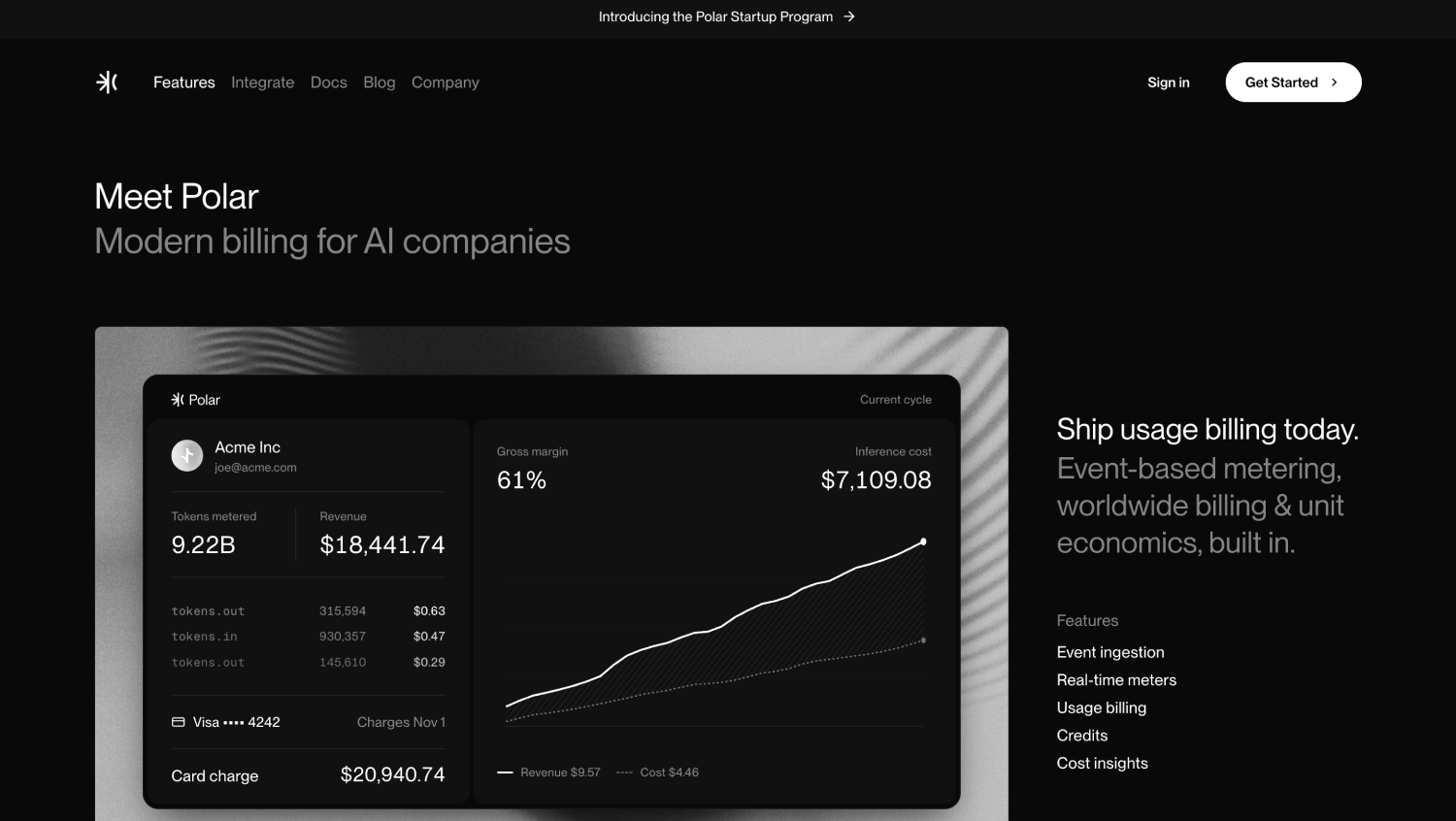
Polar is the most compelling Lemon Squeezy alternative for developers building in public or selling to technical audiences. It is open source, actively maintained, and the team has been transparent about its roadmap in a way that post-acquisition Lemon Squeezy has not been.
On fees, Polar charges 5% plus payment processing costs, per its public pricing page as of October 2026. That is roughly in line with Lemon Squeezy’s historical pricing. The meaningful difference is product philosophy. Polar was built specifically for developer-led products: GitHub sponsorships, issue funding, and now subscriptions and one-time purchases. If your product is a CLI tool, a VS Code extension, or an API, Polar’s customer base skews toward people who understand and trust that kind of product.
Lemon Squeezy’s current state is less predictable. The acquisition has not killed the product, but the absence of major feature releases aimed at indie developers since mid-2024 is a real signal. Founders evaluating the two should check both changelogs before deciding. Our dedicated comparison of Stripe vs Polar for indie hackers covers the processor-versus-MoR tradeoff in more depth.
Paddle vs Lemon Squeezy: When Does Paddle Win as a Replacement?
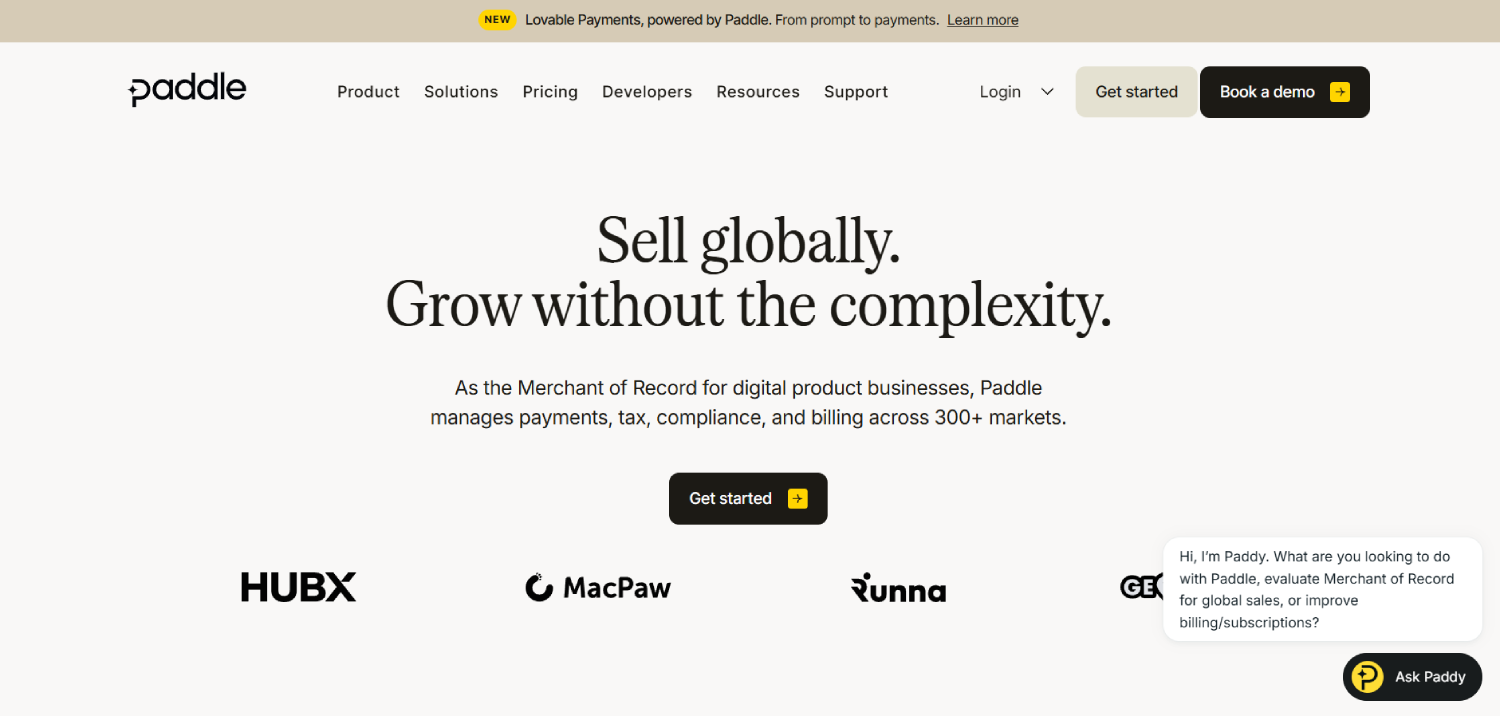
Paddle wins when you expect to grow. Its MoR coverage spans more countries, its tax engine has been battle-tested at significantly larger revenue volumes than most indie platforms, and its checkout and billing infrastructure is meaningfully more mature.
Paddle charges 5% plus $0.50 per transaction, per its public pricing page as of October 2026. At low MRR, that per-transaction fee makes Paddle slightly more expensive on small-ticket subscriptions than some alternatives. At $5 per month subscriptions, $0.50 per transaction is a 10% surcharge on top of the 5% cut. Run that math before assuming Paddle is cost-neutral.
Where Paddle earns its fee is compliance depth. It handles EU VAT, US sales tax nexus, Australian GST, and a range of other jurisdictions without requiring anything from the seller. For a solo founder who would otherwise spend hours reading Avalara documentation, that coverage has real value. If you are comparing Paddle against other MoR options at the B2B stage, the Paddle vs Polar breakdown for developer-first SaaS covers the nuances in detail.
Creem: The Newest Indie-Friendly Lemon Squeezy Alternative Worth Watching
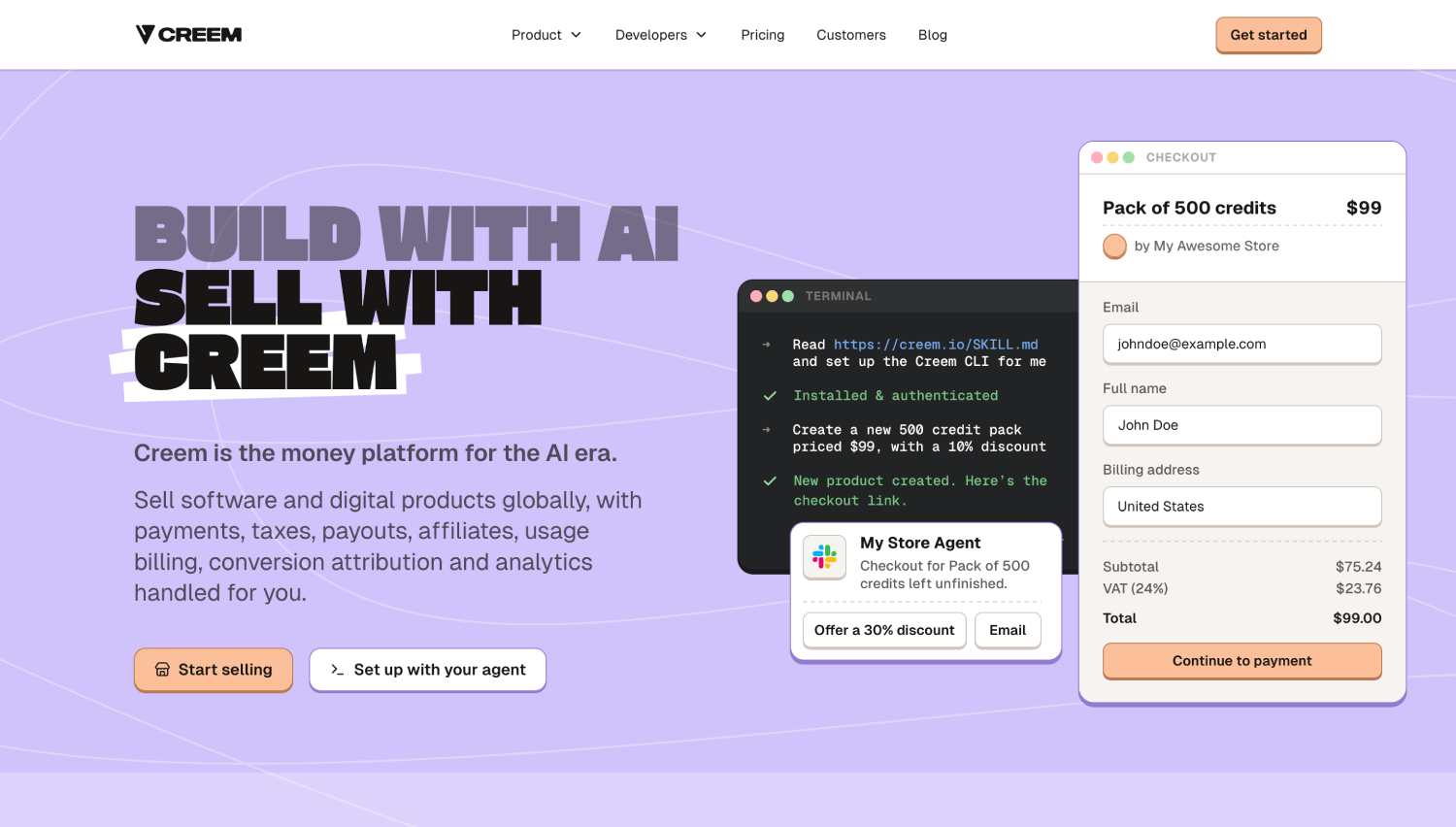
Creem entered the market specifically to serve the gap that Lemon Squeezy’s acquisition created. It positions itself as an indie-first MoR with simpler onboarding, transparent pricing, and a checkout experience designed for SaaS products rather than e-commerce.
Creem is newer than every other platform on this list. That means less track record on edge cases: disputed charges, complex proration, multi-currency subscriptions. The founding team has been responsive in public channels, which is a reasonable proxy for how they handle support at this stage. For founders building a first product who want to get started, ship, and revisit infrastructure decisions at $10K MRR, Creem reduces friction without asking you to think too hard about compliance.
The risk is platform immaturity. A tax engine that works fine for US and EU customers in 2024 may have gaps when a customer in Southeast Asia tries to subscribe. Ask the team directly about their coverage before assuming parity with Paddle or Lemon Squeezy.
Dodo Payments: Built for Emerging Market Founders
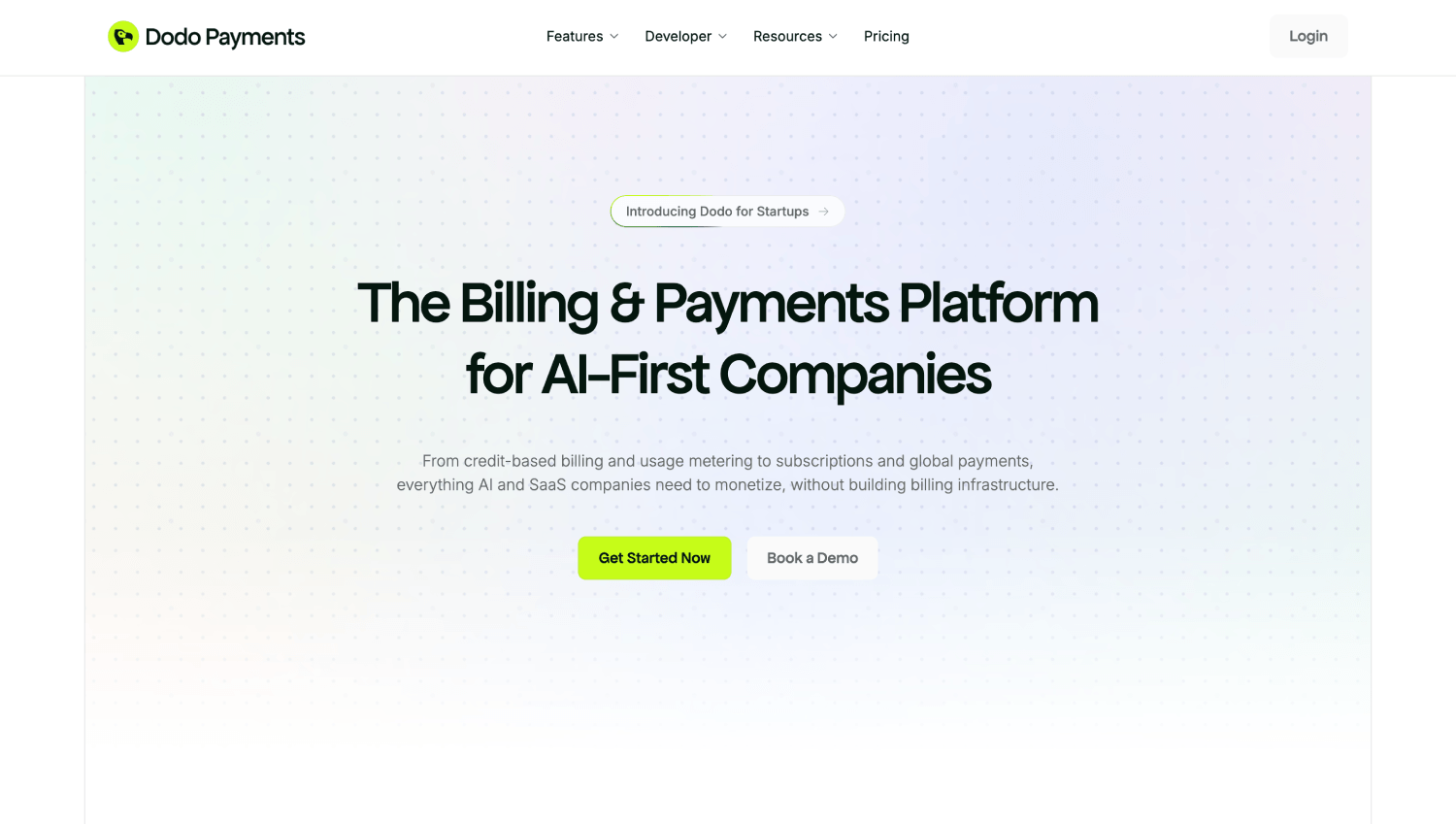
Dodo Payments is a newer MoR that has gained attention specifically among founders based in India and Southeast Asia who have historically found it difficult to access US-based MoR platforms. Paddle and Lemon Squeezy have both required founder-level verification steps that are harder to complete outside North America and Europe.
Dodo handles MoR responsibilities including tax remittance, and it accepts founders from more countries than most of its competitors. That is its primary differentiator. If you are a founder based in India building a global SaaS product, Dodo is worth evaluating before defaulting to a platform that may reject your application or require a US entity.
Pricing is not fully disclosed on the public pricing page. This information gap was confirmed as of the research date for this article, not specifically as of October 2026, and may have changed since. Contact Dodo Payments directly to get current specifics. That lack of transparency is a minor flag, but not a dealbreaker for founders who match their target customer profile.
Freemius: The Clear Winner for WordPress Plugin and Theme Sellers
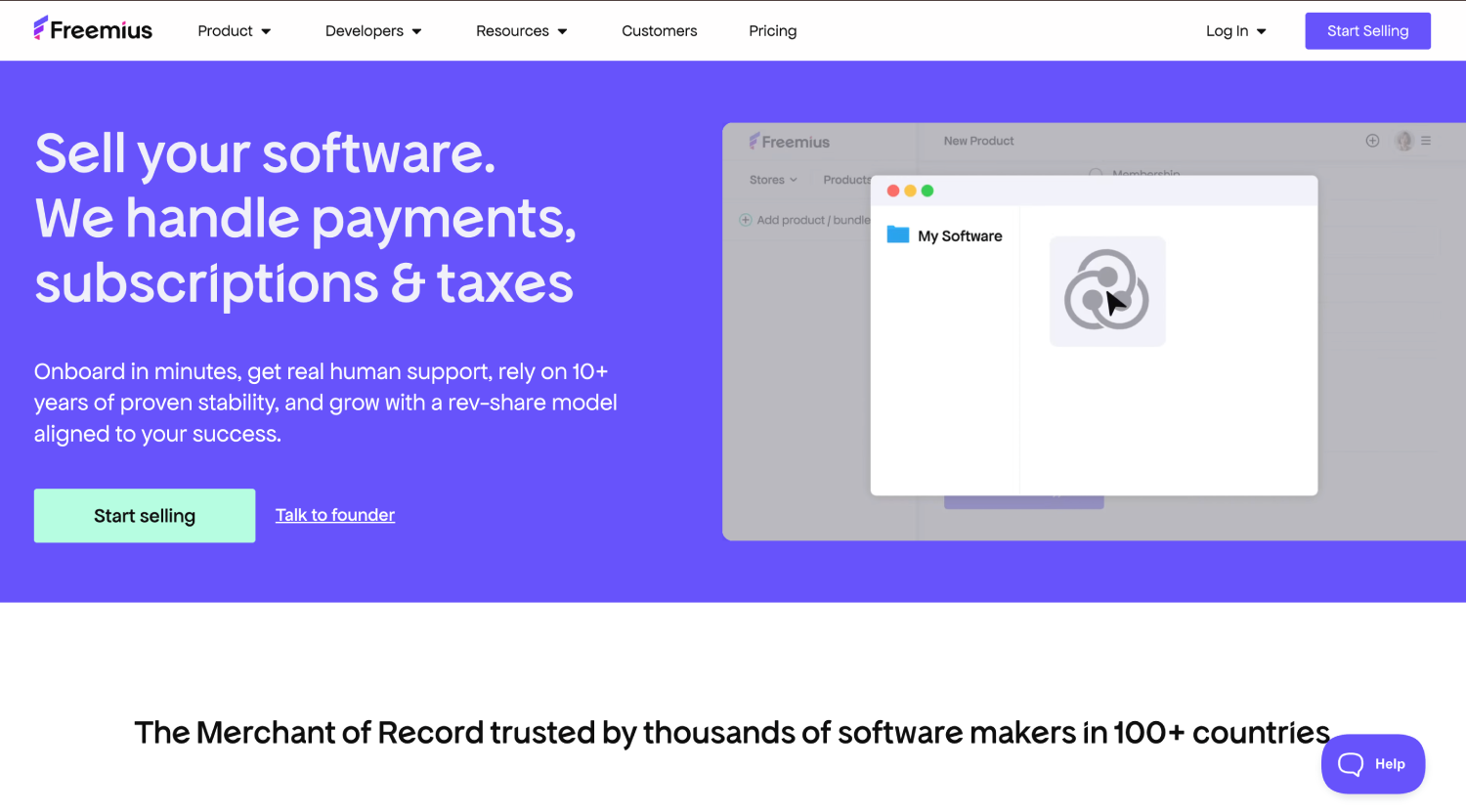
Freemius is not a general-purpose MoR. It is purpose-built for WordPress plugin and theme developers, and within that category, it is the most complete option available. It handles licensing, software delivery, automatic updates, affiliate management, and MoR tax compliance in a single product.
Per Freemius’s public pricing page as of October 2026, the platform charges 7% of revenue. That is higher than Polar and Paddle, but it includes infrastructure that those platforms do not touch. If you are selling outside the WordPress plugin and theme space, Freemius is a mismatch. If you are inside it, there is no reason to use anything else.
Gumroad: Still Worth Considering for Simple One-Time Purchases
Gumroad is not a SaaS billing platform. It is a digital product marketplace with MoR coverage, which makes it useful for a narrow use case: one-time product sales, ebooks, courses, or simple templates where you do not need subscription billing logic.
Per Gumroad’s public pricing page as of October 2026, the platform charges a flat 10% fee. That is the highest rate on this list and reflects the marketplace model rather than infrastructure pricing. For recurring SaaS subscriptions, Gumroad is not the right tool. For a founder who wants to sell a $49 one-time product with zero setup friction and does not want to think about tax, it handles MoR responsibilities and gets out of the way.
FastSpring and PayPro Global: When to Skip These as a Lemon Squeezy Replacement at the Indie Stage
FastSpring and PayPro Global both operate as full MoRs with strong global tax coverage and mature billing infrastructure. They are worth knowing about, but neither is the right starting point for a bootstrapped indie SaaS.
Both platforms use custom pricing that requires a sales conversation, which signals they are optimized for companies with existing revenue. FastSpring in particular has deep features for software companies selling through channel partners or resellers. Those features are not relevant at the indie stage and the onboarding overhead reflects it.
If you hit $50K to $100K MRR and your tax situation has become genuinely complex, FastSpring becomes more relevant. The comparison of FastSpring alternatives for B2B SaaS covers when it makes sense to step up to platforms at that tier. For now, Polar or Paddle will serve the same compliance function with less friction.
What Do Merchant of Record Fees Actually Cost You Over Time?
Consider a solo founder running a SaaS product at $3,000 MRR with an average subscription price of $29 per month. That works out to roughly 103 active subscribers (103 × $29 = $2,987, close enough for illustration).
At Polar’s 5% fee, the monthly platform cost on $3,000 MRR is $150 (5% × $3,000), before card processing fees. At Gumroad’s 10%, it is $300 (10% × $3,000). At Freemius’s 7%, it is $210 (7% × $3,000). These fee percentages are drawn from each platform’s public pricing page as of October 2026; the dollar figures follow directly from applying those rates to the $3,000 MRR figure. The gap between Polar and Gumroad is $150 per month, or $1,800 across 12 months at that MRR level. At $10,000 MRR, applying the same 5% versus 10% spread produces a $500 monthly difference, or $6,000 annually.
These are illustrative calculations, not projections from any platform. Actual costs will vary based on card processing rates, refund rates, and currency conversion. The point is that fee differences that look small in percentage terms become meaningful at even modest scale. Understanding the merchant of record fee structures across Paddle, FastSpring, Lemon Squeezy, and Polar in detail will help you model your own numbers accurately.
The FintechSpecs Indie MoR Stage Map
This framework organizes the platforms by the stage at which they deliver the best value-to-cost ratio for indie SaaS founders specifically.
| Stage | MRR Range | Best MoR Choice | Why It Fits |
|---|---|---|---|
| Pre-revenue | $0 to $500 | Polar or Creem | Fast setup, low friction, MoR coverage from first dollar |
| Early traction | $500 to $5K | Polar | Transparent fees, active product, developer-friendly |
| Growing | $5K to $50K | Paddle or Polar | Paddle’s compliance depth pays off as jurisdiction count rises |
| Scaling | $50K+ | Paddle or FastSpring | Broader integrations, enterprise billing features, channel support |
| WordPress-specific | Any | Freemius | No equivalent for plugin/theme licensing and delivery |
Frequently Asked Questions
Is Lemon Squeezy still a good merchant of record after the Stripe acquisition?
Lemon Squeezy still operates as a merchant of record and handles tax remittance across jurisdictions. The concern is not that it stopped working. The concern is that its product velocity has slowed and its roadmap now aligns more closely with Stripe’s infrastructure goals than with the indie developer use case it was built for. Founders starting new products today have stronger Lemon Squeezy alternatives to evaluate before defaulting.
What is the difference between a merchant of record and a payment processor?
A payment processor moves money from a customer’s card to your bank account. A merchant of record takes on the legal identity of the seller, which means it owns the liability for VAT, GST, and sales tax in every country where your customers live. Stripe is a payment processor. Paddle and Polar are merchants of record. The distinction matters because without an MoR, you are personally responsible for international tax compliance, which is not manageable for a small team. Our full breakdown of the merchant of record versus payment processor decision covers this in detail.
Should indie developers use Polar.sh or Lemon Squeezy?
For new products launched today, Polar is the stronger default. It is open source, actively maintained, and built specifically for developers selling to other developers. Lemon Squeezy still works, but the product’s current direction creates uncertainty about where it will be in 18 months. If you already have customers on Lemon Squeezy and no compelling reason to migrate, staying put has lower switching costs than moving an active subscriber base.
Does Gumroad count as a true merchant of record?
Yes. Gumroad handles VAT, GST, and sales tax collection and remittance as the seller of record on transactions. The limitation is not the MoR coverage. It is the product design. Gumroad is optimized for one-time digital product sales, not recurring SaaS subscriptions. Subscription logic, proration, plan upgrades, and billing email sequences are handled better by Polar, Paddle, or Creem for SaaS-specific use cases.
Can a founder based in India use Paddle or Lemon Squeezy?
Both platforms have faced friction for non-US and non-EU founders during the application process. Dodo Payments was built specifically to address this gap and accepts founders from a broader set of countries, including India. If you have been rejected by or struggled to complete onboarding on Paddle or Lemon Squeezy due to your country of incorporation, Dodo Payments is the most direct Lemon Squeezy alternative to evaluate.
What fees does Freemius charge and who should use it?
Per Freemius’s public pricing page as of October 2026, the platform charges 7% of revenue. That fee is higher than Polar and Paddle, but the platform includes WordPress-specific infrastructure that no general MoR provides: plugin licensing, automatic update delivery, freemium-to-paid conversion flows, and affiliate management. Freemius is the right choice if and only if you are selling WordPress plugins or themes. For anything else, the fee premium buys features you will not use.
How do I migrate subscribers from Lemon Squeezy to another platform?
Lemon Squeezy allows subscriber data export, but payment method tokens cannot move between platforms. That means migrating an active subscriber base requires customers to re-enter their card details, which typically causes a 10% to 25% drop in the subscriber count during migration. The cleanest approach is to run both platforms in parallel: keep existing subscribers on Lemon Squeezy and route all new signups to the new platform, then let attrition do the migration over time. The hidden cost of switching MoR platforms is a topic covered more broadly in our article on hidden costs that affect SaaS margins.
What is the cheapest merchant of record for a new SaaS product?
Polar’s 5% fee plus payment processing is the lowest publicly disclosed rate among true MoR platforms, per its public pricing page as of October 2026. Creem may be competitive, but its exact fee requires checking its current pricing page directly. Gumroad’s 10% is the highest among the platforms listed here. For a pre-revenue founder, the fee difference is small in absolute dollars, so choosing based on product fit and tax coverage rather than fee minimization alone is the more durable decision.
What Actually Matters When You Pick One
The platforms on this list all handle the core MoR function: tax liability transfer. Where they diverge is in product maturity, fee structure, and the specific type of founder they serve well. Polar works best for developers who want transparency and control. Paddle works best for founders who are already thinking about what happens at $100K MRR. Creem and Dodo work best for founders who want to ship now and revisit infrastructure later. Freemius works best if your entire business is inside the WordPress plugin economy.
Lemon Squeezy is not broken. But it is no longer the obvious first choice it was before the Stripe acquisition changed its priorities. The founder community that made it popular has started routing new product launches elsewhere, and the alternatives have responded by building products aimed directly at that audience. That shift is worth taking seriously before you lock your first paying customers into a platform you did not deliberately choose.
The one mistake worth avoiding is treating the MoR decision as irreversible. At the indie stage, the right move is to pick a platform that is good enough today and that will not make migration painful in 18 months. Every platform on this list meets that bar. The differences between them are real but not catastrophic. Pick the one that fits your current situation, ship your product, and revisit the infrastructure question once you have a clearer picture of where your customer base actually lives.