
TLDR
- FastSpring alternatives exist across every tier , from open-source indie tools to enterprise MoR platforms with dedicated contract support , and most can absorb tax registration, subscription logic, and invoicing without requiring you to rebuild from scratch.
- Paddle is the most direct FastSpring competitor for B2B SaaS; Lemon Squeezy and Polar.sh serve earlier-stage or developer-first products at lower cost; PayPro Global and Cleverbridge handle enterprise volume and complex licensing.
- The biggest migration risk is not technical , it is VAT and sales tax continuity. Any MoR you switch to takes over that liability automatically, but you must audit which countries FastSpring was collecting in before you flip the switch.
- Pricing structures vary more than feature sets. Some platforms charge a flat percentage, others add monthly platform fees or per-seat charges. Run your actual transaction mix through each pricing model before signing.
- The FintechSpecs MoR Migration Readiness Test below gives you a four-check framework to evaluate any FastSpring replacement before you commit.
The best FastSpring alternatives for B2B SaaS are Paddle, Lemon Squeezy, Polar.sh, PayPro Global, Cleverbridge, Nexway, Dodo Payments, Gumroad, and Stripe with a tax layer. Each acts as merchant of record, absorbing VAT and sales tax liability, handling invoicing, and supporting subscription billing , so switching does not require rebuilding your tax compliance stack from the ground up.
Why Are B2B SaaS Companies Leaving FastSpring?
FastSpring has served software companies since 2005, and for a long time it was one of the only merchant of record options with real subscription billing built in. The complaints that surface consistently in buyer reviews center on three things: a dated checkout experience that is difficult to customize, fee transparency that requires a sales call to decode, and support response times that frustrate smaller teams without dedicated account managers.
The MoR market has changed significantly. Paddle rebuilt its checkout infrastructure and repriced publicly. Lemon Squeezy launched with a developer-first API. Polar.sh targeted open-source and indie-hacker workflows. That competitive pressure has left FastSpring occupying an uncomfortable middle , more expensive than self-serve alternatives, less enterprise-ready than Cleverbridge or Nexway. For teams at the $500K to $5M ARR range, where every basis point of take rate matters, that position is hard to defend.
Before you understand the difference between a merchant of record and a payment processor, the migration looks terrifying. Once you understand that an MoR by definition absorbs your VAT, GST, and US sales tax obligations, the switch becomes much more mechanical.
What Is the FintechSpecs MoR Migration Readiness Test?
Most teams jump straight to feature comparisons and miss the structural checks that actually determine whether a migration goes cleanly. The FintechSpecs MoR Migration Readiness Test is a four-check framework to run before selecting any FastSpring replacement.
Check 1 , Tax Footprint Audit: Pull every country where FastSpring collected VAT or sales tax on your behalf. Your new MoR must support all of those jurisdictions on day one, not “later this year.” Ask for a written confirmation of their tax registration list.
Check 2 , Subscription State Transfer: Confirm that the new platform can import existing subscriber records including billing cycle anchor dates, trial statuses, and coupon discount states. Missing this step means manually recreating hundreds or thousands of subscriptions.
Check 3 , Invoice Format Compliance: B2B buyers in Germany, France, Italy, and the UK have specific requirements for VAT invoices. Verify that the new MoR issues compliant invoices in every country your customers are billed from, not just where your company is incorporated.
Check 4 , Pricing Model Stress Test: Run your actual last 90 days of transactions through the new platform’s fee structure. Include currency conversion fees, payout timing, and any per-transaction minimums. The headline percentage rarely reflects the effective rate on a real transaction mix.
9 Best FastSpring Alternatives Compared
| Platform | MoR Included | Public Pricing | Best For | Weakest Point |
|---|---|---|---|---|
| Paddle | Yes | 5% + $0.50 per transaction (as of their public pricing page) | B2B SaaS with global subscriptions | Less flexible for one-time purchases |
| Lemon Squeezy | Yes | 5% + $0.50 per transaction (as of their public pricing page) | Early-stage SaaS and digital products | Thin B2B invoice customization |
| Polar.sh | Yes | 4% per transaction (as of their public pricing page) | Developer tools and open-source monetization | Limited enterprise billing complexity |
| PayPro Global | Yes | Not publicly disclosed; quote-based | Software and SaaS with global licensing | Requires sales engagement to get pricing |
| Cleverbridge | Yes | Not publicly disclosed; enterprise contracts | Enterprise software with complex licensing | Overkill and costly for sub-$1M ARR |
| Nexway | Yes | Not publicly disclosed; quote-based | Gaming, publishing, and enterprise software | Limited self-serve onboarding |
| Dodo Payments | Yes | 5% + $0.40 per transaction (as of their public pricing page) | International SaaS founders outside the US | Smaller range of integrations |
| Gumroad | Yes | 10% flat per transaction (as of their public pricing page) | Creators and indie products, not SaaS | No B2B invoicing or subscription complexity |
| Stripe + Avalara/TaxJar | No (hybrid) | 2.9% + $0.30 (Stripe) plus tax tool fees | Teams that want processor control with tax coverage | You retain tax liability, not the processor |
Paddle: The Closest Direct FastSpring Replacement

Paddle is the most structurally similar to FastSpring among the options below. It acts as the merchant of record, handles VAT in 100+ countries, generates compliant B2B invoices, and supports subscription billing, trials, coupons, and metered usage. The checkout is fully hosted but embeddable, which solves FastSpring’s customization criticism without forcing you to build your own.
As of their public pricing page, Paddle charges 5% plus $0.50 per transaction, with no monthly platform fee at the base tier. That rate is competitive with FastSpring for most transaction sizes above $30. Below that threshold, the $0.50 fixed component starts to bite. Teams selling annual enterprise contracts at $5,000 or more will find the effective rate drops well below 1%, which is where Paddle actually gets interesting for higher-ACV products.
The migration path from FastSpring to Paddle is documented and relatively established. Paddle supports CSV-based subscription imports, though the anchor date fidelity depends on how clean your FastSpring export is. For a deeper look at how Paddle compares against other MoRs at different company stages, the Stripe vs Paddle vs Lemon Squeezy vs Polar comparison on FintechSpecs breaks down the structural differences across billing complexity, tax handling, and checkout control.
Best for: B2B SaaS teams at $500K to $10M ARR selling internationally, needing a true MoR with minimal internal tax overhead.
Lemon Squeezy: FastSpring Replacement for Earlier-Stage Products
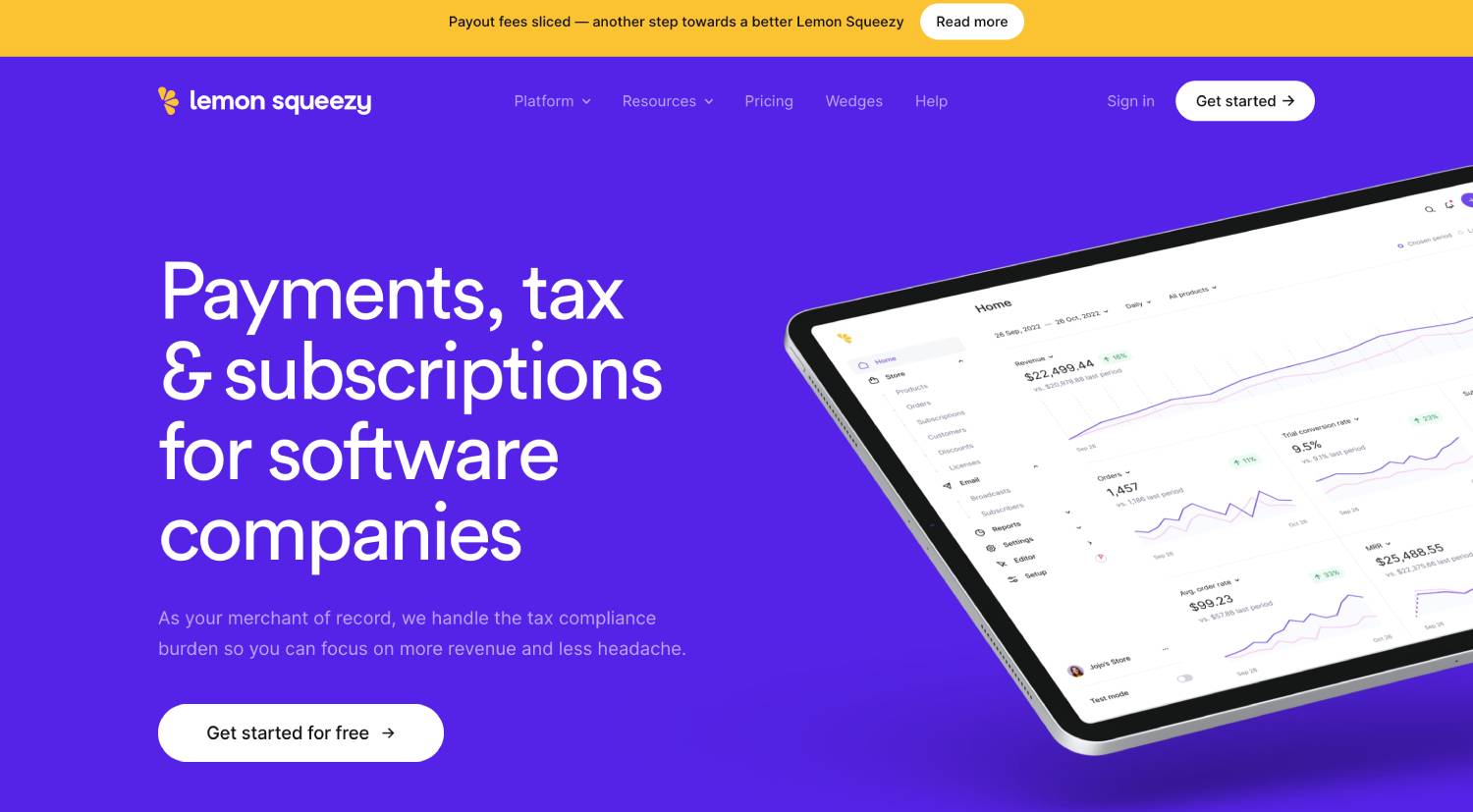
Lemon Squeezy launched as a modern MoR alternative and was acquired by Stripe in 2024, though it continues to operate as an independent product with its own pricing and checkout infrastructure. As of their public pricing page, it charges 5% plus $0.50 per transaction, matching Paddle’s headline rate, but the product is noticeably lighter on enterprise features like multi-seat license management and custom invoice fields.
For a bootstrapped or seed-stage SaaS company selling a $29 to $299 product, Lemon Squeezy is genuinely fast to configure. Checkout pages are clean, subscription management is handled through a simple dashboard, and the tax handling covers the jurisdictions that matter for most early-stage companies. The gap shows when a B2B buyer needs a VAT invoice addressed to their legal entity with a specific PO number , Lemon Squeezy handles this, but with less flexibility than Paddle’s invoice customization.
Best for: Pre-revenue to $500K ARR SaaS or digital product companies that want MoR coverage without enterprise configuration overhead.
Polar.sh: The Open-Source and Developer-Tool Option
Polar.sh positions itself explicitly for developers, open-source maintainers, and developer-tools companies. As of their public pricing page, Polar charges 4% per transaction, which is the lowest flat rate among the MoR-included options on this list. It handles VAT and sales tax, supports one-time purchases and subscriptions, and has a GitHub-connected funding layer that no other MoR offers.
The trade-off is complexity ceiling. Polar does not support the kind of multi-product, multi-seat, or enterprise contract billing that a $2M ARR B2B SaaS company with 50 enterprise accounts needs. It is built for direct-to-developer sales , individual licenses, sponsorships, and subscription tiers that map cleanly to a single product. Teams comparing Polar.sh against Paddle for developer-first SaaS should read the Paddle vs Polar.sh breakdown on this site before making the call.
Best for: Developer tools, open-source monetization, and indie SaaS products where simplicity and low take rate matter more than enterprise billing depth.
PayPro Global: FastSpring Replacement with Global Licensing Depth
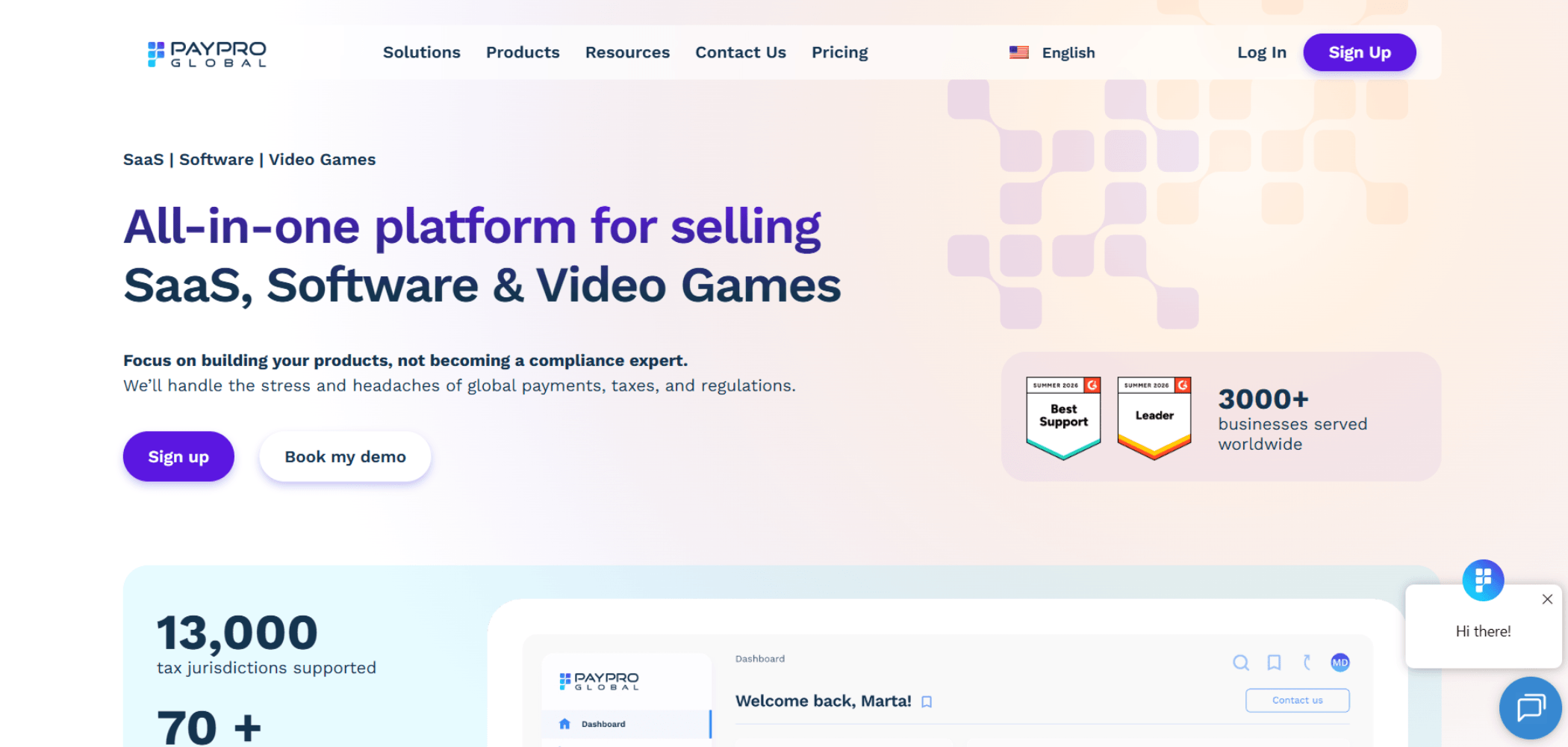
PayPro Global is the FastSpring competitor that most resembles FastSpring’s legacy positioning , a full-service MoR built specifically for software and SaaS companies, with strong support for license key delivery, upgrade/downgrade flows, and global tax compliance across 180+ countries. Pricing is not publicly disclosed; you need a sales conversation to get a quote.
That opacity is a real friction point for smaller teams but a non-issue for buyers with finance and procurement involved. PayPro Global is worth shortlisting if you sell perpetual licenses alongside subscriptions, need dedicated account management, or have complex upgrade paths that simpler MoRs handle poorly. Reviews on G2 and Capterra consistently cite their tax handling and customer support as stronger than FastSpring’s.
Best for: Software companies at $1M ARR and above with mixed license and subscription models, or those selling into markets where payment method diversity matters (PayPal, local cards, wire).
Cleverbridge: Enterprise FastSpring Alternative with Agentic Payment Support
Cleverbridge operates at the enterprise end of the MoR spectrum. It handles complex software licensing, multi-currency billing, channel partner revenue, and global tax compliance for companies ranging from mid-market to publicly traded software firms. Pricing is contract-based and not publicly disclosed.
Cleverbridge has been investing in next-generation checkout infrastructure. In September 2026, Cleverbridge completed what Visa and Revolut described as France’s first passkey-based agentic payment, signaling where their checkout roadmap is heading. For enterprise software companies that need to support AI-driven purchasing workflows alongside traditional checkout, that is a meaningful differentiator none of the self-serve MoRs can match yet.
The minimum deal size and implementation timeline make Cleverbridge unsuitable for companies under $2M ARR. The onboarding process involves professional services, and the contract structure assumes you have a finance team involved in procurement decisions.
Best for: Enterprise B2B software companies at $5M ARR and above with complex licensing, channel partners, or agentic commerce requirements.
Nexway: FastSpring Competitor for Gaming and Publishing Verticals
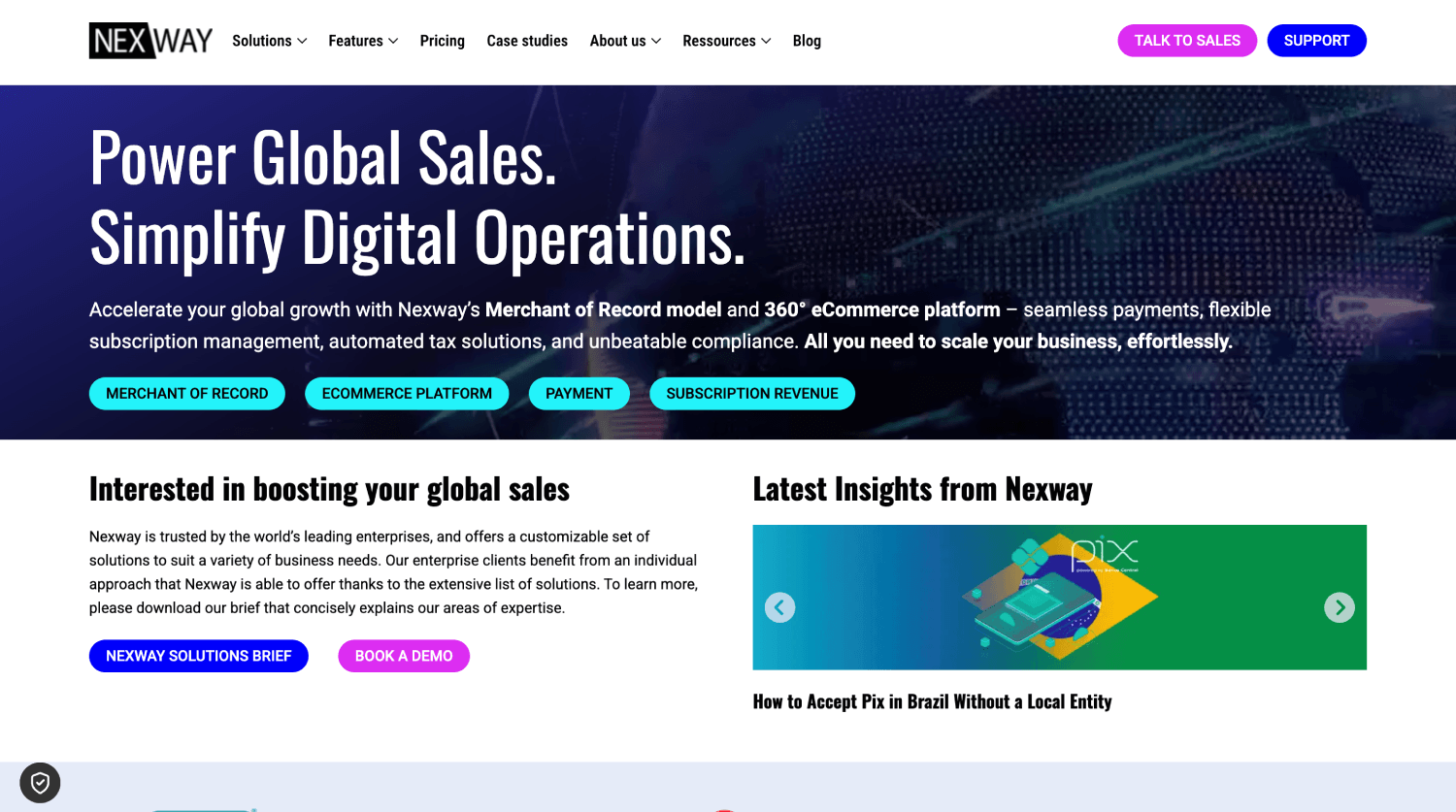
Nexway is a merchant of record with a strong track record in gaming, publishing, and enterprise software distribution. It supports global tax compliance, localized payment methods, and subscription billing, with particular depth in digital content delivery and activation code management. Pricing is quote-based and not publicly disclosed.
Nexway’s differentiation from FastSpring is primarily vertical depth rather than breadth. If you are selling a security software product, a creative suite with seat licenses, or a game with DLC and expansion packs, Nexway’s distribution network and activation infrastructure is relevant. If you are selling a generic B2B SaaS subscription, the self-serve alternatives below will be faster and cheaper to implement.
Best for: Gaming studios, publishing platforms, and enterprise software companies with activation code workflows or large-volume distribution partnerships.
Dodo Payments: FastSpring Alternative for Non-US Founders
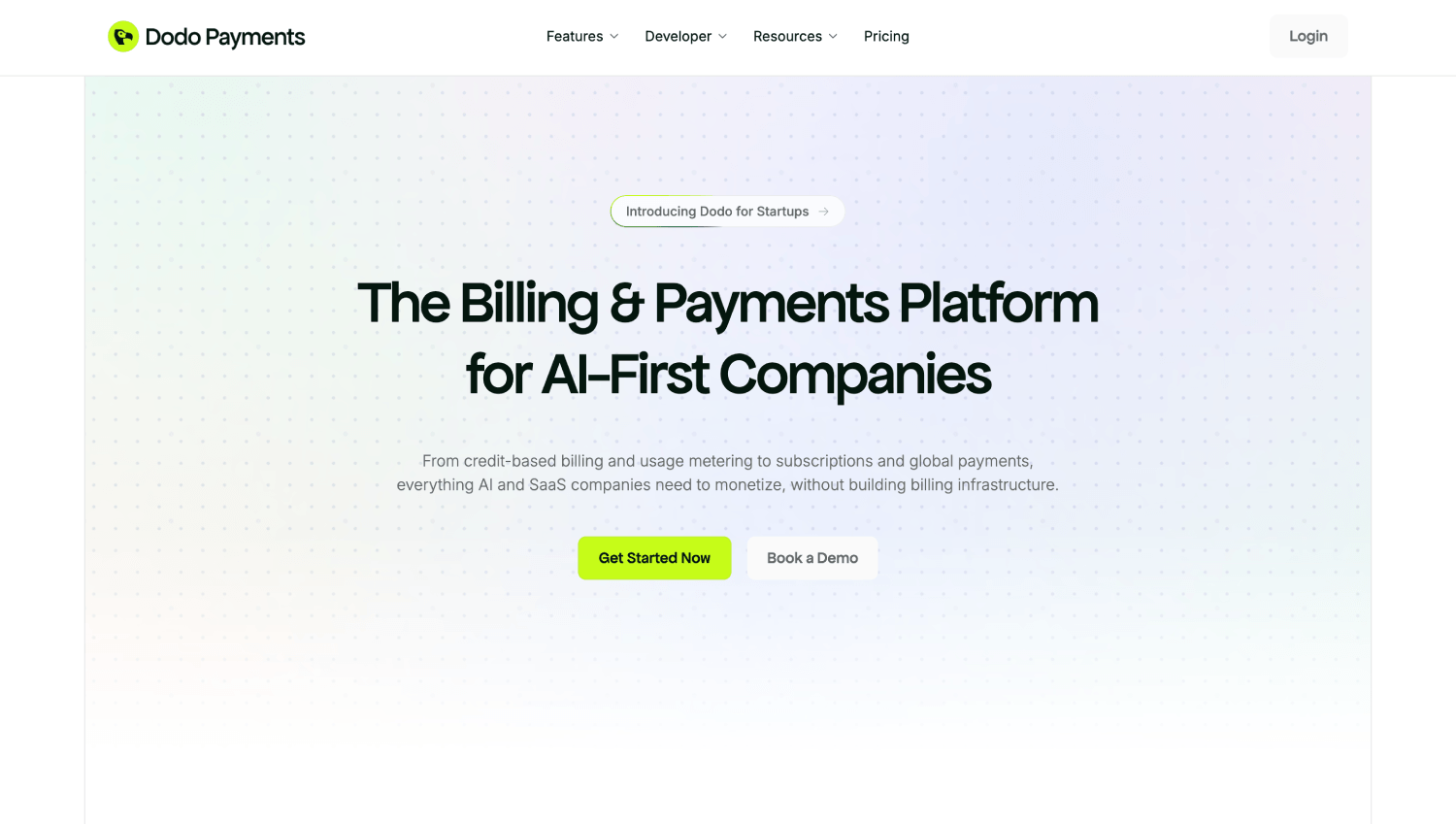
Dodo Payments is an MoR built specifically for founders outside the US who want to sell globally without forming a US entity. As of their public pricing page, Dodo charges 5% plus $0.40 per transaction, making it slightly cheaper than Paddle on the fixed component. It handles global tax compliance and supports major card networks and local payment methods across emerging markets.
The integration range is smaller than Paddle or Lemon Squeezy , fewer native integrations with billing analytics tools, CRMs, and subscription management platforms. For a founder in India, Southeast Asia, or Eastern Europe building a SaaS product for a global customer base, Dodo solves a genuine structural problem that Paddle also solves but with higher brand recognition and a more mature API.
Best for: Non-US SaaS founders at early to growth stage who want MoR coverage for global sales without the friction of US entity formation.
Gumroad: FastSpring Replacement Only If You Are Not Actually SaaS

Gumroad is a merchant of record, and it does handle tax, but it charges 10% flat per transaction as of their public pricing page. That rate is defensible for creators selling digital downloads, courses, or templates where the alternative is building a checkout from scratch. For a SaaS company with recurring revenue and enterprise buyers, 10% is simply not competitive.
Gumroad lacks subscription billing complexity, enterprise invoicing, or any meaningful B2B features. It is included here because it appears in FastSpring alternative searches frequently and deserves a clear verdict: do not use Gumroad if you are selling B2B SaaS subscriptions. Use it if you are a creator or indie maker selling one-off digital products at low volume.
Best for: Creators, educators, and indie makers selling digital products , not recurring B2B SaaS.
Stripe with a Tax Layer: When You Want Control Over the Trade-Off
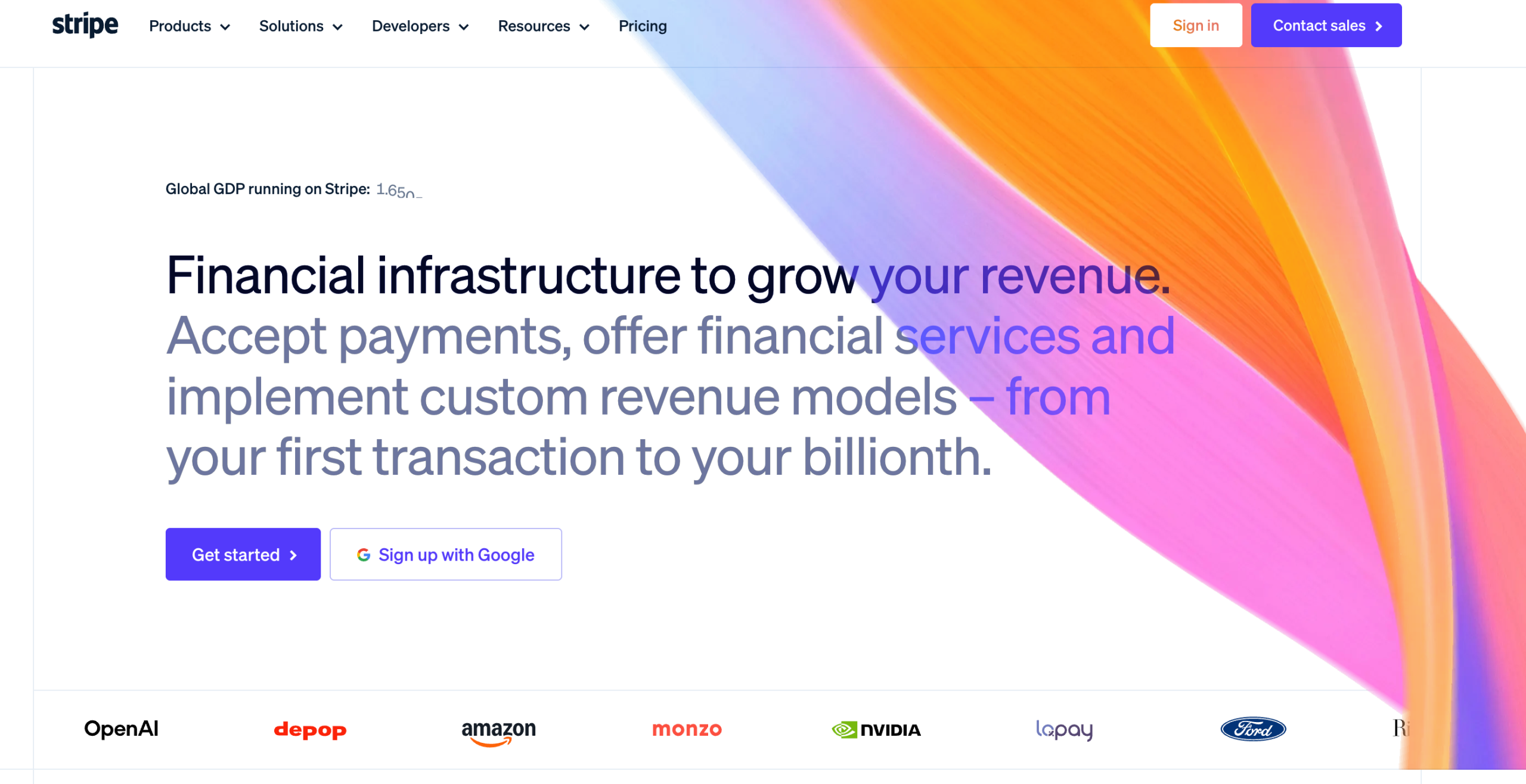
Stripe is not a merchant of record. When you process through Stripe, you remain the merchant of record and retain all VAT, GST, and sales tax obligations. Adding Avalara or TaxJar on top handles the calculation and filing, but the liability stays with you. That is a fundamentally different risk profile than using a true MoR.
That said, some teams migrating from FastSpring specifically want to shed the MoR dependency and take ownership of their payment infrastructure. Stripe gives you full control over checkout, pricing logic, subscription state, and data portability in a way that no MoR can match. The cost is real: you need to register for VAT in every country where you exceed thresholds, file returns or pay a compliance firm to do it, and maintain that registration as you grow.
Teams thinking through this trade-off should look at the merchant of record providers by SaaS stage comparison, which maps which structural choice , MoR versus processor plus tax tool , makes more sense at each ARR band.
Best for: Teams above $3M ARR with a finance function that can own tax compliance, or those who need billing complexity that MoRs cannot support.
FastSpring vs Paddle: Which Should You Actually Choose?
This is the comparison that drives the most FastSpring-competitor searches, and the answer is less dramatic than the review threads suggest. Paddle wins on checkout modernity, public pricing transparency, and developer API quality. FastSpring wins on institutional familiarity among enterprise software buyers who have worked with it for years and on its license key and activation infrastructure, which Paddle does not replicate natively.
If your team is evaluating this as a clean switch , same billing model, similar product complexity, global B2B subscriptions , Paddle is the better choice for most teams today. If you have heavy perpetual license volume or activation code requirements, look at PayPro Global before committing.
FastSpring Migration Checklist
- Export all active subscriber records from FastSpring including plan, billing cycle anchor, trial end date, and discount/coupon state.
- Document every country where FastSpring was collecting and remitting VAT or sales tax on your behalf.
- Confirm your chosen replacement MoR is registered to collect tax in all of those countries before setting a migration date.
- Test the new MoR’s checkout in staging against your most complex product configuration: trials, upgrades, currency switching, and coupon stacking.
- Verify that B2B invoice output includes your legal entity details, customer VAT number field, and correct tax line itemization for at least Germany, UK, and France.
- Run a parallel test period with a small cohort of new customers before migrating existing subscribers.
- Set a hard cutover date and communicate proactively to subscribers , payment method re-authorization is sometimes required when moving MoRs.
- Confirm payout timing and currency on the new platform matches your treasury expectations before the full migration window.
Teams operating at scale should treat the tax footprint audit as a multi-week exercise, not an afternoon task. Countries like Germany and France have specific invoice requirements that differ from what a US company defaults to, and getting those wrong generates customer support tickets and potential VAT disputes. For a broader view of compliance costs tied to international expansion, the real cost of compliance in fintech SaaS analysis is worth reading before you finalize your migration timeline.
How Does Polar.sh Compare to FastSpring for Developer Tools?
Polar.sh charges less , 4% versus FastSpring’s undisclosed rate, which per third-party reviews is estimated in the 5.9% to 8.9% range depending on plan and volume. Polar’s API is cleaner and more modern. Its GitHub integration is genuinely useful for open-source maintainers who want to monetize sponsors and premium features in the same checkout flow. FastSpring has none of that.
FastSpring has deeper activation infrastructure, more payment method coverage in emerging markets, and more institutional history with enterprise software buyers who expect a FastSpring-branded receipt. For a developer tool under $500K ARR targeting individual developers or small engineering teams, Polar.sh is the better fit. For a developer tool selling to procurement-driven enterprise buyers, FastSpring’s institutional weight matters more than Polar’s API elegance.
Frequently Asked Questions
Does switching MoRs require customers to re-enter payment information?
Sometimes, but not always. Payment card data is stored with the card networks, and many MoR platforms can coordinate a card token migration with your card network’s cooperation. The feasibility depends on which processor underpins both the source and destination MoR. Paddle, for instance, has a documented migration support process. Ask your target MoR specifically whether tokenized card data can be transferred before committing to a migration date.
Will my existing customers’ VAT numbers carry over when I switch MoRs?
Only if you explicitly export them from FastSpring and import them into the new platform’s customer records. VAT numbers are not stored by the card networks , they live in the MoR’s billing database. Include VAT number export as a required field in your FastSpring data export, and verify the import format your new MoR expects before the migration window.
Can I use multiple merchants of record at the same time?
You can, but it creates accounting and tax complexity that most teams underestimate. Running new customers on a new MoR while grandfathering existing subscribers on FastSpring means two separate tax footprints, two sets of invoices, and two reconciliation flows. Most teams complete a full cutover within 30 to 90 days rather than running parallel indefinitely.
Is FastSpring’s pricing actually higher than Paddle’s?
FastSpring does not publish its rates publicly, which itself is a differentiator. Paddle publishes 5% plus $0.50 as of their public pricing page. Third-party reviews suggest FastSpring’s effective rates vary significantly based on plan tier and negotiated volume. The lack of public pricing makes side-by-side comparison difficult without engaging FastSpring’s sales team, which disadvantages buyers who want to evaluate quickly.
Does Lemon Squeezy still operate independently after the Stripe acquisition?
Lemon Squeezy was acquired by Stripe in 2024 and continues to operate as a separate product with its own pricing, checkout infrastructure, and merchant of record function. Stripe does not act as the MoR in Lemon Squeezy transactions , Lemon Squeezy’s own MoR entity does. The long-term product roadmap has not been publicly detailed, which is worth monitoring if you are making a multi-year infrastructure decision.
What is the fastest FastSpring migration path for a small team?
For a team without dedicated finance or DevOps, the fastest path is Paddle or Lemon Squeezy. Both have self-serve onboarding, documented migration guides, and no minimum revenue requirements. Plan for two to four weeks: one week for setup and testing, one week for soft launch with new customers, and two weeks for migrating existing subscribers with a customer communication sequence. The migration checklist above covers the specific steps in order.
Which FastSpring Alternative Actually Fits Your Situation?
The MoR you choose should match your billing complexity more than your revenue size. A $3M ARR company selling seat-based enterprise contracts with custom invoicing needs Paddle or PayPro Global. A $3M ARR company selling a $49 monthly self-serve tool with minimal B2B invoicing needs could run on Lemon Squeezy just as well at a lower operational cost.
The fear that drives most teams to delay a FastSpring migration , that tax and billing will break , is legitimate but solvable. Every platform on this list handles tax as a core function, not an add-on. The real work is the audit upfront: knowing exactly what FastSpring was doing for you before you ask someone else to do it instead.
Run the FintechSpecs MoR Migration Readiness Test against your shortlist before signing anything. Teams that skip the tax footprint audit consistently underestimate the migration timeline by two to four weeks. Teams that run it first tend to close the switch in under 30 days with no revenue disruption.