

TLDR
- Most AP software that claims “AI” is running OCR plus a rules engine. True AI-native tools code invoices, route approvals, flag anomalies, and learn vendor patterns without a human configuring every rule.
- The vendor field splits cleanly into two camps: legacy automation retrofitted with an AI layer, and platforms built from the ground up on machine learning models trained on AP-specific data.
- Vic.ai, Stampli, and Medius are the clearest examples of AI-native architecture. Tipalti and Ramp bring strong payments infrastructure alongside their AI features.
- For finance teams processing fewer than 500 invoices a month, the AI overhead may not pay off. The break-even point for most mid-market teams is roughly 1,000 to 5,000 invoices monthly.
- Pricing across this category is almost entirely quote-based. Any vendor that publishes a flat rate is worth scrutinizing on implementation costs.
The best AI accounts payable software tools in 2026 are Vic.ai, Stampli, Medius, Tipalti, Ramp, Rillet, BILL AP, Yooz, and Basware. Each handles invoice capture, coding, and approval workflows, but they differ sharply on how much the AI actually decides versus assists, which ERP systems they integrate with natively, and whether they include payment execution or stop at the approval stage.
Why Calling AP Software “AI-Powered” Is Almost Meaningless Now
Every AP vendor in 2026 uses the phrase “AI-powered.” Most mean they added a machine learning model to their OCR engine so it can extract line items from a PDF without a template. That is a real improvement over 2018-era AP, but it is not the same as an AI agent that codes invoices to the right GL account, routes them through the correct approval chain, and flags a $14,000 invoice from a vendor who normally bills $9,500.
Genuine AI-native AP does four things that OCR cannot: it learns from past posting decisions to suggest GL codes with increasing accuracy, it detects statistical anomalies in invoice amounts or frequency, it can auto-approve invoices that match learned patterns within defined thresholds, and it generates an audit trail for every machine decision. The gap between “AI-assisted” and “AI-native” is the difference between a tool that helps an AP clerk work faster and one that handles a significant share of the invoice-to-pay cycle without a clerk touching it.
Finance teams evaluating this category should ask one pointed question during demos: what percentage of invoices can the system process from receipt to payment approval with zero human touches, and what is that number for your existing customer base? If the vendor hesitates, the system is probably still in the “assists” category.
The FintechSpecs AP Intelligence Stack: How to Read an AI AP Tool
Before comparing vendors, it helps to have a consistent framework. The FintechSpecs AP Intelligence Stack rates any AP tool on four layers, from the bottom up.
Layer 1: Capture. Can the system ingest invoices from any source, including email, vendor portals, PDF, EDI, and scanned paper, and extract structured data accurately without vendor-specific templates? This is table stakes in 2026. If a vendor leads with this in a demo, push harder.
Layer 2: Code. Does the AI suggest, or does it decide? Suggestion means a human still reviews every GL code. Decision means the system applies a code based on learned patterns and flags it only if confidence falls below a threshold. The latter is the meaningful capability.
Layer 3: Control. Does the system route approvals based on dynamic rules, org structure, and spend thresholds, or does a human configure every workflow manually? AI-native tools infer routing logic from historical approval patterns.
Layer 4: Check. Does the system flag anomalies in vendor behavior, duplicate invoices, and 3-way match exceptions before payment, or after? Pre-payment detection is where AI creates real financial protection. Post-payment detection is a reporting feature.
Any vendor that scores well on Layers 1 and 2 but weakly on 3 and 4 is essentially an intelligent capture tool. The tools that matter for mid-market and enterprise AP are the ones that operate competently across all four layers.
What Does Each AI AP Tool Actually Do? A Feature Comparison
| Tool | AI Layer (Intelligence Stack) | Auto-Approval Capable | Anomaly Detection | Built-in Payments | Best For |
|---|---|---|---|---|---|
| Vic.ai | Code + Control + Check | Yes | Yes | No (ERP payment rails) | High-volume AP, ERP-heavy orgs |
| Stampli | Code + Control | Yes (Billy the Bot) | Partial | Yes (Stampli Direct Pay) | Teams that need collaboration + AI |
| Medius | Code + Control + Check | Yes | Yes (fraud detection) | Yes | Mid-market to enterprise, ERP-integrated |
| Tipalti | Capture + Code | Limited | Partial | Yes (global mass pay) | Orgs with high vendor headcount and cross-border payments |
| Ramp | Capture + Code + Control | Yes | Yes (spend anomalies) | Yes (Ramp Bill Pay) | Growth-stage companies wanting AP plus cards in one tool |
| Rillet | Code + Check | Limited | Partial | No | Startups on Stripe looking for native accounting with AP features |
| BILL AP | Capture + Code | Limited | Partial | Yes | SMBs and accounting firms managing client AP |
| Yooz | Capture + Code | Limited | Partial | No | Companies needing fast ERP-agnostic deployment |
| Basware | Capture + Code + Control + Check | Yes | Yes | Yes (via network) | Large enterprises with complex PO environments |
Which AI Accounts Payable Tools Are Worth Piloting?
Vic.ai
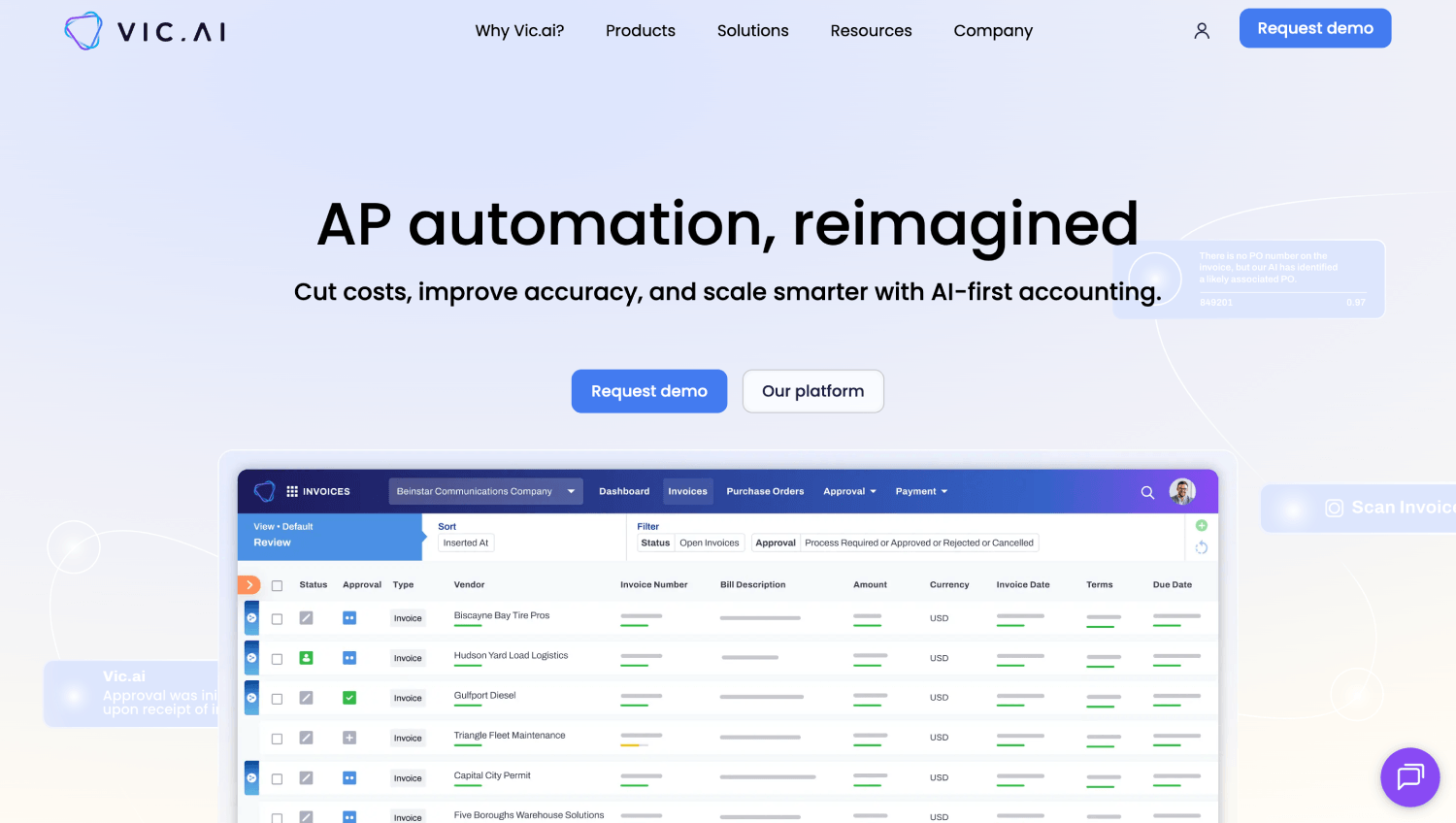
Vic.ai is one of the few AP platforms built entirely on deep learning rather than rules-based automation layered over an existing workflow tool. The system trains on a company’s historical invoice data and gets measurably more accurate over time on GL coding and approval routing, rather than requiring an admin to update rulesets as the business changes. Vic.ai integrates directly with NetSuite, Sage Intacct, Microsoft Dynamics, and SAP, and it operates as an intelligence layer on top of those ERPs rather than replacing them.
The platform is purpose-built for high invoice volume. Finance teams handling thousands of invoices monthly see the most return because the AI’s pattern recognition needs data to improve. Smaller AP operations may find the model takes longer to reach useful accuracy than expected. Vic.ai does not handle payments natively, so payment execution still runs through the ERP. Pricing is not publicly disclosed; the company sells through direct sales with custom contracts.
Stampli
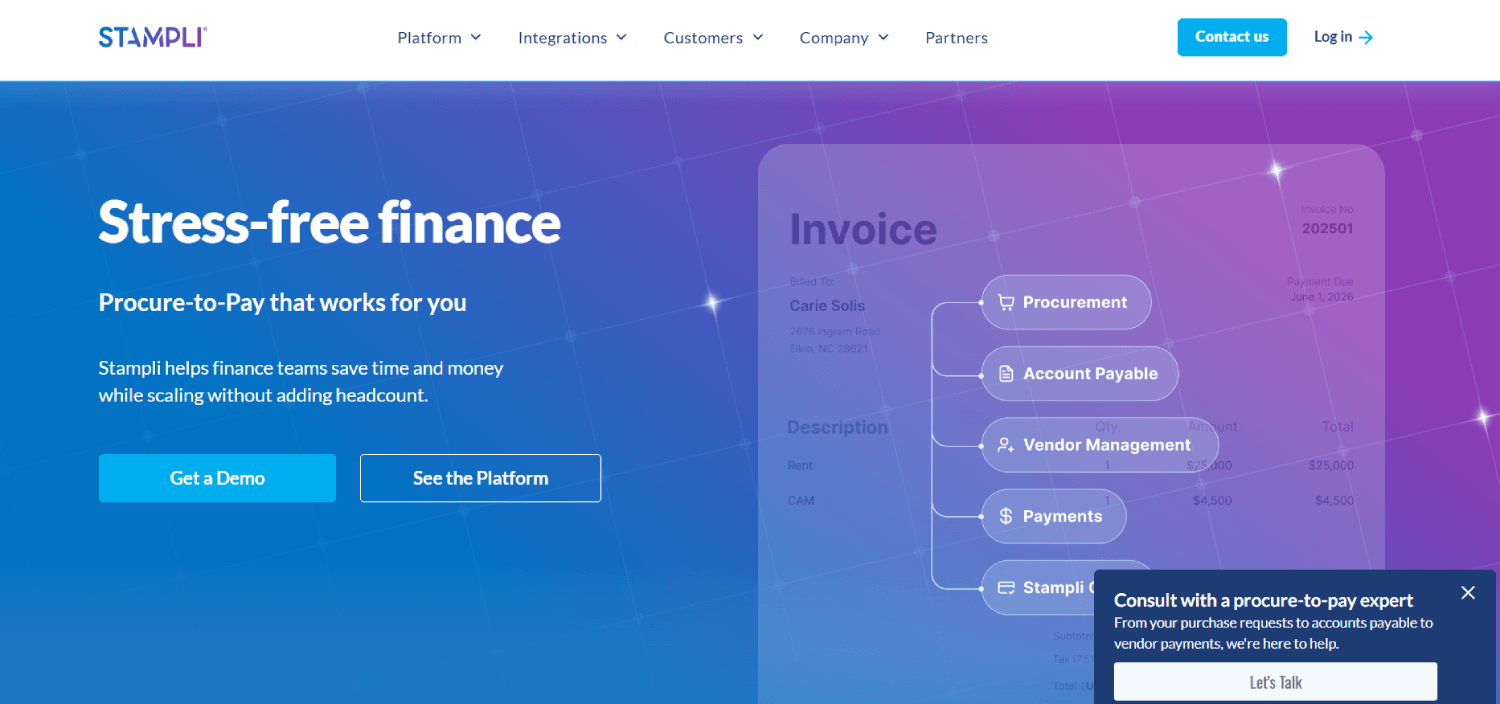
Stampli’s distinguishing feature is its AI assistant, Billy the Bot, which learns each company’s specific AP patterns: which vendors get routed to which approvers, how invoices are typically coded, and what triggers a hold. Billy surfaces this learning directly in the invoice review interface rather than operating as a background process, so AP teams can see why a decision was suggested and override it with a click.
This transparency is Stampli’s main advantage over competitors with black-box AI. The platform also includes a communication layer that keeps invoice-related conversations threaded to the invoice itself, which helps companies with distributed approvers who otherwise chase authorizations by email. Stampli Direct Pay handles payment execution, and the system integrates with over 70 ERP and accounting platforms. The combination of AI assistance and human-readable reasoning makes Stampli a particularly strong choice for companies that need audit-friendly AP processes.
Medius
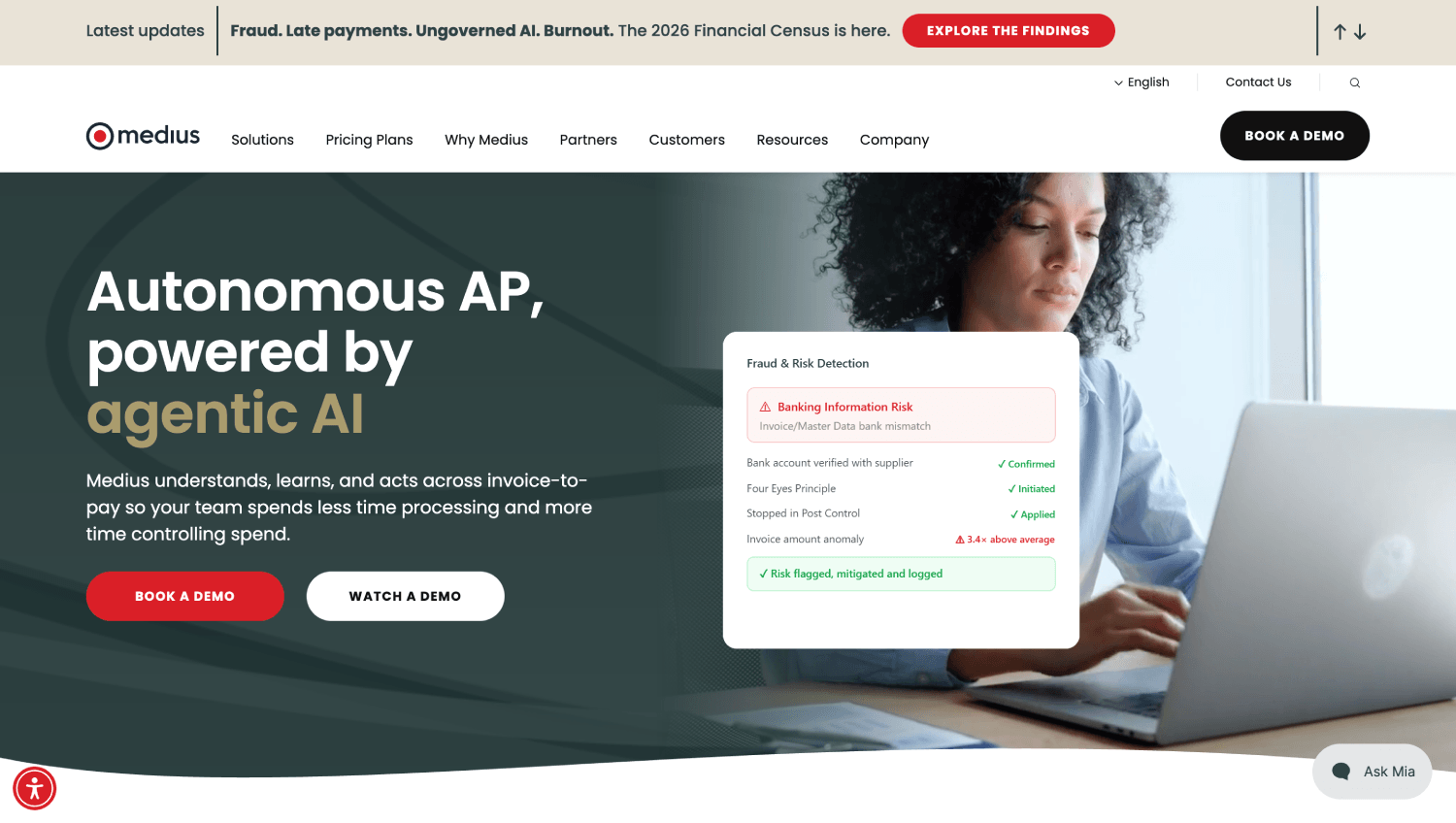
Medius positions itself at the intersection of AP automation and fraud prevention. The platform uses AI for invoice matching, coding, and approval routing, but its fraud detection layer is more developed than most competitors. Medius claims its AI can identify fraudulent invoices and payment tampering before funds leave the account, which puts it in Layer 4 of the FintechSpecs AP Intelligence Stack. Business email compromise targeting AP departments has become a well-documented concern at mid-market companies, and that Layer 4 capability is worth taking seriously during evaluation.
Medius integrates with major ERP systems including SAP, Microsoft Dynamics, and Oracle, and it includes payment execution. The platform targets mid-market to enterprise buyers. Pricing is custom and requires a demo. For teams on SAP or Microsoft Dynamics wanting AI AP with a credible fraud signal on top, Medius is the most complete option in this list.
Tipalti
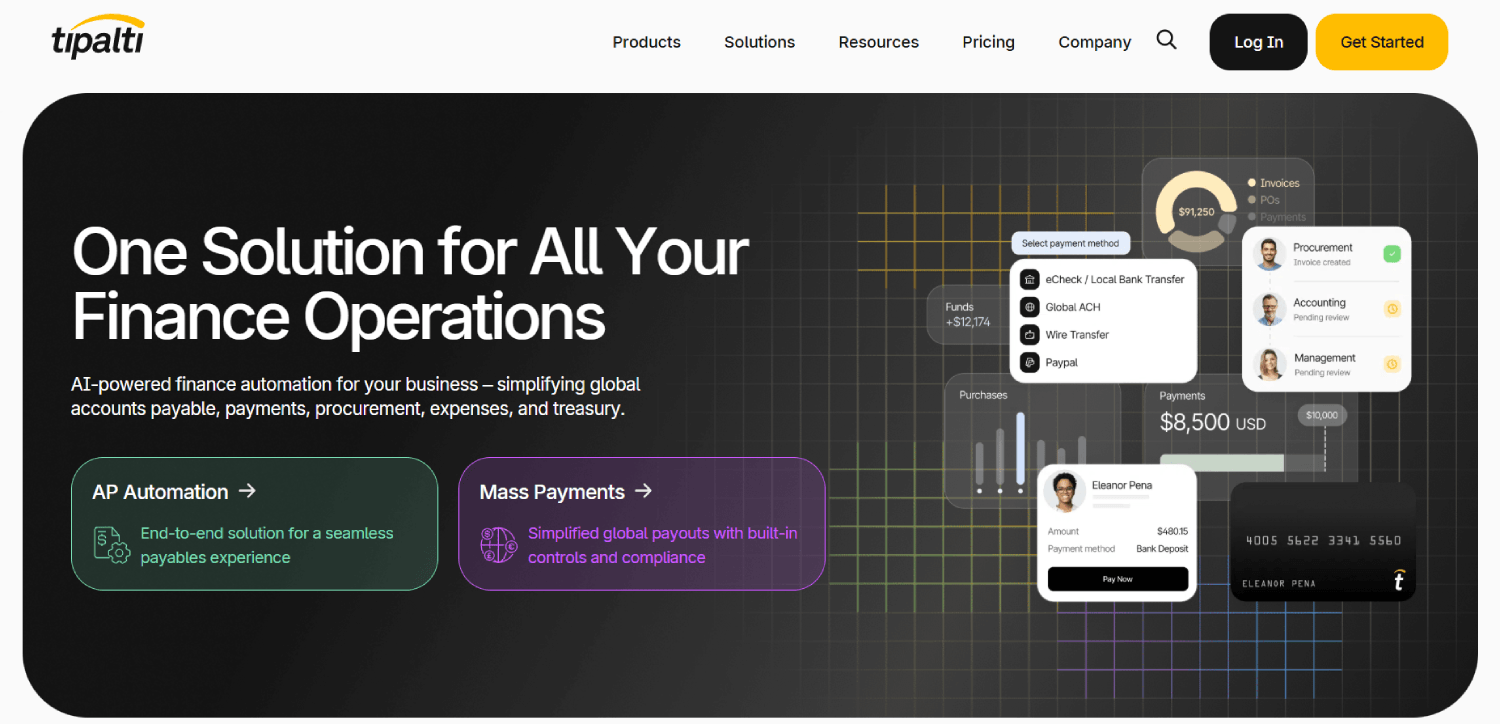
Tipalti’s core strength is payments infrastructure, not AI decision-making. The platform handles global mass payouts across 196 countries, manages vendor onboarding and tax compliance, and automates payment reconciliation. Its AI features focus on invoice capture and coding accuracy, but the approval intelligence is less developed than Vic.ai or Medius. Where Tipalti earns a spot on this list is the combination of AI-assisted AP intake with genuinely strong payment rails, which matters for companies paying hundreds of international vendors.
Finance teams that run a high proportion of cross-border vendor payments will find Tipalti’s payment network and FX handling more valuable than a more AI-intensive AP tool that forces payments through a bank or ERP. The platform also handles supplier self-service onboarding, W-9 and W-8 collection, and KPMG-validated tax compliance. For a deeper look at how Tipalti compares with BILL on the full invoice-to-pay workflow, the Bill.com vs Tipalti comparison covers the core tradeoffs.
Ramp
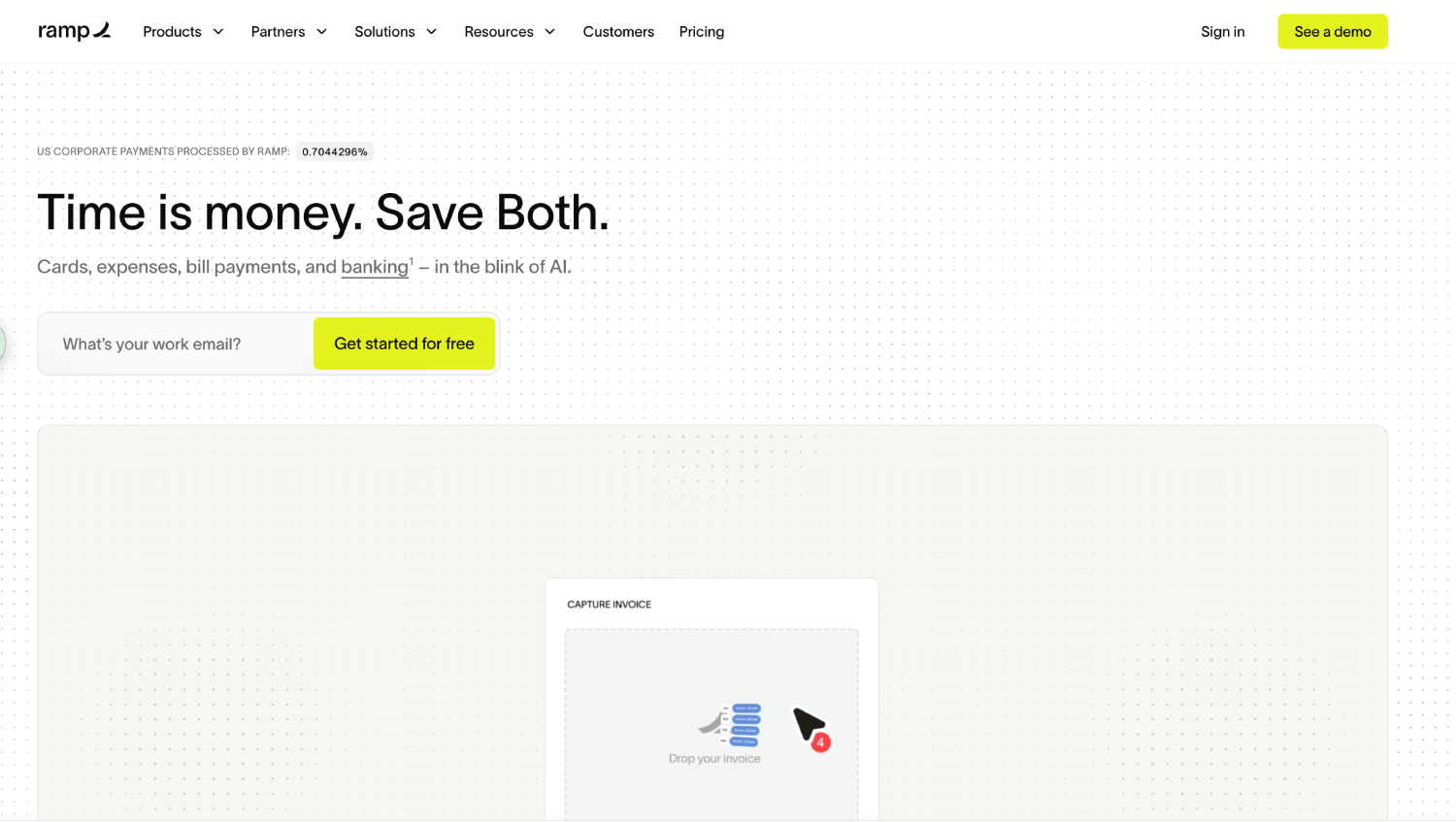
Ramp started as a corporate card and expense platform and added AP automation as the category converged around spend management. The result is a tool that handles vendor invoices alongside employee expenses and corporate cards in a single interface, which matters for CFOs who want one ledger for all non-payroll spend. Ramp’s AI identifies duplicate charges, flags vendor price increases, and can suggest payment timing to optimize cash flow.
Ramp Bill Pay processes ACH and check payments directly. The AI coding engine learns from historical transactions and improves accuracy on recurring vendors quickly. Ramp is less suited to high-complexity PO environments or large enterprises with multi-entity AP, but for growth-stage companies under 500 employees that want AP and spend consolidated, it covers the workflow without requiring an ERP. Ramp’s pricing for its core product is listed as free for the standard tier as of their public pricing page (verified July 2025).
Rillet
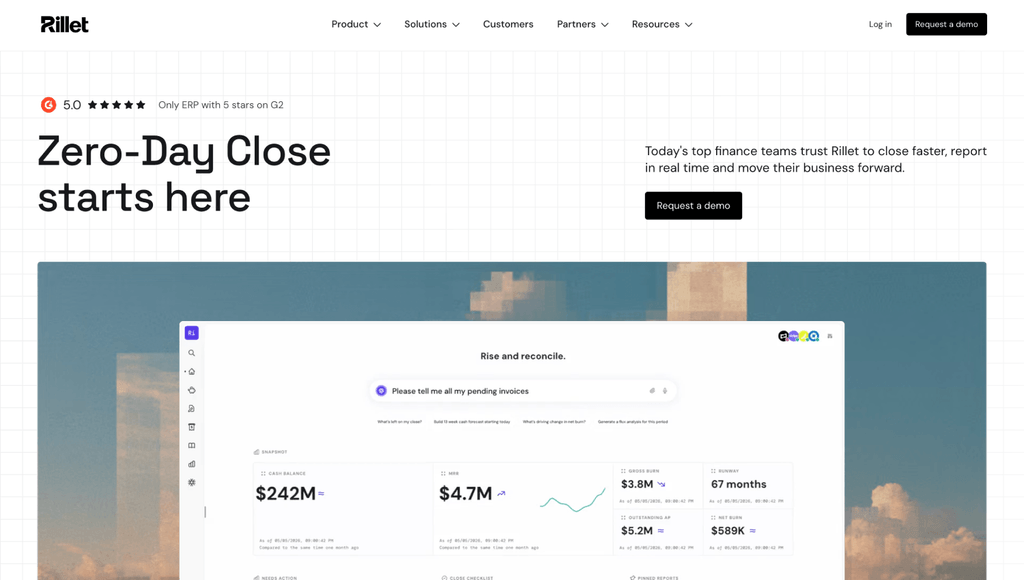
Rillet is an AI-native accounting platform aimed at Stripe-first SaaS companies, and its AP features reflect that focus. The system reads from Stripe, syncs revenue data automatically, and handles vendor bill coding with AI assistance. It is not a standalone AP platform in the same sense as Vic.ai or Medius, but for a Series A or Series B SaaS company that does not yet need a full ERP and wants clean books without manual data entry, Rillet covers the AP workflow at a fraction of the complexity. Pricing is not publicly disclosed. Rillet fits squarely in the category of tools worth piloting before committing to a heavier platform.
BILL AP
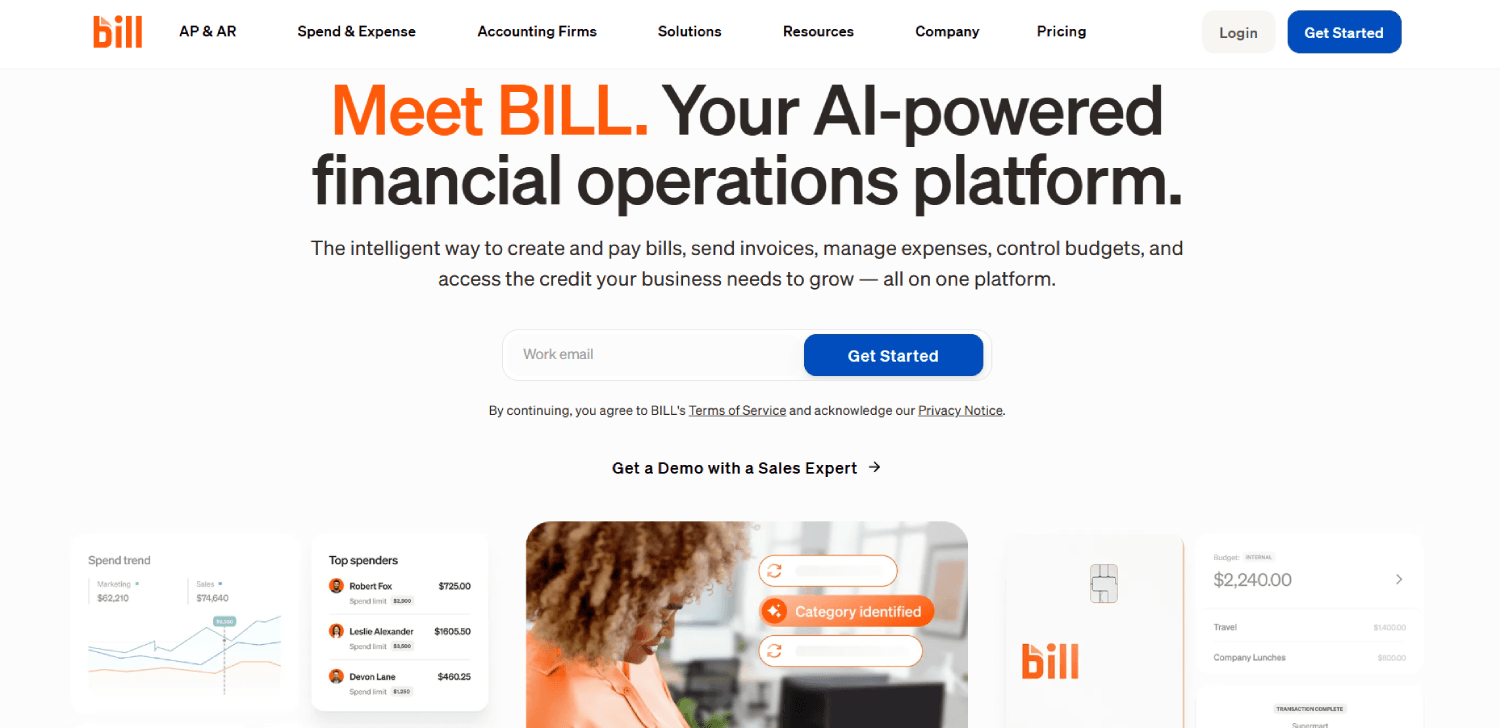
BILL has the largest installed base in the SMB AP category, partly because it integrates tightly with QuickBooks and Xero, and partly because accounting firms use it to manage client AP in bulk. The AI features handle invoice capture and suggest coding based on vendor history, but BILL’s approval workflows are more rules-based than learning-based. Auto-approval for low-risk invoices exists but requires manual threshold configuration rather than learned inference. BILL AP fits companies that want a reliable, well-integrated AP tool with decent AI assist, not companies trying to automate away most human touches.
Yooz
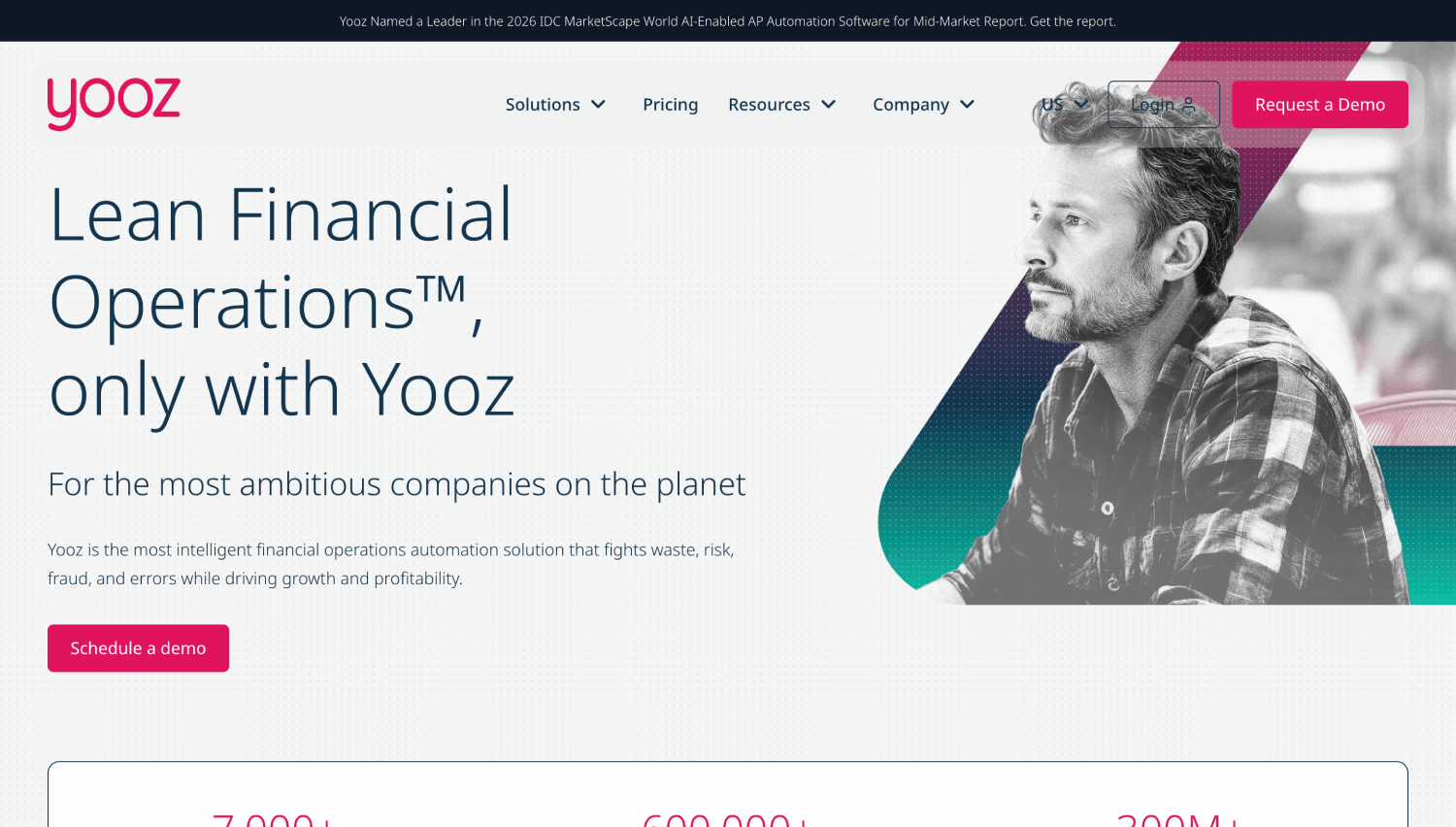
Yooz emphasizes deployment speed and ERP-agnostic integration. The platform claims connection to over 250 accounting and ERP systems, which makes it attractive for companies on less common accounting platforms that other vendors do not support natively. The AI handles invoice capture and coding, with PO matching and three-way match built into the workflow. Anomaly detection exists but is less prominent than Medius or Vic.ai. Yooz is a reasonable choice when integration breadth is the primary constraint and the buyer needs something running in weeks rather than months.
Basware
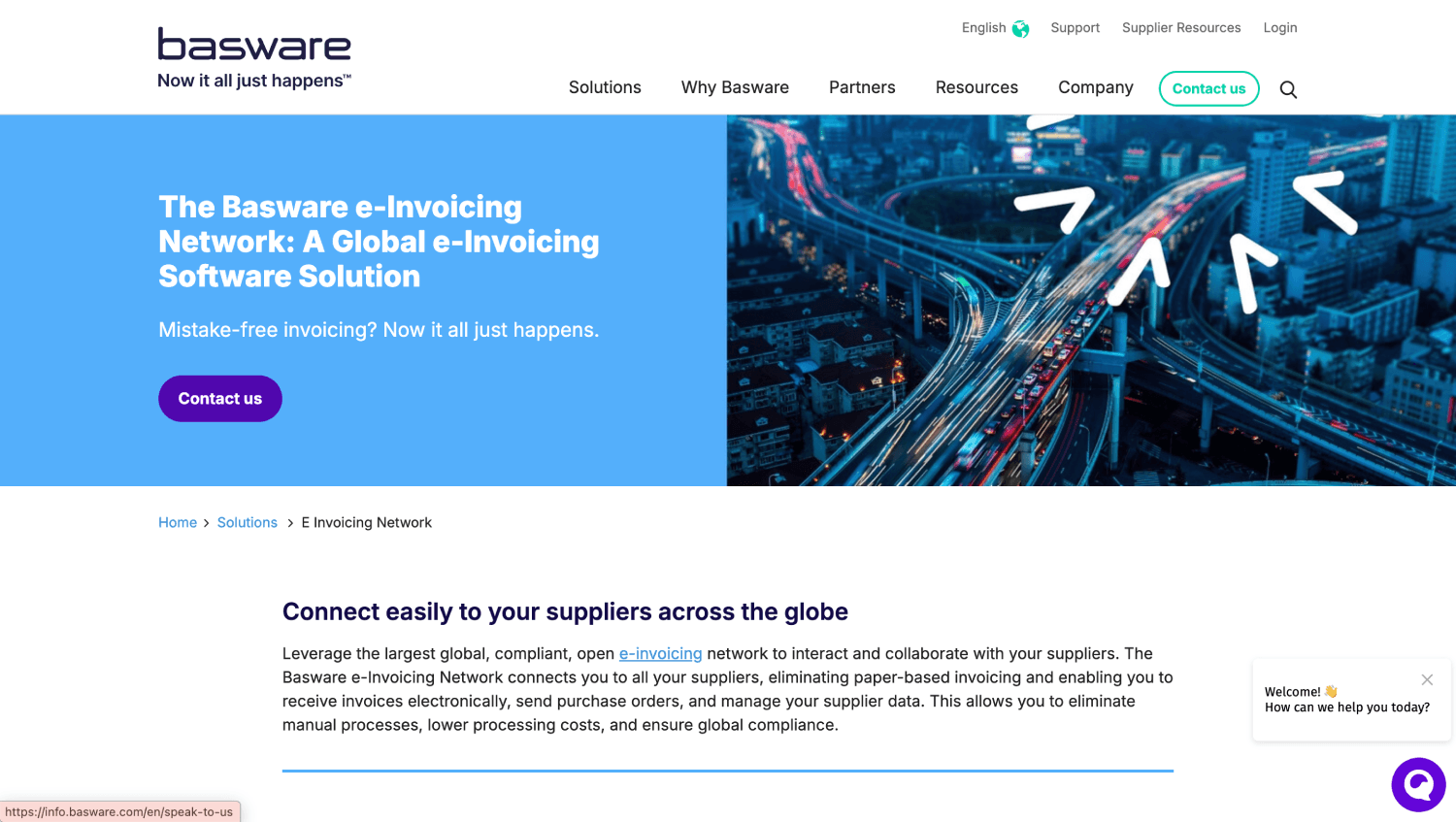
Basware operates at the enterprise end of the market, with a supplier network spanning over 200 countries and strong capabilities in PO-backed invoice processing. The AI coding and matching engine is mature, and the platform handles the full invoice-to-pay cycle including payment execution. Basware is not a tool a 50-person company pilots in a quarter. It fits large procurement environments where PO compliance, multi-entity consolidation, and supplier onboarding at scale are genuine problems. Implementation timelines and pricing reflect that complexity. For companies evaluating enterprise-grade options, Basware and SAP Concur are the two names that appear consistently in RFP shortlists.
How Do AI Agents for Accounts Payable Actually Work in Practice?
The phrase “AI agents for accounts payable” describes something more specific than a smart workflow tool. An AI agent in AP context is a system that takes autonomous action based on conditions it observes, rather than waiting for a human to initiate each step. In practice, this means the agent monitors an invoice inbox, extracts data, codes it, checks it against a PO or contract, routes it for approval if needed, and flags it for review if something looks wrong, all without a human deciding what happens next on a per-invoice basis.
Consider a mid-market company processing 3,000 invoices a month. Say roughly 70% are recurring vendor invoices with predictable amounts from vendors the system has seen before. An AI agent handles those from capture through coding to approval queue placement without anyone touching them. The remaining 30% that are new vendors, amount anomalies, or missing PO references get flagged and routed to a human. The AP clerk’s job shifts from processing every invoice to reviewing exceptions. That is what genuine AI-native AP produces, and it is meaningfully different from a tool that just reads PDFs faster.
Teams researching how this fits into a broader finance infrastructure can look at our accounts payable automation software comparison for the broader category, or the NetSuite AP automation guide if the ERP constraint is already defined.
What Should You Look for in AI-Powered AP Software?
GL coding accuracy on first-time vendors is the most useful benchmark to request during a proof of concept. Any vendor can code a recurring invoice from a known supplier correctly because that is just pattern matching against historical data. The harder test is how the system handles a net-new vendor or an invoice format it has never seen. Ask for accuracy rates on first-seen invoices specifically, not blended accuracy across all invoices.
Three-way match capability matters more than the vendor will admit during a demo. Matching a received invoice against a PO and a goods receipt before payment is the primary AP control that prevents overpayment and duplicate payment. AI platforms that handle this inside the application reduce the need for manual ERP reconciliation. Those that require the ERP to do the match introduce a workflow gap that tends to slow approvals.
ERP integration depth determines whether the AI layer actually works at full capability or degrades into a manual data entry step. A platform that connects to NetSuite or SAP via a generic API adapter may not be able to write coded invoice data back to the correct fields without customization. Ask the vendor to show the integration working live in a sandbox connected to your actual ERP version, not a generic demo environment.
How Much Does AI Accounts Payable Software Cost?
Transparent public pricing in this category is rare. Ramp is the only vendor on this list with a publicly listed free tier; as of July 2025 per their public pricing page, the standard tier is free. BILL publishes per-user pricing on its site; the Essentials tier is listed at $45 per user per month as of July 2025 per their public pricing page, with AP-specific features on higher tiers.
Every other vendor on this list requires a sales conversation before quoting. Implementation costs for enterprise platforms like Basware or Medius frequently equal or exceed the first-year software cost. When evaluating total cost, budget for data migration, ERP integration work, user training, and the time cost of running parallel AP workflows during onboarding. A platform that quotes $2,000 per month but takes four months to go live at full automation carries a meaningfully different true cost than one that costs $3,500 per month but runs in six weeks.
For growth-stage companies thinking through the broader cost of finance infrastructure, the hidden costs that compress fintech SaaS margins covers where tool costs tend to compound unexpectedly.
Frequently Asked Questions About AI AP Software
Is AI accounts payable software different from regular AP automation?
Yes, in a meaningful way. Traditional AP automation relies on rules configured by humans: if the vendor is X, code to account Y, route to approver Z. AI-native AP learns those patterns from historical data and updates them as behavior changes, without manual rule updates. The practical difference is that AI tools improve accuracy over time and can handle exceptions that fall outside predefined rules, while rules-based tools require ongoing maintenance as the business evolves.
Which AI AP tool works best with NetSuite?
Vic.ai has a native NetSuite integration that writes coded invoice data directly back to NetSuite fields without middleware. Stampli, Medius, and Yooz also support NetSuite, though integration depth varies. BILL integrates with NetSuite on its higher-tier plans. For a full breakdown of which tools work on NetSuite and how deeply, the best AP automation tools for NetSuite covers this specifically.
What is a realistic auto-approval rate for AI-native AP software?
Published benchmarks from vendors tend to cite 80 to 95 percent straight-through processing for mature implementations. A more realistic figure for the first 90 days is 40 to 60 percent, because the AI needs enough invoice history to reach high-confidence coding. Companies with clean, consistent historical AP data in their ERP get to high auto-approval rates faster. Companies migrating from manual or partially manual processes take longer.
Can AI AP software detect fraud before payment?
Some platforms can, but not all. Medius and Basware have pre-payment fraud detection as a documented feature. Vic.ai and Stampli flag anomalies that require human review. Ramp detects duplicate charges and unusual spend patterns across cards and vendor invoices. The key distinction is whether the system halts a payment automatically when it detects a problem or simply alerts a human after the fact. Ask the vendor specifically which actions are automated on a fraud signal versus which are advisory.
Do AI AP tools replace accounts payable staff?
They shift the work rather than eliminate the role. High-volume, repetitive invoice processing tasks reduce significantly with AI automation. AP staff spend more time on exception handling, vendor relationship management, and month-end close support. Teams with very small AP departments often find they can absorb invoice volume growth without adding headcount, which is the more common value proposition than outright staff reduction.
Does Ramp handle full accounts payable or only expenses?
Ramp handles both. The Bill Pay feature processes vendor invoices, including ACH and check payment, with AI-assisted coding and approval workflows. It is not as feature-rich as a dedicated AP platform in complex PO environments, but for companies under a few hundred employees that want AP and corporate card spend in a single tool, Ramp covers the full workflow.
How to Run an AI AP Pilot Without Disrupting Your Close
The most common pilot mistake is running the new tool on live invoices immediately. A better approach: run the AI platform in parallel with your existing AP process for 60 days on a defined invoice subset, typically a single vendor category or a volume band, for example, all invoices between $500 and $5,000. Compare the AI’s suggested GL codes and approval routes against what your AP team actually posted. The gap is your baseline accuracy score.
At day 60, if accuracy on that invoice subset is above 85 percent, expand the automation scope. If it is below 70 percent, check whether the training data the vendor ingested was clean and complete. Low accuracy in a pilot almost always traces back to inconsistent historical posting in the source ERP, not a fundamental AI limitation.
Keep the pilot ERP-connected from day one. Testing in a demo environment disconnected from your ERP will not surface the integration issues that actually cause go-live delays. The goal of a pilot is to find friction before it becomes a production problem.
The Underlying Shift That Makes This Category Worth Watching
AP has historically been viewed as a cost center with a fixed labor component. The AI-native platforms on this list are the first tools that credibly change that framing. When a platform can process, code, and route 70 to 80 percent of invoices without human input, AP starts to look more like a data asset than a staffing equation. Every invoice decision the AI makes becomes a data point that improves future decisions, which means the gap between teams using AI-native AP and those on rules-based automation widens over time.
The vendors worth the most scrutiny right now are the ones building proprietary training datasets on AP-specific transaction data rather than general-purpose language models bolted onto an invoice workflow. That distinction will matter more as the category matures and the “AI-powered” marketing claim becomes even less differentiated than it already is.
For finance leaders deciding whether to move now or wait, the calculus comes down to invoice volume and ERP signal quality. If you are processing at least 1,000 invoices a month on a major ERP, the economics favor a pilot this quarter. Below that threshold, a simpler tool from the small business AP automation category is likely the right starting point.



9 Best AI Month-End Close Tools for Accounting Teams