
TLDR
- Versapay’s customer portal and collaborative AR features are no longer a differentiator. Upflow, Growfin, Tesorio, and others ship the same self-service payer experience with faster implementation timelines.
- AI-native collections cadences are the clearest gap between Versapay and its newest competitors. Platforms like Growfin and Tesorio use AI to prioritize which invoices to chase and when, replacing manual worklists.
- Mid-market finance teams switching from Versapay typically cite ERP connector depth, NetSuite/Sage Intacct support, and implementation time as the deciding criteria, not just feature parity.
- Pricing across this category is not publicly standardized. Most vendors quote on contract value and invoice volume, so switching cost analysis matters more than headline rates.
- HighRadius and Billtrust sit at the enterprise end. Upflow, Growfin, and Invoiced are built for the 50-500 employee range where Versapay is most frequently evaluated.
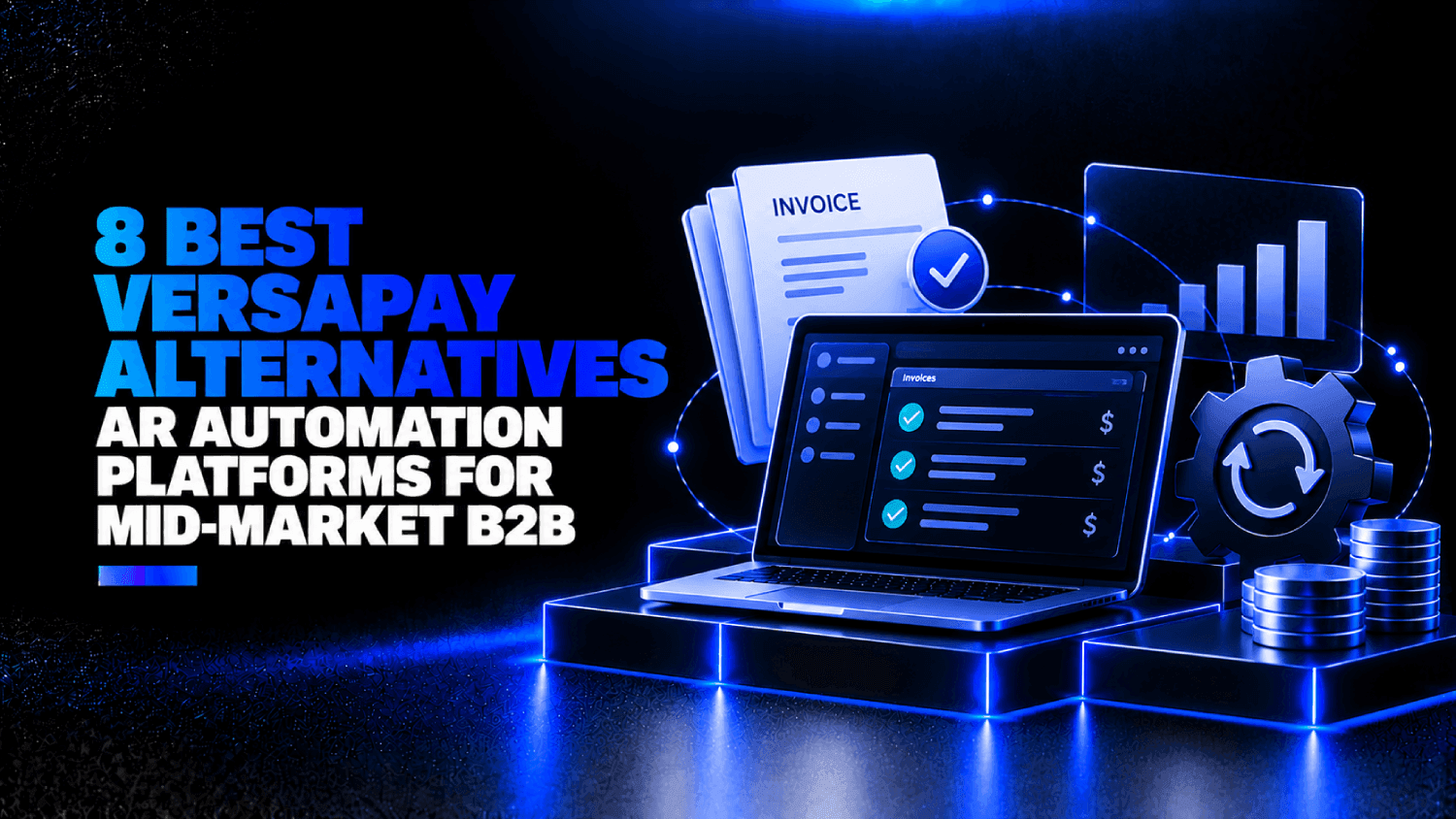
The best Versapay alternatives for mid-market B2B teams are Upflow, Growfin, Tesorio, Invoiced, HighRadius, Billtrust, Monk, and Esker. Each targets a different segment of the AR automation stack: Upflow and Growfin are fastest to deploy with AI collections, Tesorio excels at cash flow forecasting, Invoiced offers the deepest billing flexibility, HighRadius and Billtrust serve enterprise AR teams, Monk focuses on invoice processing, and Esker covers the broader order-to-cash workflow.
Why Are Teams Looking for a Versapay Replacement?
Versapay built its reputation on one specific idea: a shared payment portal where buyers and sellers collaborate on invoice disputes in real time rather than trading emails. For mid-market B2B companies billing on net terms, that was genuinely useful in 2018. The problem is that every serious AR platform now ships a version of that portal.
The complaints that surface most consistently in sales cycles and community forums center on three things. Implementation timelines run longer than expected, especially for companies with complex ERP setups. AI-assisted collections prioritization is shallow compared to purpose-built tools. And pricing for mid-market volumes can feel enterprise-weighted, with costs that scale faster than the value does.
Finance teams evaluating AR automation today are not asking whether they need a customer portal. They are asking which platform cuts days sales outstanding fastest, integrates with NetSuite or Sage Intacct without a six-month project, and gives AR staff AI-generated call lists rather than static aging reports. Those are the criteria this list is built around.
The FintechSpecs AR Platform Switching Test: Four Criteria Before You Shortlist
Before mapping alternatives to vendors, it helps to have a structured way to stress-test candidates. The four criteria below form what we call the FintechSpecs AR Platform Switching Test, designed specifically for mid-market teams leaving a collaborative AR platform for the first time.
ERP connector depth. Does the platform have a native, certified connector to your ERP, or a generic API integration that requires internal development? For NetSuite, Sage Intacct, QuickBooks Online, and Dynamics 365 users, this distinction can add three to five months to a rollout.
Payer experience without SSO friction. Can a buyer view invoices, dispute a line item, and pay without creating an account? Versapay’s portal works this way. Alternatives that require payer registration lose adoption fast in B2B contexts where procurement departments refuse to manage another login.
AI collections logic vs. rule-based sequences. Rule-based dunning tools send email X at day 30. AI-native tools look at payer payment history, invoice size, relationship age, and dispute frequency to recommend the right action at the right time. This is the actual gap between legacy and modern AR platforms.
Cash application accuracy out of the box. Automated cash application that matches payments to invoices without manual intervention is the highest-ROI feature in AR automation. Ask every vendor for their match rate on day one of go-live, not after a model training period.
Which Versapay Alternatives Should Mid-Market Teams Shortlist?
| Platform | Best For | ERP Focus | AI Collections | Pricing Model |
|---|---|---|---|---|
| Upflow | Series A-C SaaS and B2B services | NetSuite, QuickBooks, Xero | Yes, AI-prioritized worklists | Not publicly disclosed |
| Growfin | Mid-market with high invoice volume | NetSuite, Salesforce, HubSpot | Yes, AI task automation | Not publicly disclosed |
| Tesorio | Teams needing cash flow forecasting alongside AR | NetSuite, Sage Intacct, Workday | Yes, ML payment predictions | Not publicly disclosed |
| Invoiced | Complex billing models, recurring and one-time mix | NetSuite, QuickBooks, Xero, Sage | Automated dunning sequences | Not publicly disclosed |
| HighRadius | Enterprise AR with treasury integration | SAP, Oracle, NetSuite | Yes, AI credit and collections | Enterprise contract |
| Billtrust | High invoice volume, multi-channel delivery | SAP, Oracle, NetSuite, Dynamics | Yes, AI cash application | Enterprise contract |
| Monk | Invoice capture and processing-heavy workflows | Varies by deployment | Limited, focused on capture | Not publicly disclosed |
| Esker | Order-to-cash with AP and AR in one platform | SAP, Oracle, NetSuite | Yes, AI order and collections | Enterprise contract |
Upflow: Best Versapay Alternative for Seed-to-Series C B2B Teams
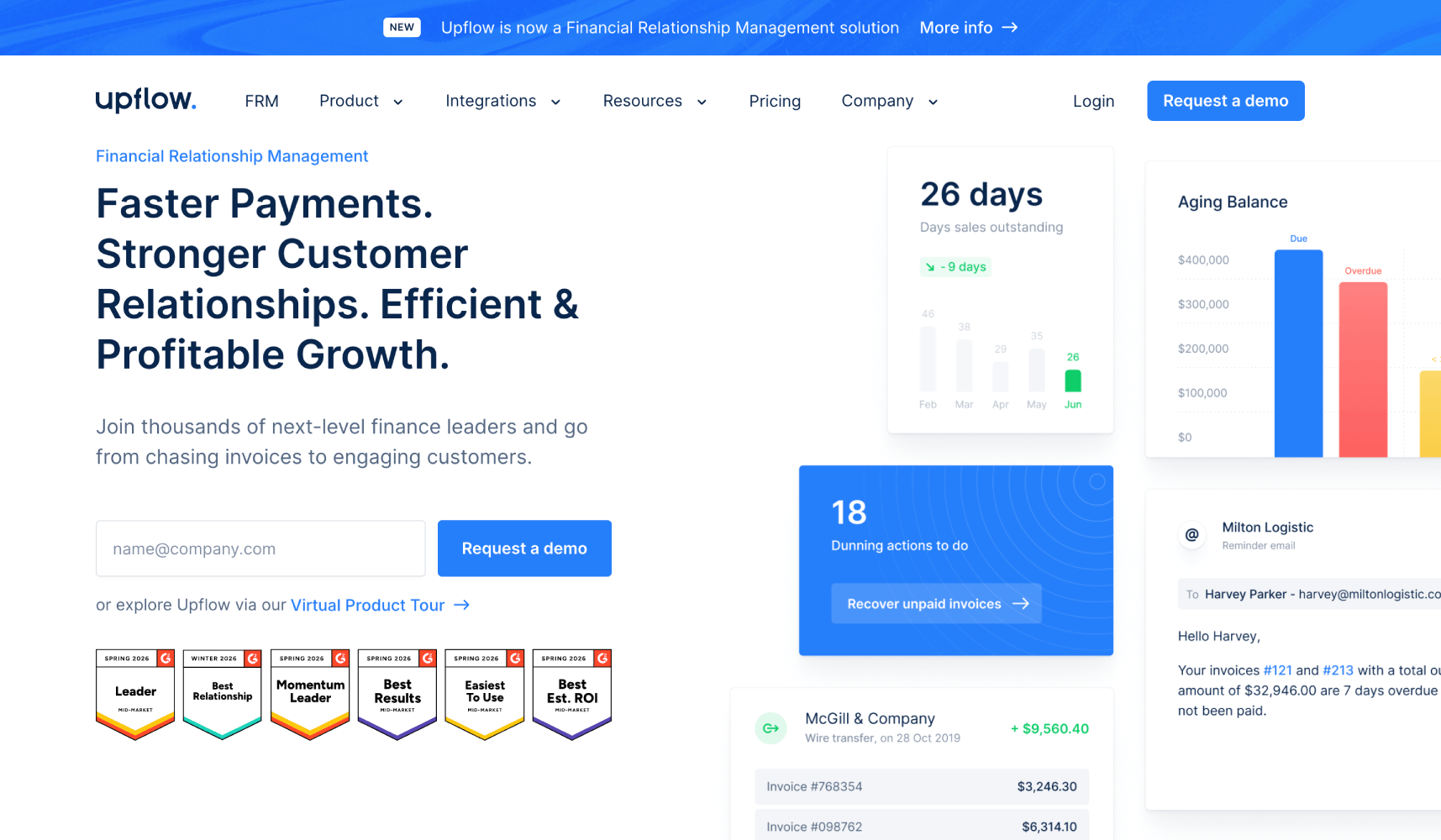
Upflow is built around one premise: AR automation should not require a six-month implementation. The platform connects to NetSuite, QuickBooks Online, Xero, and HubSpot, and deploys customer payment portals that work without payer registration. That last point matters because Versapay users switching to Upflow often cite portal adoption as their baseline requirement.
Upflow’s collections module assigns AR staff a prioritized daily task list based on invoice age, payer behavior, and communication history. It is not as deeply ML-driven as Tesorio’s cash forecasting layer, but for a 50-200 person company where the AR team is two or three people, the prioritization logic is sufficient and the ramp time is short.
Pricing is not publicly disclosed as of this writing. Upflow sells to companies invoicing in the millions annually, so expect annual contract pricing based on invoice volume and seat count.
Growfin: Best for AI Collections Cadences and CRM-Connected AR
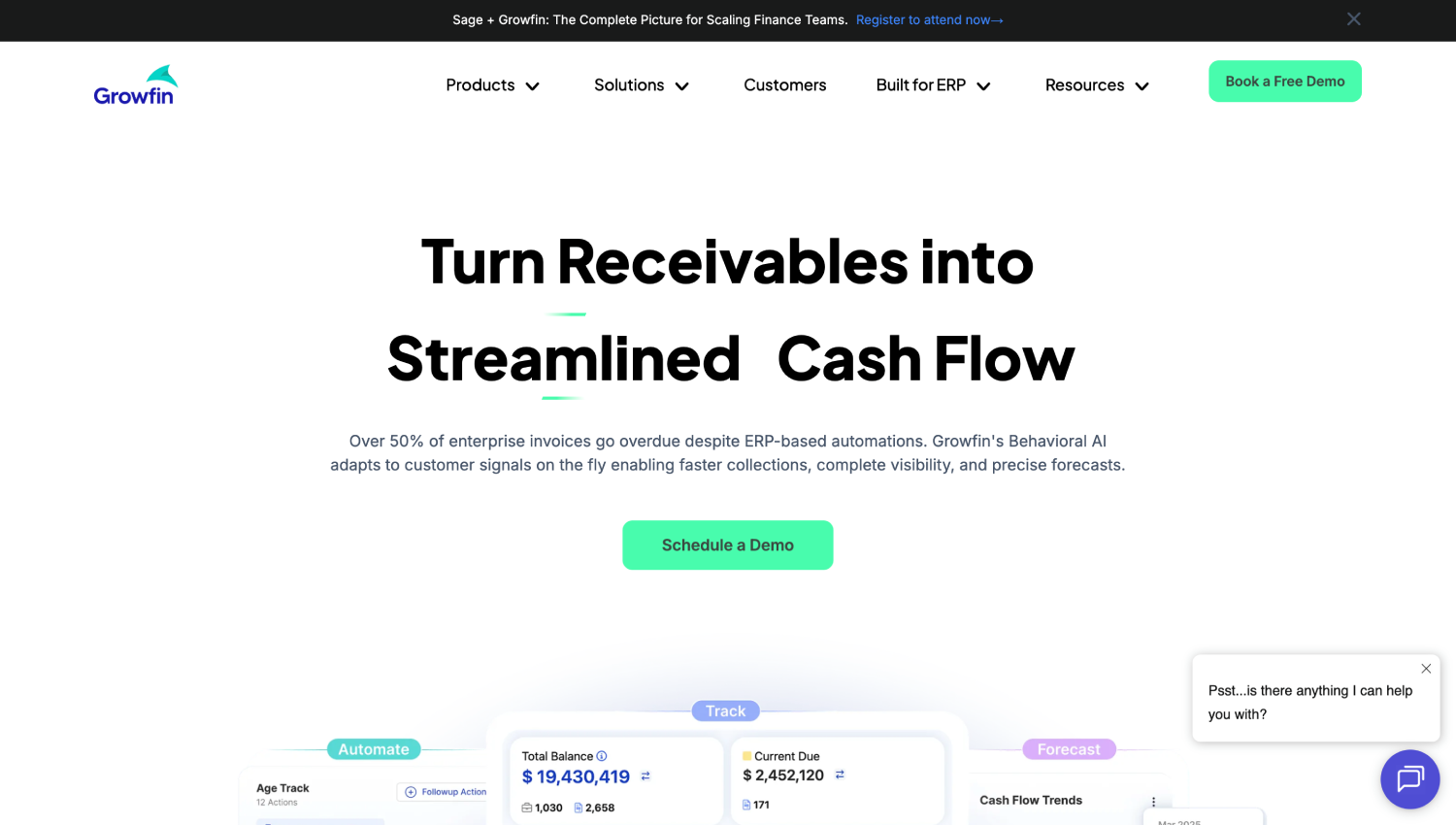
Growfin is the closest thing to an AI-native Versapay replacement for mid-market teams that have both a finance stack and a CRM. It integrates with NetSuite, Salesforce, and HubSpot simultaneously, which means collections touchpoints can be coordinated with open sales opportunities. That is genuinely useful when your AR team and your account management team share customers.
The platform automates follow-up sequences at a task level rather than just sending templated emails. A collector can see that an invoice is 22 days past due, that the same payer has three open support tickets, and that a renewal conversation is active in Salesforce, all from one view. Most platforms in this category do not surface that context natively.
Growfin positions directly against Versapay on the mid-market switching buyer. Pricing is not publicly disclosed, but the company targets teams processing between 500 and 5,000 invoices per month. For context on how AR tools fit into broader B2B billing decisions, the FintechSpecs AR automation overview covers category-level selection criteria.
Tesorio: Best Versapay Competitor for Cash Flow Visibility
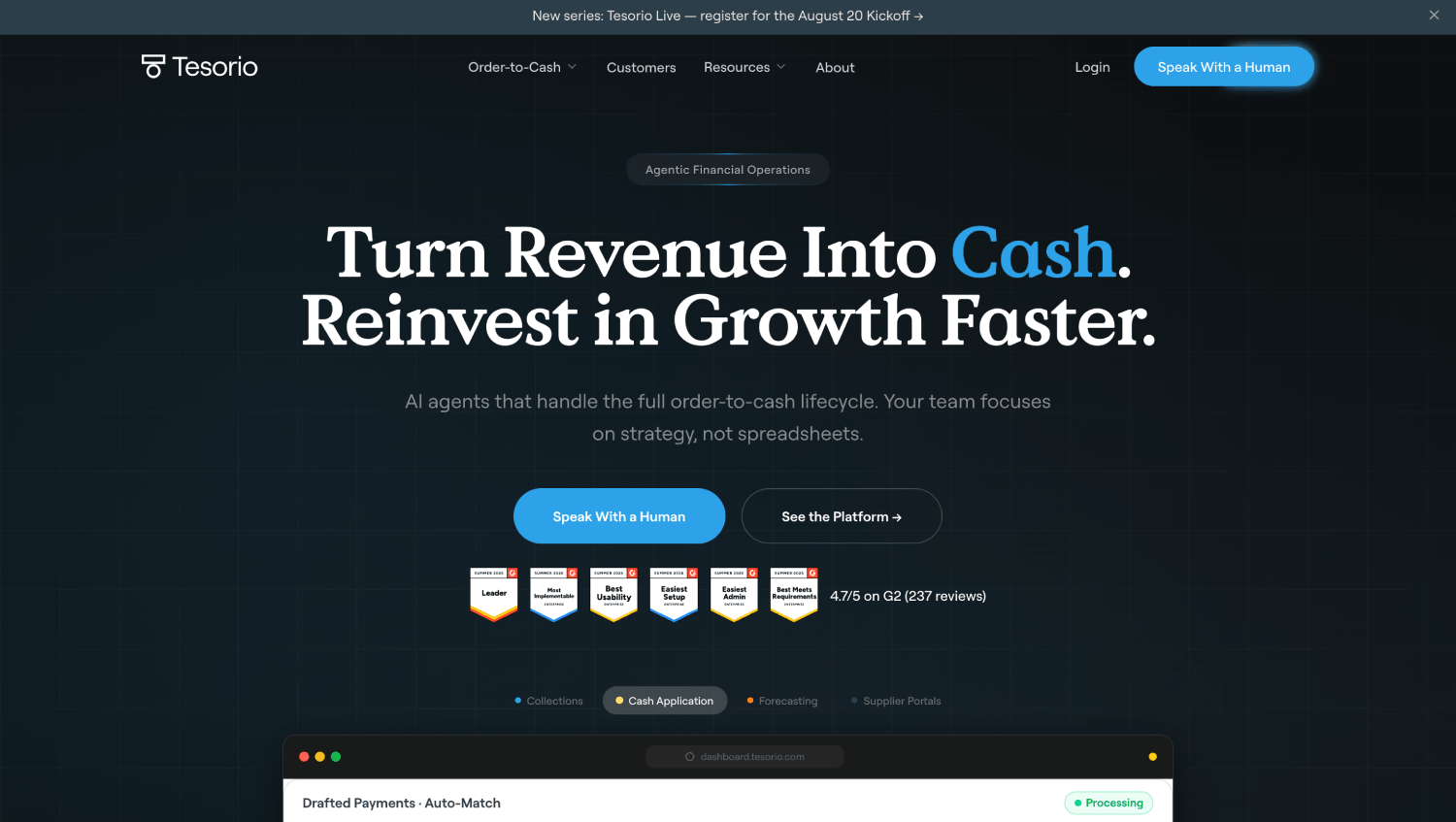
Tesorio solves a problem most AR platforms ignore: the distance between your aging report and your actual cash position. The platform runs machine learning models on historical payment behavior to predict when individual invoices will actually be paid, not just when they are due. That feeds directly into cash flow forecasting at the treasury level.
For companies using NetSuite, Sage Intacct, or Workday, Tesorio’s ERP integrations are certified and maintained by Tesorio’s team rather than third-party developers. That matters at renewal time when the ERP gets upgraded. The collections automation is competent but secondary to the forecasting layer, which is where Tesorio earns its differentiation.
Teams that do not need cash forecasting, or that use a separate FP&A tool for that function, may find Tesorio’s value proposition narrower than Upflow’s or Growfin’s. Pricing is not publicly disclosed. Tesorio targets Series B and later companies with finance teams that report to a CFO with treasury responsibilities. For teams evaluating FP&A tooling alongside AR, the guide to FP&A tools that replace spreadsheet forecasting covers the adjacent category.
Invoiced: Best Versapay Replacement for Complex Billing Structures
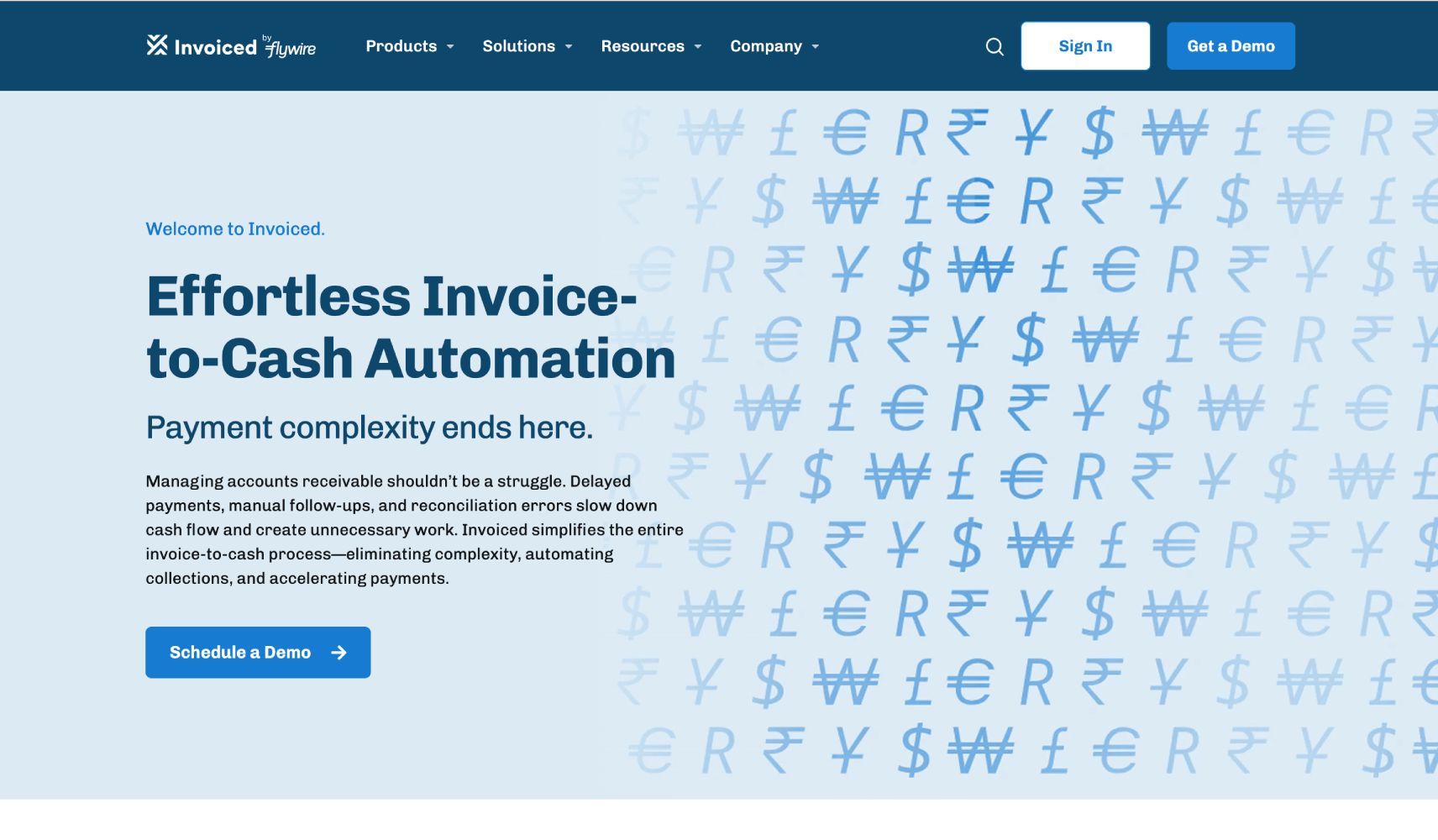
Invoiced handles billing models that most AR platforms trip over: mixed recurring and one-time charges, subscription modifications mid-period, usage components layered on top of base fees. If your company bills professional services alongside a SaaS product, or sells a mix of project work and monthly retainers, Invoiced’s billing engine is more flexible than Versapay’s.
The customer portal is white-labeled and functions without payer account creation. Automated dunning sequences are rule-based rather than AI-prioritized, which is a step behind Growfin and Tesorio on collections intelligence. For companies where the primary problem is invoice complexity rather than collections sophistication, that trade-off is acceptable.
Invoiced integrates with NetSuite, QuickBooks, Xero, and Sage. Pricing is not publicly disclosed. The company serves mid-market companies and has a documented history with B2B SaaS teams specifically, which is a useful data point for product-led companies that need to bill both monthly subscriptions and annual contracts from the same AR platform.
HighRadius: Best Versapay Alternative for Enterprise AR Teams
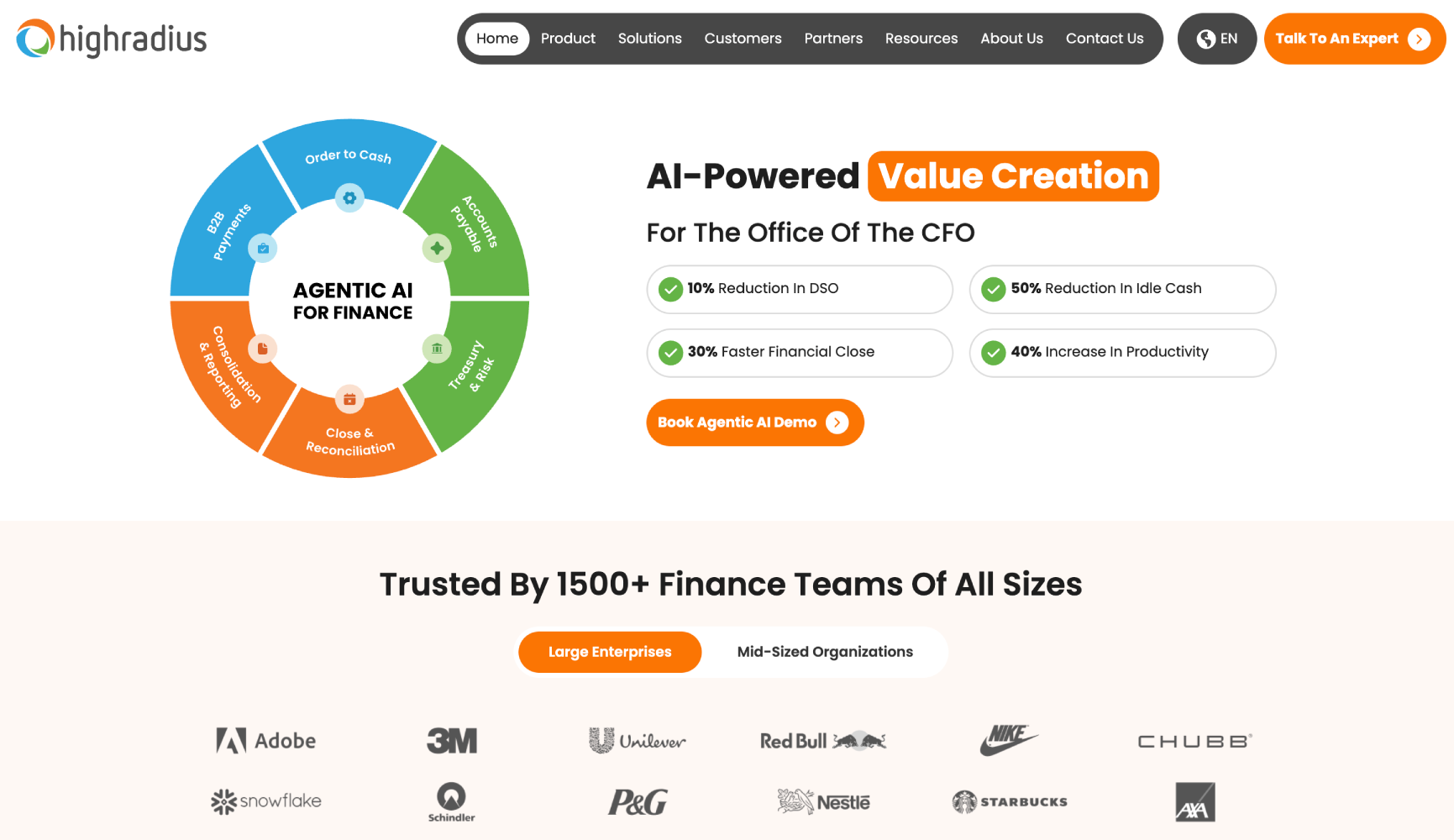
HighRadius is the platform that comes up when an enterprise AR team says it has outgrown Versapay. The product covers the full order-to-cash cycle: credit decisioning, electronic invoicing, AI cash application, collections management, and deductions management for companies dealing with retail chargebacks or short-pay disputes.
The AI cash application module is one of the most cited capabilities in the category. HighRadius claims high straight-through processing rates for automated payment matching, though specific figures should be confirmed directly with HighRadius for your invoice mix and payment channel profile. Implementation is measured in months, not weeks, and typically requires dedicated project management from both sides.
HighRadius is not a mid-market platform that scaled up. It is built for companies with dedicated AR departments, ERP environments running SAP or Oracle, and invoice volumes in the tens of thousands per month. Pricing is enterprise contract only. For teams comparing HighRadius to legacy platforms in the financial close context, the HighRadius vs. Workiva vs. Numeric comparison covers some of the adjacent positioning questions.
Billtrust: Best Versapay Competitor for Multi-Channel Invoice Delivery

Billtrust has been in the B2B billing and AR space longer than most alternatives on this list. Its differentiation sits in invoice delivery: paper, email, EDI, buyer portals, and the Billtrust Business Payments Network, which connects to thousands of buyer accounts payable systems for direct invoice routing. If your customers have procurement departments that require invoices through specific AP portals, Billtrust’s network connectivity is a material advantage.
The AI cash application layer is genuinely mature and handles complex remittance formats, partial payments, and deductions processing at scale. Collections automation is functional but less AI-native than Growfin or Tesorio. Billtrust integrates with SAP, Oracle, NetSuite, and Microsoft Dynamics 365.
Billtrust is the right choice for companies with high invoice volumes, diverse buyer AP environments, and existing ERP infrastructure at the enterprise tier. For mid-market teams under 200 employees, the implementation overhead and enterprise contract structure may outweigh the network benefits. Billtrust was acquired by FLEETCOR Technologies in 2023, which affects roadmap and support structure considerations for buyers doing vendor evaluation.
Monk: Best for Invoice Capture and Processing Automation
Monk sits at a different part of the AR stack than the other platforms on this list. Its core function is document intelligence for invoice processing: capturing invoice data from PDFs, emails, and scanned documents, extracting line items accurately, and routing for approval. If your AR problem is upstream of collections, meaning invoices are not getting out the door correctly or on time, Monk addresses that gap.
Monk is not a direct Versapay replacement in the way Upflow or Growfin are. It does not offer a customer payment portal or AI collections cadences. Finance teams that need both invoice processing automation and downstream collections management will need to evaluate whether Monk integrates with their preferred collections tool, or whether they are better served by a platform that covers both layers.
Esker: Best for Full Order-to-Cash Including Procurement
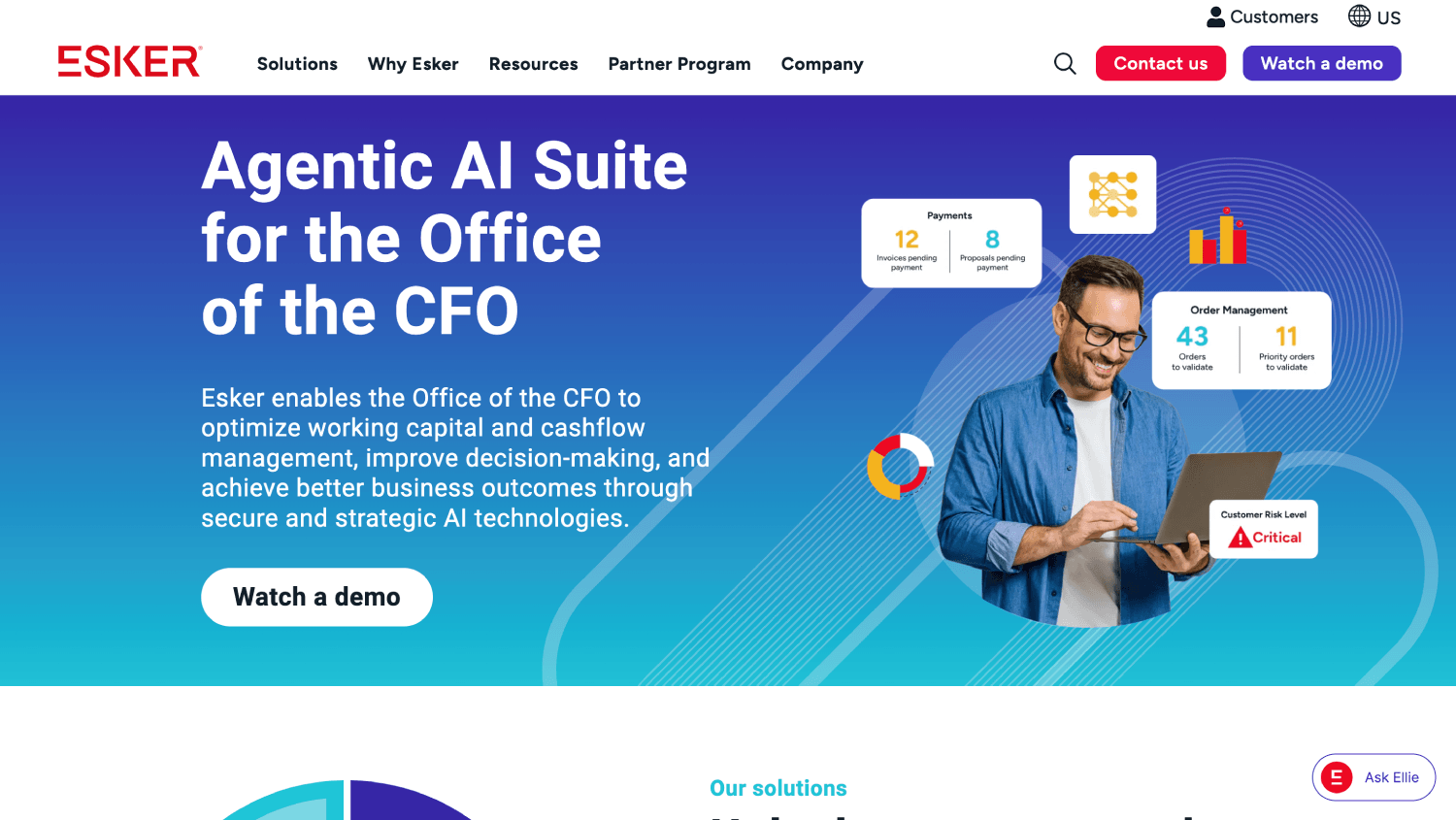
Esker covers order-to-cash and procure-to-pay in a single platform, which makes it unusual on this list. For companies that want to consolidate AP and AR automation under one vendor and one contract, Esker reduces integration overhead. The AR module includes automated cash application, collections management, credit management, and customer self-service.
Esker integrates with SAP, Oracle, and NetSuite, and supports e-invoicing mandates across multiple countries, which is relevant for US companies with European subsidiaries. The platform skews toward enterprise and upper mid-market buyers. Implementation is complex relative to Upflow or Invoiced. Pricing is enterprise contract only. For teams evaluating broader AR and AP consolidation, the AP automation comparison covers the payables side of that equation.
Switching Cost Table: Versapay to Alternatives
| Switching Factor | Upflow | Growfin | Tesorio | Invoiced | HighRadius | Billtrust |
|---|---|---|---|---|---|---|
| Typical implementation timeline | 2-6 weeks | 4-8 weeks | 6-12 weeks | 4-8 weeks | 3-6 months | 3-6 months |
| Payer portal without registration | Yes | Yes | Limited | Yes | Yes | Yes |
| AI collections prioritization | Yes | Yes | Yes (ML-based) | Rule-based | Yes | Partial |
| Native NetSuite connector | Yes | Yes | Yes | Yes | Yes | Yes |
| Team size fit | 10-500 | 50-500 | 50-1000+ | 10-500 | 500+ | 500+ |
| Pricing transparency | Quote only | Quote only | Quote only | Quote only | Enterprise | Enterprise |
Implementation timelines above are vendor-reported ranges drawn from each platform’s publicly available documentation and product pages. Actual timelines vary based on ERP complexity, data migration requirements, and internal resource availability. Confirm scope with your vendor before signing.
How Do You Evaluate an AR Platform Switch Without Getting Burned?
The most common mistake in an AR platform migration is letting the demo drive the decision. A vendor can show a flawless payment portal walkthrough while hiding that their NetSuite connector requires a custom SuiteApp installation maintained by a third party. Three questions cut through that quickly.
First: who built and maintains your ERP connector, you or a partner? If it is a partner, what is the support SLA when the connector breaks after an ERP update? Second: what is your cash application match rate on day one of go-live for a company with our invoice mix, and can you show a reference customer with a similar profile? Third: what does the payer onboarding experience look like for a buyer who has never used your portal before, and can we test it with a real invoice before we sign?
For teams running a more formal vendor evaluation, the FintechSpecs fintech vendor evaluation framework covers the broader due diligence process across contract, security, and integration dimensions.
What Does an AR Platform Migration Actually Cost?
None of the platforms on this list publicly disclose pricing as of this writing. That is consistent across the category. What finance teams should budget for beyond the software contract includes data migration (historical invoices, customer records, payment history), ERP connector setup or professional services fees, AR staff training, and a parallel-run period where both platforms are active.
For mid-market companies, the total cost of switching is often less about the new platform’s annual contract and more about the three to eight weeks of internal finance team time consumed by the migration. The platforms with the fastest implementation timelines, Upflow and Invoiced, are not necessarily cheaper in software cost, but they tend to produce lower total switching costs because they reduce that internal time investment.
Teams worried about margin impact during a platform switch should also consider the hidden costs that compress SaaS margins during infrastructure transitions, many of which apply equally to AR platform migrations.
Frequently Asked Questions
What is the best Versapay alternative for a company using NetSuite?
Upflow, Growfin, Tesorio, and Invoiced all maintain native NetSuite connectors. For a mid-market team under 200 employees, Upflow and Invoiced typically deploy fastest on NetSuite environments. Tesorio is the stronger choice if you need cash flow forecasting integrated with your AR data. Confirm whether each vendor’s NetSuite connector is certified by NetSuite or maintained independently, since that affects upgrade compatibility.
How does Versapay compare to Billtrust?
Versapay focuses on collaborative AR through a shared invoice portal, and targets mid-market companies. Billtrust covers invoice delivery across more channels, including EDI and direct AP portal connectivity through its Business Payments Network, and serves higher invoice volumes at the enterprise level. Billtrust is a better fit for companies with large, procurement-driven buyer bases. Versapay is a better fit for mid-market teams that want faster deployment and a simpler portal experience. A detailed head-to-head is covered in the Invoiced vs. Versapay vs. Billtrust comparison.
Which AR automation platforms use AI for collections?
Growfin, Upflow, Tesorio, and HighRadius all use AI or machine learning to prioritize collections tasks rather than relying purely on rule-based dunning sequences. Growfin integrates CRM data into collections context. Tesorio uses ML to predict payment dates. HighRadius applies AI across credit, cash application, and collections at enterprise scale. Invoiced uses configurable rule-based dunning, which is more predictable but less adaptive than AI-driven approaches.
Is HighRadius a Versapay alternative for mid-market companies?
HighRadius is designed for enterprise AR departments with dedicated teams, SAP or Oracle ERP environments, and invoice volumes in the tens of thousands per month. Implementation typically takes three to six months. For a mid-market company under 300 employees, HighRadius is likely over-engineered and over-priced relative to the use case. Upflow or Growfin are more appropriate for that segment.
What should I ask a vendor before switching from Versapay?
Three questions matter most. Who builds and maintains your ERP connector, and what happens when our ERP upgrades? What is your cash application match rate on day one, not after training, for an invoice mix similar to ours? Can we test the payer portal with a real invoice before signing? The answers to these three questions surface integration risk, automation quality, and payer adoption risk, which are the three most common reasons AR platform migrations underperform expectations.
Do any Versapay alternatives offer a customer payment portal without requiring payer registration?
Upflow, Invoiced, Billtrust, and HighRadius all offer customer-facing payment portals that allow a buyer to view an invoice and pay without creating an account. This is a meaningful requirement in B2B contexts where procurement teams at large buyers will not register for a vendor’s portal. Tesorio’s self-service payer experience is more limited and worth confirming directly with the vendor before shortlisting.
How long does it take to implement a Versapay replacement?
Implementation time depends heavily on ERP complexity and data migration requirements. Upflow and Invoiced typically deploy in two to eight weeks for companies with standard ERP setups. Growfin and Tesorio typically take four to twelve weeks. HighRadius and Billtrust run three to six month implementations for enterprise environments. These are directional estimates. Companies with custom ERP configurations or large historical data sets should add buffer.
Are there AR automation platforms built for B2B SaaS billing specifically?
Upflow and Invoiced both have documented customer bases in B2B SaaS and handle mixed billing models including subscriptions, annual contracts, and professional services. Growfin’s CRM integration is also well-suited to SaaS companies where AR and account management overlap. The broader category of B2B collections software covers tools that extend into recovery workflows beyond the AR automation layer.
What the Right AR Platform Decision Actually Comes Down To
Versapay’s core insight, that invoice disputes should happen in a shared workspace rather than an email thread, was correct. Every serious competitor has since built that into their product. The decision is no longer whether a platform offers a customer portal. The decision is which platform ships AI-driven collections logic fast enough to matter, integrates with your ERP without a multi-month project, and fits a team where AR is owned by two or three people rather than a dedicated department of twenty.
For most mid-market companies in the 50-to-300 employee range, Upflow and Growfin are the right first calls. Tesorio is the right first call if cash forecasting is the CFO’s primary problem. Invoiced earns its place for companies with billing complexity that breaks simpler AR tools. HighRadius and Billtrust are worth evaluating seriously only once you have an enterprise-scale AR operation that justifies the implementation overhead.
The platforms that win in this category over the next two years will be the ones where AI collections prioritization actually reduces the number of manual touchpoints per recovered dollar, not the ones with the most impressive demo portals. That distinction is worth weighting heavily when you run your own evaluation.