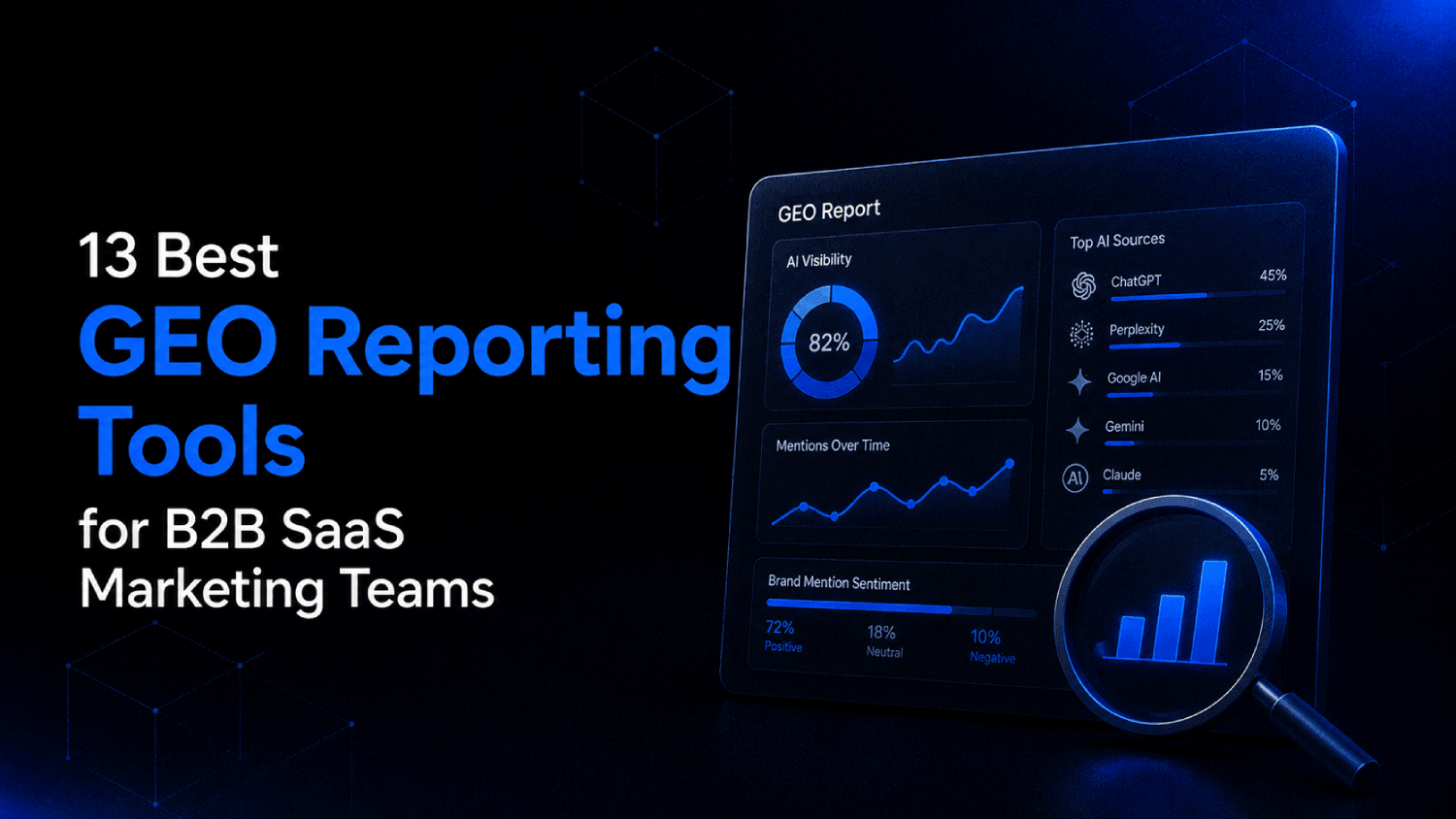

- GEO reporting is not SEO reporting with a new label. The metrics are different: citation frequency, prompt coverage, model variance, and share of voice in AI-generated answers.
- Most B2B SaaS marketing teams are tracking the wrong signals. Organic traffic tells you nothing about whether ChatGPT or Perplexity mentions your product when a buyer asks a relevant question.
- The tools in this list fall into three categories: dedicated GEO platforms, hybrid SEO/GEO suites, and audit-focused tools. Each serves a different stage of GEO maturity.
- Fintech SaaS teams face a harder version of this problem. Regulatory language, trust signals, and competitor density in AI responses make prompt monitoring more consequential than in most verticals.
- No single tool covers the full picture. Most teams need at least two: one for ongoing citation monitoring and one for prompt auditing across models.
The best GEO reporting tools for B2B SaaS teams in 2025 and 2026 are Profound, Otterly AI, Peec AI, BrandViz AI, SE Ranking AI Visibility Tracker, Semrush AI Toolkit, Ahrefs Brand Radar, Goodie AI, Scrunch AI, Search Atlas OTTO, GrackerAI, Brandwatch, and Google Search Console’s generative AI performance report. Each addresses a different measurement problem: citation tracking, prompt coverage, model-specific share of voice, and answer quality scoring.
Why GEO Reporting Is Not the Same as Content SEO Reporting
When a buyer types “best AP automation software for mid-market SaaS” into ChatGPT, they get a synthesized answer, not a list of blue links. Your brand either appears in that answer or it does not. No rank position. No page two. No meta description to optimize. This is a binary visibility problem that no SEO dashboard was built to measure.
Traditional content SEO reports on keyword rankings, organic sessions, and backlink counts. GEO reporting tracks something categorically different: whether AI models cite your brand, in which contexts they mention it, how that mention compares to competitors, and whether the framing is accurate. A company can have 50,000 monthly organic visitors and zero presence in any AI-generated answer for their highest-intent queries.
B2B SaaS marketing teams building out their generative engine optimization strategy need reporting infrastructure that matches the channel. The five core GEO metrics that matter are: citation frequency (how often your brand is mentioned), prompt coverage (what percentage of relevant queries surface your brand), model variance (does ChatGPT mention you but Claude does not), sentiment accuracy (is the AI’s description of your product correct), and competitive share of voice (your mentions relative to named competitors in the same answers).
A Framework for Evaluating GEO Reporting Tools Against B2B SaaS Needs
Before comparing 13 tools, it helps to have a consistent lens. The GEO Audit Stack is a four-layer evaluation framework developed for assessing any GEO reporting tool against B2B SaaS requirements.
Layer 1 , Prompt Coverage: Does the tool test your brand across the full range of queries a buyer might use, not just branded searches? A tool that only checks “your brand name” misses the discovery problem entirely.
Layer 2 , Model Breadth: Does it query ChatGPT, Claude, Gemini, and Perplexity separately? Model variance is real. A B2B SaaS company might appear consistently in Perplexity but never in Claude, and those are different buyer populations.
Layer 3 , Competitive Context: Does the tool show who else appears in the same answers? Share of voice within an AI response matters more than absolute mention count.
Layer 4 , Trend Granularity: Can you track changes over time at the prompt level, not just the account level? Month-over-month shifts in specific query responses tell you whether your content changes are working.
Every tool below is assessed against these four layers. A tool that fails two or more is flagged accordingly.
Which Tools Are Built Specifically for GEO Reporting?
1. Profound
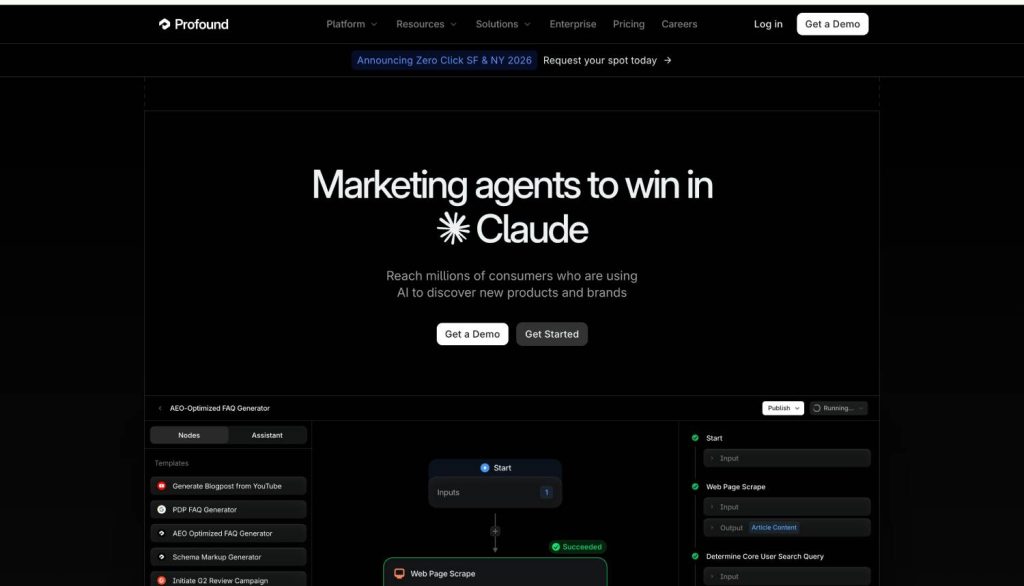
Profound is the most purpose-built GEO analytics platform currently available for B2B teams. It tracks brand mentions across ChatGPT, Perplexity, Google AI Overviews, and Gemini, and structures the output as “answer engine insights” rather than keyword rankings. The platform lets teams define a prompt library covering their full competitive category, then monitors how AI responses to those prompts change over time.
Prompt coverage and model breadth are strong. Competitive context reporting, showing which competitors appear alongside you in the same AI responses, is a core feature rather than an add-on. Pricing is not publicly disclosed; Profound operates on a demo-to-quote model. Best for: mid-market to enterprise B2B SaaS teams with dedicated demand gen or content functions.
2. Otterly AI
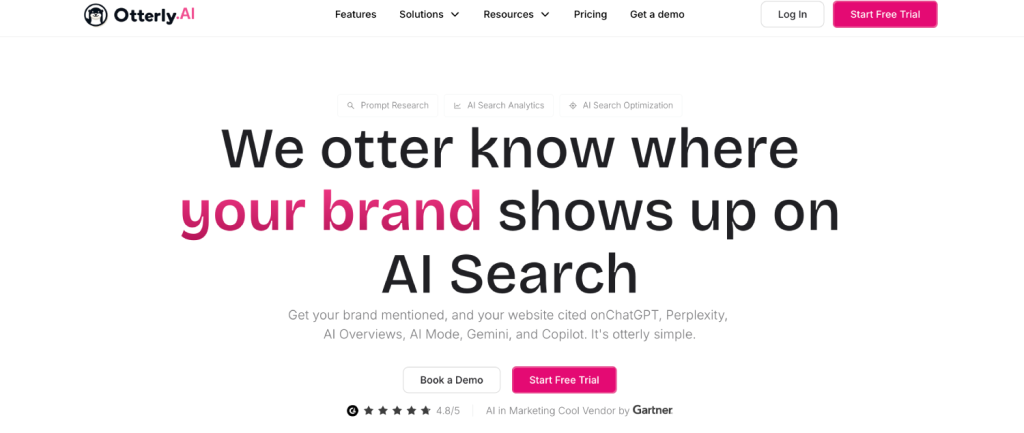
Otterly AI focuses specifically on AI answer tracking. It monitors brand and competitor mentions across AI search platforms, surfaces prompt-level data, and flags when your brand disappears from answers it previously appeared in. The interface is cleaner than most alternatives, and setup time is low. It ranks consistently in third-party GEO tool roundups, including the SERP results for “generative engine optimization tools.”
Otterly’s weakness is model breadth. At the time of writing, coverage varies by plan, and teams running prompts across four or more AI models may hit limitations. Check their current pricing page before committing.
3. Peec AI
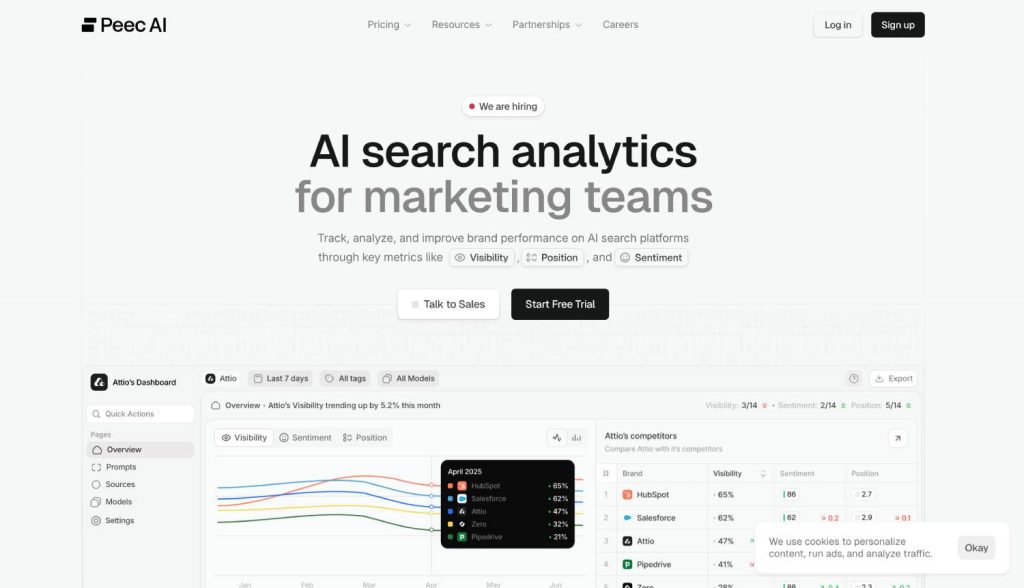
Peec AI takes a share-of-voice approach. Rather than just flagging mentions, it calculates your brand’s visibility percentage relative to competitors across a defined prompt set. For B2B SaaS teams that care about competitive positioning, this framing surfaces clearer signal than raw mention counts. You can see, for a given set of buyer queries, whether you appear in 40% of answers while your closest competitor appears in 70%.
Peec AI’s prompt library customization is strong, and the competitive benchmarking output is well-suited for quarterly business reviews or board reporting. Layer 4 (trend granularity) is solid; the historical tracking goes down to the individual prompt level.
4. BrandViz AI
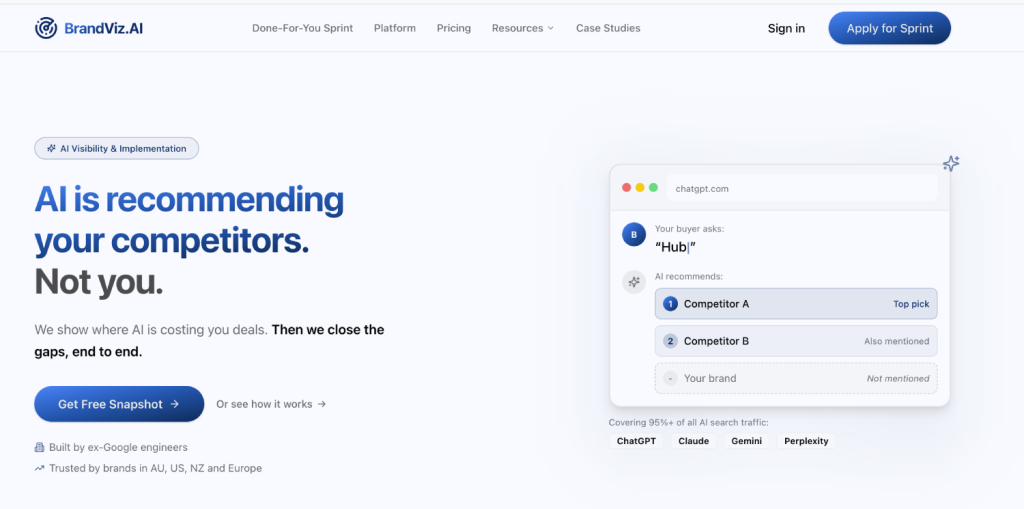
BrandViz AI appears in multiple SERP results for GEO tool comparisons and focuses on brand perception inside AI answers, not just mention presence. It surfaces how AI models describe your brand, whether the description matches your actual positioning, and where factual errors appear. For B2B SaaS companies with complex or evolving product offerings, this accuracy layer matters.
A fintech company, for example, faces real risk if an AI model describes their product as a payment processor when they are actually a ledger tool. BrandViz AI is one of the few platforms that surfaces these framing errors systematically. It scores lower on Layer 3 (competitive context) compared to Profound or Peec AI.
5. SE Ranking AI Visibility Tracker
SE Ranking’s AI Visibility Tracker sits inside a broader SEO suite, which is its main advantage and its main limitation. Teams already using SE Ranking for keyword tracking can add AI visibility monitoring without switching platforms. The tool tracks brand appearances in Google AI Overviews and expands into other model outputs depending on the subscription tier.
For B2B SaaS teams early in their GEO reporting work, the integrated workflow reduces friction. For teams that need deep prompt-level customization across multiple non-Google AI engines, a dedicated platform will serve them better. SE Ranking’s pricing is publicly available on their site and is generally more accessible than enterprise-only platforms.
6. Semrush AI Toolkit
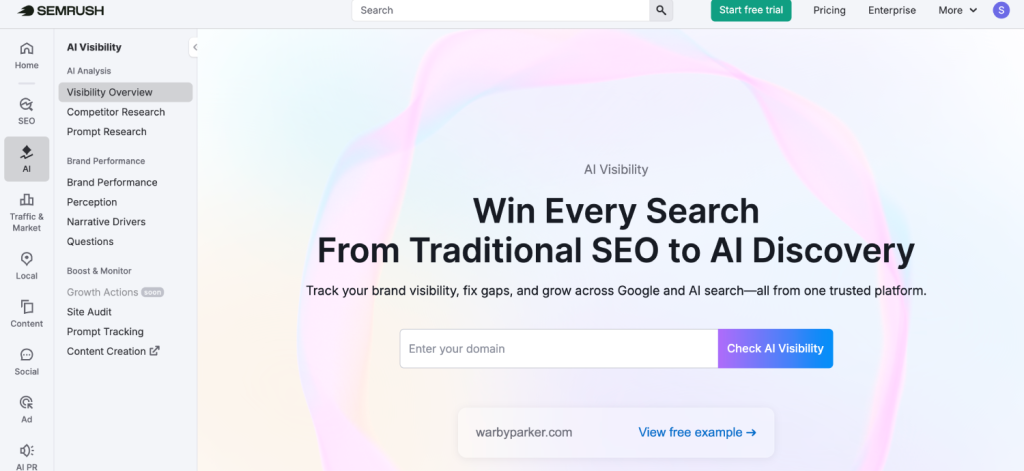
Semrush’s AI Toolkit expands on Semrush’s core SEO infrastructure with AI Overview tracking and answer engine monitoring. For teams already invested in Semrush for competitive analysis, keyword research, and backlink tracking, the AI Toolkit adds GEO signals without a separate contract. The reporting is solid for Google-centric AI monitoring.
Where it falls short is model breadth beyond Google. Teams that need detailed ChatGPT or Claude citation tracking will find the Semrush AI Toolkit thinner than dedicated GEO platforms. It is best treated as a GEO monitoring layer on top of an existing SEO workflow, not a standalone GEO analytics solution.
7. Ahrefs Brand Radar
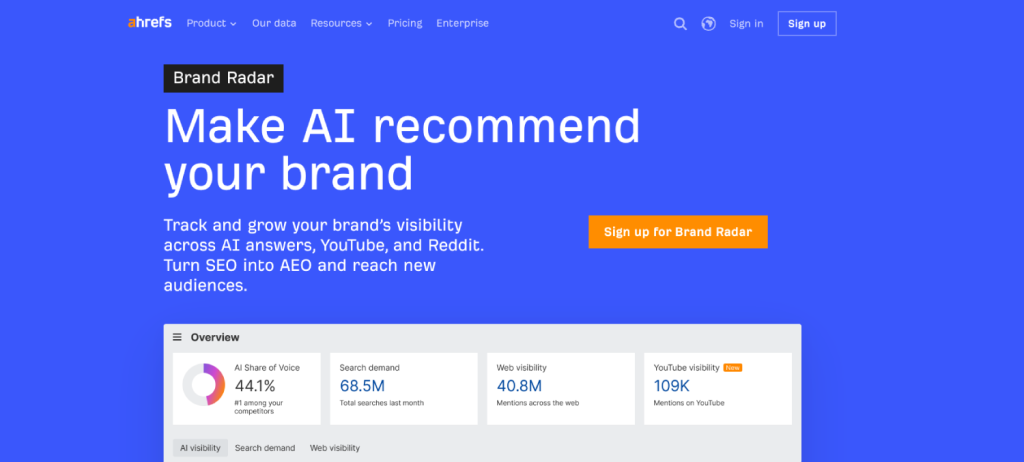
Ahrefs Brand Radar monitors how and where your brand gets mentioned in AI-generated content, including web-based AI tools and answer engines. For teams already using Ahrefs for backlink analysis and content gap work, Brand Radar integrates naturally into the existing reporting cadence. The data pulls well into dashboards.
Like Semrush, Ahrefs remains primarily an SEO platform with GEO features added. Teams using Ahrefs for their core SEO work and want basic AI mention monitoring will find value here. Teams whose primary reporting need is GEO-specific will outgrow it quickly.
8. Goodie AI
Goodie AI focuses on tracking which content pieces drive AI citations. Rather than just monitoring whether your brand appears, it attempts to attribute citation appearances back to specific pages or content assets. This is the most useful reporting signal for content teams that want to know which articles or pages are actually being pulled into AI answers.
The content attribution layer is genuinely differentiated. Most other tools tell you that you were cited; Goodie AI tries to tell you why and from where. This matters a great deal for teams using content as their primary GEO strategy, which is most B2B SaaS companies.
9. Scrunch AI
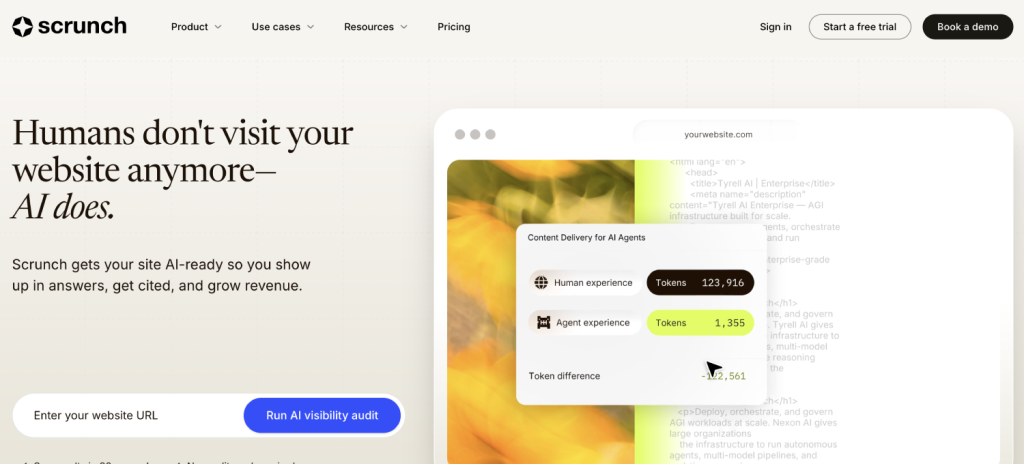
Scrunch AI is positioned as an AI search analytics platform with a focus on B2B. It tracks prompt-level performance across AI engines, provides share-of-voice benchmarking, and surfaces competitor mentions in the same answer threads. The interface is built for marketing teams rather than technical SEO practitioners, which reduces the ramp time for RevOps or demand gen users.
Scrunch AI’s model coverage includes ChatGPT, Perplexity, and Google AI Overviews. Teams should verify current Claude and Gemini coverage against their specific needs before purchasing, as model breadth in this category changes frequently as the platforms evolve.
10. Search Atlas OTTO
Search Atlas OTTO is an AI-powered SEO and GEO assistant built into the Search Atlas platform. It analyzes content for GEO readiness, suggests structural changes to improve citation probability, and monitors AI answer appearances. The prescriptive layer, telling you what to change rather than just what is happening, differentiates it from pure monitoring tools.
For B2B SaaS content teams with limited GEO expertise, the guidance layer has real value. For teams that already have a GEO strategy and just need measurement, the prescriptive features are unnecessary noise.
11. GrackerAI
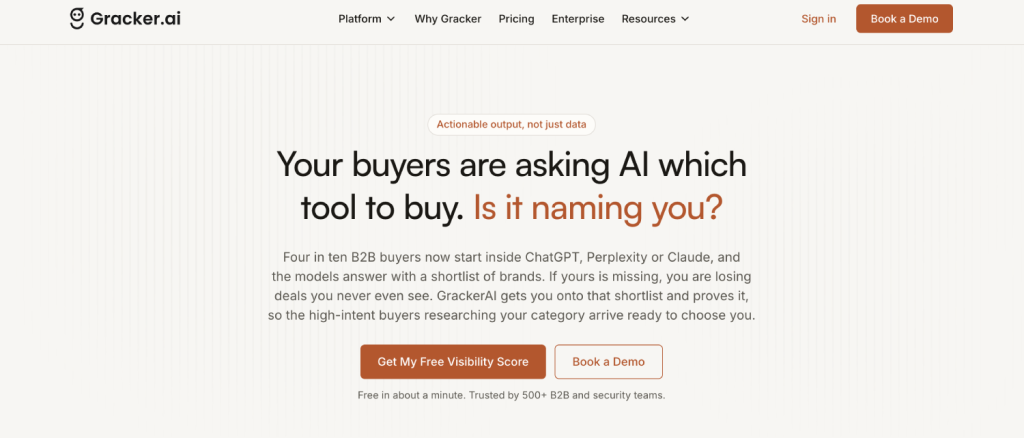
GrackerAI is built specifically for B2B SaaS marketing teams with a focus on competitive intelligence within AI answers. It tracks which competitors appear in AI responses to your target queries, how the competitive set shifts over time, and which prompt categories show the most volatility. The competitive framing makes it one of the more useful tools for product marketing or competitive intelligence functions.
GrackerAI appears in GEO tool roundups targeting B2B SaaS specifically. Teams in crowded verticals, including fintech, HR tech, or legal SaaS, where multiple well-funded competitors are also investing in GEO, will get the most value from its competitive tracking features.
12. Brandwatch
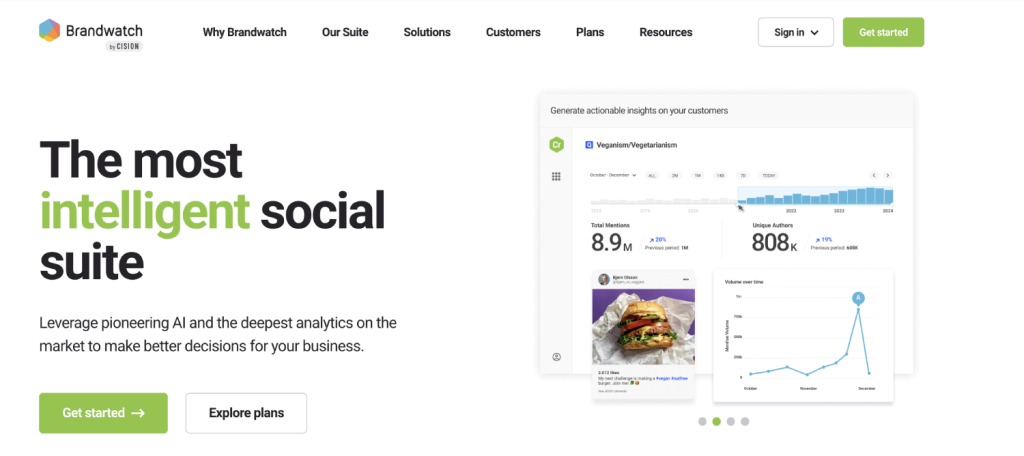
Brandwatch is an enterprise social listening and brand intelligence platform that has added AI answer monitoring to its feature set. For large B2B SaaS teams already using Brandwatch for brand tracking across social, news, and review platforms, extending that monitoring into AI answers is a natural expansion.
Brandwatch is not a pure GEO tool. Its strength is unified brand monitoring across many channels, with AI answers as one channel among several. Teams whose primary need is deep prompt-level GEO analytics will find it less granular than dedicated platforms. Teams that need a single brand monitoring dashboard across all channels will find the integration valuable.
13. Google Search Console Generative AI Performance Report
Google Search Console introduced a generative AI performance report that surfaces how your content appears in Google’s AI Overviews. It is free, integrates directly with your existing GSC setup, and provides query-level data on AI Overview appearances. According to Google’s Search Console Help documentation, the report shows impressions, clicks, and click-through rates from AI Overview appearances separately from standard organic results.
The limitation is obvious: it only covers Google. For B2B SaaS teams that need cross-model visibility, GSC’s AI report is a necessary baseline, not a complete solution. Every team should have it set up regardless of what other GEO reporting tools they use.
How Do These Tools Compare Across the Four GEO Audit Stack Layers?
| Tool | Prompt Coverage | Model Breadth | Competitive Context | Trend Granularity | Best For |
|---|---|---|---|---|---|
| Profound | Strong | Strong (4+ models) | Strong | Strong | Mid-market to enterprise B2B SaaS |
| Otterly AI | Strong | Moderate | Moderate | Moderate | Early-stage GEO teams |
| Peec AI | Strong | Moderate | Strong | Strong | Competitive share-of-voice reporting |
| BrandViz AI | Moderate | Moderate | Moderate | Moderate | Brand accuracy and perception tracking |
| SE Ranking AI Tracker | Moderate | Google-focused | Moderate | Moderate | Existing SE Ranking customers |
| Semrush AI Toolkit | Moderate | Google-focused | Moderate | Moderate | Existing Semrush customers |
| Ahrefs Brand Radar | Moderate | Moderate | Moderate | Moderate | Existing Ahrefs customers |
| Goodie AI | Moderate | Moderate | Weak | Moderate | Content attribution to AI citations |
| Scrunch AI | Strong | Moderate | Strong | Strong | RevOps and demand gen teams |
| Search Atlas OTTO | Moderate | Moderate | Weak | Moderate | Content optimization guidance |
| GrackerAI | Strong | Moderate | Strong | Strong | Competitive intelligence in B2B SaaS |
| Brandwatch | Moderate | Moderate | Moderate | Moderate | Enterprise unified brand monitoring |
| Google Search Console (AI Report) | Limited to GSC queries | Google only | Weak | Moderate | Baseline for all teams (free) |
What GEO KPIs Should B2B SaaS Marketing Teams Actually Track?
The measurement problem most teams hit is using SEO KPIs to report on GEO performance. Sessions, rankings, and domain authority tell you nothing about AI search presence. GEO requires a different KPI set, and the tools above are only as useful as the metrics you define before deploying them.
The five GEO KPIs that map to real buyer behavior in B2B SaaS are:
- Citation rate by prompt category: Out of all prompts in a defined category (e.g., “best [category] software for [use case]”), what percentage of AI responses mention your brand? Measured per model, per month.
- Competitive share of voice: When your brand is cited, how many competitors are cited in the same response? Your goal is to appear with fewer, lower-authority competitors over time.
- Model parity score: Do you appear consistently across ChatGPT, Perplexity, Claude, and Gemini? Large gaps between models indicate content or authority issues specific to how each model was trained.
- Sentiment accuracy rate: When AI models describe your product, is the description accurate? For B2B SaaS, inaccurate AI descriptions are a support and trust problem, not just a marketing one.
- Prompt coverage expansion: Month over month, are you appearing in a wider set of relevant queries, or a narrower one? Contraction is an early warning sign that competitors are producing content that displaces you.
Fintech SaaS companies have a sixth KPI worth tracking: regulatory framing accuracy. If a model describes your product with incorrect regulatory claims, such as citing the wrong compliance standard or mischaracterizing how funds are held, that creates material risk. This matters more in fintech than in most SaaS verticals, which is one reason specialized GEO agencies for fintech SaaS increasingly include AI response auditing as a service. Teams building out their broader GEO strategy should also review how GEO differs from traditional SEO in B2B SaaS contexts before defining their KPI framework.
Which GEO Tool Configuration Works for Most B2B SaaS Teams?
No single tool in this list covers all four layers of the GEO Audit Stack at full strength. The practical answer for most teams is a two-tool stack: one dedicated GEO monitoring platform plus Google Search Console’s AI report as a baseline.
For teams under 50 people or early in GEO maturity, Otterly AI or Peec AI paired with GSC covers the basics without overcommitting budget. For teams past Series B with active content programs and a competitive category, Profound or Scrunch AI as the primary platform gives the prompt-level depth needed to connect content decisions to GEO outcomes. GrackerAI adds competitive intelligence as a layer on top of either.
Teams already using Semrush or Ahrefs should activate those platforms’ AI tracking features before adding a new vendor, then evaluate whether the coverage gaps justify the additional spend. The answer is usually yes within six months, but testing the existing toolset first is the more defensible budget decision.
Consider how GEO tooling fits into the broader question of how AI search is changing B2B buyer behavior. The channel shift is not incremental. Buyers who previously ran five-tab Google research sessions are now asking AI engines to synthesize the comparison for them, and those engines have clear preferences for well-structured, frequently cited content. Teams that treat GEO reporting as optional are, in effect, choosing to be invisible in an increasing share of their buyers’ research process.
What Should a B2B SaaS Team Measure in the First 90 Days of GEO Reporting?
The first 90 days should establish baselines, not attempt optimization. A team that starts acting on GEO data before they have 60 days of prompt-level history will make changes based on noise, not signal.
For example, if a Series B project management SaaS company starts using Peec AI on day one, the right 90-day sequence looks like this: weeks one through four, define a prompt library of 30 to 50 queries spanning awareness, comparison, and decision-stage buyer language. Weeks five through eight, run those prompts across at least three AI models and record baseline citation rates, competitive share of voice, and any sentiment accuracy issues. Weeks nine through twelve, identify which prompt categories have the lowest citation rates despite high buyer intent, then flag those as content gaps. That is the starting point for content strategy, not the output of it.
This connects directly to the broader content infrastructure decisions that high-growth B2B SaaS teams face. Understanding how to structure content so ChatGPT actually cites your brand is the operational counterpart to the reporting stack described here. Measurement without execution is just watching numbers. Execution without measurement is just publishing into the dark.
Frequently Asked Questions About GEO Reporting Tools for B2B SaaS
How does an answer engine work differently from a search engine for B2B buyers?
A traditional search engine returns a ranked list of links. An answer engine, such as ChatGPT, Perplexity, or Google AI Overviews, synthesizes a response from multiple sources and presents a single answer, often without showing all the sources it drew from. For B2B SaaS buyers, this means the research process compresses. Instead of visiting five vendor sites, a buyer might read one AI-generated comparison and shortlist from that. Brands not cited in that answer are effectively invisible to that buyer at that moment.
Is SEO still relevant for B2B SaaS marketing teams in 2026?
SEO remains relevant because AI models are trained on and cite web content. Strong organic authority, structured content, and high-quality backlinks all correlate with higher AI citation rates. The difference is that GEO adds a measurement and optimization layer that traditional SEO reporting does not address. Teams that abandon SEO for GEO exclusively will undermine the content foundation that GEO depends on. The right move is to add GEO reporting on top of, not instead of, existing SEO infrastructure.
What is an AI search audit and when should a B2B SaaS team run one?
An AI search audit is a systematic review of how your brand appears across AI-generated answers for a defined set of target queries. It covers citation frequency, competitive share of voice, brand description accuracy, and model variance. B2B SaaS teams should run an initial audit before investing in any GEO tool, then quarterly after that. An audit run before a major product launch or rebrand is particularly valuable, since AI models may carry outdated brand descriptions for months after a positioning change.
How many prompts should a B2B SaaS company track in a GEO reporting platform?
Thirty to 50 prompts is a practical starting point for most B2B SaaS teams. Those prompts should cover the full buyer research process: awareness-stage category questions, mid-funnel comparison queries, and decision-stage prompts that include competitor names. Teams in highly competitive verticals, such as fintech, HR tech, or DevOps tooling, may need 80 to 100 prompts to capture the full competitive picture. Tracking too few prompts produces misleading citation rates; tracking too many without analysis bandwidth creates noise.
Do GEO reporting tools work for fintech SaaS companies with regulated products?
Yes, but fintech teams need to add a compliance review layer that most GEO platforms do not provide natively. Tracking whether an AI model mentions your product is useful. Tracking whether the model accurately describes your regulatory status, fund protection structure, or licensing is critical. Teams at regulated fintech companies should include prompt sets that test AI descriptions of their compliance posture, not just their product features, and should flag inaccurate AI descriptions to legal and compliance teams for remediation. This is a gap in current GEO tooling that most platforms have not addressed.
Can GEO reporting tools measure ROI from AI search visibility?
Not directly, and any tool claiming to do so is overstating its capabilities. Current GEO platforms measure brand presence and citation patterns in AI responses, not downstream conversions from those citations. The attribution gap is real: a buyer who encountered your brand in a ChatGPT answer and then searched your brand name directly will appear in your analytics as branded organic traffic, not as an AI search conversion. Teams can proxy GEO impact by tracking branded search volume growth alongside citation rate improvements, but direct ROI attribution from AI search is not yet a solved problem.
How often should GEO reporting data be reviewed?
Monthly reviews are appropriate for most B2B SaaS teams. AI model updates, competitor content changes, and prompt drift can shift citation rates meaningfully over a four-week period. Weekly monitoring makes sense for teams in fast-moving competitive categories or during periods of active content publishing. Quarterly reviews at the board or VP level should focus on trend lines rather than week-over-week fluctuations, since the signal-to-noise ratio in GEO data is lower than in traditional channel analytics.
The Measurement Gap Most Teams Will Hit
Every tool in this list solves part of the GEO reporting problem. None solves all of it, and the teams that get the most value from GEO analytics are the ones that define their prompt library and KPI framework before they buy anything. A platform with strong model breadth is worthless if the prompts being tracked do not reflect how real buyers describe their problem.
The more consequential insight from evaluating this category is that GEO reporting reveals something SEO reporting never showed: what AI models believe about your brand, which may not match what your brand actually is. For B2B SaaS companies with complex products, frequent pricing changes, or evolving positioning, this gap between AI perception and brand reality is a strategic problem that sits above the marketing function. It touches product, legal, and customer success in ways that a new keyword ranking never did.
Teams that treat GEO reporting as a marketing dashboard exercise will miss this. Teams that use it to systematically audit how AI models represent their brand and their category will find one of the more durable competitive advantages currently available in B2B growth. The reporting tools exist. Whether the organization treats what they surface as a signal worth acting on is a different question entirely.