
- PayFac-as-a-Service is not Stripe Connect with a revenue share. You become the sub-merchant sponsor, own the onboarding flow, and set your own take-rate up to whatever ceiling the provider allows.
- The provider you choose sets your margin ceiling permanently. At $1M/month in processing volume, the difference between a 20 bps and 60 bps spread is $4,800 per month in gross profit.
- Most vertical SaaS teams underestimate ops burden: KYC/KYB, chargeback liability, reserve management, and 1099-K reporting all land on you under the PFaaS model.
- Only a handful of providers offer a documented path to full PayFac registration if you outgrow the service model. Know which ones before you sign.
- If you process under $500K/month and have fewer than 200 sub-merchants, a lighter embedded payments option is probably the right starting point.
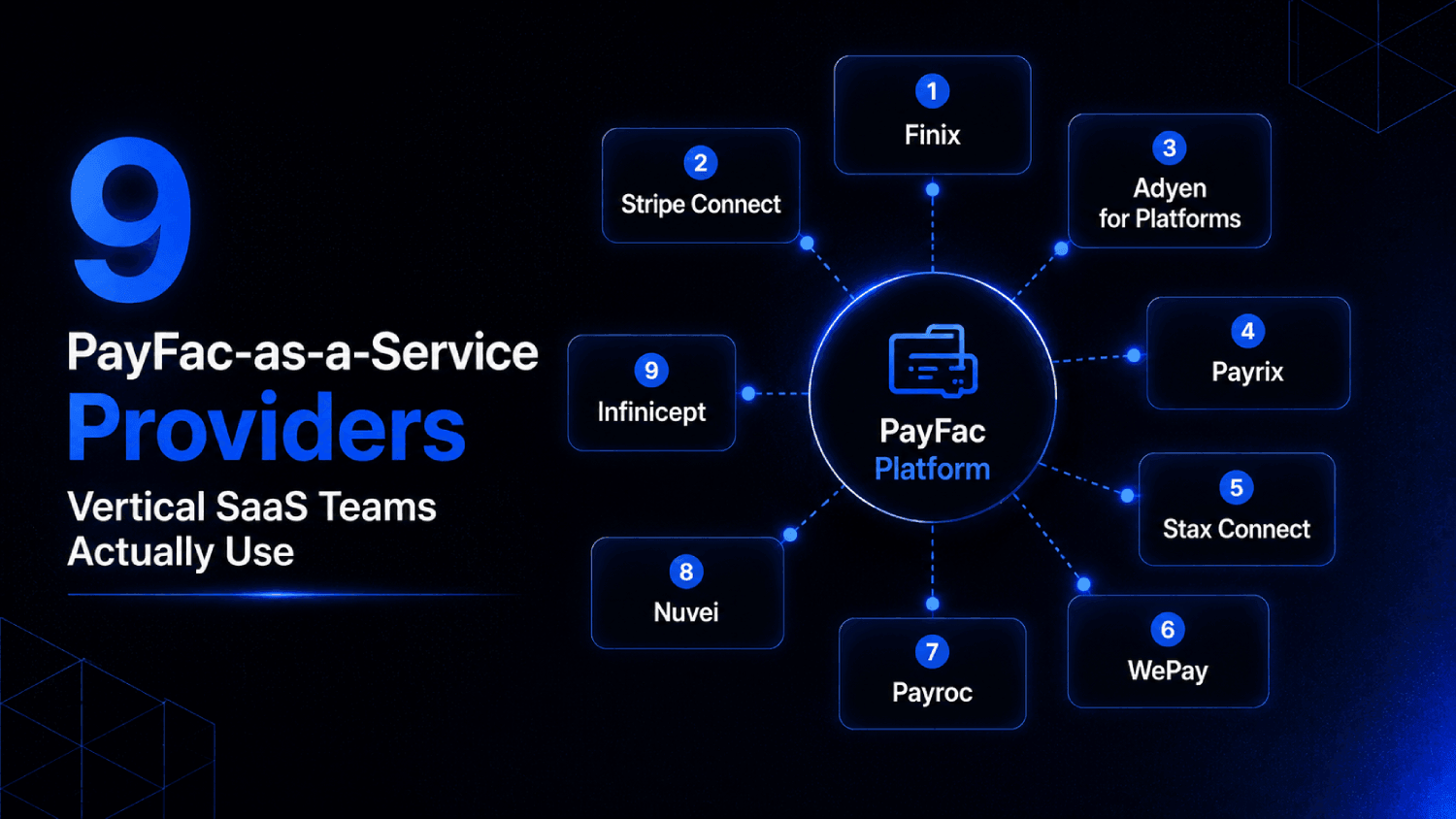
PayFac-as-a-Service providers are companies like Finix, Stripe (via Connect), Adyen for Platforms, Payrix, Stax Connect, WePay, Payroc, Nuvei, and Infinicept that let a SaaS platform onboard its own sub-merchants, control the checkout experience, and earn a spread on every transaction, without registering as a full payment facilitator with a card network. Evaluating payfac as a service providers means weighing monthly processing volume, acceptable ops burden, and how much margin the provider’s buy rate leaves on the table.
Why “Just Drop In Stripe” Leaves Real Money Behind
Most SaaS founders who add payments start with Stripe Connect in platform mode. They collect a flat referral fee or absorb the Stripe rate and charge slightly more. That works at low volume. It stops working the moment you realize Stripe’s published rate is your ceiling, not your floor.
Under a true PayFac-as-a-Service arrangement, you act as the merchant of record for your sub-merchants. You negotiate a buy rate with the acquirer or provider. You charge your sub-merchants whatever rate the market will bear. The spread between those two numbers is yours to keep, and no one can compress it without renegotiating your underlying contract.
This is the structural difference that matters. Stripe Connect pays you a referral or passes you interchange plus a margin Stripe controls. PFaaS gives you the margin architecture, at the cost of owning compliance, onboarding, and risk. If your sub-merchants are captive inside your vertical software, that trade is usually worth making. If they are not captive, the ops overhead may not pencil out until you hit meaningful volume.
For teams still evaluating whether embedded payments or full payment facilitation fits better, the top embedded payments providers for B2B SaaS platforms article covers the lighter, lower-liability model as a starting point.
What Does Owning Sub-Merchant Onboarding Actually Mean?
When you use PFaaS, you are responsible for collecting and verifying business identity information for every sub-merchant on your platform. The provider supplies the KYC/KYB engine and underwriting logic, but you own the user experience, the data collection, and often the first layer of review decisions.
You also inherit chargeback liability exposure up to whatever threshold your provider sets. Most PFaaS agreements require you to maintain a reserve, either a rolling reserve held back from settlement or a fixed reserve funded upfront. That reserve is real cash off your balance sheet.
The operational checklist is longer than most product teams expect: 1099-K issuance for sub-merchants above IRS thresholds, card brand compliance reporting, PCI scope management, and monthly reconciliation against your sub-merchant ledger. The Fintech Product and Compliance Readiness Checklist covers most of these line items in detail and is worth running through before you commit to any provider.
The FintechSpecs Margin Stack Test: How to Model PFaaS Economics Before You Sign
Every PFaaS provider negotiates differently, but the underlying math follows the same structure. Your gross payment margin equals your merchant rate minus your buy rate minus any per-transaction fees from the provider. What varies is how much of that spread you can actually keep at your volume.
The FintechSpecs Margin Stack Test breaks PFaaS economics into three layers: the buy rate floor (what the provider charges you), the rate ceiling (what your market will accept from sub-merchants), and the ops tax (chargeback reserves, onboarding costs, and support overhead expressed as basis points). If your ceiling minus your floor minus your ops tax is negative or under 20 bps, the model does not work at that volume tier.
Here is how that plays out across three realistic volume tiers for a vertical SaaS platform with typical card-present or card-not-present merchant mix:
| Monthly GMV | Illustrative Buy Rate | Merchant Rate Charged | Gross Spread | Est. Ops Tax | Net Payment Margin | Monthly Gross Profit |
|---|---|---|---|---|---|---|
| $250,000 | 2.10% | 2.70% | 60 bps | 20 bps | 40 bps | $1,000 |
| $1,000,000 | 1.90% | 2.60% | 70 bps | 15 bps | 55 bps | $5,500 |
| $5,000,000 | 1.60% | 2.50% | 90 bps | 10 bps | 80 bps | $40,000 |
These figures are illustrative, constructed using the FintechSpecs Margin Stack Test framework applied to spread ranges that payment infrastructure practitioners and industry publications (including the Payments Leaders Forum and publicly available interchange schedules from Visa and Mastercard) discuss openly. Actual provider buy rates are negotiated privately and not published by any provider on this list. Your real spread will depend on your industry vertical, average ticket size, card mix (debit versus credit versus commercial), and chargeback history. The pattern holds: ops tax shrinks as a percentage of spread at higher volume, which is why PFaaS becomes significantly more attractive past $1M/month in GMV.
On the question of which providers tend toward lower or higher buy rates: Stripe Connect publishes its rate structure (currently 0.25% plus 25 cents per transfer on standard Connect, per their public pricing page), making it the most transparent but least negotiable option. Providers like Payrix, Payroc, and Infinicept, which have less brand recognition and are actively competing for platform business, consistently negotiate more aggressively on buy rate than Adyen or Stripe, according to platforms that have run competitive RFPs across multiple providers. Adyen’s interchange-plus-plus model can produce lower effective costs at very high volume, but the minimums required to reach that tier are enterprise-level. No provider publicly discloses their floor buy rate, so any comparison must come from direct negotiation or references from platforms at similar volume.
Which PFaaS Providers Are Worth Evaluating?
The market breaks into three camps: processor-native platforms that added a platform layer (Stripe Connect, Adyen for Platforms), pure-play PFaaS infrastructure providers built specifically for this model (Finix, Payrix, Infinicept), and acquirer-backed programs (Payroc, Stax Connect, WePay via JPMorgan). Each camp has different pricing flexibility, onboarding speed, and migration risk.
| Provider | Best For | Pricing Model | Path to Full PayFac | Developer Experience | Ops Burden on Platform |
|---|---|---|---|---|---|
| Finix | Vertical SaaS with $500K+ monthly GMV wanting maximum margin control | Negotiated buy rate + platform fee | Yes, documented | Strong REST API, good docs | High (you own boarding UX) |
| Stripe Connect | Early-stage platforms, developer-first teams, fast time-to-market | Published rate + optional revenue share | No direct path | Strongest on this list | Low (Stripe holds liability) |
| Adyen for Platforms | Enterprise SaaS or marketplace with global sub-merchants | Interchange++ negotiated | Yes, via Adyen acquiring | Strong, less startup-friendly | Medium-High |
| Payrix | SMB-focused vertical SaaS (field services, home services) | Negotiated buy rate | Yes | Moderate | Medium |
| Stax Connect | Platforms with sub-merchants sensitive to subscription pricing | Subscription + interchange pass-through | No direct path | Moderate | Medium |
| WePay (Chase) | Platforms wanting Chase settlement and bank-grade trust signals | Negotiated, enterprise minimum | No direct path | Below average | Medium |
| Payroc | ISO-channel platforms moving upmarket to software | Negotiated buy rate | Yes, via Payroc acquiring | Lower | High |
| Nuvei | Platforms with high-risk or international sub-merchants | Negotiated, volume minimums | Yes | Moderate, strong global coverage | High |
| Infinicept | Platforms planning to become full PayFacs within 12-24 months | Platform licensing + processing fees | Yes, core use case | Moderate | Very High (training included) |
Finix vs Stripe Connect: Which One Actually Wins for a Vertical SaaS Platform?
Finix and Stripe Connect are the two providers vertical SaaS teams compare most often, and they solve fundamentally different problems. Stripe Connect minimizes time-to-revenue and ops complexity. Finix maximizes margin and control. Choosing between them is really a question of where your platform sits today versus where it needs to be in 18 months.
Stripe Connect’s developer experience is genuinely ahead of every competitor on this list. The API documentation, sandbox environment, webhook reliability, and Stripe Dashboard for platforms reduce a two-month build to three or four weeks for most engineering teams. The trade-off is pricing: Stripe sets your buy rate, and you work within their published rate structure. For a platform doing $200K/month in GMV, that is probably fine. For a platform doing $2M/month, leaving 30 to 50 bps on the table starts to look like a deliberate choice to subsidize Stripe’s infrastructure.
Finix was built explicitly for the PFaaS model. You negotiate your buy rate, you control onboarding rules, and Finix gives you a documented path to registering as a full payment facilitator with Visa and Mastercard if you outgrow the service model. The ops burden is real: your team will spend measurable engineering and compliance hours on boarding flows, reserve management, and dispute handling. Finix provides the infrastructure and tooling, but the operational ownership stays with you.
A comparison of broader payment infrastructure options for SaaS founders, including how Stripe and its alternatives stack up on total cost of ownership, is covered in the best payment infrastructure tools for SaaS founders roundup.
Which Providers Offer a Real Path to Full PayFac Registration?
Full PayFac registration means your company is listed directly with Visa and Mastercard as a payment facilitator, holds its own merchant identification number as the master merchant, and takes on the full regulatory and financial liability that comes with that status. It is expensive (setup costs regularly reach six figures when you include legal, compliance, and technology), but it removes the provider’s margin from your economics entirely.
Infinicept is the clearest choice if your stated goal is full PayFac registration within 24 months. Their entire business model is built around training platforms to become registered PayFacs, and their software stack is designed to transfer cleanly when you graduate out of their program. Finix, Adyen for Platforms, Payrix, and Payroc also offer documented paths, though none of them are as explicit about it as Infinicept.
Stripe Connect, Stax Connect, and WePay do not offer a direct migration path to full PayFac. That is not necessarily disqualifying, but it means you will rebuild your payment stack from scratch if you ever decide to register, which is a meaningful switching cost to price in upfront.
What Is the Cheapest Way to Monetize Payments Inside My Software?
Cheapest in terms of upfront cost points to Stripe Connect. There is no setup fee on their public pricing page, developer onboarding is self-serve, and you can be processing sub-merchant payments in days rather than weeks. The long-run cost is the margin compression described above.
Cheapest in terms of ongoing cost at volume points to a negotiated buy-rate arrangement with a provider like Finix or Payrix, provided you can absorb the implementation cost and ops overhead. At $1M/month GMV, even a 30 bps improvement in net margin covers meaningful engineering time.
For platforms under $500K/month, the calculation usually favors Stripe Connect or a similar low-friction option. The ops overhead of true PFaaS eats the margin advantage at low volume. This is the same pattern documented in the why most FinTech SaaS margins are worse than founders think article: the fixed cost of compliance infrastructure needs sufficient volume to amortize before it improves unit economics.
How Much Can a SaaS Platform Actually Earn From Embedded Payments?
Payment revenue is a multiplier on your existing revenue, not a replacement for SaaS subscription growth. A vertical SaaS platform with 500 sub-merchants each processing $5,000/month has $2.5M in monthly GMV. At 60 bps net margin, that is $15,000/month, or $180,000 annually, from payments alone. At $10,000/month per sub-merchant and 80 bps net, it is $400,000 annually.
Those numbers are real but they are not automatic. They assume you have negotiated a competitive buy rate, your sub-merchants accept the merchant rate you charge, and your chargeback rate stays within acceptable bounds. A vertical where your software controls the transaction (field service scheduling software that also processes payment on job completion, for example) makes all three of those assumptions much easier to maintain than a generic horizontal platform.
The ceiling also depends on your vertical’s average ticket and card mix. High-ticket B2B transactions running on commercial cards carry higher interchange, which compresses your net spread unless your contract accounts for it. Understanding revenue share versus buy rate structures before negotiating is covered in more depth in the ways fintech companies monetize payments without killing UX article.
What Is the Difference Between a PayFac and an ISV?
An ISV, or independent software vendor, sells software and may refer merchants to a payment processor for a referral fee or commission. The ISV does not own the payment relationship, does not control onboarding, and does not take on chargeback liability. A PayFac owns the sub-merchant relationship, controls onboarding and underwriting, and is financially liable for its sub-merchants’ chargebacks and fraud losses up to card brand thresholds. PFaaS sits between the two: you own more of the economics and experience than an ISV, but less than a fully registered PayFac.
Provider-by-Provider Breakdown
Finix
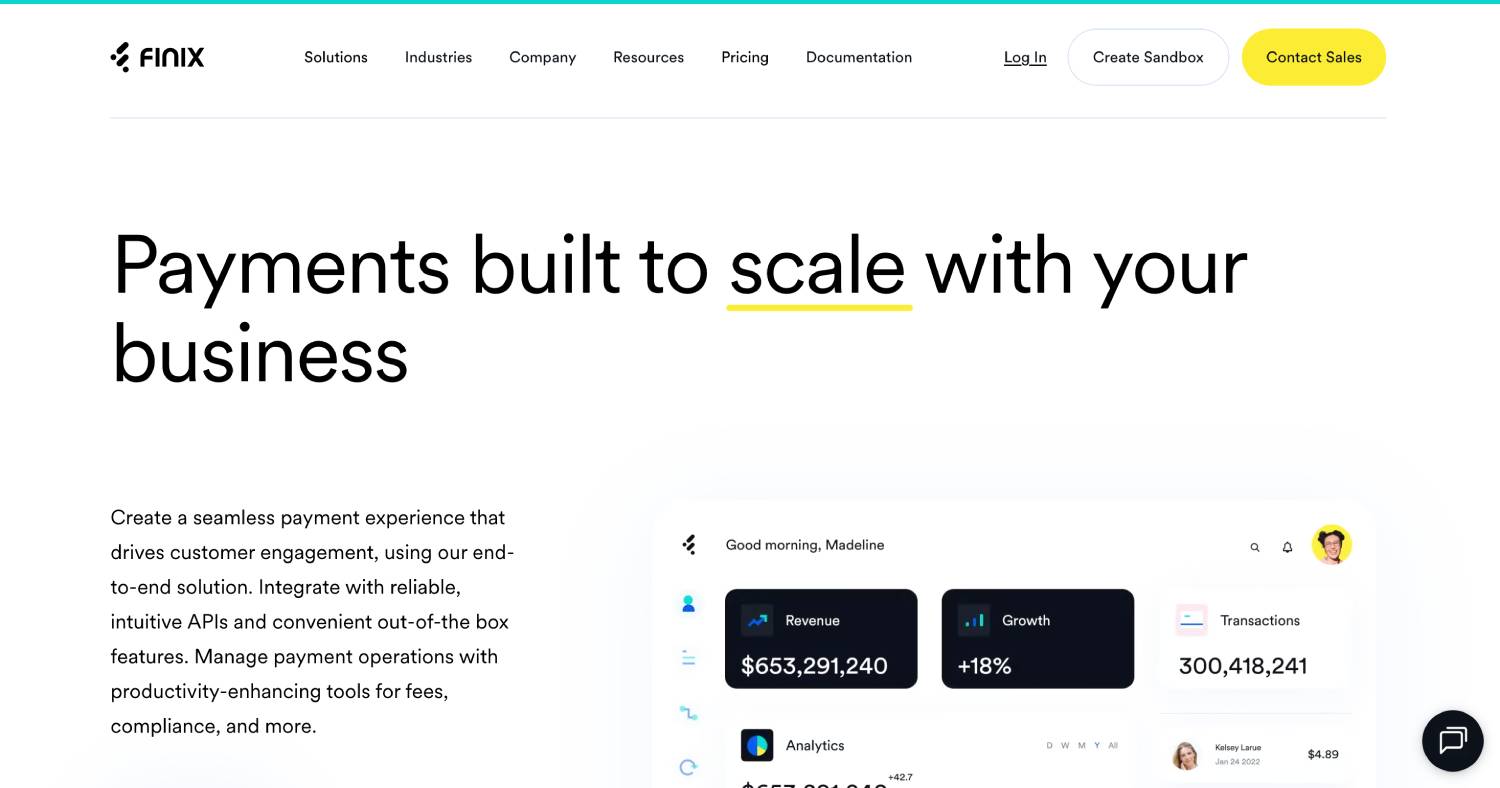
Finix is the provider most purpose-built for the PFaaS model among US-focused options. Their API is well-documented, their boarding flow tooling is mature, and they have been explicit about their path-to-PayFac program since their early days. Volume minimums and pricing are negotiated, not published. Expect meaningful deal complexity if your GMV is under $500K/month. No setup fee is published; implementation cost depends on integration scope and is scoped during the sales process.
Stripe Connect
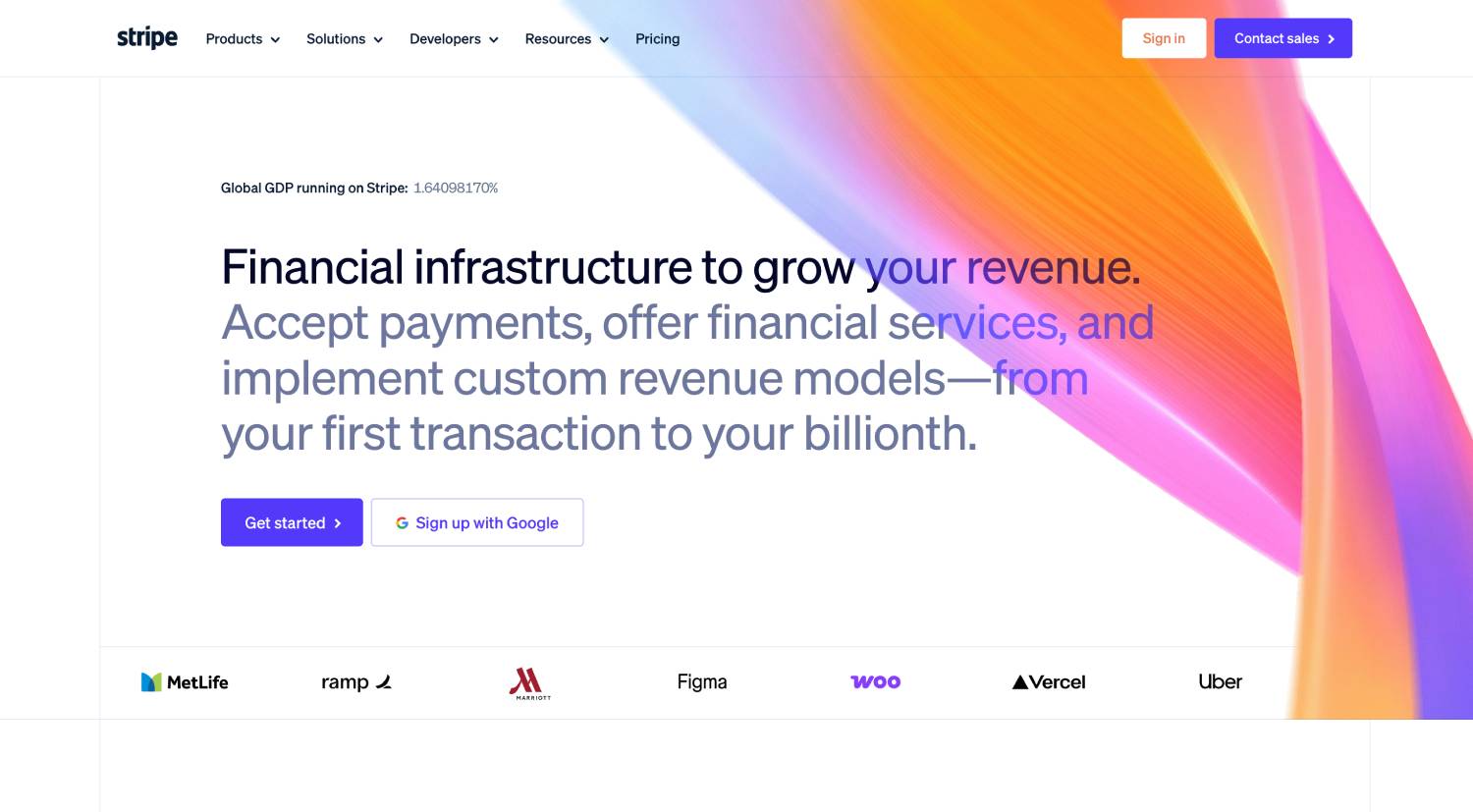
Stripe Connect remains the fastest way to add payment monetization to a SaaS product. Their published rate structure and revenue share program are transparent on their public pricing page, standard Connect charges 0.25% plus 25 cents per payout to connected accounts, with no setup fee. The trade-off is margin ceiling: Stripe controls the economics, and there is no negotiated buy rate available to most platform operators. Best for teams who value speed and developer experience over long-run margin optimization.
Adyen for Platforms
Adyen for Platforms is the strongest option for SaaS companies with international sub-merchants or complex multi-currency needs. Their interchange-plus-plus pricing model is negotiated at the enterprise level; Adyen does not publish platform pricing. Implementation costs are enterprise-scoped, and deal timelines commonly exceed 60 days. Do not expect a self-serve path.
Payrix
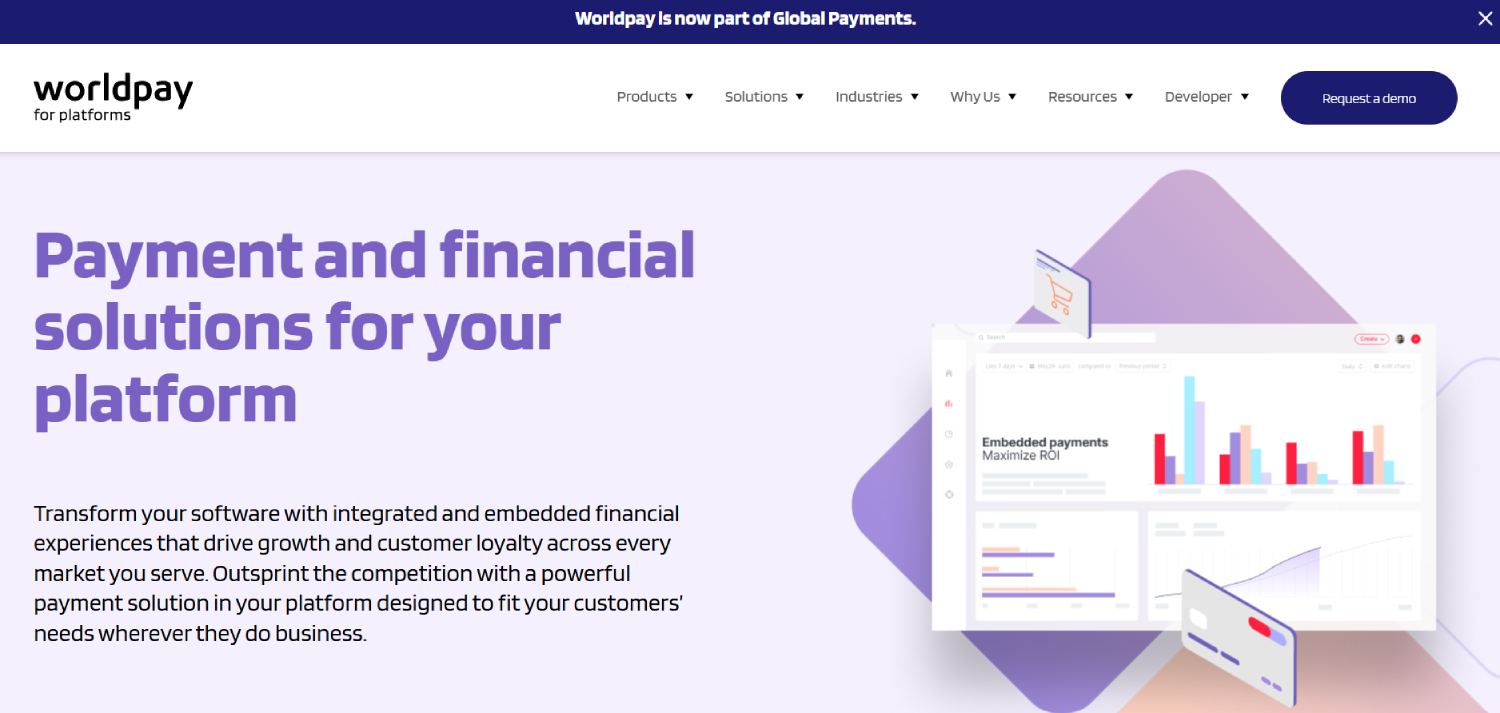
Payrix (now part of Worldpay from FIS) specializes in SMB-facing vertical SaaS use cases. Their onboarding tools and underwriting engine are built for high-volume, lower-ticket merchant portfolios typical in field services, fitness, and home services software. Developer experience is adequate but not exceptional. Pricing is negotiated; no setup fee is published, and implementation scope drives costs.
Stax Connect
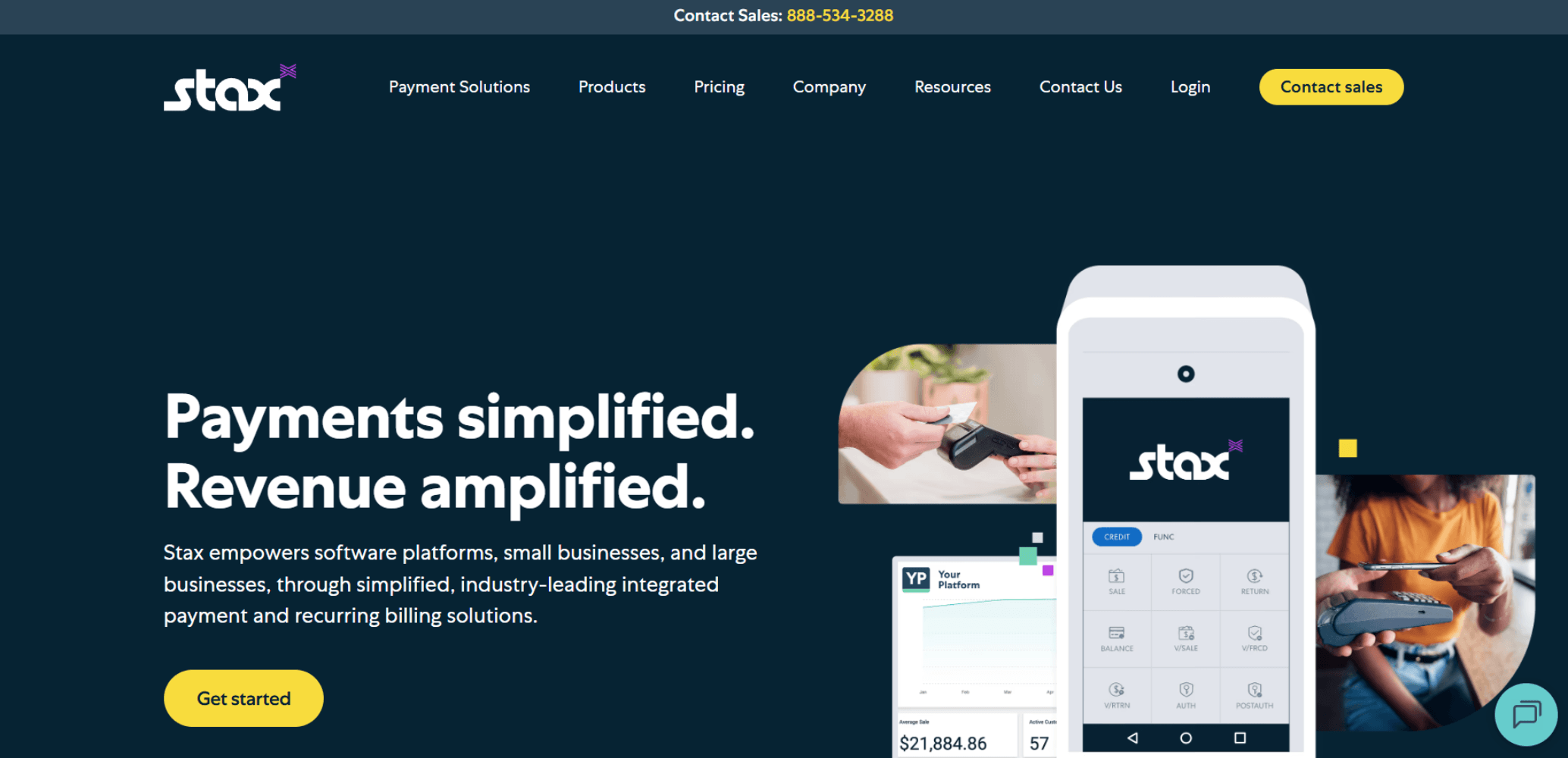
Stax Connect offers a subscription-based pricing model passed through to sub-merchants, which can be a competitive advantage in verticals where sub-merchants are cost-sensitive and prefer predictable payment costs over percentage-based fees. The platform’s margin architecture is different from a traditional buy-rate spread model and requires careful modeling before committing. Pricing is not published for platform partners; it is scoped through their partner sales team.
WePay
WePay, operating under JPMorgan Chase, offers a PFaaS model with the trust and settlement infrastructure of Chase behind it. For platforms selling to SMBs who care about where their money settles, that is a real differentiator. Developer tooling and API quality lag behind Finix and Stripe. Volume minimums are enterprise-level, and WePay does not publish pricing or setup costs for platform partners.
Payroc
Payroc serves platforms that emerged from the ISO channel and are moving toward software-led payment distribution. Their acquiring relationships give them flexibility on buy rates for the right volume. Developer experience is the weakest on this list. Best fit for operators who have existing relationships in the acquiring space and need a compliant PFaaS wrapper. Setup and ongoing costs are negotiated; no public pricing is available.
Nuvei
Nuvei stands out for platforms with sub-merchants in high-risk categories or international markets that other providers decline. Their underwriting tolerances are wider than most, which matters for platforms in gaming, nutraceuticals, or cross-border commerce. That flexibility comes with higher processing costs and more intensive onboarding scrutiny. Their path to full PayFac is available but complex. Pricing is negotiated at the enterprise level; no public rate card exists.
Infinicept
Infinicept is the only provider on this list whose explicit purpose is to help you graduate out of their product. They provide PFaaS infrastructure plus structured education, compliance tooling, and boarding support designed to prepare your team for full PayFac registration. If becoming a registered PayFac within two years is a board-level goal, Infinicept is the most logical starting point. The ops burden is high by design: they are teaching you to own it. Infinicept charges a platform licensing fee plus processing fees; specific figures are not published and are scoped through their sales process.
Frequently Asked Questions
What is PayFac-as-a-Service and how does it differ from Stripe Connect?
PayFac-as-a-Service is a model where a software platform acts as the effective merchant of record for its sub-merchants, controlling onboarding, pricing, and the payment experience, while a licensed provider handles the underlying acquiring infrastructure and card network registration. Stripe Connect in platform mode also routes sub-merchant payments through Stripe’s master merchant account, but Stripe controls the rate structure. True PFaaS providers like Finix or Payrix allow you to negotiate a buy rate and charge your sub-merchants a different rate, keeping the spread as payment revenue.
How much does it cost to set up each PFaaS provider?
Stripe Connect has no published setup fee and onboards platforms self-serve, making it the lowest-friction starting point. Finix, Payrix, Payroc, and Infinicept do not publish setup fees; costs are scoped during a sales process and depend on integration complexity and volume commitments, platforms should budget for non-trivial implementation costs if custom boarding flows or deep API integration are required. Adyen for Platforms and WePay both operate on enterprise contracts with no public pricing; expect a minimum of 60 days from first contact to contract for either. Stax Connect and Nuvei similarly do not publish partner-tier pricing. Full PayFac registration (separate from PFaaS) with Visa and Mastercard involves legal, compliance, and technology costs that commonly reach six figures, though the specific figure depends on your legal structure and existing infrastructure.
Should my SaaS become a full PayFac or use PayFac-as-a-Service?
PFaaS is the right default for most vertical SaaS platforms under $5M/month in GMV. Full PayFac registration gives you maximum margin control and eliminates the provider’s cut, but it requires registering with card networks, maintaining dedicated compliance staff, and holding cash reserves against merchant risk. Most platforms that eventually register as full PayFacs started on a PFaaS model to validate the economics and build operational muscle before taking on the full liability. Providers like Infinicept and Finix offer documented transition paths for this reason.
Which PFaaS providers tend to offer the most favorable buy rates for platforms?
No provider publicly discloses buy rates, so direct published comparisons do not exist. That said, the pattern that emerges from platforms that have run competitive RFPs is consistent: providers with less brand recognition and active platform business development, Payrix, Payroc, and Infinicept, tend to negotiate more aggressively on buy rate than Stripe or Adyen, which have less incentive to compete on price. Adyen’s interchange-plus-plus model can produce lower effective costs at very high GMV, but the volume threshold to reach that tier is enterprise-level. Your negotiating position depends on monthly GMV, chargeback history, and merchant vertical risk. Platforms processing $1M or more per month with clean risk profiles have significantly more room than sub-$250K platforms.
What ops burden should a SaaS team expect when switching to PFaaS?
Plan for KYC/KYB collection on every sub-merchant during onboarding, ongoing transaction monitoring against your provider’s fraud thresholds, chargeback dispute management (which requires dedicated staff or tooling once volume scales), 1099-K preparation for qualifying sub-merchants each January, and monthly reconciliation of sub-merchant ledgers. Most platforms underestimate the dispute management workload specifically. Chargeback management tools designed for B2B SaaS payment platforms address part of this, but human review is still required for contested disputes above a certain dollar threshold.
What volume makes PFaaS worth the ops overhead?
There is no universal number, but the crossover point where PFaaS net margin exceeds the all-in ops cost (staff time, tooling, reserves) typically occurs somewhere between $500K and $1M in monthly GMV for a vertical SaaS platform with a captive sub-merchant base. Below $500K/month, the fixed ops cost often consumes the margin advantage. Above $1M/month, the spread income starts to look like a meaningful revenue line that justifies the infrastructure investment. Model your specific vertical’s chargeback rates and ticket size before committing.
The Provider You Pick Sets Your Margin Ceiling for Years
Switching PFaaS providers after you have onboarded 300 sub-merchants is not like switching a SaaS tool. Sub-merchant data, boarding records, dispute history, and settlement flows are all entangled with your provider’s infrastructure. Most platforms that try to migrate mid-stream spend six to nine months on the project and absorb real revenue disruption during the transition. The provider selection decision is more like choosing a banking infrastructure partner than picking a SaaS vendor.
That means the right evaluation sequence is: model your economics at your expected volume in 18 months, not today. Decide whether full PayFac registration is a realistic goal in 24 to 36 months. Then choose a provider whose margin structure, developer tooling, and migration path align with where you are going, not just where you are. Teams that pick Stripe Connect because it is fast and then rebuild on Finix 18 months later typically spend more in total than teams that absorbed the Finix implementation cost upfront.
Payment revenue compounds. A vertical SaaS platform with captive sub-merchants, a well-negotiated buy rate, and low chargeback exposure can generate payment gross profit that rivals or exceeds SaaS subscription gross profit within two to three years at scale. The providers that get you there fastest are not always the ones that get you there most profitably. Knowing the difference before you sign is what separates a payment monetization strategy from a payment monetization experiment. Teams approaching this decision for the first time should also review the critical mistakes when choosing fintech infrastructure before finalizing any provider shortlist.