
TLDR
- Nium is not the only infrastructure-grade option for real-time cross-border payouts. Airwallex, Thunes, Rapyd, Wise Platform, Routefusion, Payoneer, dLocal, Payouts.com, and Currencycloud each cover distinct corridors at different price points.
- The right switch depends on three variables: which corridors you need, whether you want API-first infrastructure or a managed service, and how fast you need to go live.
- Airwallex and Wise Platform win on FX transparency for USD-to-developed-market corridors. Thunes and dLocal own emerging-market rails in ways Nium does not match in depth.
- Onboarding speed varies from days (Payoneer, Airwallex) to months (Nium enterprise contracts), and that gap matters more than most teams realize at the shortlisting stage.
- Pricing is not publicly disclosed by most vendors in this category. Budget the same discovery time for vendor pricing as you would for a new bank relationship.
The best alternatives to Nium for cross-border payouts are Airwallex, Thunes, Rapyd, Wise Platform, Routefusion, Payoneer, dLocal, Payouts.com, and Currencycloud. Each covers a different combination of corridors, rail types, and pricing structures. Airwallex is the strongest general-purpose competitor for US companies paying into Europe and Asia-Pacific. Thunes is the deepest option for emerging-market corridors, particularly Africa and Southeast Asia. dLocal is purpose-built for Latin America, Africa, and Asia payout complexity.
Why Are US Companies Looking for Nium Alternatives Right Now?
Nium built a strong reputation as an API-first global payout network, and it earned it. The platform covers real-time payouts in over 100 countries, supports multi-currency wallets, and has the compliance infrastructure that regulated fintechs need. But three friction points push teams toward competitors at evaluation time.
First, Nium’s onboarding and contracting process is enterprise-oriented. It is not self-serve. For a Series A company that needs to move fast, the weeks-to-months sales cycle feels like a mismatch. Second, corridor depth varies. Nium performs well in high-volume corridors like USD to EUR, GBP, SGD, and AUD, but for less common emerging-market payouts, both Thunes and dLocal carry more local rail relationships. Third, pricing is negotiated, not published. That makes it hard to model unit economics before you get on a call.
None of this means Nium is wrong for your use case. It means the alternatives have caught up in specific dimensions. Understanding where each platform leads is the only way to shortlist correctly.
How to Evaluate Cross-Border Payout Platforms Before You Switch
Most teams compare vendors on feature lists and miss the two things that actually drive switching cost: rail type and settlement timing. Here is a simple framework, which we call the FintechSpecs Corridor Fit Test, for evaluating any payout platform before you sign.
Run each candidate through four checks. First, confirm the rail type per corridor. SWIFT, local ACH equivalents, real-time payment networks, and mobile money rails all carry different speed and cost profiles. A vendor that says “we cover Nigeria” but relies on SWIFT correspondent banking is not the same as one with local NIBSS connectivity. Second, verify settlement timing to the recipient, not just to the vendor’s ledger. A 24-hour credit to a vendor account that then takes two days to reach a recipient bank account is a four-hour promise that delivers in 72. Third, check FX markup transparency. Some platforms publish mid-market-based markups. Others bundle the spread into the transaction fee and do not disclose it. Third, confirm compliance coverage for your entity type. Platforms licensed as money transmitters in the US may not be the right fit if you are embedding payouts into a regulated product that requires your own licensing posture.
If you are also evaluating payment infrastructure more broadly, the comparison of cross-border payout APIs for US platforms on FintechSpecs covers rail types, currency support, and developer experience in depth , with a focus on API architecture and developer onboarding rather than the vendor-by-vendor alternative analysis here.
What Is the Best Alternative to Nium for Cross-Border Payouts by Corridor?
| Platform | Strongest Corridors | Rail Type | Best For | Onboarding Speed |
|---|---|---|---|---|
| Airwallex | US, EU, UK, AU, SG, HK | Local rails + SWIFT | Multi-currency ops, fast setup | Days |
| Thunes | Africa, SEA, LATAM, South Asia | Local rails, mobile money | Emerging market depth | Weeks (enterprise) |
| Rapyd | Global, 100+ countries | Local rails + wallets | Collect + payout in one platform | Weeks |
| Wise Platform | US, EU, UK, AU, developed markets | Local rails | FX transparency, SMB payouts | Days to weeks |
| Routefusion | US, LATAM, selected EU | Local rails + SWIFT | US-headquartered platforms, developer-first | Days |
| Payoneer | Global, 190+ countries | Local rails + SWIFT | Marketplace and contractor payouts | Days |
| dLocal | LATAM, Africa, South Asia | Local rails, mobile money | Emerging market payout compliance | Weeks (enterprise) |
| Payouts.com | Global, 200+ countries | Local rails + SWIFT | Gig, freelancer, and creator payouts | Days to weeks |
| Currencycloud | US, EU, UK, 180+ countries | Local rails + SWIFT | Embedded FX, B2B platform integration | Weeks |
1. Airwallex: Strongest General-Purpose Nium Competitor for US Companies
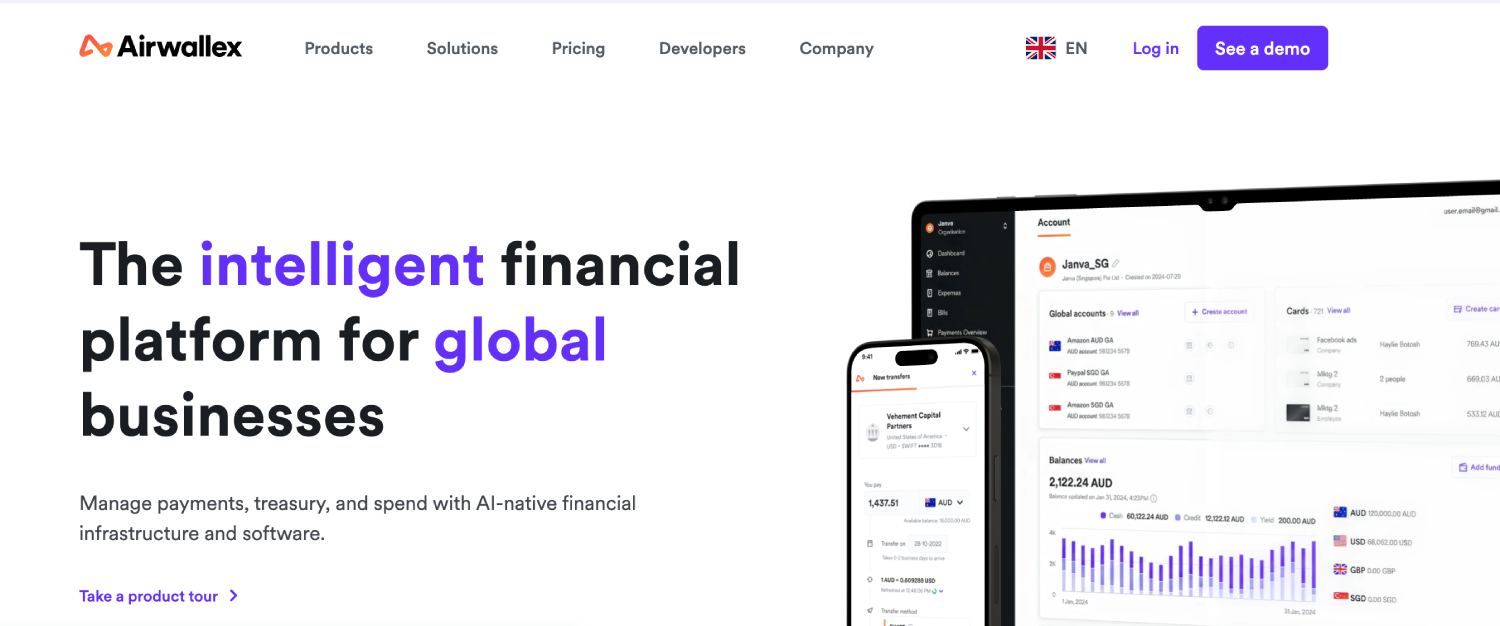
Airwallex is the closest like-for-like competitor to Nium for US companies paying into developed markets. It offers local payment rails in over 150 countries, multi-currency wallets, and an API that developer teams can integrate without a long sales process. Unlike Nium, Airwallex allows companies to open accounts and test the API without an enterprise contract first.
The FX pricing model is more transparent than Nium’s. Airwallex publishes that it charges a small markup above the interbank rate, though the exact rate varies by currency pair and is not a fixed published figure. For high-volume senders, this still requires a direct conversation, but smaller senders can get a clearer picture earlier. The platform handles both inbound collections and outbound payouts, which matters for platforms that need to manage multi-currency treasury.
Where Airwallex is weaker is in deep emerging-market corridors. For USD to NGN, KES, or BDT payouts that require mobile money or local agent network access, Airwallex’s coverage is functional but not among the strongest options in this category. For those corridors, Thunes or dLocal will outperform it on settlement speed and local rail connectivity. The Airwallex vs Wise head-to-head for US companies going global on FintechSpecs covers the FX and feature differences in more detail.
2. Thunes: The Deepest Emerging-Market Rail Network
Thunes operates what it describes as a direct global payments network, with connections to over 130 countries via local rails, mobile money operators, and bank account credits. Its differentiation over Nium is depth in corridors that most Western-built platforms treat as secondary. Africa and Southeast Asia in particular are markets where Thunes has direct connections that competitors often route through intermediaries.
J.P. Morgan Payments has partnered with Thunes on a cross-border payout product covering 100-plus corridors , a partnership documented in FintechSpecs’ coverage of the Xpedite Remit launch. That institutional validation is a meaningful data point for compliance-sensitive buyers. Thunes is API-first and designed for platform integration rather than direct business use. It is not a self-serve product. Onboarding requires a commercial agreement, and the process takes weeks.
For a US platform paying gig workers or suppliers in West Africa, East Africa, or Bangladesh, Thunes will routinely settle faster than Nium in those corridors because of its direct local rail access. The trade-off is that Thunes does not cover the full product surface area that Nium does. It is a payout and collections network, not a full financial infrastructure layer.
3. Rapyd: The Collect-and-Pay Platform for Global Operations
Rapyd covers over 900 payment methods across more than 100 countries, positioning it as a unified collect-and-payout platform. The key distinction from Nium is that Rapyd’s strength is on the collection side. If your business needs to accept local payment methods in markets like Brazil, Indonesia, or Mexico and then payout in a different currency, Rapyd handles both legs of that transaction in one API.
For businesses that only need outbound payouts, Rapyd is not necessarily the most cost-efficient option. Its pricing is negotiated and not publicly disclosed. Rapyd’s broader product surface makes it compelling for marketplaces and gig platforms that have complex collection needs, but pure-payout use cases may find Routefusion or Wise Platform simpler to work with.
4. Wise Platform: Strong FX Transparency for Developed-Market Payouts
Wise Platform is the B2B API product built on Wise’s consumer-facing infrastructure. It gives fintechs and platforms access to Wise’s local payment network, which covers over 160 countries, with FX rates that are explicitly mid-market-based with a disclosed transfer fee. That level of pricing transparency is rare in this category and is a primary reason Wise Platform appears on shortlists alongside Nium.
The limitation is corridor depth in emerging markets. Wise Platform performs best for USD to GBP, EUR, AUD, CAD, and other G10 currency payouts. For markets where local bank penetration is low and mobile money dominates, Wise Platform’s coverage exists but may not match the rail quality of Thunes or dLocal. Wise Platform is also not designed for high-frequency, high-volume API payouts with complex reconciliation. It works better for platforms where payout frequency is moderate and FX predictability matters more than real-time speed.
5. Routefusion: API-First Payout Infrastructure Built for US Platforms
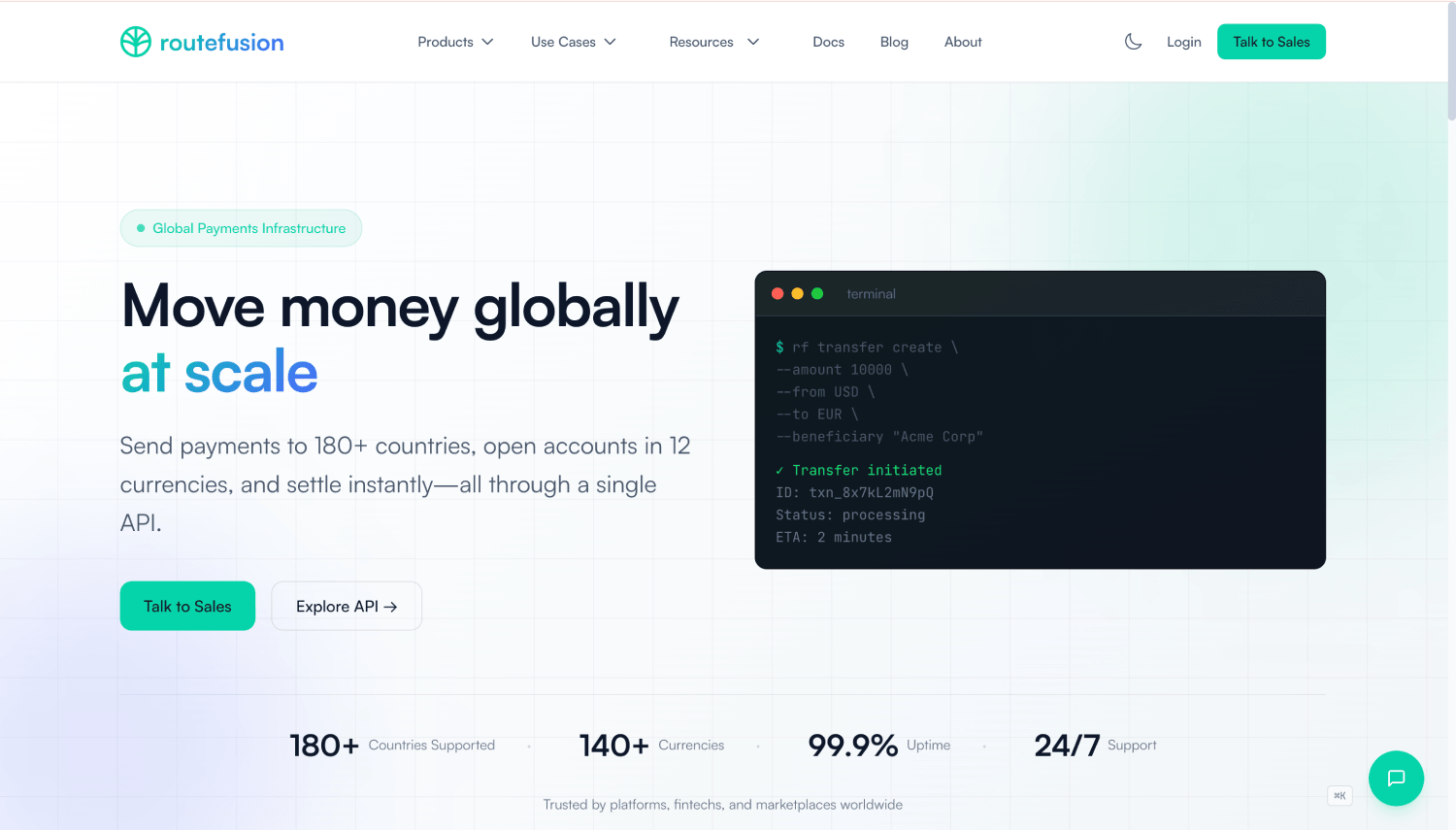
Routefusion is a US-headquartered cross-border payments API that routes payouts through multiple underlying banking and payments partners. Its design philosophy is developer-first: clear documentation, fast integration, and a single API that abstracts the underlying rail selection. For US companies building payouts into a product, Routefusion’s integration experience is faster than Nium’s enterprise process.
Routefusion’s corridor coverage is strong in North America and Latin America but thinner than Nium or Thunes in Asia and Africa. Pricing is not publicly disclosed and requires a direct conversation. For teams that care about building on infrastructure they can understand and debug, Routefusion’s developer experience is a real differentiator. For teams that need global breadth from day one, it is a narrower option.
6. Payoneer: Fastest Onboarding for Marketplace and Contractor Payouts
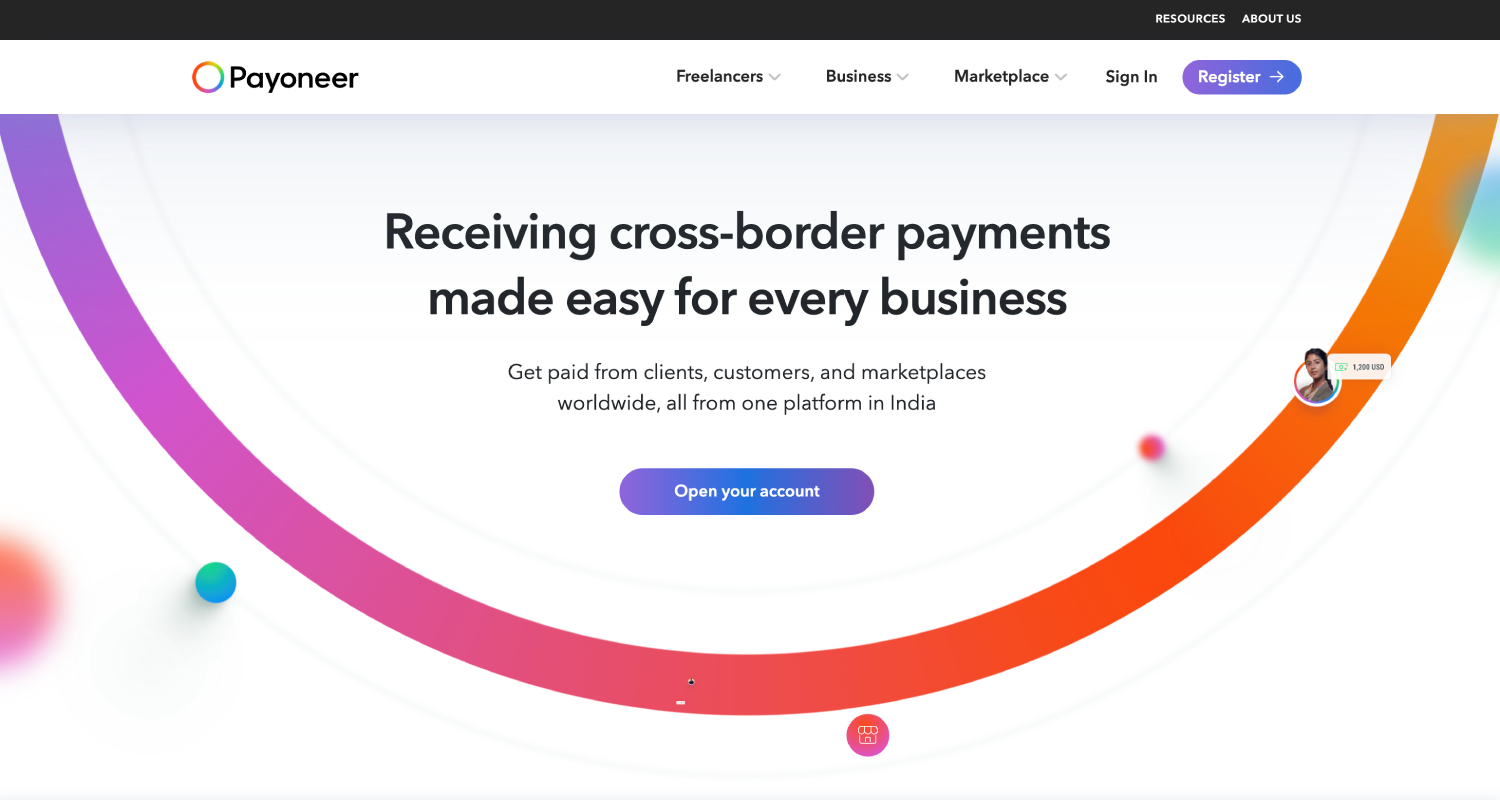
Payoneer reaches over 190 countries and is the most accessible payout option for platforms that need to go live quickly. The self-serve account and API access process is faster than any enterprise-tier competitor in this list. For US marketplaces paying international contractors or freelancers, Payoneer’s existing recipient network means a large share of payees already have Payoneer accounts, which removes the bank account collection friction entirely.
Payoneer’s weakness is that its infrastructure was not designed as a white-label API layer for embedding inside another product. It is better suited to situations where the recipient interacts with Payoneer directly than situations where you want the payout experience to feel native to your platform. For pure API infrastructure embedded invisibly in a product, Routefusion, Airwallex, or Currencycloud offer cleaner integration patterns.
7. dLocal: The Emerging-Market Payout Specialist
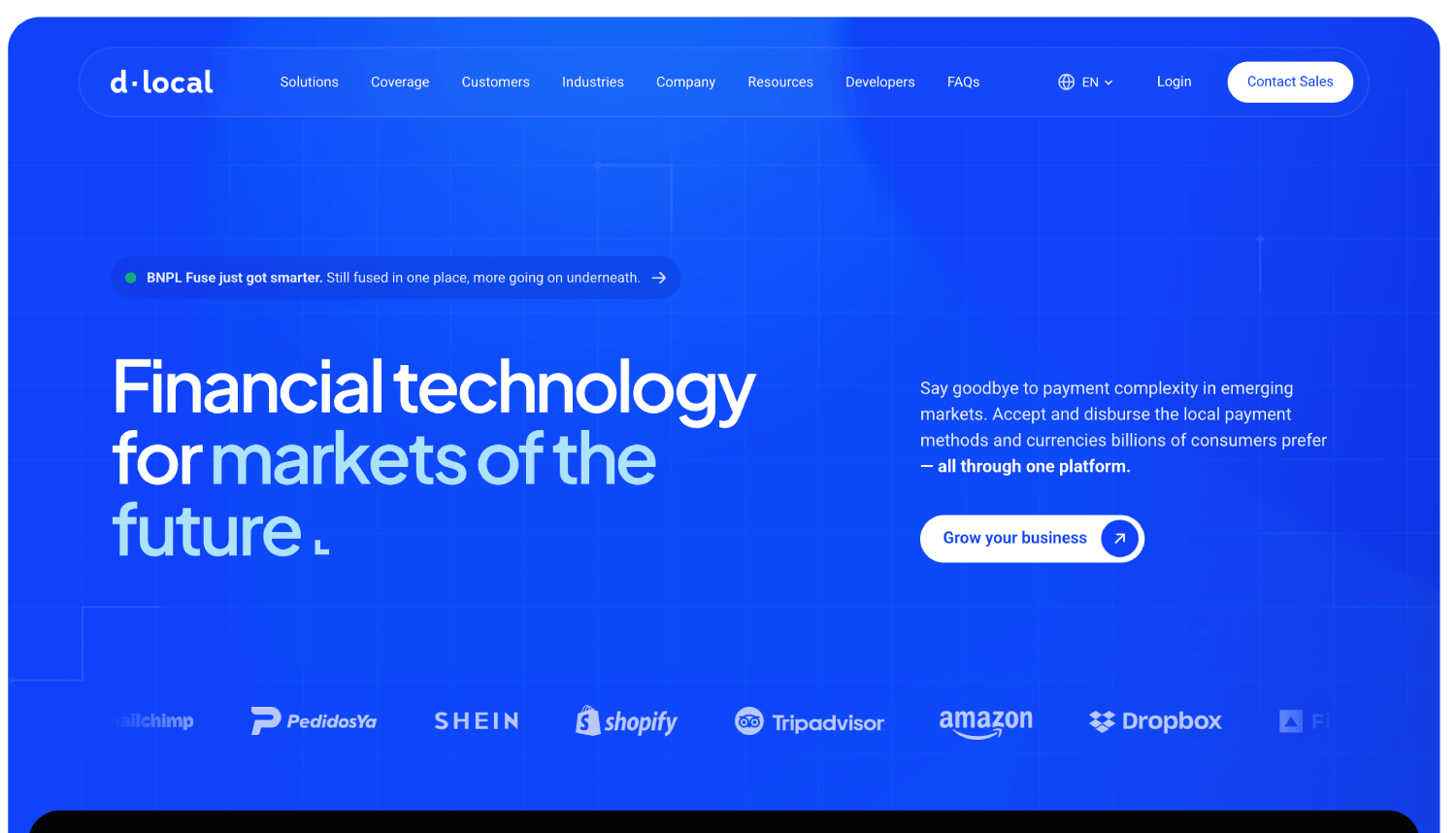
dLocal is purpose-built for what it calls “high-growth markets,” meaning Latin America, Africa, and Asia. Its local rail connections in markets like Brazil, Mexico, Nigeria, Egypt, India, and the Philippines are deep in ways that Nium’s coverage is not. For a US company with significant payout volume in those markets, dLocal’s compliance infrastructure and local entity relationships are a meaningful operational advantage.
dLocal handles both collection and payouts, and its compliance posture is designed for markets with complex foreign exchange controls, like Brazil’s IOF requirements or Nigeria’s CBN regulations. That expertise matters a lot in markets where sending payments incorrectly can result in transactions being stuck or rejected. Pricing is enterprise-negotiated and not publicly disclosed. Onboarding takes weeks and requires a commercial agreement, similar to Nium.
8. Payouts.com: Global Payout Coverage for Gig and Creator Platforms

Payouts.com covers over 200 countries and territories and is designed for platforms with high payout frequency to individual recipients, such as gig economy, creator, and insurance payout use cases. Its API is straightforward, and the platform supports multiple payout methods including bank transfer, digital wallet, prepaid card, and mobile money depending on the destination country.
Payouts.com does not publish pricing. It is a managed-service model more than a pure API layer, which means integration is faster but customization is more limited than Nium or Airwallex. For teams that need to pay thousands of individuals across many countries and want a single vendor to manage the routing and compliance complexity, it solves that problem cleanly.
9. Currencycloud: Embedded FX Infrastructure for B2B Platforms
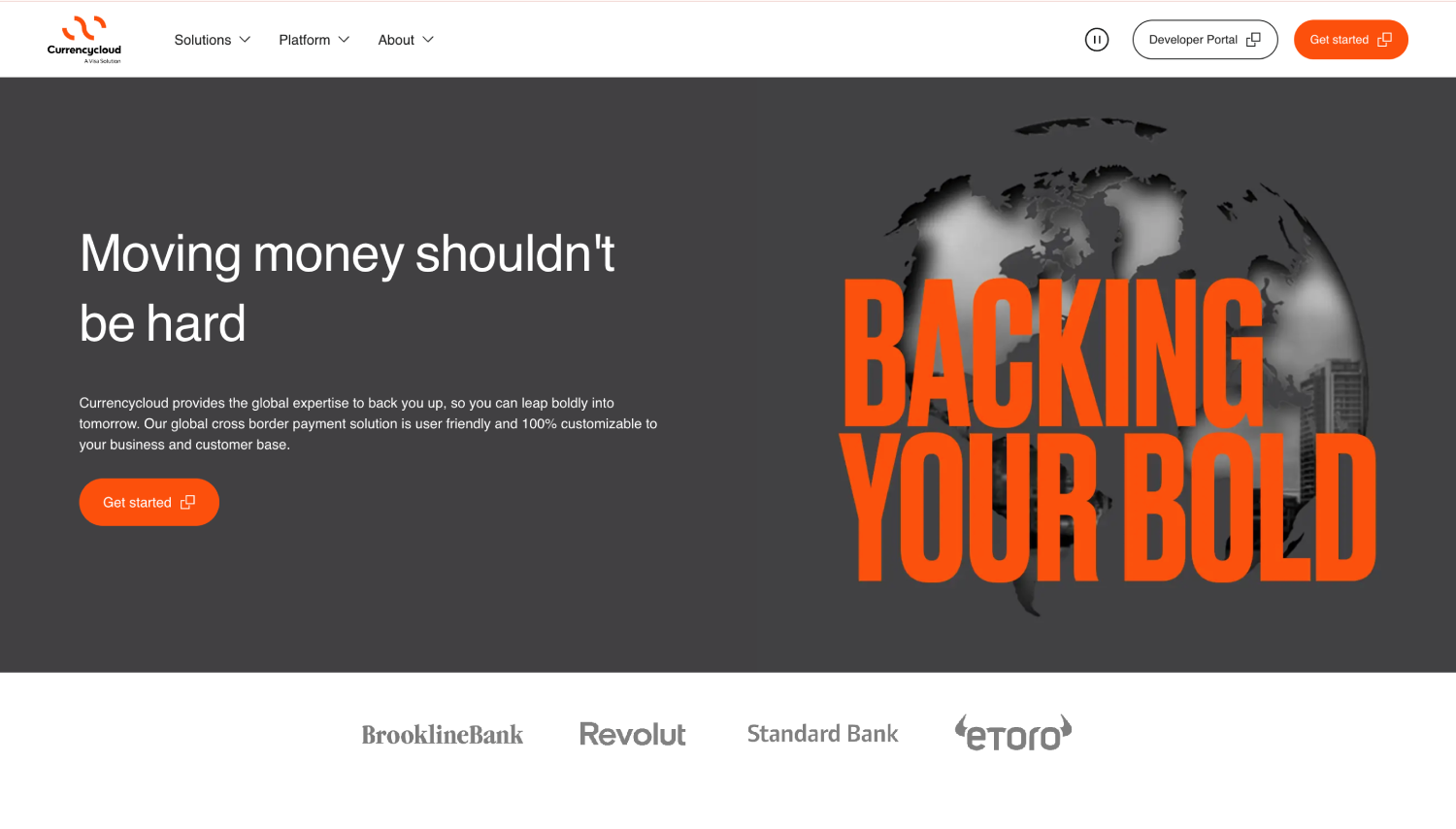
Currencycloud, owned by Visa, provides cross-border payment and FX infrastructure that other fintechs and banks embed into their own products. It covers over 180 countries and 35 currencies with local payment collection and payout capabilities. The Visa ownership means institutional infrastructure and compliance coverage, which matters for regulated fintech products.
Currencycloud is the right choice for platforms that want to offer multi-currency accounts and cross-border payments as a feature inside their own product without becoming a licensed money transmitter. Its API is designed for embedding, not for direct end-user use. Pricing is negotiated and not publicly disclosed. For early-stage companies, Currencycloud’s minimum volume requirements may create a barrier that Airwallex or Wise Platform do not.
Nium vs Airwallex: Where Does Each Platform Actually Win?
Nium and Airwallex are the two platforms that appear on almost every shortlist in this category, so the comparison deserves a direct answer. Nium’s advantages are corridor breadth, real-time payout speed in corridors where it has direct settlement relationships, and a compliance infrastructure designed for regulated fintech products. Airwallex’s advantages are faster onboarding, more transparent FX pricing, stronger multi-currency treasury tooling, and a developer experience that requires less hand-holding from a sales team.
For a US company paying suppliers or contractors in Europe, Australia, Singapore, or Hong Kong, Airwallex reaches parity with Nium on corridor quality while offering a faster path to production. For a company paying recipients in sub-Saharan Africa, South Asia, or Southeast Asia at scale, Nium’s direct rail relationships in those corridors often deliver better settlement times than Airwallex’s coverage. The specific corridors you need should determine which platform you talk to first.
Consider this scenario: a Series B US marketplace paying 2,000 contractors monthly across 40 countries, with 60% of volume in Europe and 40% split across Nigeria, India, and Indonesia. Nium covers all three emerging-market corridors but requires a multi-week enterprise negotiation. Airwallex can cover the European volume immediately and the India corridor well, but requires Thunes or dLocal for Nigeria depth. A two-vendor approach adds reconciliation complexity but may deliver better outcomes per corridor than a single Nium contract that forces average performance everywhere.
What Does Cross-Border Payout Infrastructure Actually Cost?
Most platforms in this category do not publish pricing, and the ones that do offer starting points rather than final rates. The economics typically include three components: a transaction fee (flat or percentage), an FX markup above the mid-market rate, and sometimes a platform fee or monthly minimum. Understanding all three is the only way to compare total cost of ownership across vendors.
Wise Platform is among the most transparent in this category: it discloses its FX markup and charges a transfer fee that varies by corridor. Airwallex similarly publishes that it marks up above the interbank rate, though the specific percentage varies by currency pair. Payoneer charges a fee that varies by destination and payout method. Nium, Thunes, Rapyd, dLocal, Routefusion, Payouts.com, and Currencycloud all negotiate pricing based on volume, corridors, and product configuration. For a detailed look at how these infrastructure layers generate revenue and structure their fees, the breakdown of how fintech infrastructure companies make money on FintechSpecs is worth reading before you enter vendor negotiations.
One practical note: for any platform where you are processing more than $1M per month in cross-border volume, the FX markup matters more than the transaction fee. A 0.5% FX spread difference at $2M monthly volume is $10,000 per month. Request a mid-market rate comparison from every vendor using the same set of currency pairs and volumes before you sign.
Frequently Asked Questions
What is the fastest Nium alternative to integrate for cross-border payouts?
Airwallex and Payoneer offer the fastest path from account creation to live payouts, typically measured in days rather than weeks. Airwallex’s developer documentation and sandbox environment are accessible without a sales conversation, which makes it the fastest option for teams building API-first payout infrastructure. Payoneer is faster for marketplace use cases where recipients can hold Payoneer accounts. Enterprise platforms with complex compliance requirements will still need weeks regardless of vendor choice.
Which cross-border payout platform has the best coverage for Africa and Southeast Asia?
Thunes and dLocal both carry deeper local rail connections in Africa and Southeast Asia than Nium in specific corridors. Thunes has particularly strong mobile money network access in West and East Africa and direct bank account credit capabilities in key Southeast Asian markets. dLocal’s strength is in markets with complex foreign exchange controls, including Nigeria and Egypt. For most African and Southeast Asian corridors, either vendor will outperform Airwallex or Wise Platform on settlement speed and rail quality.
Is Wise Platform a real infrastructure alternative to Nium for B2B payouts?
Yes, for developed-market corridors. Wise Platform’s B2B API gives fintechs access to Wise’s local payment rails across 160-plus countries with mid-market-based FX rates. It is better suited to platforms paying into US, UK, EU, Australia, and Canada than to those with heavy emerging-market payout volume. Its primary advantage over Nium is pricing transparency and a faster commercial process. For embedding payouts inside a regulated financial product with complex compliance requirements, Nium’s infrastructure may still be more appropriate depending on your licensing posture.
Does Rapyd compete directly with Nium for API-first payout infrastructure?
Rapyd overlaps with Nium on payout capabilities, but its strongest differentiation is on the collection side. If your use case is a two-sided marketplace where you need to accept local payment methods in one market and payout in another currency, Rapyd handles both legs in a single platform better than most pure-payout alternatives. For teams that only need outbound payouts and want the simplest possible API, Rapyd’s broader surface area adds complexity that may not be needed.
How does dLocal compare to Nium for Latin American payouts?
dLocal’s local entity structure and regulatory relationships in Latin American markets like Brazil, Mexico, Argentina, and Colombia give it operational advantages over Nium in those corridors. Brazil in particular involves complex rules around foreign payment flows, IOF tax treatment, and local banking relationships that dLocal has spent years navigating. Nium covers Latin America but built its strongest rail relationships in Asia-Pacific first. For US companies with significant LATAM payout volume, dLocal belongs on the shortlist ahead of Nium.
Can I use multiple payout platforms instead of choosing one Nium alternative?
Yes, and for companies with payout volume spread across both developed and emerging markets, a two-vendor approach is often the right answer. A common structure is Airwallex or Wise Platform for G10 currency corridors and Thunes or dLocal for emerging-market corridors. The trade-off is added reconciliation complexity and two vendor relationships to manage. If your engineering team has the capacity to abstract payout routing behind an internal orchestration layer, the per-corridor performance gains typically outweigh the operational overhead. The guide to outbound payment APIs for B2B SaaS on FintechSpecs covers how to think about that routing decision.
What should I check for compliance before switching from Nium to an alternative?
Check three things before switching. First, confirm the new vendor holds money transmitter licenses in every US state where your recipients or counterparties are located. Second, verify the vendor’s AML and sanctions screening process matches or exceeds your current compliance posture, especially for high-risk corridors. Third, check that their API supports the transaction monitoring and reporting hooks you need to satisfy your own compliance obligations. Switching payout infrastructure is not just a technical migration. It is a compliance review. The fintech product and compliance readiness checklist on FintechSpecs is a useful starting framework for that review.
Which Nium Alternative Should You Actually Choose?
The answer depends on where your payout volume is going, not on which platform has the longest feature list. Airwallex is the right starting point for most US companies paying into Europe, Asia-Pacific developed markets, and the UK. Thunes belongs on the shortlist for any company with meaningful Africa or Southeast Asia volume, and the J.P. Morgan endorsement via the Xpedite Remit partnership is a credibility signal worth noting. dLocal is the right call for Latin America and emerging-market Africa where local regulatory complexity is high.
Wise Platform earns a look any time FX transparency and pricing predictability matter more than corridor depth. Routefusion is worth evaluating for developer-first US teams that want clean infrastructure without an enterprise sales process. Payoneer fits platforms paying large numbers of individual contractors rather than businesses, particularly where recipients can self-onboard to Payoneer directly. Currencycloud is the right embedded infrastructure choice for fintechs that want to offer multi-currency payments as a product feature rather than just a payout rail.
The biggest mistake teams make is evaluating these platforms on overall country coverage rather than on the specific corridors where they will process 80% of their volume. Run the FintechSpecs Corridor Fit Test on your top five destination countries before your first vendor conversation. That exercise will cut your shortlist from nine platforms to two or three, and it will give you the right questions to ask when you do get on a call. For a broader view of how payment infrastructure decisions compound over time as a company scales, the critical mistakes when choosing fintech infrastructure on FintechSpecs covers the patterns that trip up otherwise well-run teams.