
TLDR
- GoDocs and LaserPro solve the same closing-document problem but serve different lender profiles: GoDocs is built for commercial and SBA lenders who want LOS-agnostic API connectivity, while LaserPro is a Finastra product designed around bank and credit union core systems.
- Document coverage is the first cut. LaserPro maintains a large multi-state consumer and commercial template library maintained by Finastra’s compliance team; GoDocs focuses on commercial, SBA 7(a), SBA 504, and USDA loan documentation with more granular deal-level configurability.
- Maintenance model matters more than template count. Whoever owns regulatory updates after go-live determines your compliance exposure when state forms change mid-year.
- LOS fit is often the deciding factor in practice. LaserPro integrates deeply with Finastra’s own loan origination stack and selected bank cores; GoDocs publishes API documentation aimed at any LOS or core that can consume a REST connection.
- Neither platform publicly discloses per-loan or subscription pricing, so budget conversations require a direct vendor call.
GoDocs vs LaserPro commercial loan documentation is a comparison that surfaces on nearly every serious lender shortlist , and the two platforms are less interchangeable than they first appear. GoDocs is the stronger fit for commercial and SBA lenders who need API-driven document generation outside a bank core, particularly when deal complexity varies widely by loan type. LaserPro is better suited to community banks and credit unions already operating within the Finastra environment who need a combined consumer-and-commercial document solution with Finastra-managed compliance updates. The decision turns on three things: loan type coverage, who maintains your state form library after implementation, and how the tool connects to your LOS.
Why Do Lenders Compare GoDocs and LaserPro in the First Place?
Both products generate closing document packages for US commercial loans. That surface similarity is enough to put them on the same shortlist. But they were built for different buyers and that shapes every downstream decision.
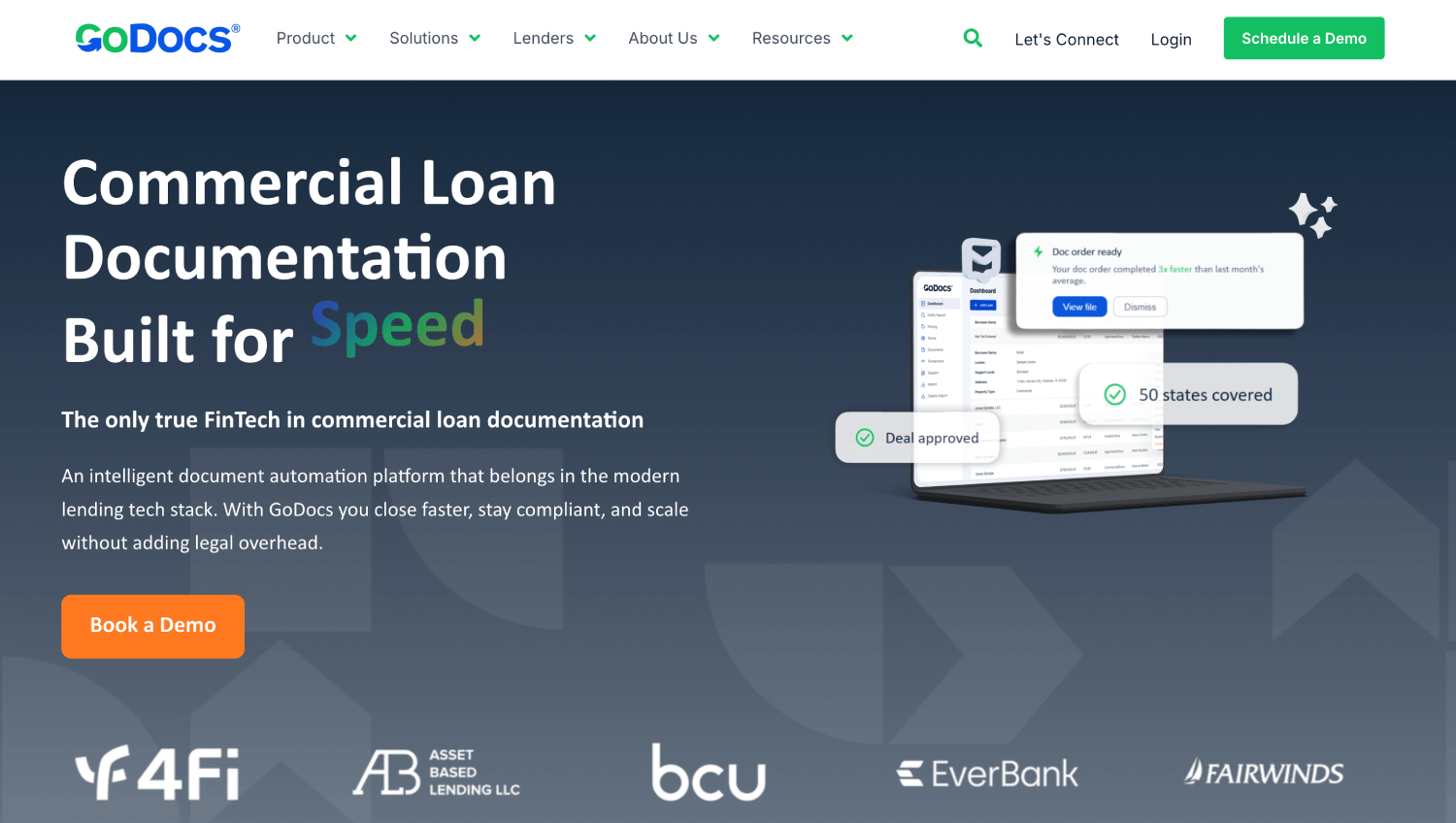
GoDocs was founded specifically to serve commercial, SBA, and USDA lenders who found that general-purpose document tools were either too consumer-focused or too tightly coupled to a particular core banking system. Its architecture is built around generating loan document packages through an API call, which means any LOS that can pass deal data via REST can theoretically use it.
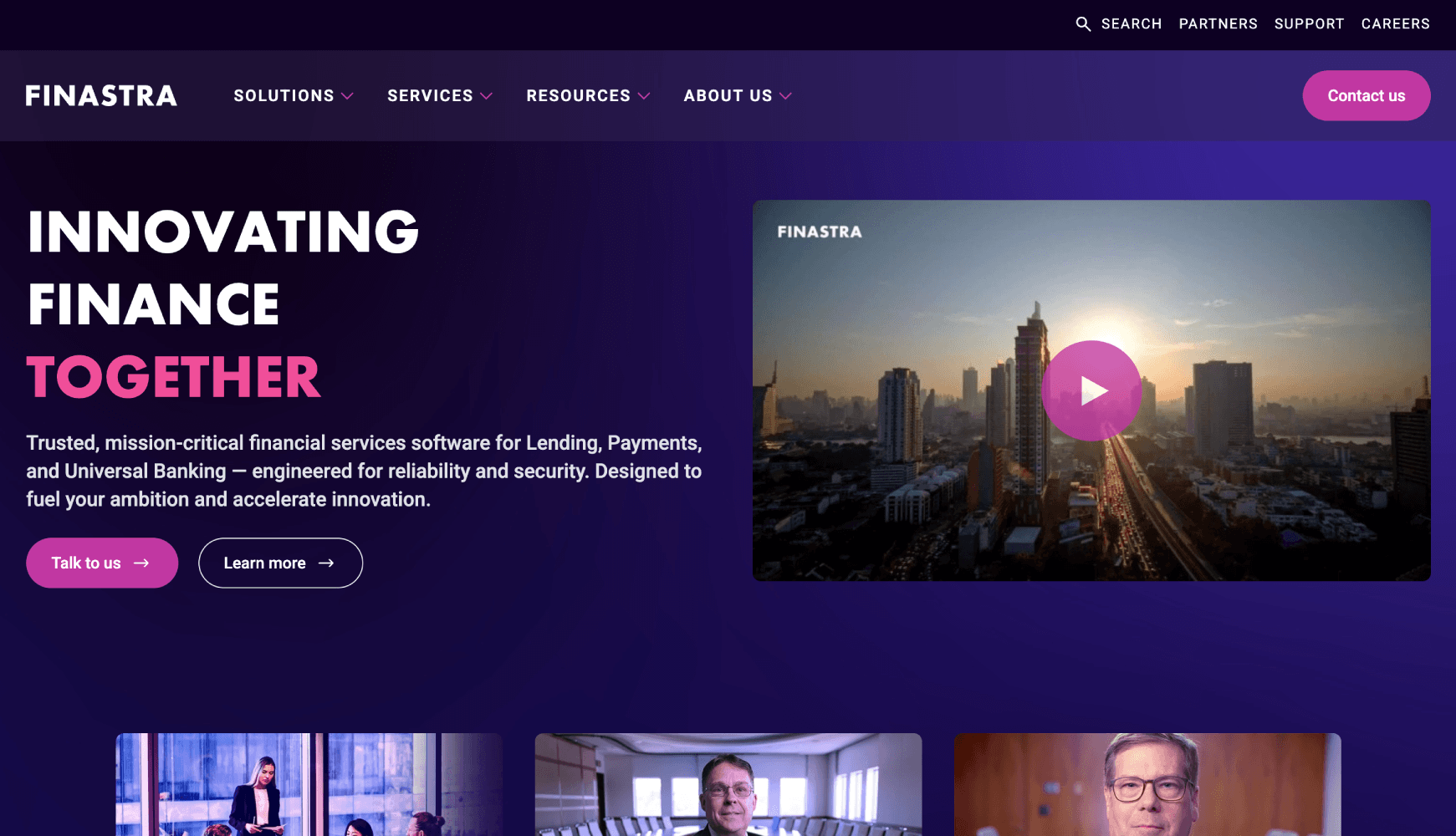
LaserPro is a Finastra product with a long history in community banking. It handles both consumer and commercial lending documents across a large multi-state template library. Its natural integration path runs through Finastra’s own core and lending platforms, though it also works with third-party systems.
What Loan Types Does Each Platform Actually Cover?
GoDocs covers commercial real estate, commercial and industrial (C&I) loans, SBA 7(a), SBA 504, and USDA business and industry loan documentation. The SBA and USDA coverage is a deliberate product decision, and it reflects GoDocs’s target market of non-bank lenders, CDFIs, and commercial-focused banks that originate government-guaranteed deals alongside conventional commercial paper.
LaserPro’s template library covers consumer loans, mortgages, home equity, and commercial lending across all 50 states and US territories. For community banks and credit unions that originate a mix of consumer and commercial products, this breadth is a practical argument for staying on a single document platform. SBA-specific documentation is available through LaserPro but commercial real estate and C&I document complexity is generally considered a secondary use case relative to its consumer lending depth.
| Loan Type | GoDocs | LaserPro (Finastra) |
|---|---|---|
| Commercial Real Estate | Yes, core use case | Yes |
| Commercial and Industrial (C&I) | Yes | Yes |
| SBA 7(a) | Yes, purpose-built | Available |
| SBA 504 | Yes, purpose-built | Limited |
| USDA B&I | Yes | Not primary coverage |
| Consumer Installment Loans | Not primary coverage | Yes, core use case |
| Home Equity / HELOC | Not primary coverage | Yes |
| Multi-state Coverage | All 50 states | All 50 states plus territories |
How Does Each Platform Handle Compliance Maintenance?
This is where most lenders underestimate their exposure. Generating a closing package is a one-time task; keeping every state-specific form compliant with regulatory changes is a continuous obligation. When a state revises a disclosure requirement or a federal agency updates an SBA form, someone has to update the template before the next loan closes.
Finastra’s model for LaserPro centralizes that responsibility within their compliance team. Banks on LaserPro receive updated forms through the platform, and Finastra absorbs the ongoing legal and editorial work of tracking state banking law changes. For a community bank with no dedicated regulatory affairs staff, that is a meaningful operational subsidy.
GoDocs takes the same general approach for its commercial and SBA form library. Its compliance team monitors federal agency publications (SBA Standard Operating Procedures, state UCC filing requirements, and state-specific loan instrument rules) and pushes updates to the template library. The practical difference is that GoDocs’s scope is narrower: it tracks the regulatory inputs that affect commercial and government-guaranteed lending specifically, rather than the full consumer-to-commercial spectrum.
The question every lender should ask before signing either contract: what is the contractual SLA for form updates after a regulatory change takes effect, and who bears liability if a package goes out on a stale form? Neither vendor publicly publishes those terms, so this is a due-diligence question for the sales conversation , ask specifically for the turnaround commitment in writing, not just a verbal assurance during the demo. For a broader framework on evaluating vendor risk before contracts are signed, the FintechSpecs fintech vendor evaluation framework covers the right questions in detail.
How Does Each Platform Connect to a Loan Origination System?
Integration architecture is where the GoDocs vs LaserPro commercial loan documentation decision often gets made in practice, because the tools that already exist in a lender’s tech stack constrain the options.
GoDocs is built as an API-first document generation service. A lender’s LOS passes deal data to the GoDocs API and receives a completed, lender-branded closing package. The integration is designed to be LOS-agnostic, which means it can connect to Encompass by ICE Mortgage Technology, nCino, Salesforce-based lending platforms, and proprietary in-house origination systems. That flexibility matters most to non-bank lenders and fintechs who built their own origination workflow rather than purchasing an off-the-shelf LOS.
LaserPro integrates natively with Finastra’s own suite, including Finastra Originate and Finastra core banking. It also supports integrations with third-party cores through established data exchange formats. For community banks and credit unions already running on Finastra infrastructure, LaserPro’s integration lift is minimal. For a lender on a non-Finastra core, the implementation effort is comparable to any other document system, and the native integration advantage disappears.
The LOS-Document Stack Matching Problem
Lenders often discover mid-implementation that their LOS sends data fields in a format that requires mapping work before the document system can consume them correctly. This is true for both platforms. GoDocs’s API documentation is publicly accessible, which allows engineering teams to assess the mapping requirements before signing a contract. LaserPro’s integration specifications are typically reviewed during the sales and scoping process.
Neither vendor publicly discloses typical implementation timelines. Both recommend a formal scoping call to assess mapping complexity for a specific LOS configuration before committing to a go-live schedule. That is a reasonable position for contract-based enterprise software, but it also means lenders should request reference customers with similar LOS setups , and ask those references directly how long the data mapping phase actually took.
| Integration Factor | GoDocs | LaserPro (Finastra) |
|---|---|---|
| Integration model | REST API, LOS-agnostic | Native Finastra + third-party connectors |
| Best LOS match | Any API-capable LOS or custom build | Finastra Originate, Finastra core platforms |
| Non-Finastra core support | Yes, primary use case | Yes, with integration setup required |
| API documentation access | Publicly available | Reviewed during sales process |
| Typical implementation timeline | Not publicly disclosed; request reference data | Not publicly disclosed; request reference data |
What Does the GoDocs vs LaserPro Decision Actually Cost?
Both GoDocs and LaserPro operate on contract-based pricing that is not published on their public websites. Neither platform lists per-loan fees, subscription tiers, or implementation costs on a public pricing page.
This is worth stating directly because it affects how buyers should structure vendor conversations. Plan to request a formal quote with use-case-specific pricing, and ask specifically about: base subscription or platform fee, per-loan or per-document package fees, implementation and onboarding costs, compliance update delivery (included or add-on), and volume commitments or minimum annual spend. These are the variables that create meaningful total cost differences between lenders with similar document volumes.
For lenders evaluating the broader lending software market, the FintechSpecs loan origination and management software comparison covers how document generation fits into the larger LOS decision.
The FintechSpecs Commercial Document Stack Audit: Four Checks Before You Choose
Most lenders approach this decision by evaluating features. That is the wrong starting point. The right starting point is a structured audit of what your current operation actually requires from a document system. The following four-check framework , the FintechSpecs Commercial Document Stack Audit , is designed to surface the real constraints before you spend time in vendor demos.
Check 1: Loan Type Concentration
List your current and projected loan mix by type for the next 24 months. If more than 30 percent of your volume is SBA, USDA, or complex commercial real estate, you need a system where those document types are the primary product, not an add-on. If your mix is predominantly consumer loans with a secondary commercial book, a combined platform like LaserPro likely reduces total vendor count without sacrificing coverage.
Check 2: Core and LOS Dependency
Map every system that will need to pass data to your document platform. If your core or LOS is already a Finastra product, LaserPro’s integration path is demonstrably lower-friction. If you are on a non-Finastra core, an independent LOS, or a custom-built origination system, the integration effort is roughly equivalent and GoDocs’s API-first architecture may actually reduce implementation risk.
Check 3: Compliance Ownership
Ask internally: who on your team will own the regulatory change tracking process? If the answer is “the vendor,” confirm in writing which forms are covered, how quickly updates are delivered after a regulatory effective date, and what the contractual liability structure looks like. This check applies equally to GoDocs and LaserPro. The FintechSpecs fintech product and compliance readiness checklist provides a parallel structure for assessing this question across your full lending operation.
Check 4: Deal Complexity and Configurability
Run three of your most complex recent loan scenarios through each vendor’s demo. Construction loans with multiple disbursement schedules, SBA deals with multiple collateral positions, and participation loans with unusual fee structures are the stress tests that reveal configurability limits fastest. A system that handles your average deal perfectly but fails on your top 15 percent by complexity creates real operational risk.
Who Should Choose GoDocs?
GoDocs fits lenders whose primary business is commercial and government-guaranteed lending, who need LOS flexibility rather than deep integration with a bank core, and whose deal complexity requires granular document configurability. Non-bank commercial lenders, SBA preferred lenders, CDFIs, and commercial lending fintechs are the natural fit.
It also fits lenders who want to maintain architectural flexibility in their tech stack. Because GoDocs connects via API rather than through a proprietary integration, switching origination platforms does not require rebuilding the document generation layer. That matters more than it sounds for organizations that are actively modernizing their lending infrastructure. For context on how fintech lending infrastructure decisions compound over time, the AI tools for lending teams overview on FintechSpecs shows how document generation fits alongside underwriting and servicing layers.
Who Should Choose LaserPro?
LaserPro fits community banks and credit unions that originate a broad mix of consumer and commercial loans, run on Finastra infrastructure, and want compliance updates delivered through a single vendor relationship. The combined consumer-commercial template library is a genuine differentiator for institutions that do not want to manage separate document platforms for each lending line.
It also fits buyers who place a premium on vendor relationship depth over architectural flexibility. Finastra is a large company with established support structures, and for a 10-person lending team at a community bank, the operational stability of an embedded vendor relationship may outweigh the portability advantages of an API-first tool. Lenders evaluating the full commercial lending software category should also review the loan servicing software comparison to understand how post-closing document workflows connect downstream.
Are There Other Commercial Loan Document Platforms Worth Considering?
Yes. The commercial lending document generation market includes several other platforms that belong on any honest shortlist.
Wolters Kluwer Bankers Systems (which includes the TSoftPlus and iLAW products) is a long-established competitor in the bank forms and compliance document space, with particularly strong consumer lending coverage and wide bank core integrations. Harland Financial Solutions also serves community banks with document preparation tools. For lenders building or buying modern tech stacks, some are evaluating whether to generate documents entirely within their LOS using embedded document assembly rather than a standalone document platform.
The LaserPro alternative search also surfaces these names, which means LaserPro buyers evaluating their options are not limited to a two-horse race.
Frequently Asked Questions
What is GoDocs used for?
GoDocs is a commercial loan document generation platform. It produces closing document packages for commercial real estate, commercial and industrial loans, SBA 7(a), SBA 504, and USDA business and industry loans across all 50 US states. Lenders connect to GoDocs via a REST API, passing deal data from their loan origination system and receiving a completed, lender-branded closing package. It is designed primarily for non-bank commercial lenders, SBA preferred lenders, and community banks with heavy commercial portfolios.
What is LaserPro by Finastra?
LaserPro is a loan document preparation system developed and maintained by Finastra. It generates compliant closing document packages for consumer loans, mortgages, home equity products, and commercial lending across all 50 states and US territories. Finastra maintains the template library and delivers regulatory updates to the platform. LaserPro integrates natively with Finastra’s core banking and loan origination systems and also supports third-party core connections.
Can GoDocs replace LaserPro for a community bank?
It depends on the bank’s loan mix. If the bank originates significant consumer loan volume alongside commercial paper, GoDocs does not cover consumer loan documentation as a primary use case, which means replacing LaserPro entirely would leave a gap. For a community bank whose commercial lending volume is large enough to justify a standalone commercial document platform, GoDocs is a credible option. Banks on Finastra’s core should factor in the integration work required to connect GoDocs rather than using LaserPro’s native integration path.
How does lender closing document automation reduce operational risk?
Closing document automation reduces risk primarily by eliminating manual form selection and population errors. When a lender builds a closing package manually, an officer selecting the wrong state form or failing to include a required disclosure creates regulatory and legal exposure. Automated systems like GoDocs and LaserPro generate the correct state-specific package based on deal parameters, and their compliance teams track regulatory changes to keep templates current. The residual risk lies in the lag between a regulatory change and a platform update, which is why contractual update SLAs matter.
Does GoDocs integrate with nCino?
GoDocs’s API-first architecture is designed to integrate with any LOS capable of making a REST API call, which includes nCino. Specific integration details, certified connectors, and implementation requirements are confirmed during the vendor sales and scoping process. GoDocs does not publish a formal integration marketplace with pre-built connectors the way some LOS vendors do, so the integration work involves custom API mapping from the nCino data model to GoDocs’s document generation inputs.
What happens when state loan forms change on LaserPro?
Finastra’s compliance team is responsible for monitoring state banking law changes and updating LaserPro’s form library accordingly. Updated templates are delivered to LaserPro customers through the platform. The specific update timeline, effective date handling, and contractual obligations around timely form updates are terms a buyer should request explicitly during contract negotiation. LaserPro does not publish a public compliance update calendar or response-time SLA on its website.
Is there a GoDocs vs LaserPro pricing comparison available publicly?
Neither GoDocs nor Finastra LaserPro publishes pricing on their public websites. Both operate on contract-based pricing that varies by loan volume, document types, number of lender locations, and integration complexity. Getting a comparable quote from each requires a direct conversation with both sales teams using the same loan volume assumptions, loan type mix, and integration requirements. Comparing total cost across a 36-month contract period, including implementation and compliance update fees, produces a more accurate picture than comparing base subscription costs alone.
How does document generation fit into a modern lending tech stack?
Document generation sits at the closing stage of the loan lifecycle, downstream from credit decisioning and underwriting and upstream from loan servicing. A modern lending stack connects the LOS to document generation via API, then passes the executed closing package to the loan servicing system. The compliance exposure in document generation is high because the documents are legally binding instruments. For lenders building out the full stack, decisions about document generation should be evaluated alongside AI underwriting and credit decisioning platforms and loan servicing tools to verify data flows cleanly between layers.
The Decision in Plain Terms
Commercial lending document generation is not a commodity problem. The gap between a correctly generated closing package and a defective one is not a formatting inconvenience; it is an enforceability question that surfaces in workouts and defaults. Treating GoDocs and LaserPro as interchangeable because they both produce PDFs is the error this comparison is designed to prevent.
GoDocs is the purpose-built answer for lenders whose commercial and government-guaranteed loan volume is large enough to justify a dedicated platform, and whose tech stack is built around API connectivity rather than a single core vendor’s suite. LaserPro earns its place for institutions where Finastra integration, combined consumer-commercial coverage, and centralized compliance maintenance represent genuine operational value rather than theoretical features.
The most common mistake lenders make in this evaluation is selecting based on template count rather than template maintenance. A large library of stale forms is worse than a narrower library that is current. Before any contract is signed, the compliance update SLA, the contractual liability for delayed updates, and the actual state form coverage for your specific loan types are the three terms worth fighting for. Everything else is secondary. For those also evaluating the broader lending software stack, the fintech product and compliance readiness checklist provides a parallel framework for assessing compliance infrastructure across the full lending operation.