


TLDR
- Ramp works well for US-only companies, but its Canadian entity support, international card issuance, and ERP depth have real limits that push growing SaaS teams elsewhere.
- Brex, Airbase, and Mercury are the most direct replacements, but Airwallex, Payhawk, Spendesk, Navan, Teampay, and Pleo each win in specific scenarios Ramp does not cover.
- The right switch depends on three factors: where your entities are incorporated, how much ERP integration depth your finance team needs, and whether rewards matter more than controls.
- Canadian-headquartered SaaS teams have the fewest options on this list. Airwallex and Brex are the strongest fits, with Pleo viable if your Canadian team is a subsidiary of a European parent.
- Pricing across this category is largely quote-based above the free tier. Get numbers from every vendor before shortlisting, because the differences compound at scale.
The best Ramp alternatives for SaaS companies are Brex, Airbase (now Maxio), Mercury, Airwallex, Payhawk, Spendesk, Navan, Teampay, and Pleo. Each beats Ramp in at least one meaningful category: global entity support, rewards on software spend, ERP integration depth, or travel management. The right replacement depends on your incorporation geography, headcount, and how tightly your finance team needs to close the books each month.
Why Do SaaS Teams Switch Away From Ramp?
Ramp became the default spend platform for US-based startups because it was free, had a clean interface, and automated receipt matching better than anything at its price point. That reputation is deserved for a certain kind of company: one entity, US-only, on QuickBooks or NetSuite, under 200 employees.
The cracks appear once a company opens a Canadian, UK, or European subsidiary. As of their public product pages, Ramp does not issue cards in Canada, the UK, or EU markets, and physical cards for non-US employees require workarounds that create friction for finance teams. ERP integration depth is another common complaint: Ramp’s native NetSuite sync handles basic expense coding, but teams running complex multi-entity consolidations often find they need more granular mapping or a middleware layer. If you want a detailed head-to-head breakdown, Ramp vs Brex vs Airbase covers the three-way comparison in full. This article focuses on switching intent: who should leave Ramp, and where they should go.
The switching reasons tend to cluster into four buckets. Teams running this evaluation usually cite at least one of them.
| Switching Reason | Who This Affects | Best Alternative |
|---|---|---|
| Non-US entities need local cards | Companies with Canadian, UK, or EU subsidiaries | Airwallex, Payhawk, Brex |
| ERP integration too shallow | Finance teams on NetSuite, Sage, or Microsoft Dynamics | Airbase (Maxio), Teampay, Payhawk |
| Want better rewards on SaaS spend | High software-spend startups chasing cashback | Brex, Mercury |
| Need travel + expense in one tool | Teams with significant travel budgets | Navan, Spendesk |
| Canadian HQ, need a native card | Canadian-incorporated SaaS companies | Airwallex, Brex (via US entity) |
The FintechSpecs Spend Stack Fit Test: How to Score a Ramp Replacement
Before running vendor demos, score your situation across four dimensions. This is the framework we use when evaluating spend platforms for switching coverage. Call it the Spend Stack Fit Test.
Entity footprint: count every legal entity that needs a card program. One US LLC is a Ramp-friendly profile. Two or more entities across different countries forces you toward Airwallex, Payhawk, or Brex, which have native multi-currency card issuance in more markets.
ERP depth required: rate your close process on a scale of simple to complex. Simple means monthly journal entries and category mapping. Complex means intercompany eliminations, subsidiary-level P&L visibility, and audit-ready coding at the line-item level. Airbase and Teampay score higher on the complex end.
Reward sensitivity: calculate your monthly SaaS and software card spend. If it exceeds roughly $50,000 per month, rewards rates become a real dollar figure worth optimizing. Brex and Mercury are the two platforms where this math works most clearly.
Travel volume: if your team books more than roughly $20,000 per month in travel, a combined travel-and-expense platform like Navan saves real admin time by eliminating the reconciliation step between a travel tool and a spend tool.
Which Ramp Alternative Is Best for Companies With Global Entities?
Airwallex
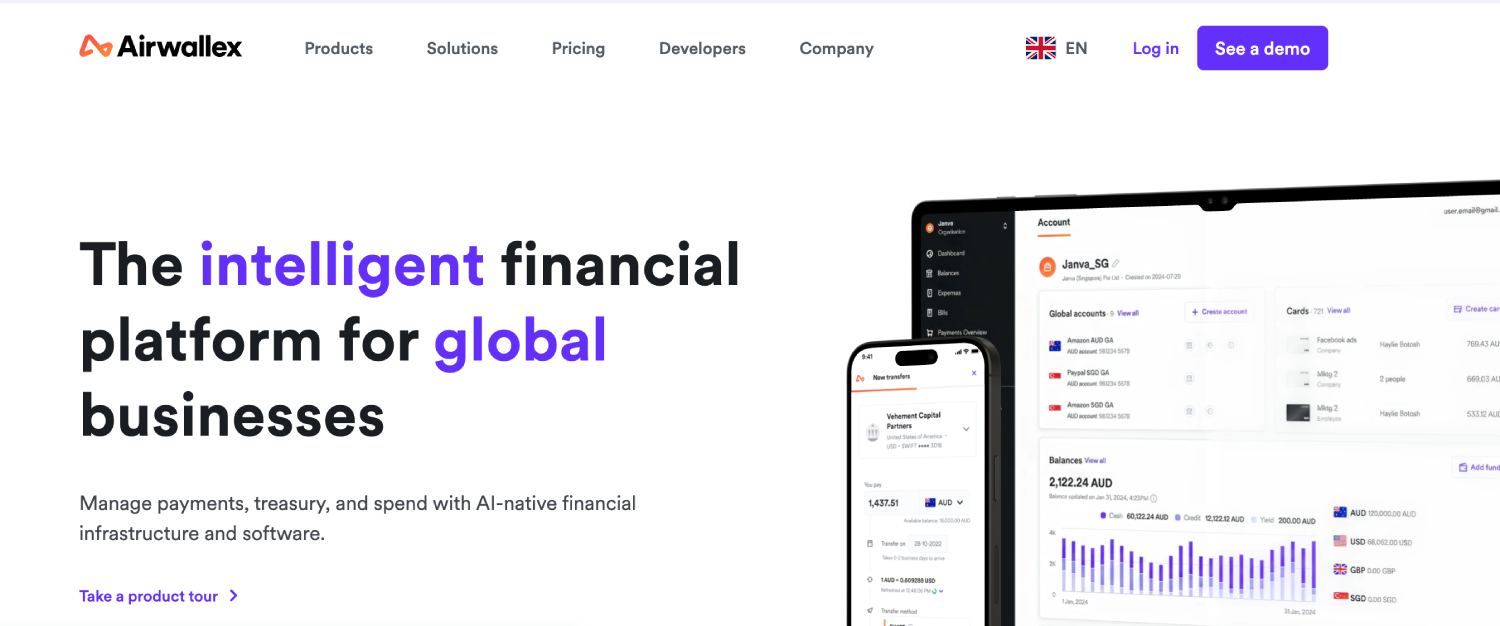
Airwallex is the strongest Ramp alternative for companies with entities outside the US, including Canada. It issues corporate cards across dozens of countries, holds balances in multiple currencies, and charges no foreign transaction fees on card spend. The spend management layer includes virtual and physical cards, receipt capture, and approval workflows that most finance teams find adequate for day-to-day control. If your primary pain with Ramp is that your Canadian or UK employees cannot get local cards, Airwallex solves this without requiring a complex workaround.
The trade-off is ERP integration depth. Airwallex’s accounting sync covers QuickBooks and Xero natively, but teams running NetSuite at scale have reported needing middleware. For a detailed look at how Airwallex compares on multi-currency business accounts, see the Airwallex vs Wise comparison for US companies going global.
Payhawk
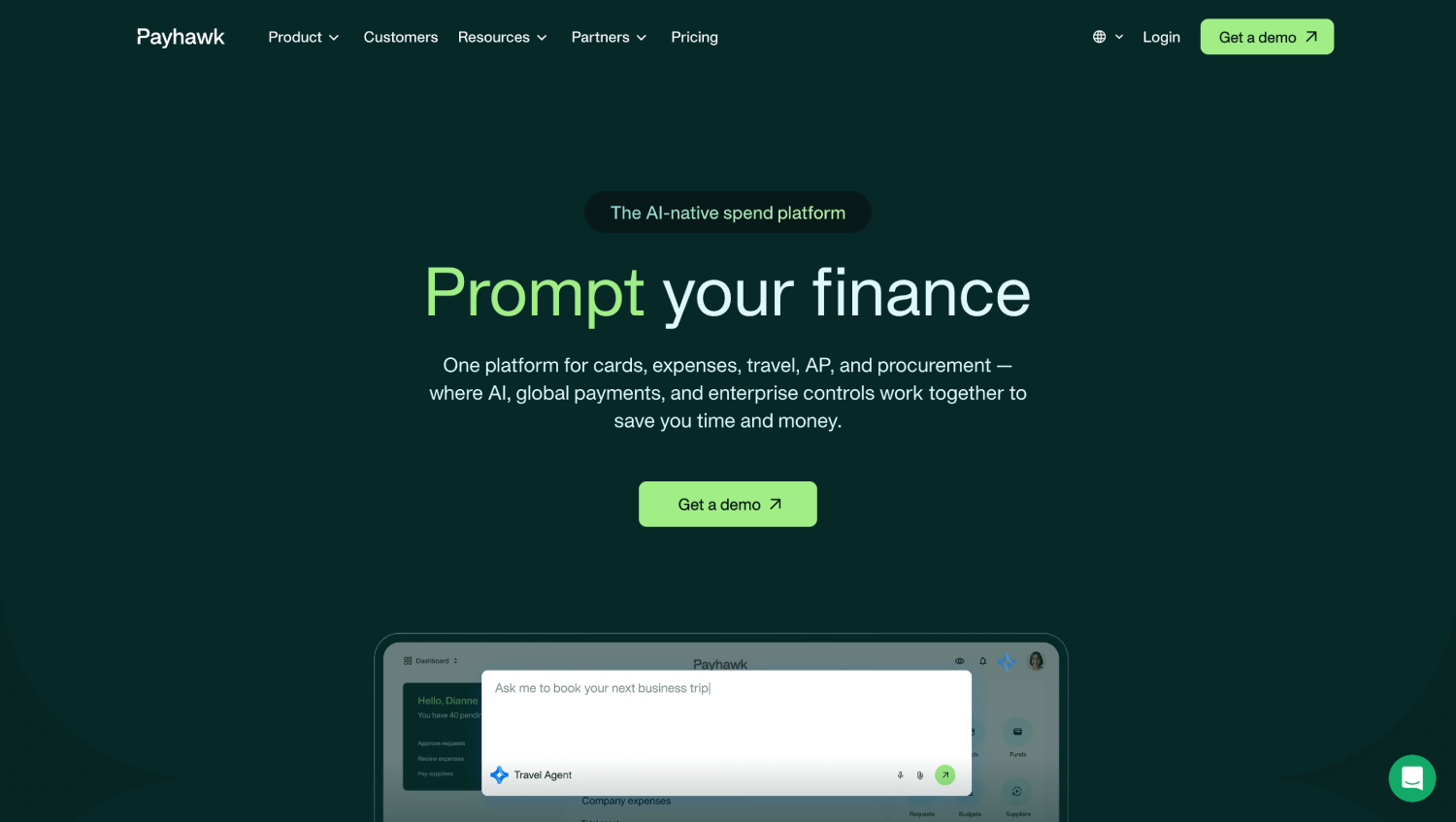
Payhawk is built for multi-entity European and UK companies but has expanded meaningfully into the US market. It issues Visa cards in the EU and UK, handles multi-currency expense reimbursements, and has one of the deeper NetSuite integrations in this category. Finance teams that need subsidiary-level budget tracking with automated coding to cost centers and projects consistently rate Payhawk above Ramp on ERP depth. Pricing is not publicly disclosed and varies by company size.
Pleo

Pleo is a European spend management platform with card issuance across the UK and EU. Canadian companies that are subsidiaries of a European parent can use Pleo for the European side of their operation. For purely Canadian-incorporated companies without a European parent, Pleo is not a practical fit. It covers expense management, vendor invoices, and reimbursements in one interface, which appeals to teams tired of managing separate tools.
Which Ramp Competitor Has the Best Rewards for SaaS Spend?
Brex
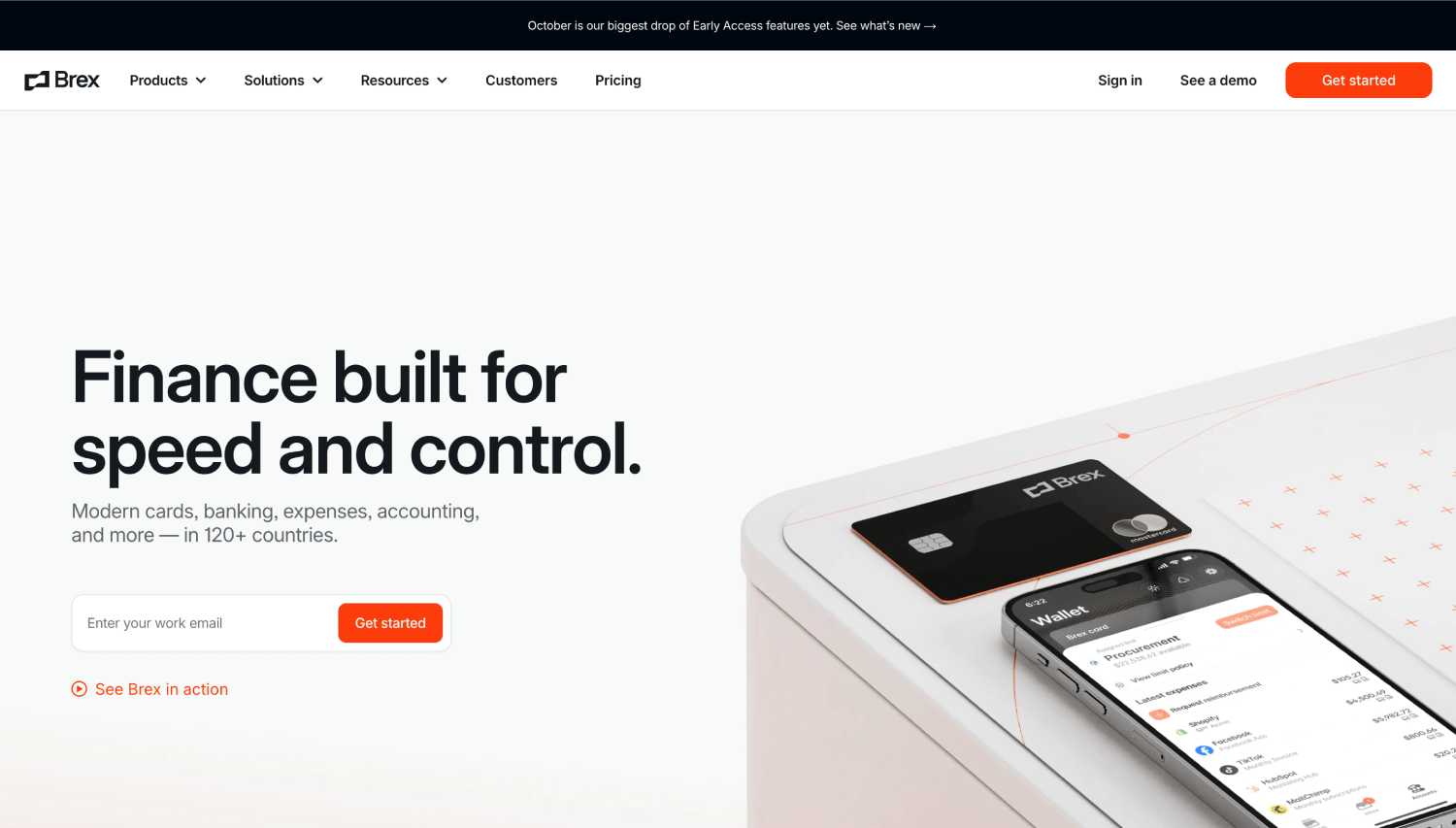
Brex offers the most differentiated rewards structure for SaaS companies among spend management platforms. Its rewards program gives elevated points on software, recurring SaaS subscriptions, and travel booked through Brex Travel, which is the spend profile of most SaaS finance teams. Points can be redeemed for statement credits, travel, or transferred to airline and hotel partners. Brex also issues cards outside the US, including Canada, which makes it one of the few platforms that solves both the rewards and global entity problems simultaneously.
According to Brex’s pricing page, Brex has three tiers: Essentials (free), Premium ($12/user/month), and Enterprise (custom pricing). The platform’s spend controls, policy engine, and accounting integrations are competitive with Ramp. The main knock is that enterprise features and dedicated support sit behind the paid plans.
Mercury

Mercury is primarily a business bank account that has added corporate cards and spend management. Its IO Visa card offers cashback, and for early-stage SaaS companies that want a single banking and spending platform without paying a platform fee, Mercury is a clean option. The spend management features are less mature than Ramp, Brex, or Airbase, but for a seed-stage company where simplicity matters more than approval workflows, Mercury is often the right default. Pricing for Mercury’s core accounts is publicly free, with revenue generated on interchange and banking products.
Which Ramp Alternative Has the Deepest ERP Integration?
Airbase (Maxio Spend)
Airbase, now part of Maxio, built its product around the needs of mid-market finance teams running formal month-end closes. It covers corporate cards, bill pay, expense reimbursements, and purchase order workflows in one platform. The accounting layer syncs to NetSuite at a level of granularity that Ramp does not match out of the box: subsidiary mapping, intercompany transaction handling, and multi-dimensional coding across departments, locations, and classes.
For a Series B or Series C SaaS company where the VP Finance runs a two-week close and needs every card transaction coded correctly before books are locked, Airbase reduces the manual reconciliation work that Ramp’s lighter integration creates. The trade-off is a heavier implementation. Getting Airbase fully configured with NetSuite takes weeks, not days. Pricing is not published and requires a sales conversation.
Teampay
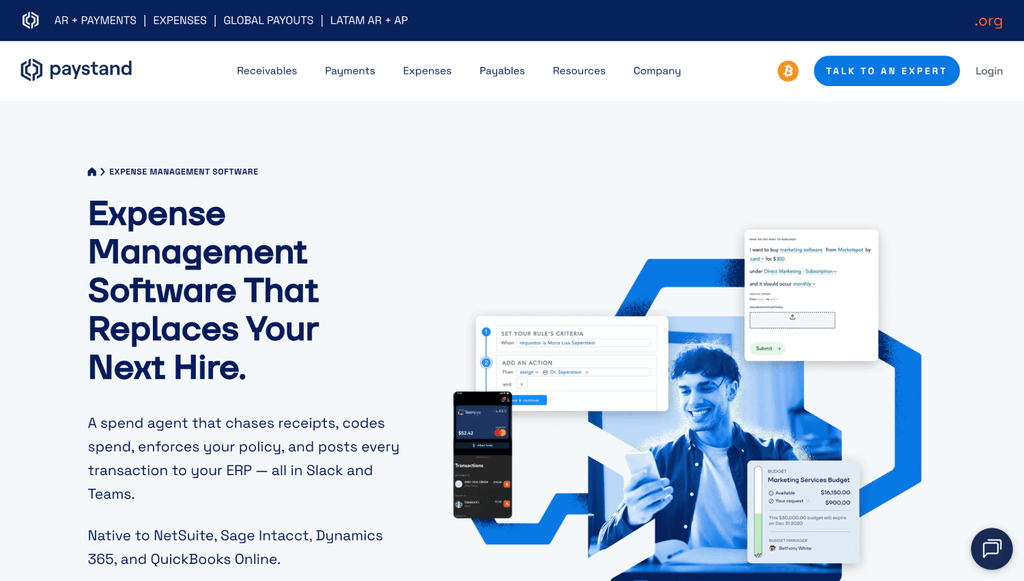
Teampay (acquired by paystand) focuses on procurement-led spend management, meaning it is designed around the idea that spend should be requested and approved before a card is used, rather than categorized after the fact. For finance teams that want to enforce budget gates at the point of request, Teampay’s approval workflow engine is more granular than Ramp’s. It integrates with NetSuite and Sage Intacct, which matters for the finance teams most frustrated by Ramp’s integration limits. Pricing is not publicly disclosed.
Which Platform Is Best for SaaS Teams With Heavy Travel Spend?
Navan
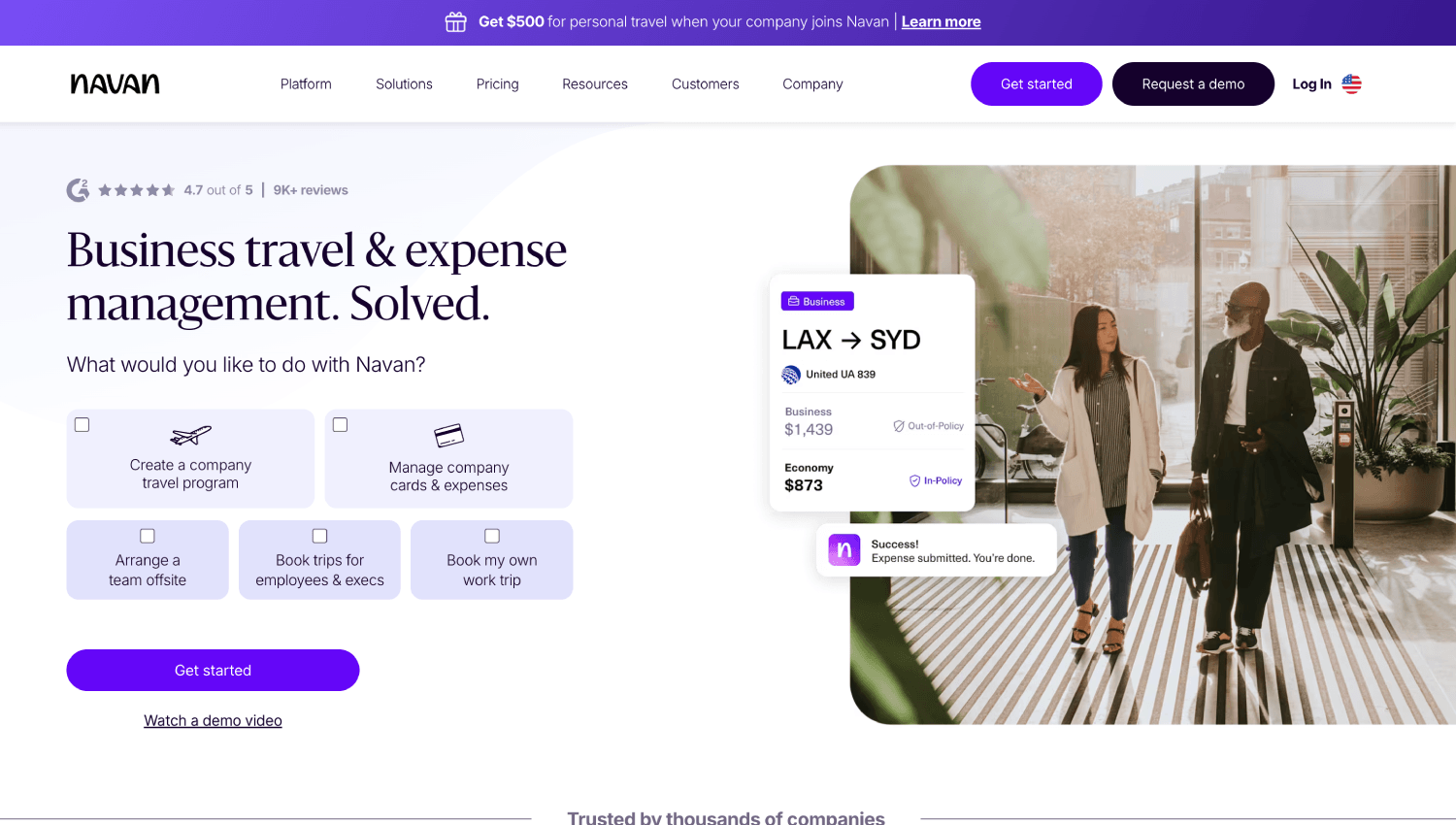
Navan (formerly TripActions) combines a corporate travel booking tool with expense management and corporate cards in one platform. For a SaaS company whose sales and customer success teams book significant travel, Navan eliminates the reconciliation step between a travel booking tool and a spend platform. Policy enforcement happens at booking, not after the receipt, which reduces out-of-policy spend before it happens rather than flagging it in review. Ramp does not have a native travel booking product, so teams using Ramp alongside TravelPerk or Egencia are running two tools where Navan runs one. Navan’s pricing is quote-based.
Spendesk

Spendesk is a European spend management platform that covers corporate cards, virtual cards, reimbursements, and invoice management. It is primarily built for European markets, with card issuance across France, Germany, and the UK. For a US-headquartered SaaS company with a European go-to-market team that needs local card issuance and euro-denominated expense workflows, Spendesk is a practical choice. Its travel expense features are built into the platform rather than bolted on. Pricing is not publicly disclosed.
What Are the Best Ramp Alternatives for Canadian SaaS Companies?
This is the most under-served segment in the spend management category. Ramp does not issue cards for Canadian-incorporated entities, and most US-centric competitors have the same limitation. The practical options for Canadian SaaS companies are narrower than the marketing suggests.
Airwallex is the most complete option for a Canadian company. It issues Canadian-dollar Visa cards, holds CAD balances, and handles cross-border payments to USD vendors without the FX friction of running everything through a US bank. Brex is available to Canadian companies that have or establish a US entity, which many venture-backed Canadian SaaS companies do. For a purely Canadian-incorporated company with no US entity, Airwallex is the most functional replacement for what Ramp offers US teams.
Pleo has expanded into Canada, though the product depth there lags their European markets. Founders evaluating Pleo for a Canadian operation should confirm current availability and feature coverage directly with Pleo before committing to a demo process. The best multi-entity expense management platforms coverage on FintechSpecs includes additional options for teams managing entities across multiple jurisdictions.
Full Comparison: 9 Ramp Alternatives Across Key Dimensions
| Platform | Card Issuance Outside US | ERP Depth | Rewards | Travel Booking | Best For |
|---|---|---|---|---|---|
| Brex | Yes (incl. Canada) | Strong | High (SaaS-optimized) | Via Brex Travel | VC-backed startups, global entities |
| Airbase (Maxio) | Limited | Deepest | Moderate | No | Mid-market with complex close |
| Mercury | No | Basic | Cashback | No | Seed/early-stage, single US entity |
| Airwallex | Yes (many markets) | Moderate | Low | No | Multi-currency, non-US entities |
| Payhawk | Yes (EU, UK, US) | Strong (NetSuite) | Low | No | European-US multi-entity |
| Spendesk | Yes (EU, UK) | Moderate | Low | Partial | European go-to-market teams |
| Navan | Yes | Moderate | Moderate | Yes (native) | High travel-spend companies |
| Teampay | Limited | Strong | Low | No | Procurement-led spend control |
| Pleo | Yes (EU, UK, Canada) | Moderate | Low | No | European subsidiaries |
What Does Ramp Pricing Look Like Compared to Alternatives?
Ramp’s core spend management platform is free as of their current public pricing, with revenue generated on interchange. Premium features including advanced controls, custom roles, and dedicated support sit behind paid plans. According to Ramp’s pricing page, the Plus tier is $15 per user per month plus a platform fee based on team size , meaning total cost is not purely per-user and grows with headcount in two ways. Exact current rates should be confirmed at ramp.com/pricing as pricing tiers are subject to change.
Most alternatives in this list do not publish per-seat pricing publicly. According to Brex’s pricing page, Brex offers three tiers: Essentials (free), Premium ($12/user/month), and Enterprise (custom pricing). Mercury is free for core accounts. Airbase, Payhawk, Spendesk, Navan, Teampay, and Pleo all operate on quote-based pricing that scales with headcount and feature usage. The practical implication is that comparing total cost across platforms requires running a formal RFP or at minimum a pricing call with each vendor. For teams thinking through how to structure vendor evaluation, the fintech vendor evaluation framework on FintechSpecs covers the right questions to ask before signing a contract.
One cost factor that rarely appears in headline pricing: implementation time. Platforms with deeper ERP integrations cost more in internal finance team hours to configure. A company switching from Ramp to Airbase should budget for a multi-week implementation project, not a same-week cutover.
How Do You Migrate Off Ramp Without Disrupting the Close?
The migration risk is not technical. It is the gap period where employees have cards on both platforms, some transactions land in Ramp, some in the new system, and the month-end close requires pulling from two sources. Finance teams that manage this well do two things: they run a parallel period of two to four weeks with both platforms active before fully cutting over, and they communicate card cutover dates to every budget owner in advance so no one charges a business expense to a disabled card.
Vendor setup in the new platform takes the most time, particularly if you are migrating bill pay and reimbursements as well as cards. If you are running bill pay through Ramp, audit your vendor list before migration. Some vendors have ACH details saved in Ramp that will need to be re-entered in the new platform. This is grunt work, but skipping it creates payment failures during the cutover window. The accounts payable automation tools guide covers platforms that can handle vendor payments independently if you want to separate cards from bill pay entirely.
Frequently Asked Questions
Is there a Ramp alternative that works for Canadian companies?
Airwallex is the most complete option for Canadian-incorporated companies, offering CAD-denominated Visa cards and multi-currency account management. Brex is available to Canadian companies that hold or create a US legal entity, which many venture-backed Canadian SaaS companies already have. Pleo has expanded into Canada but product depth there lags its European markets. For purely Canadian entities with no US presence, Airwallex is the practical choice.
Does Brex replace Ramp for multi-entity SaaS companies?
Brex handles multi-entity structures better than Ramp for companies with international subsidiaries, including Canadian entities. It issues physical and virtual cards in more countries, and its accounting integration supports subsidiary-level coding. For companies with US-only entities, the feature delta between Brex and Ramp is smaller and the decision comes down to rewards structure and ERP preference more than entity support.
What is the best Ramp alternative for companies on NetSuite?
Airbase has the deepest NetSuite integration in this category, covering subsidiary mapping, intercompany transactions, and multi-dimensional coding that Ramp does not match natively. Payhawk and Teampay both offer strong NetSuite integrations as well. If your finance team runs a formal two-week close in NetSuite and finds itself manually correcting Ramp exports, Airbase is worth a demo before any other alternative.
Is Mercury a real Ramp competitor for spend management?
Mercury competes with Ramp at the early-stage end of the market, where a company wants a free platform that combines a business bank account with basic card controls and cashback rewards. Mercury’s spend management features, including approval workflows and ERP integrations, are less mature than Ramp’s. For a seed-stage company that values simplicity and a single banking relationship over advanced spend controls, Mercury is a genuine alternative. For Series B and beyond, it is not the right replacement.
What should I ask Ramp alternatives before switching?
Ask five things: whether the platform issues local-currency cards in every country where you have employees; which ERP versions are natively supported and what sync frequency looks like; what happens to your historical transaction data during migration; whether bill pay and reimbursements are included in the base price or add-on costs; and what the implementation timeline looks like for a company your size. The answers narrow the field faster than any feature checklist.
Does Navan replace Ramp entirely or just add travel?
Navan covers corporate cards, expense reimbursements, and travel booking in one platform, so it can replace Ramp entirely for companies where travel is a significant spend category. For companies with minimal travel, Navan’s travel booking layer is unnecessary overhead. The platform’s expense management and card controls are competitive with Ramp’s, but the differentiation is the pre-trip policy enforcement: spend limits and approved vendors are set at booking time, which reduces out-of-policy spend before it happens rather than flagging it in review.
Are there Ramp alternatives that also handle accounts payable?
Airbase covers cards, reimbursements, and accounts payable in one platform, which is one reason it appeals to finance teams that want to consolidate tools. Spendesk includes invoice management alongside cards and reimbursements. Navan does not cover AP. For teams that want AP automation alongside card spend in a single platform, Airbase is the most complete option in this list. Standalone AP automation tools are covered separately in the AP automation software comparison.
The Spend Platform Decision Comes Down to Two Constraints, Not Nine Features
After comparing nine platforms, the real decision tree is short. If your company has entities outside the US, start with Airwallex and Brex and ignore the rest until those two are ruled out. If your company is US-only and your primary complaint is ERP depth, look at Airbase first. Everything else in this list solves a more specific problem: travel volume, European market teams, or procurement-led spend control.
The second constraint is integration complexity. Platforms with deeper ERP integration take longer to implement and cost more in finance team time during setup. A company that is six weeks from a board meeting should not start an Airbase migration. A company planning for the next fiscal year should run the evaluation now. That sequencing is not obvious but it matters: the value of a tighter close process compounds over time, but the pain of a botched migration hits in the month you switch. For teams building out their broader fintech operations stack, the tools fintech ops teams actually use daily covers the adjacent infrastructure that spend platforms plug into.
Ramp earned its position by being genuinely good for a specific company profile. It is still the right call for a US-only, early-to-mid-stage company with a simple close process and light travel. The moment any of those conditions change, the platform’s edge narrows. The nine alternatives here exist because that profile describes fewer companies every year, not more.










9 Best AI Month-End Close Tools for Accounting Teams