
TLDR
- Wise Business is not always the cheapest option once you factor in currency conversion fees, card spending abroad, and the absence of a US checking account with ACH rails.
- Airwallex, Revolut Business, and Mercury beat Wise on card programs, accounting integrations, or specific payment corridors for US-headquartered companies.
- The right alternative depends on one of three primary needs: lowest FX cost, best card and expense controls, or deepest accounting and ERP integration.
- Several competitors listed here offer FDIC-insured USD balances, which Wise Business does not provide directly.
- Free or no-minimum accounts exist across most alternatives, so switching cost is low enough to run a parallel test before fully migrating.
The best Wise Business alternatives for US companies are Airwallex, Revolut Business, Mercury, Relay, Payoneer, OFX, Brex, Deel, and WorldFirst. Each wins in a specific scenario: Airwallex leads on FX rates and card controls for high-volume senders, Revolut Business on card perks and global ATM access, Mercury on FDIC-insured banking with no monthly fees, and Relay on multi-account treasury management for small businesses managing multiple revenue streams.
Why Are US Companies Reconsidering Wise Business?
Wise Business earns its reputation on transparent mid-market exchange rates and low transfer fees. For a US company sending occasional international payments, it delivers. The friction shows up when volume increases, when teams need corporate cards with controls, or when the finance stack requires deep QuickBooks or NetSuite sync.
According to Wise’s official pricing page, spending with the Wise Multi-Currency Card in a currency you hold as a balance is listed as “Free.” Wise does charge fees for ATM withdrawals above certain monthly thresholds, but that is specifically an ATM fee, not a general card spending fee. Where fees do apply is on currency conversion: when you spend in a currency you do not hold, Wise converts at a disclosed rate. The deposit protection question is separate: Wise Business’s pricing page does not address FDIC insurance or deposit protection status for US customers, and that detail requires verification through Wise’s regulatory disclosures rather than its pricing documentation.
Three scenarios reliably push companies to look for alternatives to Wise. First, outbound payment volume at a scale where even small FX margin differences translate to real dollars, the exact threshold varies by corridor and fee structure, so the clearest test is to run your actual three-month transfer history through both providers’ fee calculators. Second, teams that need physical and virtual cards with per-card limits, merchant category controls, and receipt capture. Third, finance teams running month-end close who need automatic reconciliation with their accounting software, not a CSV export.
The FintechSpecs Multi-Currency Switch Test: How We Evaluated Each Alternative
To build this list, we applied what we call the FintechSpecs Multi-Currency Switch Test, a four-part evaluation framework designed specifically for US companies already comfortable with Wise Business and looking for a direct replacement or meaningful upgrade.
The four checks are: (1) FX transparency, meaning whether the provider publicly discloses its exchange rate markup over the mid-market rate; (2) US banking rails, meaning ACH, wire, and whether USD balances are FDIC-insured; (3) card program depth, meaning whether virtual and physical cards exist with spend controls and real-time notifications; and (4) accounting integration quality, meaning whether the sync is native or requires a third-party connector. A provider that fails two or more checks does not make this list.
Which Wise Business Alternative Is Best for Each Use Case?
| Provider | Best For | FX Markup | FDIC-Insured USD | Corporate Cards | Free Plan |
|---|---|---|---|---|---|
| Airwallex | High-volume FX and card programs | 0.5% to 1% (publicly stated) | Yes (via partner banks) | Yes, virtual and physical | Yes |
| Revolut Business | Card perks and global ATM access | 0% on weekdays (plan limits apply) | No (e-money institution) | Yes, with spend controls | Yes (limited) |
| Mercury | US startups needing FDIC banking plus wires | Not a core FX product | Yes, up to $5M (via sweep; verify current limit with Mercury directly) | Yes, debit and credit | Yes |
| Relay | Multi-account treasury for small businesses | Not a core FX product | Yes, up to $3M (via sweep; verify current limit with Relay directly) | Yes, debit | Yes |
| Payoneer | Freelancers and marketplace sellers | Varies by corridor | No | Yes, prepaid | Yes (annual fee applies) |
| OFX | Large, infrequent FX transfers | Not publicly disclosed; negotiable | No | No | No fee on transfers |
| Brex | Venture-backed startups needing spend management | Not a core FX product | Yes (via partner banks) | Yes, credit and virtual | Yes (Starter plan) |
| Deel | Companies paying international contractors or employees | Varies; built into payroll pricing | No | Deel Card (prepaid) | No (Deel HR free, payroll priced per contractor) |
| WorldFirst | US importers and exporters with Asia corridors | Not publicly disclosed; often low for large transfers | No | No | No fee on transfers |
1. Airwallex: The Strongest All-Around Wise Business Competitor for US Companies
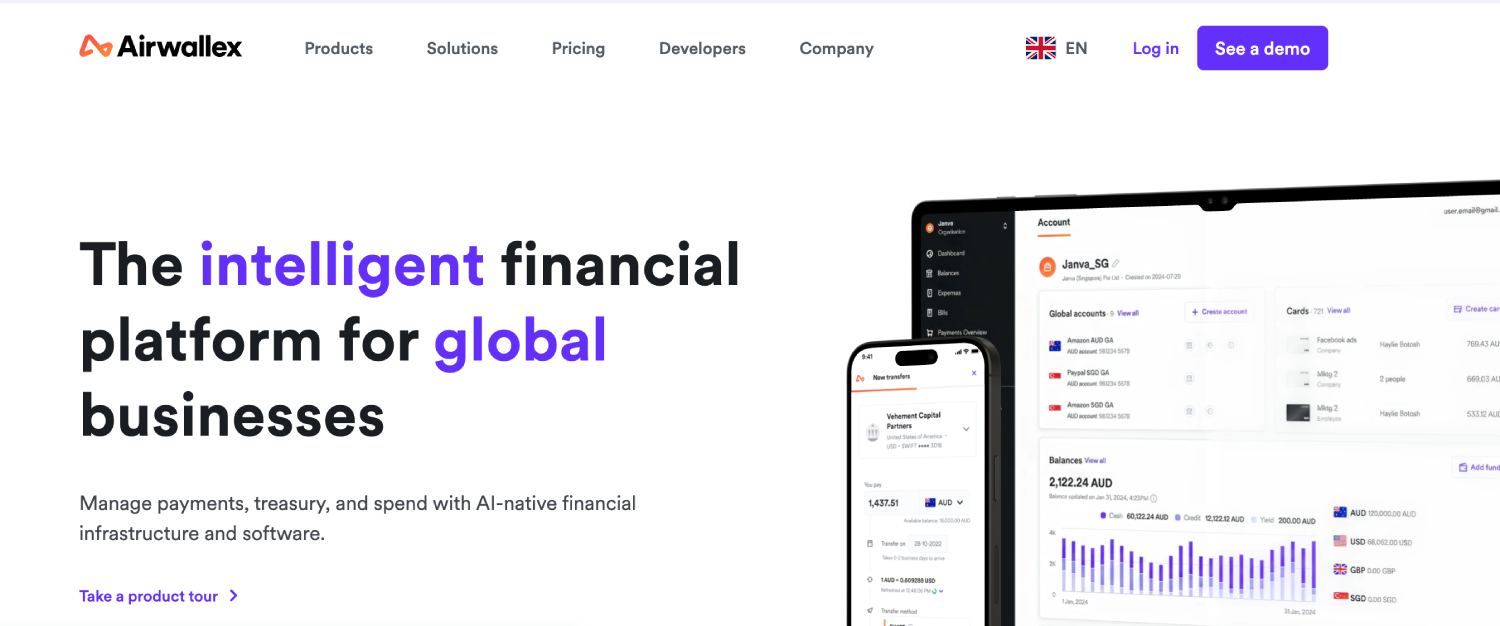
Airwallex is the alternative most likely to replicate the full Wise Business experience while outperforming it on card controls and FX rates at volume. The company publicly states an FX markup of 0.5% to 1% over the mid-market rate, which is competitive with Wise for most corridors and often lower for high-volume accounts.
US companies get a business account with ACH and wire capabilities, local account details in multiple currencies, and both virtual and physical Visa cards with per-card spend limits and real-time controls. The accounting sync covers QuickBooks Online, Xero, and NetSuite natively, which matters for finance teams running month-end close without manual imports.
The one honest trade-off: Airwallex’s onboarding takes longer than Wise’s. Expect one to three business days for verification versus Wise’s near-instant flow. For a detailed side-by-side of these two platforms, see Airwallex vs Wise: The Better Multi-Currency Account for US Companies Going Global.
2. Revolut Business: Best for Card-Heavy Teams Operating Globally
Revolut Business is the right pick for teams where the card program matters as much as the transfer capability. On weekday transfers, Revolut uses the interbank exchange rate with no markup up to plan limits, which beats Wise’s conversion fee on most pairs. Weekend rates include a small surcharge, disclosed in advance.
The card program is deeper than most alternatives at this price point. Teams get unlimited virtual cards, per-card spend limits, merchant category controls, and instant freeze capability. Physical cards work globally with low foreign transaction fees on paid plans.
The important caveat for US businesses: Revolut Business operates as an e-money institution in the US, not a chartered bank, so USD balances are not FDIC-insured. As of November 2026, Revolut Business offers a free plan with limited monthly free transfers, plus paid plans (Grow, Scale, Enterprise) on its public pricing page. Companies holding significant idle balances should factor in the absence of deposit protection.
3. Mercury: Best for US Startups Who Want Real Banking Plus Wires
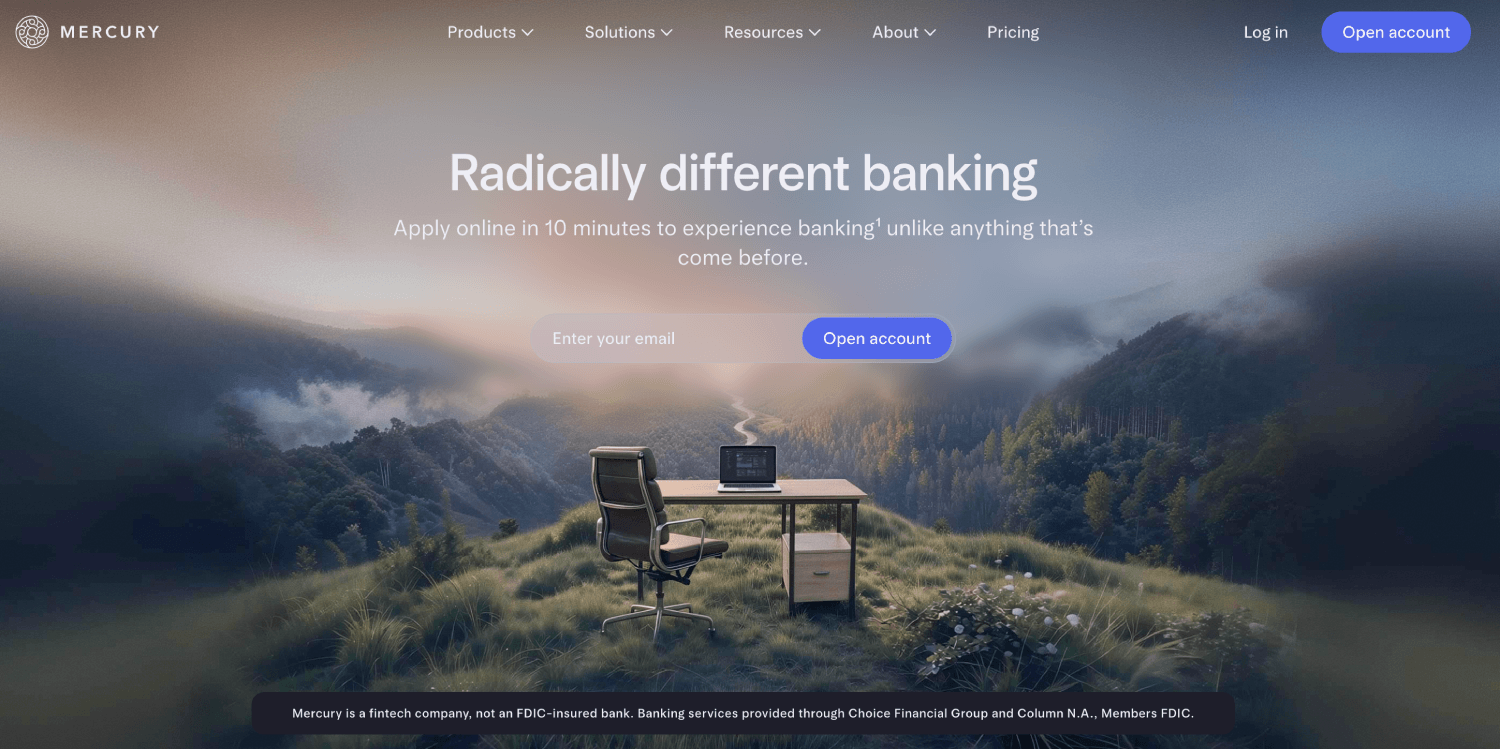
Mercury occupies a different position than the others on this list. It is a US business banking product first, with international wire capability added, rather than a multi-currency account with banking features bolted on. That distinction matters for seed-to-Series B companies who need a primary operating account with FDIC coverage, not just a payment tool.
Mercury offers FDIC insurance through its sweep network, up to $5 million according to Mercury’s public claims, though you should confirm the current limit directly with Mercury before relying on that figure, along with ACH and domestic wires with no monthly fees, and international wires. The debit card and recently introduced credit card round out the spend side. Where Mercury falls short versus Wise is in holding foreign currency balances: Mercury is fundamentally a USD account with international sending, not a true multi-currency wallet.
For teams building out their full finance stack, Mercury pairs well with a dedicated FX tool. For the company whose main pain with Wise is the absence of FDIC insurance and ACH rails rather than FX rates, Mercury is the cleaner answer. If you are evaluating US business accounts more broadly, the top US business bank accounts for startups breakdown covers Mercury alongside its direct competitors.
4. Relay: Best for Small Business Owners Managing Multiple Revenue Streams

Relay serves a specific slice of the Wise Business audience: small business owners and operators who want to run 20 separate checking accounts for envelope budgeting, with debit cards per account and clean bookkeeper access. It is not a multi-currency FX product; it is a US banking platform with strong multi-account architecture.
As of November 2026, Relay offers FDIC coverage through its sweep program, up to $3 million according to Relay’s public claims, though confirm the current limit directly with Relay, no monthly fees on the base plan, and direct integrations with QuickBooks and Xero. International wires are available. The audience is a small business owner replacing Wise because they want better cash flow visibility across accounts, not because they are sending high FX volume.
5. Payoneer: Best for Freelancers and Marketplace Sellers Receiving International Payments
Payoneer is the oldest name on this list and still the most used among individual contractors and marketplace sellers receiving payments from Amazon, Upwork, Airbnb, and similar platforms. Its core product is receiving USD, EUR, GBP, JPY, CAD, and AUD into local account details, then withdrawing to a local bank or spending on the Payoneer prepaid Mastercard.
For US companies trying to pay a global contractor base, Payoneer’s mass payout product competes with Wise Business’s batch transfer capability. Fees vary by corridor and payment method. Payoneer charges an annual account fee; exact current pricing and fee schedules are published on Payoneer’s fees page. The platform is not a good fit for companies that need a corporate card program with spend controls or accounting software integrations at any meaningful depth.
6. OFX: Best for Large, Infrequent International Transfers
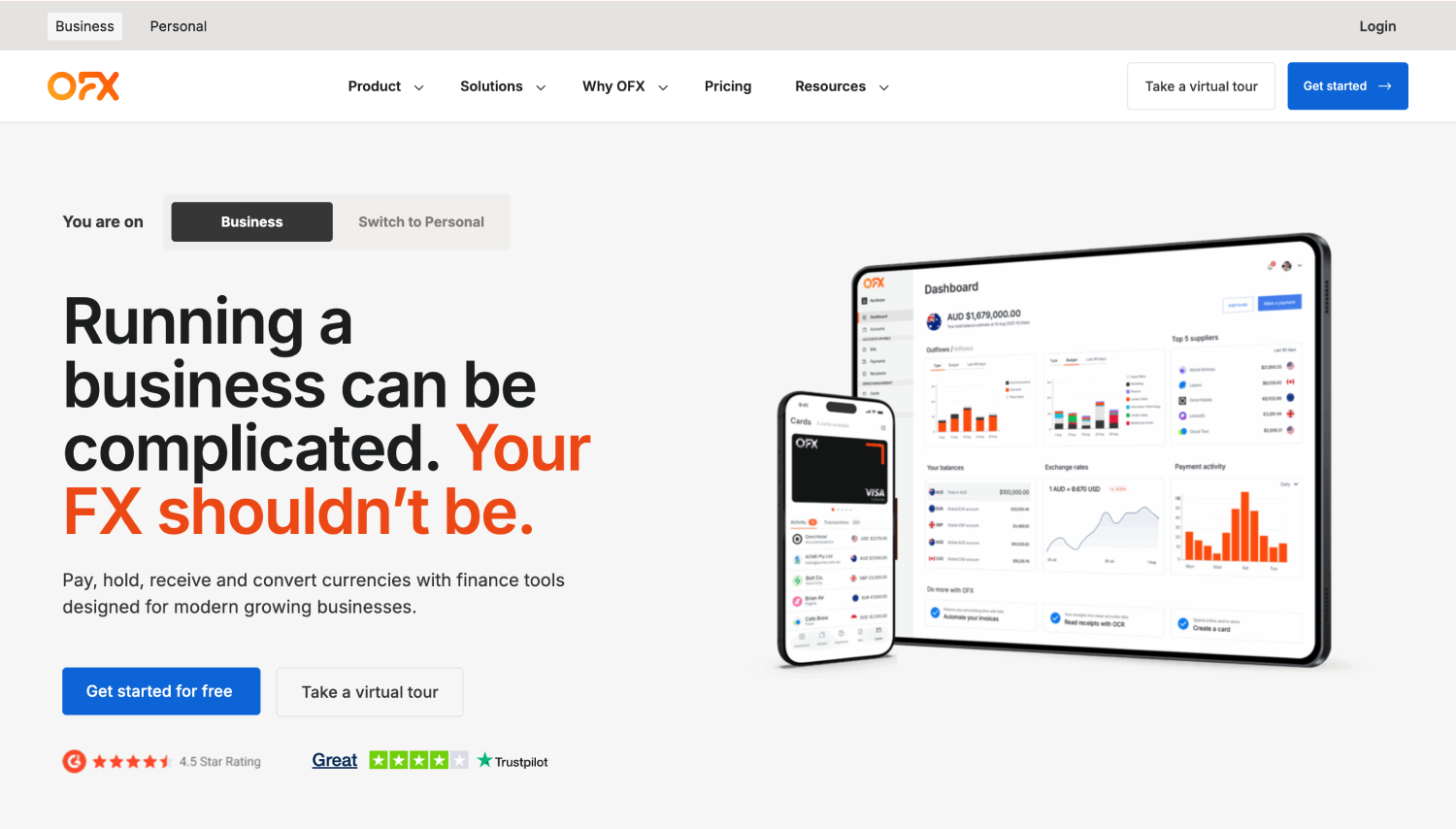
OFX does not try to be a business account. It is a currency transfer specialist built for companies moving large amounts occasionally, where a phone call with a dealer and a negotiated rate beats any app-based product on price. OFX does not publicly disclose its FX markup, but for transfers above $10,000, the effective rate is competitive in corridors where Wise’s percentage-based fee becomes expensive in dollar terms.
There are no transfer fees as of November 2026. The trade-off is a less modern UX and no card product. For a company wiring $200,000 to pay a European supplier quarterly, OFX is worth quoting alongside Wise. For daily operational payments, it is the wrong tool.
7. Brex: Best for Venture-Backed Startups Who Need Spend Management and International Wires
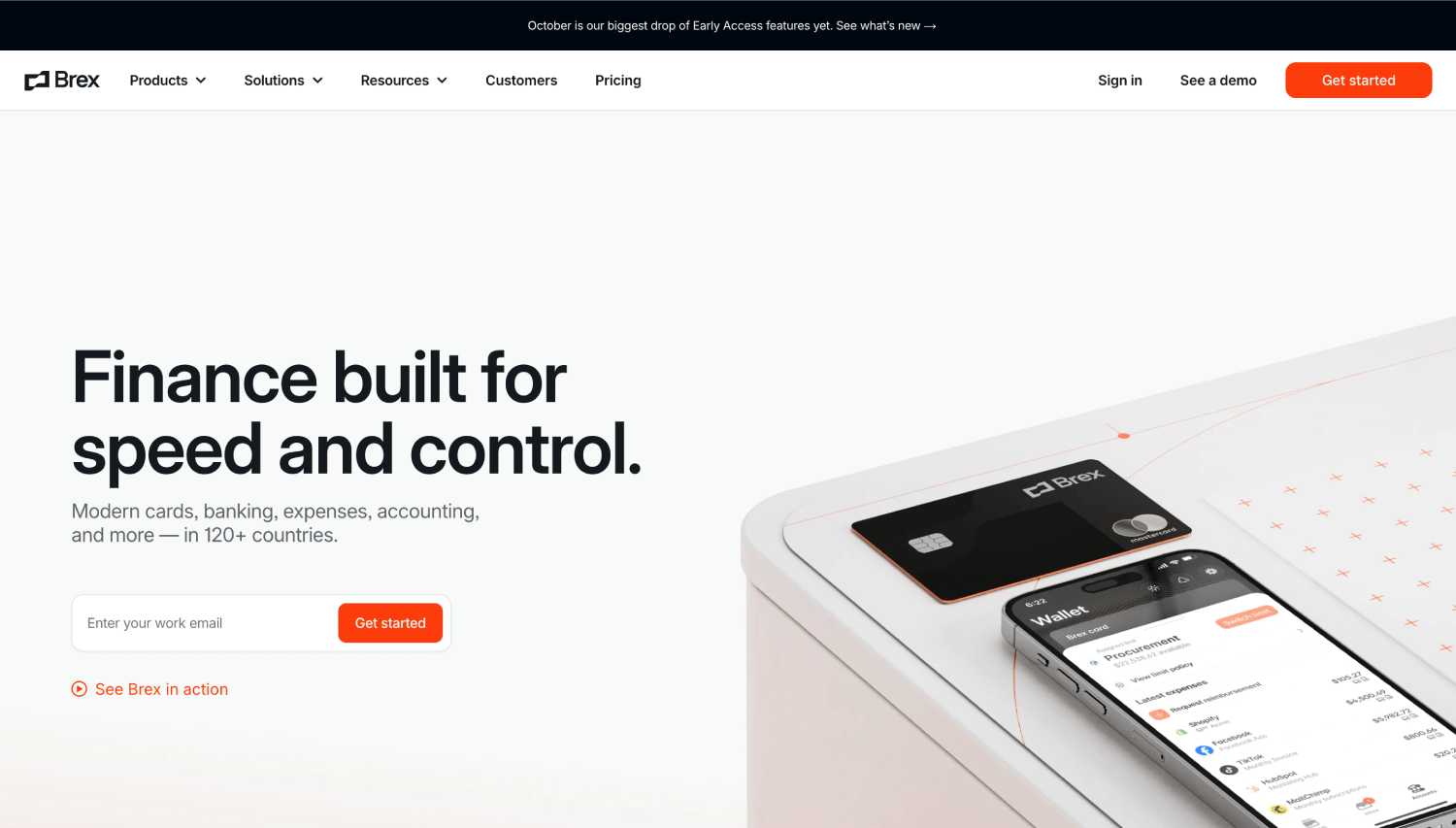
Brex is a spend management platform with international wire capability, not a pure FX or multi-currency account. What it offers that Wise Business does not is a full corporate card program with real-time controls, expense policy enforcement, receipt matching, and direct sync to NetSuite, Sage Intacct, and QuickBooks.
US startups at seed through Series C use Brex as their primary financial hub. The card product runs on credit lines tied to the company’s balance, not personal guarantees, which matters for teams that have burned through the novelty of debit-based spend tools. International wire fees apply; as of November 2026, Brex’s public pricing page shows plan-based access to international wires. The FX rate is not Brex’s headline feature, so companies with high FX volume should pair Brex with a dedicated FX tool.
The Ramp vs Brex vs Airbase spend platform comparison goes deeper on where Brex wins and where it falls short versus its direct competitors.
8. Deel: Best for US Companies Paying Global Contractors or Employees
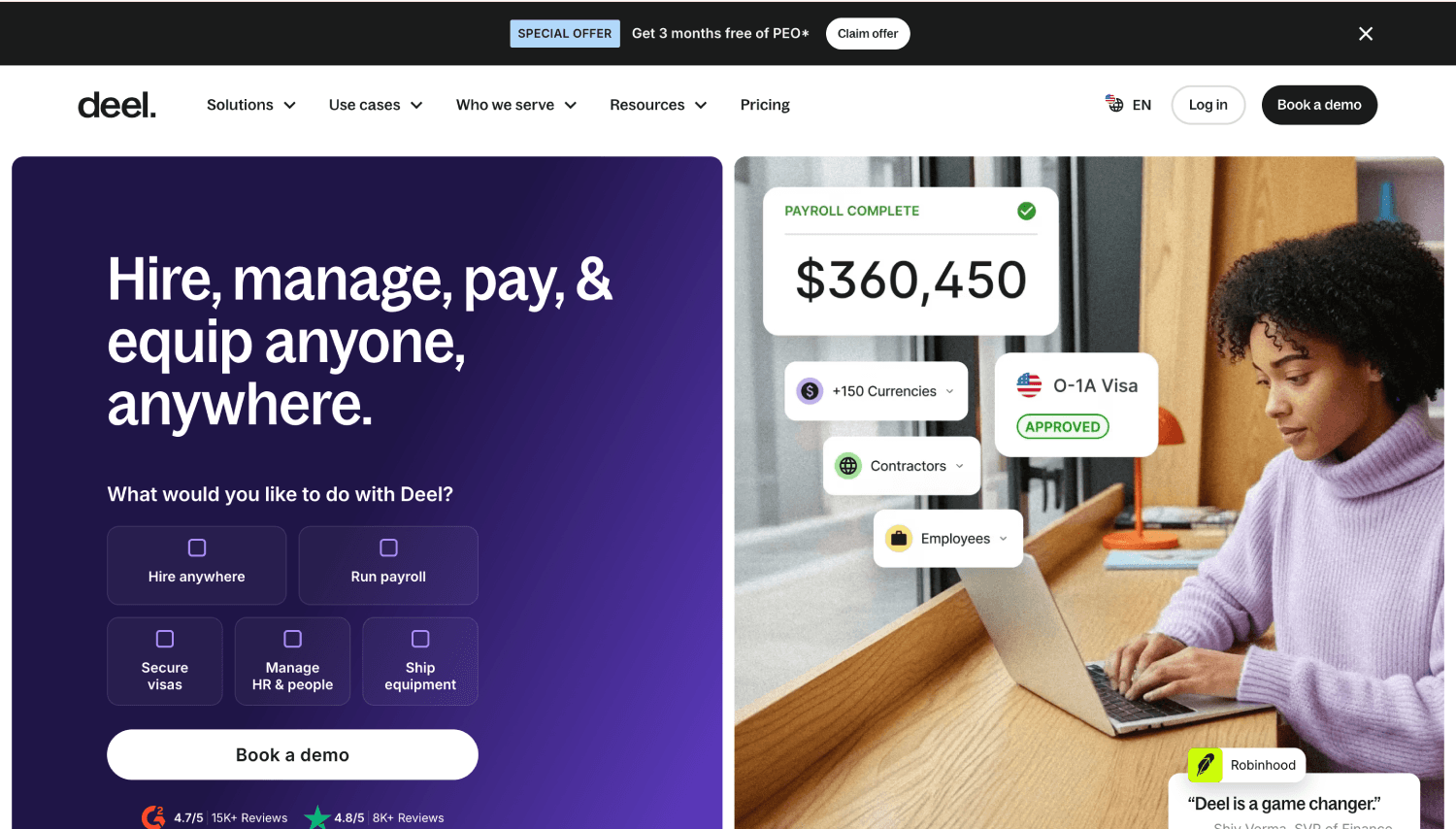
Deel is on this list because a large share of companies using Wise Business are doing so primarily to pay international contractors. Deel solves that problem end to end: compliance, contracts, local payment methods, and tax documents, bundled into a per-contractor monthly fee.
As of November 2026, Deel charges per active contractor per month on its public pricing page (amounts vary by plan and country). That is a different cost model than Wise’s per-transfer fee, and for companies running 10 or more regular contractor payments, Deel’s all-in pricing often wins on total cost when you include the compliance overhead that Wise does not cover. The Deel Card gives contractors a prepaid card to access their earnings. Deel is not a general business account and should not replace your primary banking relationship.
9. WorldFirst: Best for US Importers and Exporters With Asia-Pacific Corridors
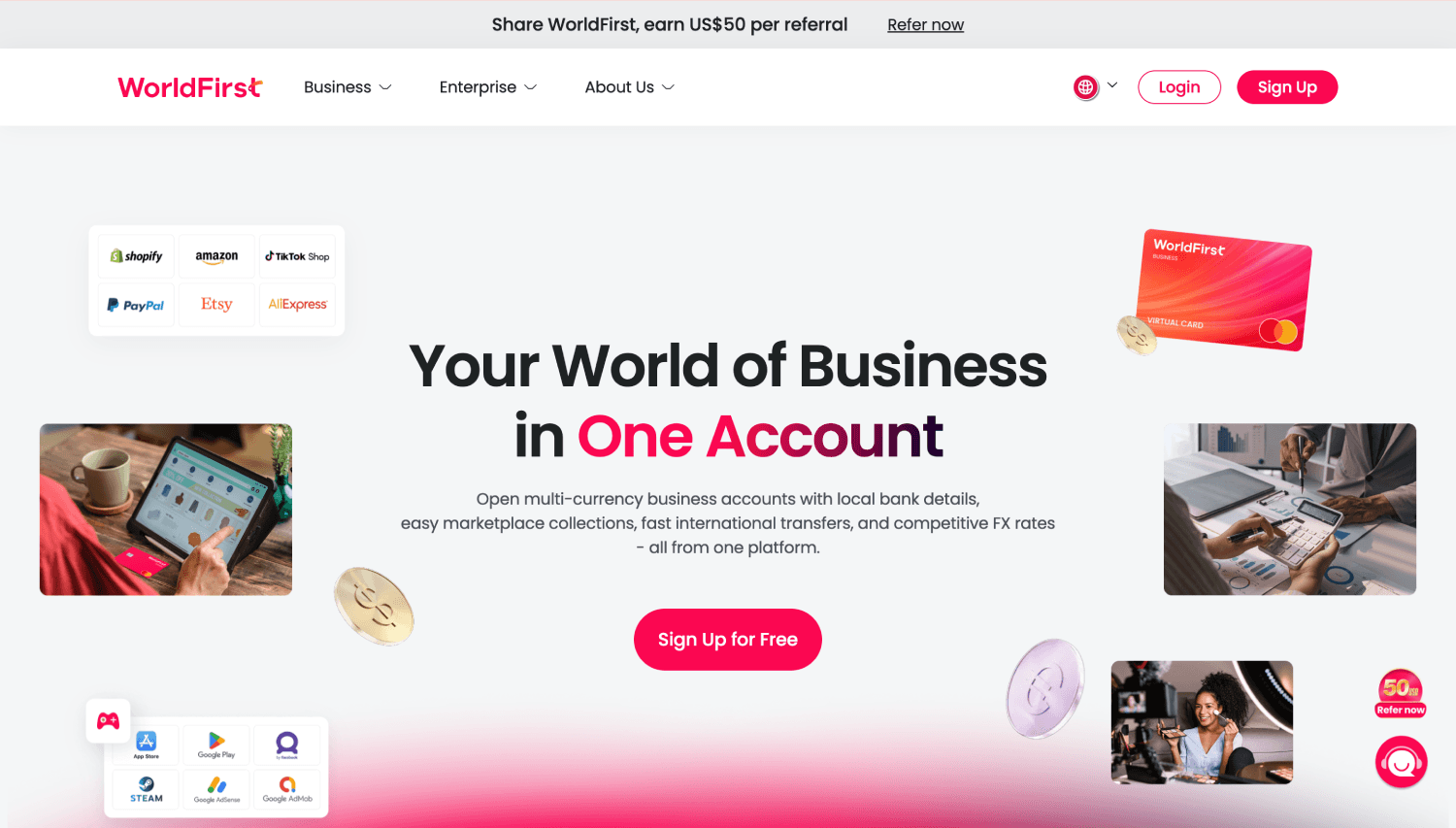
WorldFirst (owned by Ant Group) has quietly built one of the stronger Asia-Pacific corridor networks for US businesses. If your payment volume runs heavily through CNH, JPY, KRW, or AUD, WorldFirst’s local network often yields better rates and faster settlement than Wise’s correspondent banking approach for those corridors.
US companies get local currency account details in multiple markets, batch payment capability, and no transfer fees as of November 2026. The accounting integration is lighter than Airwallex’s. WorldFirst suits importers paying Asian suppliers or e-commerce sellers with heavy Asia-Pacific supplier bases more than it suits SaaS teams paying European freelancers.
For a direct comparison of WorldFirst and Airwallex on cross-border SaaS payouts, see WorldFirst vs Airwallex for Cross-Border SaaS Payouts.
How Do Cross-Border Payout Fees Compare Across These Wise Alternatives?
Fee structures across multi-currency accounts are deliberately hard to compare because providers mix percentage markups, fixed fees, and corridor-specific pricing. The clearest public breakdown of Wise, Airwallex, Nium, and Payoneer fee structures is available in the cross-border payout fees comparison published on FintechSpecs, which breaks down FX markups and per-payout pricing side by side.
As a general guide: Wise’s fee for a USD-to-EUR transfer runs at a disclosed percentage above mid-market, which you can calculate exactly on their fee estimator before sending. Airwallex’s 0.5% to 1% markup is competitive at volume. OFX and WorldFirst do not disclose margins publicly but are negotiable for large transfers. Revolut Business charges 0% markup to plan limits, then a disclosed surcharge.
What Should US Companies Check Before Switching From Wise Business?
Before migrating, run the FintechSpecs Multi-Currency Switch Test against your specific payment mix. Pull three months of Wise transaction history and categorize transfers by corridor, volume, and frequency. Calculate the actual fee paid per corridor, not the advertised rate. Then quote the same corridors at comparable volumes from your top two alternatives.
Check whether your accounting software has a native integration or requires a third-party connector. Native integrations with QuickBooks Online, Xero, or NetSuite reduce reconciliation time substantially. If you are on NetSuite, Airwallex and Brex both offer native sync; Wise’s accounting integration is functional but less deep for multi-entity setups.
Confirm the deposit protection status of any account holding idle USD. Wise Business’s pricing page does not address FDIC insurance or deposit protection status for US customers; verify Wise’s regulatory protections through its separate regulatory disclosures. Mercury, Relay, and Brex all offer FDIC coverage through partner bank networks, though current coverage limits should be confirmed directly with each provider. For companies where idle cash protection is a board-level requirement, that distinction is non-negotiable.
Frequently Asked Questions
Is Airwallex cheaper than Wise Business for US companies sending money abroad?
Airwallex publicly states an FX markup of 0.5% to 1% over the mid-market rate for most corridors. Wise charges a disclosed percentage fee that varies by corridor and payment method; exact figures for specific corridors are available on Wise’s public pricing page. For transfers above $10,000, the effective cost is comparable, but Airwallex often wins on corridors with high Wise fees, particularly in Asia-Pacific. The only way to compare accurately is to run the same transfer amount through both fee calculators on the same day, since mid-market rates shift constantly.
Does Wise Business offer FDIC insurance for US customers?
Wise Business’s pricing page does not address FDIC insurance or deposit protection status for US customers. To understand how Wise holds US customer funds, check Wise’s regulatory disclosures directly. If FDIC coverage is a firm requirement, Mercury, Relay, and Brex are the alternatives on this list that provide it through partner bank or sweep networks, though current coverage limits should be confirmed with each provider before relying on published figures.
Which Wise Business alternative has the best corporate card program?
Revolut Business and Brex lead on card program depth. Revolut Business offers unlimited virtual cards, per-card spend limits, and global ATM access with low fees on paid plans. Brex offers credit-based corporate cards with real-time controls, receipt matching, and deep accounting sync, without requiring personal guarantees. Airwallex’s card program is competitive and pairs better with its multi-currency account for teams that need both FX and card control in one platform.
What is the best Wise Business alternative for paying international contractors?
Deel is the most complete solution if compliance, local contracts, and tax documents matter alongside payment. Payoneer is the better option if contractors already have Payoneer accounts or receive from major marketplace platforms. For pure payment cost, Wise Business often remains competitive for one-off contractor payments. Deel’s all-in monthly fee per contractor typically wins on total cost once compliance overhead is counted for 10 or more regular contractors.
Can US companies hold foreign currency balances in these alternatives?
Airwallex, Revolut Business, Payoneer, and WorldFirst all support multi-currency balance holding, meaning you can receive in GBP, hold it, and send it without converting. Mercury and Relay are fundamentally USD accounts and do not hold foreign currency balances. Brex is similar: it is a USD-centric spending and banking platform with international wire capability, not a multi-currency wallet. If holding foreign currency balances is a core requirement, Airwallex or Revolut Business are the strongest options on this list.
How long does it take to open a Wise Business account alternative?
Mercury and Relay are the fastest, often approving US-registered companies within one business day. Airwallex typically takes one to three business days for verification. Revolut Business is similarly one to three business days. Payoneer and WorldFirst can take several business days depending on document review. Brex requires a US-registered entity and processes applications quickly for companies with a US EIN and incorporation documents ready. None of these match Wise’s near-instant onboarding for simple business structures.
Which alternative is best for a US SaaS company receiving payments from international customers?
Airwallex handles this well, offering local account details in GBP, EUR, AUD, and other currencies so international customers can pay without a cross-border transfer fee. Payoneer also provides local receiving accounts in major currencies. For SaaS companies using a subscription billing platform, the more relevant infrastructure question is usually about merchant of record or payment processor coverage rather than the multi-currency account layer. See the best cross-border payout APIs for US platforms for the API-layer view of this problem.
The Decision Framework: Which Alternative Fits Your Company’s Profile
Most companies switching away from Wise Business fall into one of three profiles. The first is the high-volume sender: a company moving significant international payment volume where FX margin differences compound into real savings at scale. Airwallex or WorldFirst (for Asia-Pacific corridors) are the right starting points. The second is the card-and-compliance team: a company where finance wants spend controls, receipt matching, and accounting sync, and the international transfer is secondary. Brex or Revolut Business fit here. The third is the banking-first startup: a company where FDIC insurance and ACH rails matter more than FX optimization, and international wires are occasional. Mercury or Relay are the natural landing spots.
Finance teams that pick a Wise alternative based on advertised FX rates alone, without mapping those rates to their actual payment mix, tend to find they have optimized for the wrong variable. A company sending four large transfers per year to a European supplier needs OFX or a negotiated rate from WorldFirst, not a full multi-currency account. A company paying 50 contractors in 20 countries monthly needs Deel, not a manual batch transfer tool. Mapping your actual transaction history to the provider’s strength takes 30 minutes and prevents a migration you will redo in 18 months.
For teams building out the broader payments stack alongside their multi-currency account, the best payment infrastructure tools for SaaS founders covers the layer below the account: the APIs, processors, and rails that handle the actual money movement at scale.