
TLDR
- Payoneer charges a 2% fee above the mid-market rate on most currency conversions, plus receiving fees that stack on top , alternatives like Wise Business and Airwallex offer mid-market or near-mid-market FX on the same corridors.
- Wise Business works best for companies receiving payments in a few major currencies; Airwallex wins for teams that need local collection accounts across a dozen countries and want to hold balances in multiple currencies.
- API-first platforms like Nium and Thunes let engineering teams embed cross-border payouts directly into their product, bypassing the Payoneer portal entirely , the right move for platforms disbursing at scale.
- Freelancers in Pakistan, the Philippines, and other high-volume corridors often find that WorldFirst, Wise, or stablecoin-based options beat Payoneer on net received amount per transfer.
- The right replacement depends on three variables: payment direction (receiving vs. sending), corridor concentration (one dominant country vs. global scatter), and whether you need a portal or an API.
The nine best Payoneer alternatives for businesses are Wise Business, Airwallex, WorldFirst, Nium, Thunes, Mercury, Relay, Trolley, and Deel. Each targets a different profile: Wise for cost-sensitive multi-currency receiving, Airwallex for multi-country collection and FX treasury, WorldFirst for trade-focused SMBs, Nium and Thunes for platforms needing payout API infrastructure, Mercury and Relay for US-based teams that want global wires from a business banking interface, and Trolley or Deel for companies paying global contractors at scale.
Why Are Businesses Switching Away from Payoneer?
Payoneer built its reputation on global freelancer payments, and that origin still shapes the product. Receiving fees, FX markups above mid-market, and a portal-first experience made sense when the customer was a solo contractor in 2012. For a Series A company receiving six-figure payments from enterprise clients in Europe and Asia, those same design choices become measurable margin drag.
The core complaint from finance teams is fee stacking. Payoneer’s standard receiving fee for payments from non-Payoneer sources runs at 1% for bank transfers from US clients and up to 3% for card payments, per Payoneer’s public pricing page. Add a currency conversion markup of 2% above mid-market , the figure Payoneer states on its pricing page , and a withdrawal fee to your local bank, and a single cross-border payment can cost 3 to 5% all-in. Wise Business publicly charges no receiving fee on major currency transfers and converts at mid-market with a small transparent fee , the gap is real and computable.
The second driver is infrastructure fit. Payoneer is a portal product. You log in, manage payments through a dashboard, and withdraw to a local bank. That works for a freelancer. It does not work for a marketplace that needs to programmatically trigger payouts to 40,000 sellers in 60 countries via API. For that use case, see our breakdown of the best outbound payment and payout APIs for B2B SaaS.
How to Evaluate a Payoneer Replacement: The FintechSpecs Three-Axis Test
Most comparison articles treat Payoneer alternatives as a flat list ranked by feature count. That approach fails because a freelancer in Karachi and a CFO managing an eight-figure annual payout volume to European vendors have almost nothing in common. Before reaching for a replacement, map your situation across three axes.
Axis 1 , Payment direction: Are you primarily receiving payments from clients, sending payments to contractors or vendors, or both? Wise Business and WorldFirst are optimized for receiving. Trolley, Nium, and Thunes are built for sending at volume. Airwallex handles both but prices them differently.
Axis 2 , Corridor concentration: If 90% of your volume runs through two or three currency pairs, pick a provider with known low-cost infrastructure on those specific corridors. Nium covers 100+ countries but has variable pricing by corridor. Wise has built direct integrations with domestic payment rails in the UK, EU, US, Australia, and several Asian markets, which keeps costs low on those corridors specifically.
Axis 3 , Portal vs. API: Do you need a managed interface your finance team logs into, or do you need an API your engineering team integrates? This axis alone eliminates half the candidates. Trolley, Nium, and Thunes exist primarily as APIs. Mercury, Relay, and WorldFirst are primarily portal products. Airwallex and Wise sit in between, offering both.
Which Platforms Are the Strongest Payoneer Competitors?
1. Wise Business
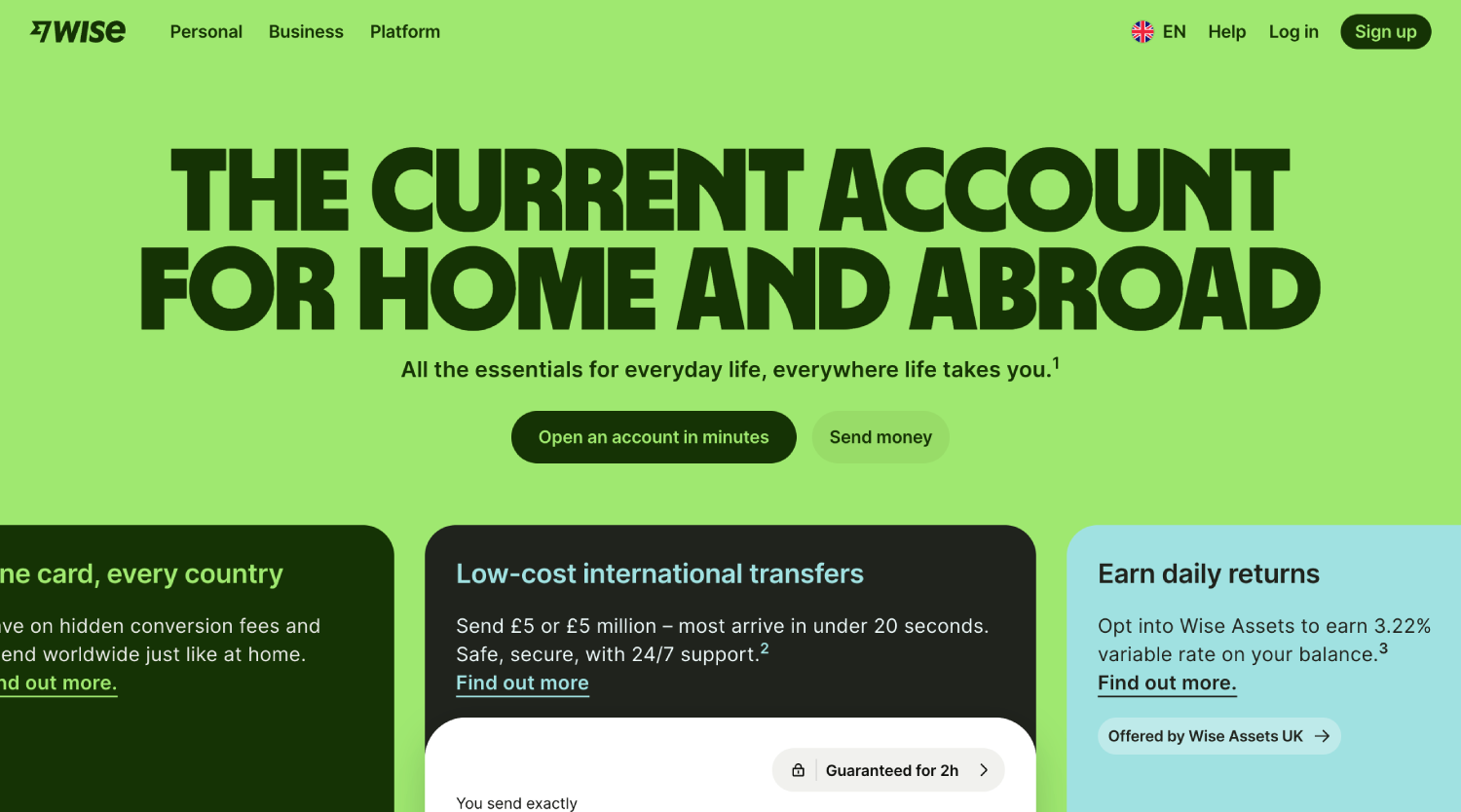
Wise Business is the most direct Payoneer competitor for companies whose primary need is receiving international payments cheaply. Wise converts at the mid-market rate and charges a small transparent fee per conversion, disclosed upfront before you confirm. As of November 2026, Wise Business accounts in the US can hold balances in over 40 currencies and receive payments in major currencies via local account details , a UK sort code, a EU IBAN, a US routing number , without paying a receiving fee on those transfers.
The practical difference from Payoneer: a US-based agency billing a UK client in GBP will pay the mid-market GBP/USD rate plus Wise’s disclosed conversion fee, with no receiving fee on top. That is structurally cheaper than Payoneer on the same corridor for most transaction sizes. For a detailed side-by-side of Wise versus Airwallex , the two most common Payoneer replacements for US companies , see the Airwallex vs Wise comparison for US companies going global.
Where Wise falls short: it does not offer outbound mass payouts via API in the same way Trolley or Nium do, and its USD account still relies on a third-party bank, which creates occasional receiving friction for certain wire types. Not the right tool if you are disbursing to 500 contractors monthly.
2. Airwallex
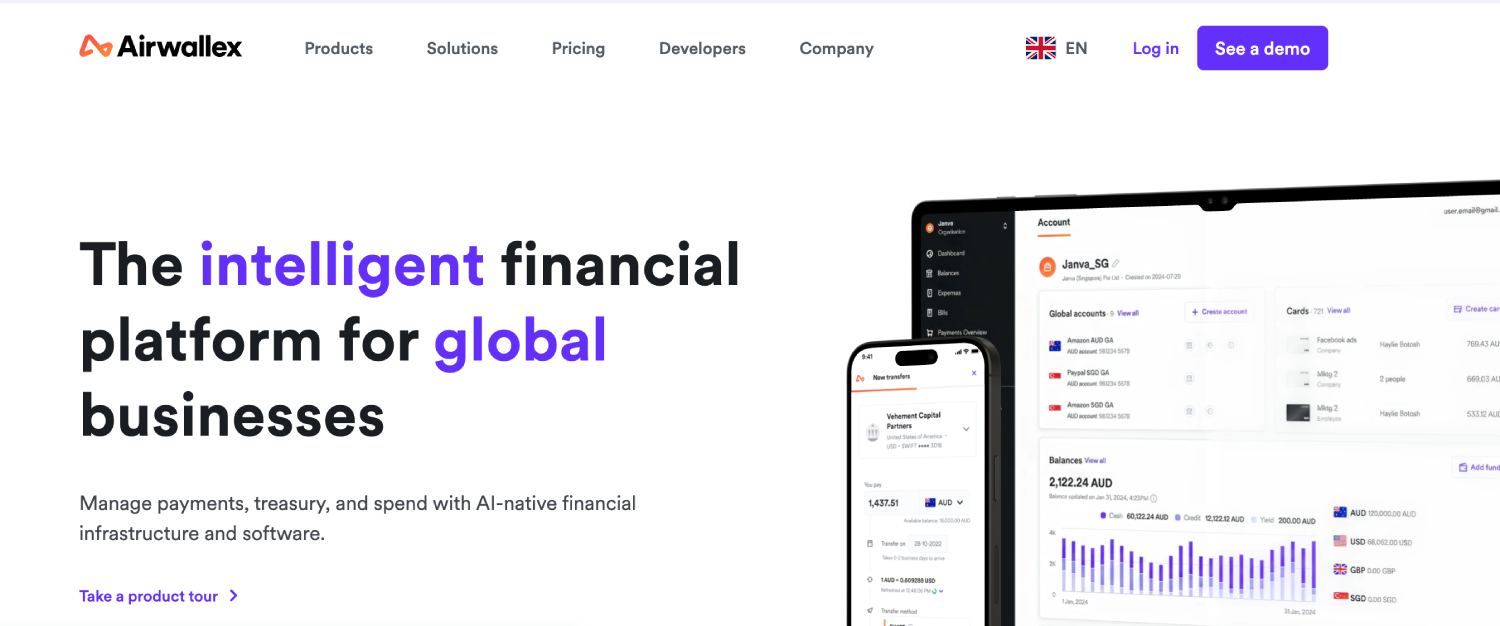
Airwallex is the stronger choice when your business spans multiple countries and you need to both collect and disburse across regions. The platform issues local collection accounts in the US, UK, EU, Australia, Hong Kong, Singapore, Canada, and several other markets as of November 2026, letting you receive in local currency without exposing clients to international wire friction. You can hold those balances and deploy them without converting.
Airwallex’s FX rates sit at or near mid-market for major pairs. Its API is production-grade: companies can programmatically create payouts, generate virtual cards for vendor spending, and build multi-entity FX treasury workflows. The platform targets seed-to-Series C companies that have outgrown a single-country bank account but are not yet large enough to negotiate custom FX rates with a tier-1 bank. For a full breakdown of how Airwallex compares specifically against Chase for US businesses, the Airwallex vs Chase analysis covers it at the product level.
The trade-off: Airwallex’s pricing for some high-volume corridors can be less favorable than Nium or Thunes once you are moving serious volume, and its US regulatory footprint is still narrower than a licensed bank. Pricing varies by corridor and volume; request a quote directly from Airwallex for anything above $500K/month in outbound volume.
3. WorldFirst
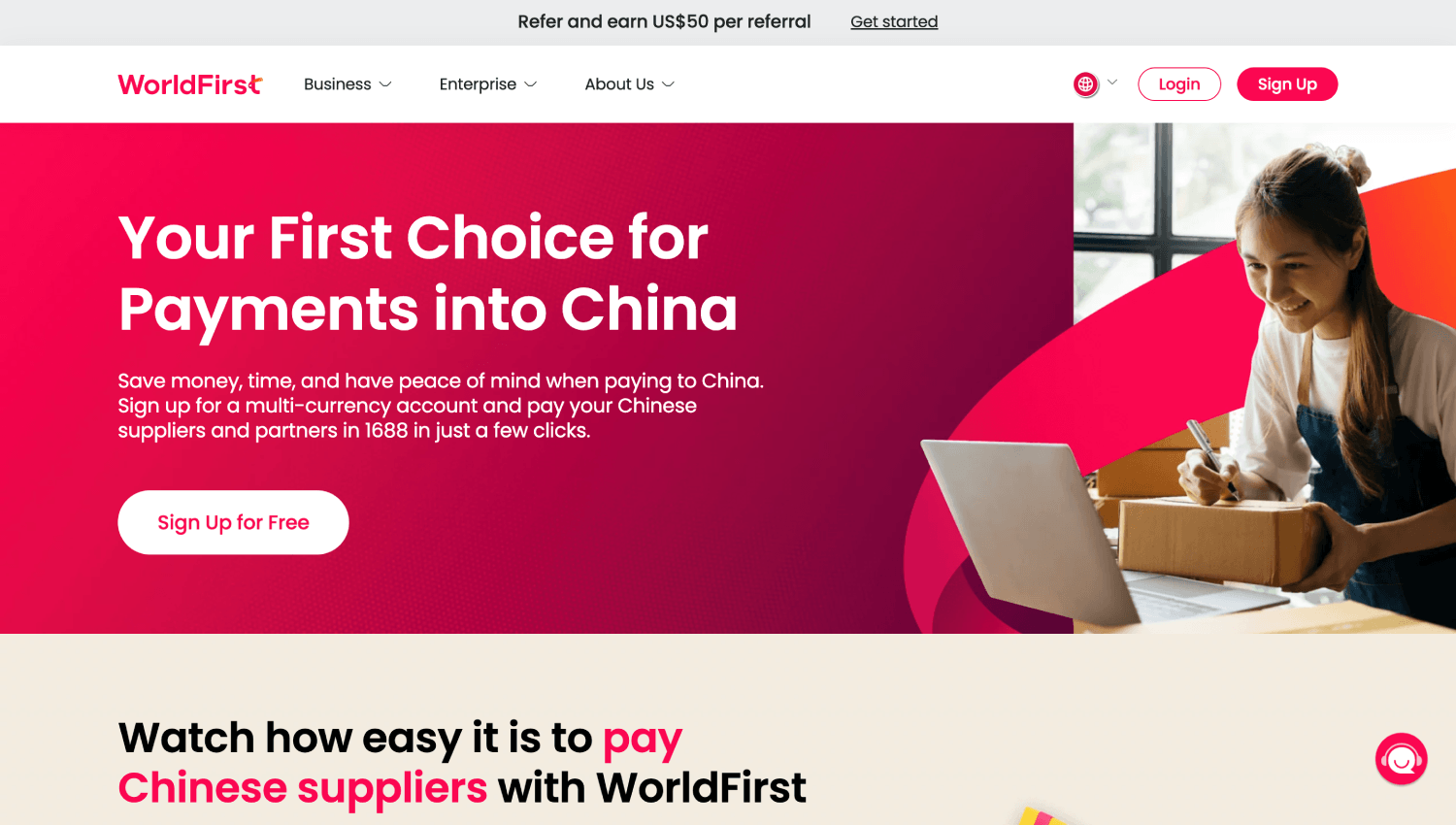
WorldFirst (now part of Ant International) focuses on trade-oriented businesses: importers, exporters, ecommerce sellers receiving marketplace proceeds from Amazon, eBay, or Shopify, and SMBs making international supplier payments. Its FX rates are competitive for major currency pairs, and it offers forward contracts and market orders that Payoneer and Wise do not.
WorldFirst’s World Account lets businesses receive in multiple currencies and pay suppliers directly , a workflow that suits a physical goods business better than a digital services company. For SaaS companies with no supply-chain exposure, WorldFirst adds features you will not use. For an importer paying Chinese suppliers in CNH while receiving USD from Amazon FBA, it is significantly better than Payoneer. For how WorldFirst compares to Airwallex specifically on cross-border SaaS payouts, see the WorldFirst vs Airwallex breakdown.
4. Nium
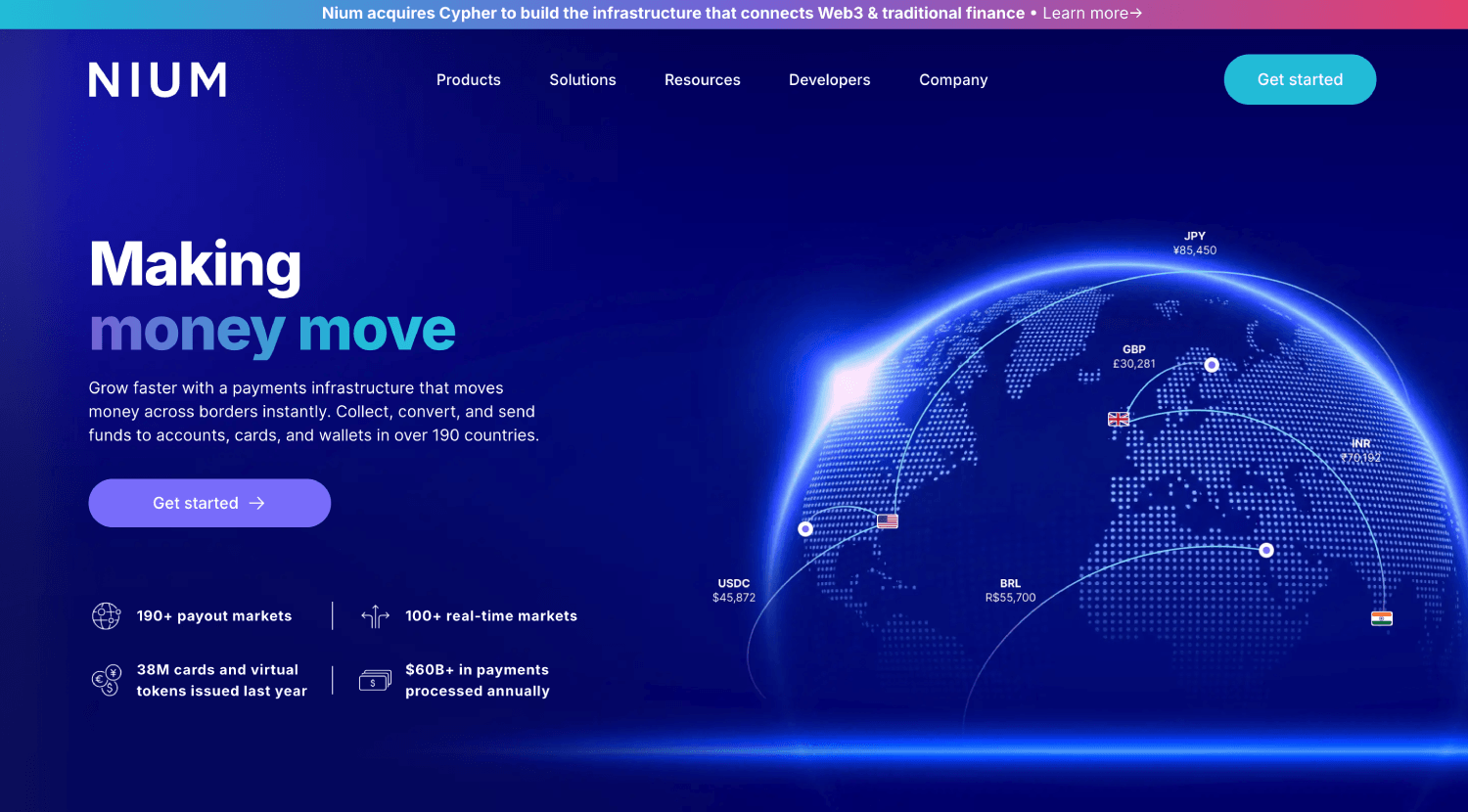
Nium is not a portal product. It is a cross-border payment infrastructure API that lets platforms embed global payouts, FX, and card issuance into their own product. If you are building a marketplace, a gig platform, or a vertical SaaS tool that needs to pay participants in multiple countries, Nium gives you the rails without requiring your users to touch a Payoneer interface.
Nium claims coverage across 100+ countries and 65+ currencies as stated on its public site as of November 2026. Pricing is not public and varies by corridor, volume, and the specific rails used (SWIFT, local ACH equivalent, real-time rails). Nium is overkill for a 10-person agency paying three freelancers. For a platform processing thousands of monthly payouts, it is the right architectural choice. For a comparison of Nium’s global payout infrastructure against Thunes, the Nium vs Thunes piece covers the infrastructure differences in detail.
5. Thunes
Thunes competes directly with Nium on global payout infrastructure but leans harder into emerging market corridor depth , Africa, Southeast Asia, and parts of Latin America where Nium’s local rail coverage thins out. Thunes is built for platforms and payment service providers, not end-users, so it requires API integration and a compliance conversation before you can go live.
If your payout volume concentrates in corridors like Nigeria, Kenya, the Philippines, or Indonesia, Thunes is worth evaluating alongside Nium. Both are enterprise-grade and require custom pricing. Neither is a Payoneer drop-in for a small business; they are infrastructure choices for teams with engineering capacity and volume to justify the integration cost.
6. Trolley
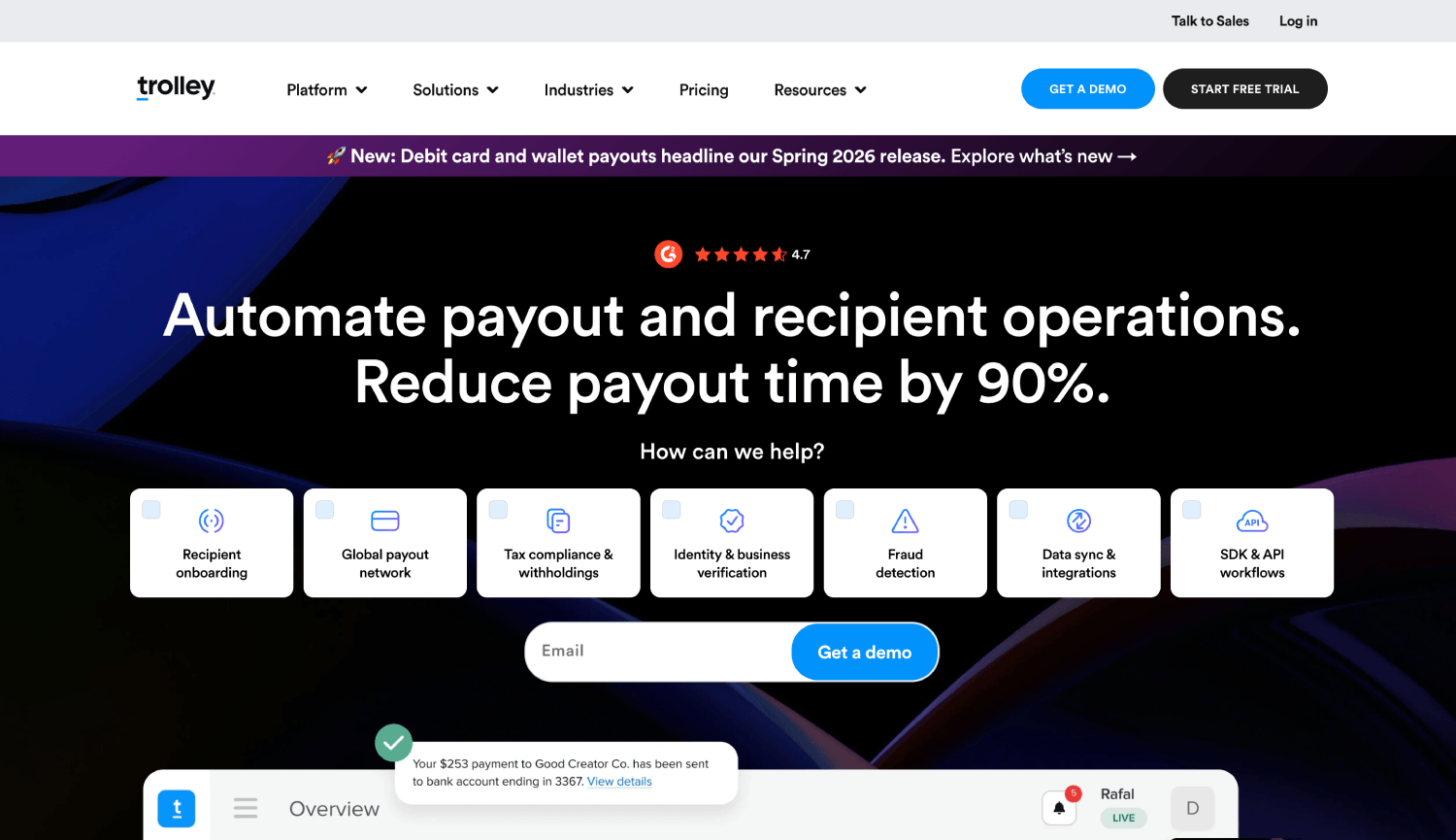
Trolley (formerly Payment Rails) focuses specifically on mass payouts to global payees: contractors, freelancers, affiliates, and creators. It handles 1099/W-9 tax form collection, payee verification, and multi-rail disbursement through a single API and dashboard. For a company paying 200+ global contractors monthly, Trolley removes the manual overhead that Payoneer requires.
Trolley is not a receiving account. You fund your Trolley balance from your existing bank, then disburse outward. It does not replace Payoneer for businesses that need to receive payments , it replaces the outbound side only. Trolley’s pricing is not fully public; the company offers custom quotes based on volume and corridors. For the tax compliance angle specifically, the best 1099 and tax compliance APIs for platforms covers the competitive set Trolley sits in.
7. Mercury
Mercury is a US business banking platform built for startups and technology companies. It is not primarily a cross-border payments tool, but it offers international wires in 30+ currencies from a clean, developer-friendly interface. For a US-incorporated startup that receives most revenue domestically but occasionally needs to pay international vendors or receive foreign client wires, Mercury is simpler than adding a dedicated cross-border layer.
Mercury does not publicly itemize its FX pricing on international wire conversions as of November 2026. If FX cost is your primary concern, Wise or Airwallex will be cheaper on conversion-heavy volumes. Mercury wins on overall banking UX and the fact that it is a single account for US banking plus global wires, rather than a separate cross-border wallet layered on top of your bank.
8. Relay

Relay is another US business banking product, targeted at small businesses and their accountants. It supports international wires and multiple sub-accounts for cash management. Like Mercury, Relay is not a dedicated cross-border platform , it is a business bank that handles international payments adequately rather than exceptionally.
Relay makes this list because a segment of Payoneer users are using Payoneer as a workaround for a bad primary bank account, not because they specifically need Payoneer’s global wallet features. For that segment, switching to a better US business bank solves the problem more cleanly. Relay does not publicly itemize its FX pricing as of November 2026; request details before assuming cost parity with Wise or Airwallex.
9. Deel
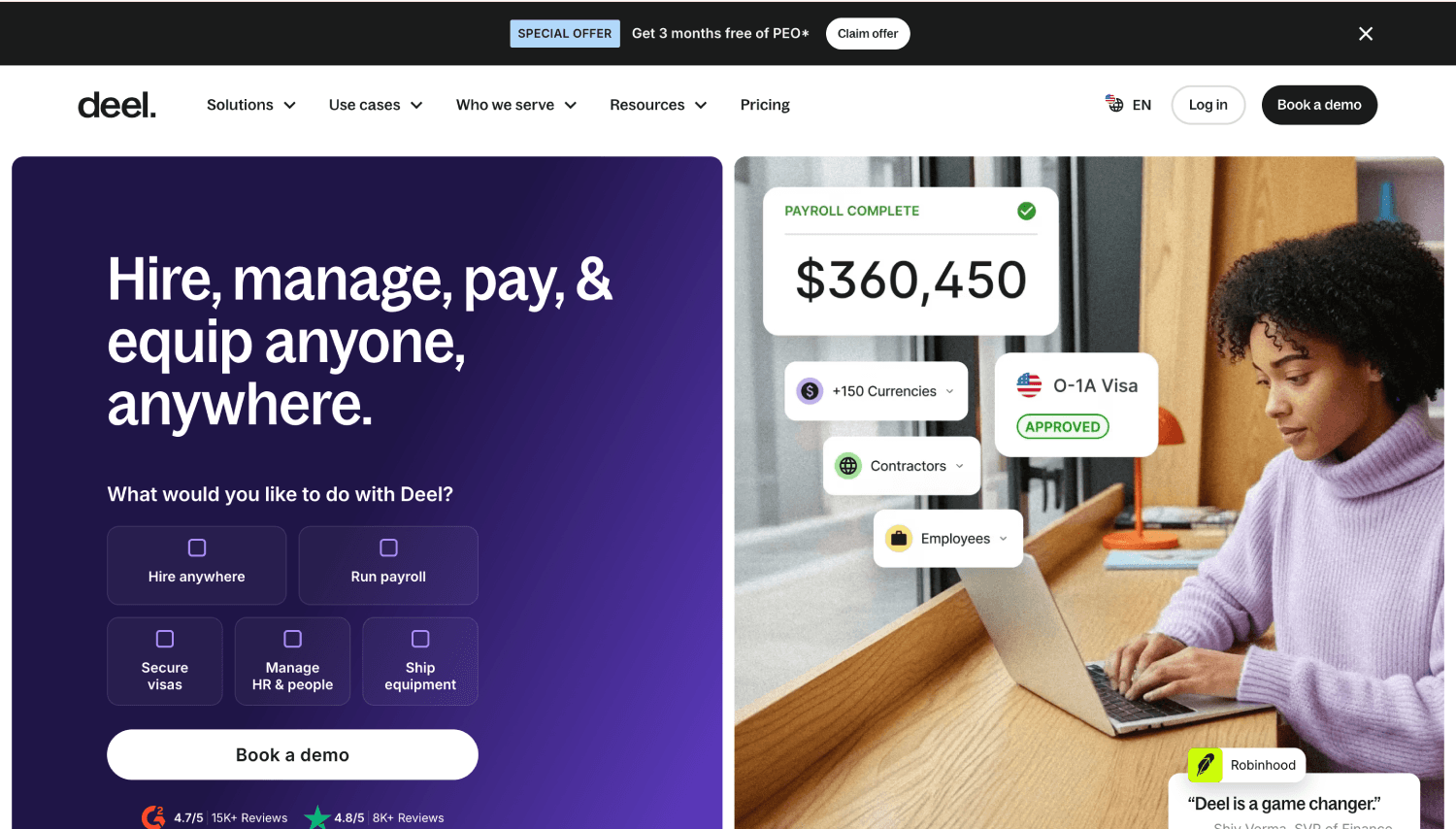
Deel is an employer of record and contractor payment platform that includes global payouts as part of a broader HR and compliance product. If your Payoneer usage is specifically about paying international contractors and you also need contract management, local compliance, and payroll, Deel replaces more of the stack than any pure-payments alternative.
Deel’s pricing is not structured like a payment API , it charges per contractor per month, with rates varying by country and engagement type, as described on Deel’s public pricing page as of November 2026. If you are paying 10 contractors and need compliance handled for each, Deel’s all-in monthly cost may be lower than managing separate contracts plus Payoneer fees. If you are a platform paying 10,000 payees, Deel is not the right fit; Trolley or Nium scale better at that volume.
Payoneer vs Wise vs Airwallex: The Core Comparison
| Platform | Best For | FX Rate | Receiving Fees | API Available | Multi-Currency Wallet |
|---|---|---|---|---|---|
| Payoneer | Freelancers, marketplaces | 2% above mid-market (per public pricing page) | Up to 3% (card); 1% (bank) | Yes (limited) | Yes |
| Wise Business | Cost-sensitive receiving, SMBs | Mid-market | None on major currencies | Yes | Yes (40+ currencies) |
| Airwallex | Multi-country collection, FX treasury | Near mid-market | None on local collection | Yes (full API) | Yes (12+ local accounts) |
| WorldFirst | Trade, ecommerce sellers | Competitive, varies | None on most transfers | Limited | Yes |
| Nium | Platforms, payout APIs | Custom (corridor-based) | Not applicable | Yes (primary interface) | Yes |
| Thunes | Emerging market corridors | Custom | Not applicable | Yes (primary interface) | Yes |
| Trolley | Mass contractor payouts | Varies by corridor | Not applicable (send-only) | Yes | No |
| Mercury | US startups needing global wires | Markup (not publicly itemized) | Not applicable (wire-based) | Yes | No |
| Deel | Contractor payments + compliance | Included in monthly fee | Included in monthly fee | Yes | No |
Fees and rates reflect publicly available information as of November 2026 and are subject to change. FX rates vary by transaction size, currency pair, and account tier.
What Should Freelancers in Pakistan and High-Volume Corridors Use Instead of Payoneer?
Payoneer remains well-known in Pakistan, the Philippines, Bangladesh, and similar markets partly because it was early and because local bank integrations allowed direct withdrawals before most competitors built them. That first-mover advantage has eroded.
Wise now supports PKR withdrawals to Pakistani bank accounts in supported scenarios, though coverage and withdrawal options vary. WorldFirst has expanded corridor depth in several South and Southeast Asian markets. For freelancers specifically, the practical test is: what does your client support? Many US clients pay through Upwork, Toptal, or Fiverr, which have their own payout systems. If your client pays bank-to-bank, Wise Business’s local USD account details let you receive a US domestic wire , the cheapest option for a US-based client , and then convert at mid-market.
Stablecoin payouts are a growing option for high-inflation corridors. A contractor in a country with currency volatility can receive USDC via a platform like stablecoin payout tools built for global contractors and hold USD-denominated value without bank conversion until needed. This option requires a client platform that supports it, but adoption is accelerating among digital-first companies.
When Does a Payout API Beat a Payoneer Replacement Portal?
The most common mistake companies make when switching from Payoneer is replacing one portal with another portal. If your team manually logs in to trigger payouts, you have not improved your process , you have only changed the logo on the login screen. For companies disbursing more than a few dozen payments monthly, the right answer is a payout API.
Say a marketplace pays 800 sellers monthly across 40 countries. A portal-based Payoneer replacement means someone on the finance team is exporting a CSV, uploading it, and manually reconciling failures. An API-based solution , Nium, Thunes, Trolley, or Airwallex’s payout API , triggers those payouts programmatically from your own system, fails are surfaced in your own error handling, and reconciliation pulls into your ledger automatically. The finance team stops touching a third-party dashboard for routine disbursements. For how payout APIs work at the infrastructure level, the payout API explainer covering rails, funding, compliance, and reconciliation is worth reading before you evaluate vendors.
The cut-off for when API investment pays off varies, but 100+ monthly payments across multiple corridors is a reasonable threshold where manual portal workflows start causing real operational cost.
How Do Cross-Border Payout Fees Stack Up Across Payoneer Competitors?
The FintechSpecs fee comparison on cross-border payout fees across Wise, Airwallex, Nium, and Payoneer breaks down FX markups and per-payout costs at the corridor level. The short version: Payoneer is rarely the cheapest option on corridors where Wise or Airwallex has built local rail integrations. Payoneer is competitive mainly on corridors where it has exclusive or near-exclusive reach, and those corridors are shrinking as alternatives expand.
Consider a hypothetical: a US company receives $50,000/month from a UK client in GBP, then sends $30,000/month to contractors in India and the Philippines. On the GBP receiving side, Payoneer’s 2% FX markup costs $1,000/month on that volume. Wise’s mid-market conversion with a disclosed small fee costs materially less , the exact savings depend on the transaction size and Wise’s current fee for that currency pair, available on the Wise pricing page. On the outbound India and Philippines payout side, Airwallex and Trolley both offer competitive per-transfer rates that undercut Payoneer’s markups on those corridors. Across both directions, switching platforms at that volume could represent thousands of dollars in annual savings , entirely from fee structure, before accounting for any operational improvements.
Frequently Asked Questions
Is Wise Business a direct replacement for Payoneer?
Wise Business replaces Payoneer for companies whose primary use case is receiving international payments in foreign currencies and converting at competitive rates. Wise offers local account details in major currencies, mid-market FX rates, and no receiving fee on most transfers as of November 2026. It does not replicate Payoneer’s marketplace-integrated receiving (e.g., Upwork, Fiverr direct deposit) or Payoneer’s prepaid debit card product, so check whether those specific features matter to your workflow before switching.
What is the cheapest Payoneer alternative for freelancers?
For freelancers billing clients directly (not through a marketplace), Wise Business is typically the cheapest option on major corridors because it converts at the mid-market rate. For freelancers on platforms like Upwork or Fiverr, the platform’s built-in payout system usually determines your options, and the platform may already support direct bank transfers or local rail payouts that are cheaper than Payoneer. WorldFirst is worth comparing for freelancers in trade-adjacent markets.
Can platforms switch from Payoneer to an API-based payout system?
Yes, and for platforms disbursing more than 100 payments monthly across multiple corridors, switching from Payoneer’s portal to an API like Nium, Thunes, or Trolley typically reduces manual operations and can lower per-payout cost. The integration requires engineering work upfront , typically several weeks for a standard API integration , and compliance review for the corridors you plan to cover. Nium and Thunes both have enterprise onboarding processes; Trolley offers more self-serve options for smaller platforms.
Does Airwallex charge receiving fees?
Airwallex does not charge a fee for receiving payments into local collection accounts as of November 2026. When you convert balances between currencies, Airwallex applies a rate that sits near but not always exactly at the mid-market rate; the specific margin varies by currency pair. Withdrawal to your local bank account may carry a fee depending on the destination and transfer type. Check Airwallex’s public pricing page or request a quote for your specific corridor before assuming cost parity with Wise.
What is the best Payoneer alternative for paying global contractors at scale?
Trolley is the most purpose-built option for outbound contractor payouts at scale, handling W-9/W-8BEN collection, payee verification, and multi-currency disbursement in a single platform. Deel is the better choice if you also need contract management and local employment compliance. For platforms embedding payouts into their own product, Nium’s API offers more flexibility and global corridor depth. None of these replace Payoneer’s receiving functionality; they address the outbound payment side only.
Are stablecoin payouts a viable Payoneer alternative for high-inflation corridors?
For contractors in countries with significant currency depreciation, receiving USDC or another dollar-pegged stablecoin can preserve value better than receiving local currency converted from a cross-border transfer. Platforms like Deel have added crypto payout options. Standalone stablecoin payout tools also exist for this use case. The practical constraint is adoption on the client side , your client needs to support stablecoin disbursement, and the contractor needs a wallet and an off-ramp to local currency when needed.
The Decision Most Companies Get Wrong
Most companies switching from Payoneer default to whichever alternative their peer recommended on a Slack channel or Reddit thread. That works fine if your situation is identical to your peer’s situation , which it almost never is. The right replacement is determined by corridor, volume, and direction, not by brand recognition or which product has the best comparison landing page.
Wise wins on cost for companies primarily receiving. Airwallex wins on flexibility for companies operating across multiple geographies with multi-currency treasury needs. Nium and Thunes win when you need to embed payouts into a product rather than manage them through a dashboard. Trolley wins for outbound contractor payouts at scale. If you map your situation against those four scenarios honestly, the shortlist narrows to one or two options, and the evaluation becomes a pricing conversation rather than a feature-discovery exercise.
One thing worth watching: the cross-border payment market is moving toward stablecoin settlement rails alongside traditional SWIFT and local ACH equivalents. J.P. Morgan, Visa, and Mastercard have all announced or launched stablecoin settlement programs in 2026. Platforms evaluating infrastructure today should ask vendors whether their roadmap includes stablecoin rails, because the operational cost advantage of settling on a 24/7 programmable rail versus correspondent banking could dwarf the FX markup differences that dominate the conversation today.