
- Most lenders evaluating “lending software” are thinking in raw APIs, which means they are underestimating how much product work sits between an API call and a funded loan.
- White-label lending software lets banks, credit unions, fintechs, and non-bank lenders deploy a fully branded digital loan product without building origination, underwriting decisioning, or servicing infrastructure from scratch.
- The buy-versus-build calculus has shifted: a mid-market bank or credit union can launch a fully branded digital lending product in weeks, not the 12-to-18 months an in-house build typically requires.
- Vendor selection hinges on four things: loan type coverage, decisioning flexibility, regulatory infrastructure ownership, and the degree to which the UI is truly rebrandable versus just “configurable.”
- Pricing models vary widely across this category, from per-loan fees to platform SaaS fees plus origination percentages, and the difference materially affects unit economics at scale.
White-label lending software lets banks, credit unions, fintechs, and non-bank lenders deploy a fully branded digital loan product without building origination, underwriting decisioning, or servicing infrastructure from scratch. The leading platforms in this category include nCino, Finastra, TurnKey Lender, Biz2X, Floify, CloudVirga, and Peach Finance. Each covers a different slice of the lending stack, loan type, or borrower segment, so the right choice depends entirely on what you are originating and who you are selling to.
What Is White-Label Lending-as-a-Service, and How Is It Different from Raw APIs?
A raw lending API gives you the ability to, say, pull a credit bureau file or calculate an amortization schedule. What it does not give you is a borrower application flow, an underwriter decision queue, a loan agreement generator, a servicing ledger, or a borrower portal. Assembling those layers yourself is the actual work, and it commonly takes 12 to 18 months and a dedicated engineering team of five or more before a loan can fund.
White-label lending-as-a-service platforms are different. They ship the entire origination-to-servicing workflow as a pre-built product that can be rebranded. Your logo goes on the borrower portal. Your name appears on disclosures. The decisioning rules are yours. The vendor owns the infrastructure, the compliance controls, and the integrations with credit bureaus, e-signature providers, and core banking systems.
The practical difference is who holds the implementation risk. With a raw API approach, you own every integration point. With a white-label LaaS platform, the vendor has already absorbed most of that risk. You are configuring, not building. That distinction matters enormously when you are trying to launch in a quarter, not a fiscal year.
What Does the FintechSpecs LaaS Evaluation Grid Actually Measure?
Before running through individual vendors, it helps to have a common scoring frame. The LaaS Evaluation Grid is FintechSpecs’ four-axis evaluation framework, built specifically to separate genuine white-label lending platforms from API wrappers dressed up in marketing copy. We apply it consistently across every vendor in this category.
Axis 1: Stack Depth. Does the platform cover origination, decisioning, document collection, e-sign, servicing, and borrower portal? Or does it stop at origination and hand off to third-party servicing?
Axis 2: Decisioning Flexibility. Can you plug in your own underwriting rules, external data sources, and custom scoring models, or are you locked into the vendor’s default credit logic?
Axis 3: Regulatory Ownership. Who owns compliance for TILA disclosures, adverse action notices, FCRA obligations, and state lending laws? Vendors who push regulatory ownership entirely onto the lender are effectively selling infrastructure, not a managed platform.
Axis 4: UI Rebrandability. Is the borrower-facing experience genuinely white-labeled, meaning the vendor’s name never appears, or is it “configurable” in the sense that you can change a logo but not the underlying UX patterns?
Most shortlists collapse around Axes 3 and 4. Many vendors excel at stack depth but leave compliance ownership ambiguous. Others offer deep rebranding but thin decisioning flexibility. Running every vendor through all four axes before a procurement conversation saves weeks of late-stage surprises. You can pair this with a broader vendor evaluation approach described in our guide on how to evaluate a fintech vendor before you sign.
Which White-Label Lending Platforms Are Worth Evaluating?
nCino
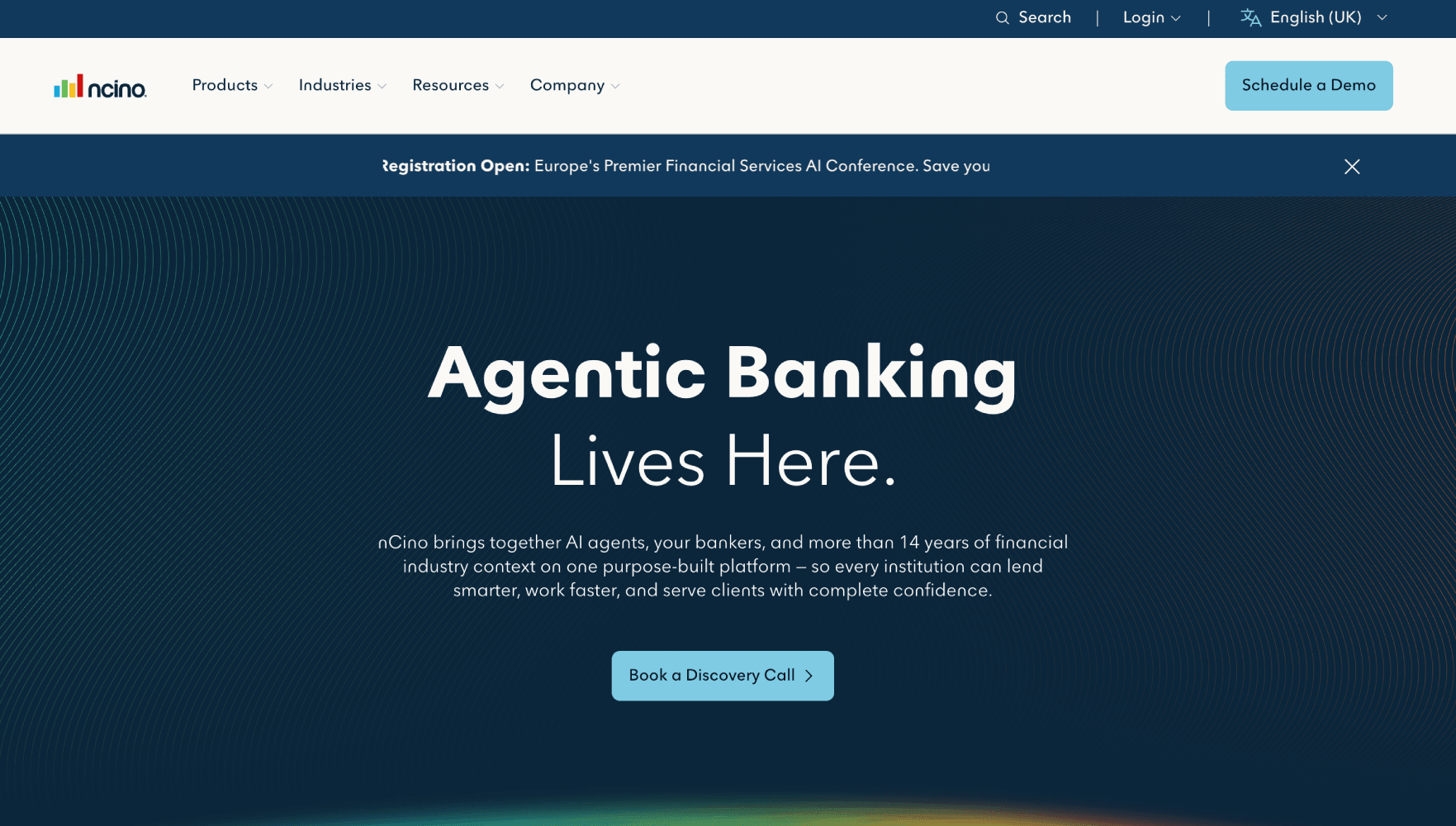
nCino is the dominant cloud-based commercial lending platform for mid-size to large banks. It runs on Salesforce infrastructure and covers commercial loan origination, spreading, credit memo generation, portfolio management, and covenant tracking in a single environment. The borrower experience is rebrandable, and the bank faces a configurable workflow engine rather than a fixed process.
nCino’s strength is commercial and SBA lending for institutions that already run Salesforce or want deep CRM-to-credit integration. Its weakness is consumer lending: the platform is not designed for high-volume personal loan or auto origination at scale. Pricing is enterprise-negotiated and not publicly disclosed.
Finastra LaserPro and Fusion Loans
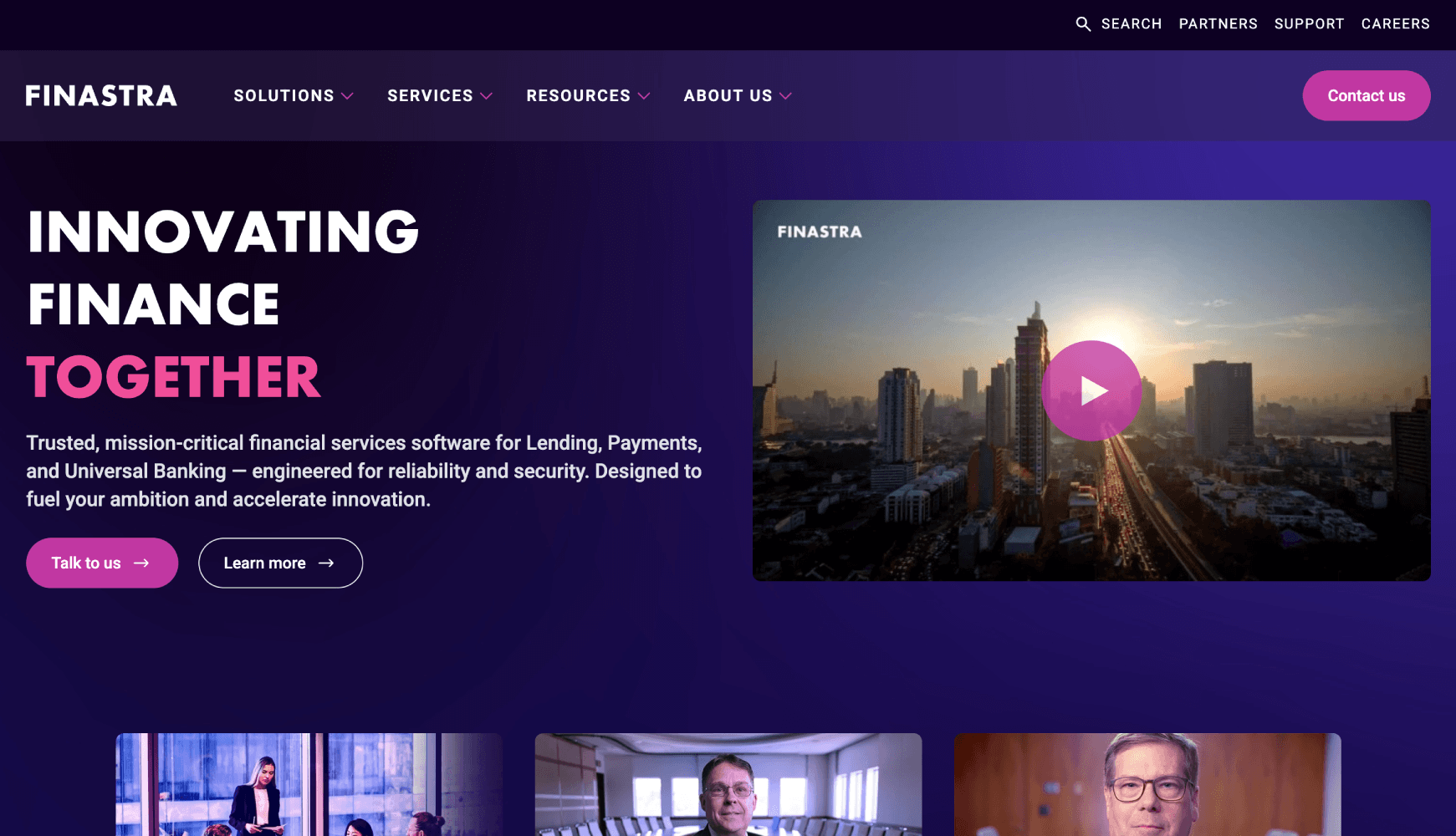
Finastra offers two distinct white-label lending products. LaserPro is a loan documentation and compliance engine used by thousands of community banks and credit unions for consumer and commercial loan documents. Fusion Loans is a separate digital origination platform for automated personal and small business lending. The two products share a vendor but operate largely independently.
LaserPro is the right choice if your primary need is compliant loan document generation across multiple states, since the platform maintains document templates for all 50 states and updates them as regulations change. Fusion Loans is the right choice if you need a full digital origination workflow. Together they cover more of the community bank lending stack than almost any other single vendor relationship.
TurnKey Lender
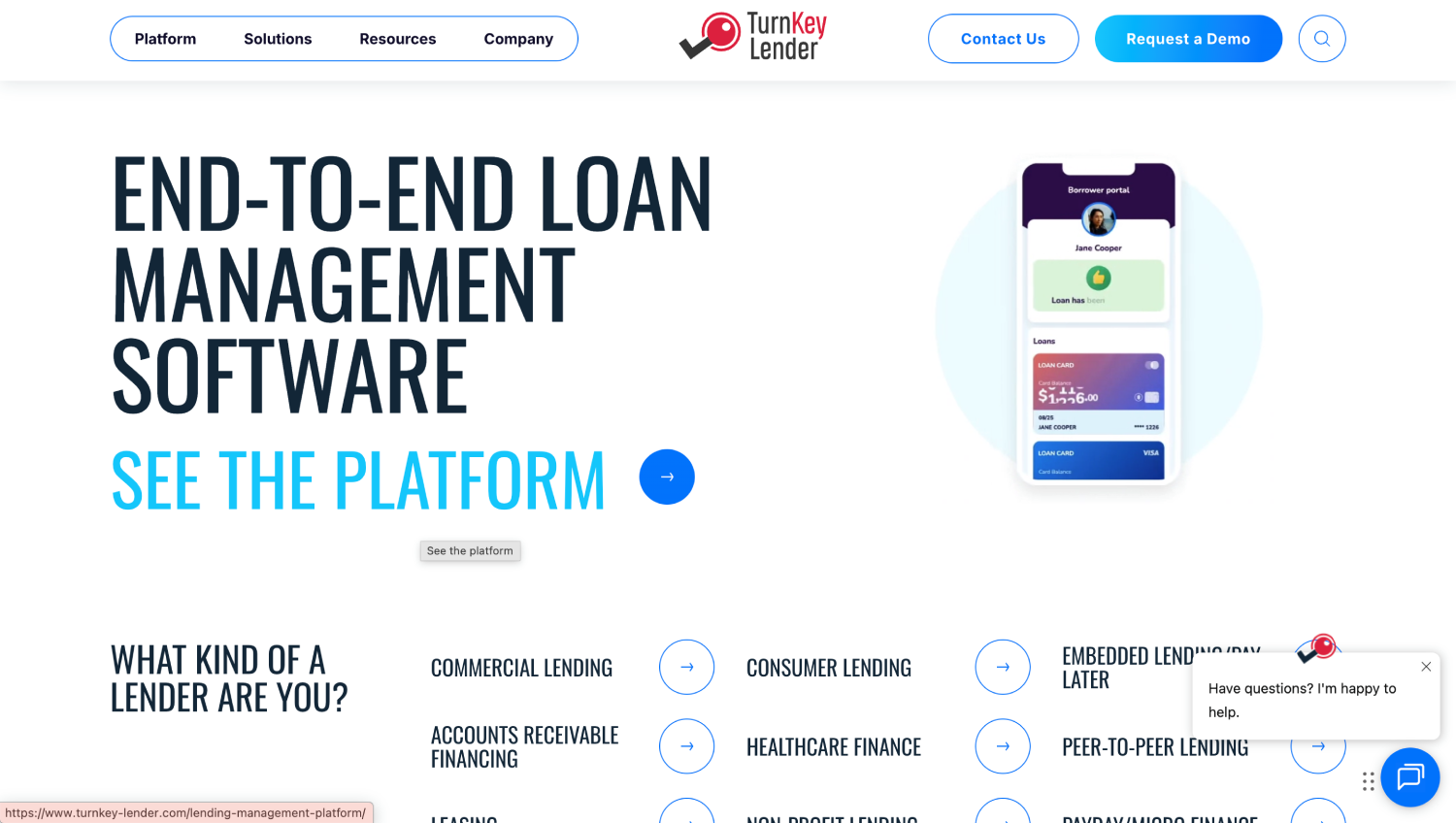
TurnKey Lender is a full-cycle white-label lending platform aimed at non-bank lenders, credit unions, and fintechs originating consumer installment loans, BNPL, and SME loans. It covers application intake, AI-assisted credit scoring, loan agreement generation, e-signature, disbursement coordination, and a servicing and collections module. The borrower portal is rebrandable with the lender’s brand.
TurnKey Lender’s decisioning layer is one of the more flexible in this tier. Lenders can build custom scorecard logic using the vendor’s rule engine without requiring a data science team. The platform supports both direct-to-consumer lending and embedded lending scenarios where the lender’s product sits inside a third-party platform or marketplace. TurnKey Lender does not publicly disclose per-seat or per-loan pricing.
Biz2X
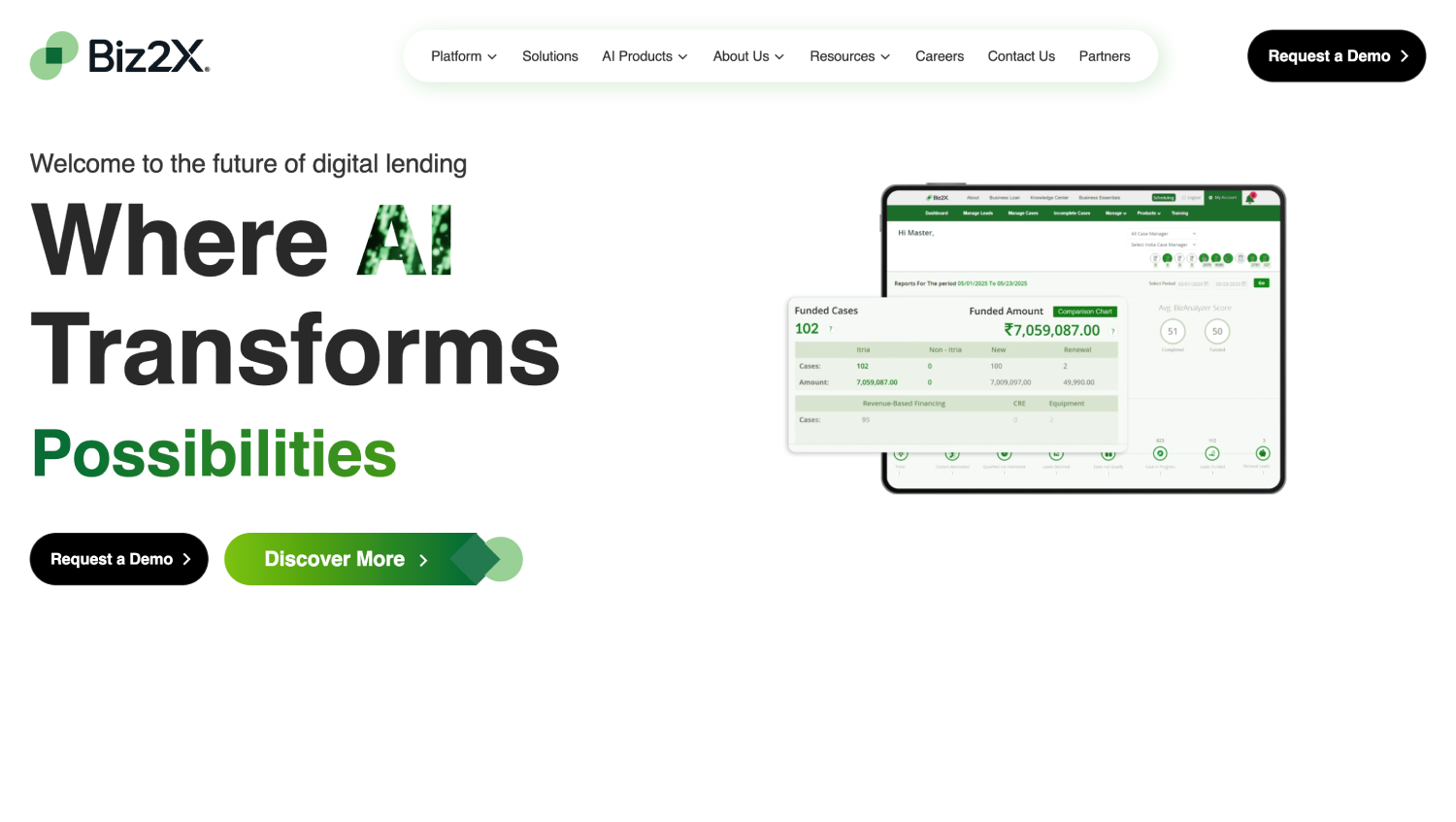
Biz2X is a white-label digital lending platform built specifically for small business loan origination at banks and credit unions. It is the SaaS licensing arm of Biz2Credit and uses the same underlying credit infrastructure that Biz2Credit has used to originate billions in SME loans. Banks license the platform, brand it as their own, and use it to process SBA loans, term loans, and lines of credit digitally.
The differentiation for Biz2X is data depth on the SME side. The platform can ingest business tax returns, bank statements, and accounting data natively and run cash flow analysis as part of the underwriting process. For community banks trying to compete with fintech SME lenders on speed, this is the most direct competitive answer available as a white-label product.
Floify
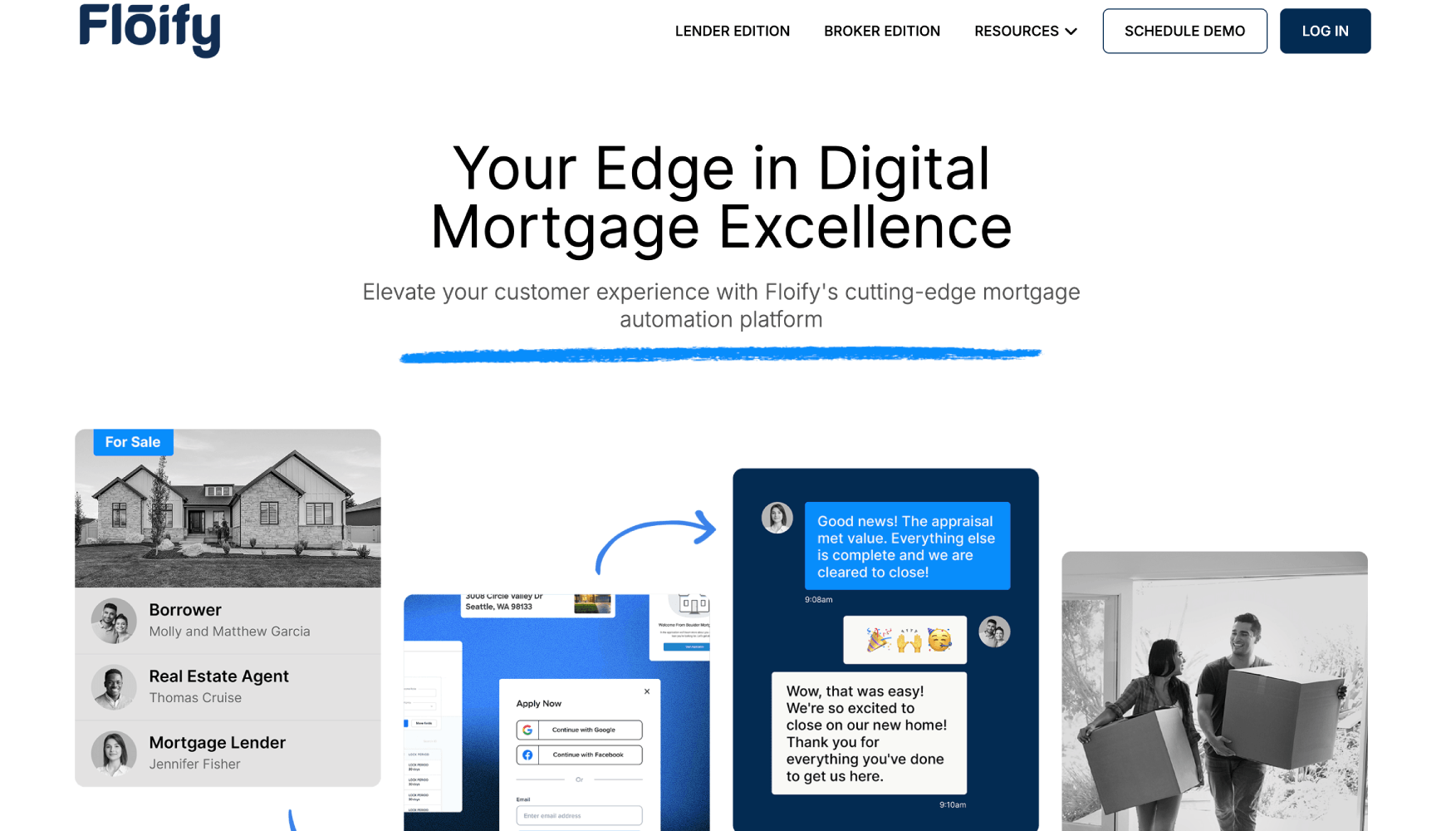
Floify is a white-label mortgage point-of-sale and loan origination platform for mortgage lenders, brokers, and banks. It handles borrower application intake, document collection, condition management, and communication between borrowers, loan officers, and processors. The borrower experience is fully rebrandable.
Floify does not include a servicing module because it is designed as a front-end origination layer that connects to a lender’s loan origination system of record, most commonly Encompass or Byte Software. If you are a mortgage lender who has a servicing platform but needs a modern digital borrower experience, Floify is a narrow but well-executed fit. If you need an end-to-end platform, it is not the right tool.
CloudVirga
CloudVirga is an enterprise mortgage point-of-sale platform positioned at larger mortgage banks and retail lenders who need a white-label borrower experience that integrates deeply with their existing LOS and pricing engine. It is built for high-volume mortgage operations where loan officer efficiency and pipeline visibility matter as much as borrower UX.
CloudVirga focuses on the enterprise segment of mortgage origination where per-loan economics justify a more complex integration. It is not a fit for credit unions originating 200 mortgages a year, but it is worth evaluating for any lender doing significant retail mortgage volume with a Encompass or ICE Mortgage Technology infrastructure already in place.
Peach Finance
Peach Finance is a programmable loan servicing and management platform used by fintech lenders, banks launching new loan products, and embedded lending programs. It is API-first rather than a traditional white-label UI platform, but it includes borrower-facing portals and white-label communication templates that can be deployed under a lender’s brand.
Peach’s primary value is servicing flexibility. Unlike most legacy loan servicing platforms that were built for fixed product types, Peach can model almost any loan structure, including BNPL, income share agreements, revolving credit, and traditional installment loans, on a single platform. For lenders launching non-standard loan products or embedded credit programs, this is the most important capability in the category. For more context on how loan servicing software compares across the market, see our loan servicing software and APIs comparison.
LoanPro
LoanPro is a cloud-native loan management and servicing platform that bridges white-label origination features with a deep loan accounting and servicing infrastructure. It serves consumer lenders, credit unions, and fintech lenders who need real-time loan accounting, automated payment processing, and a configurable borrower portal. LoanPro’s architecture is API-first, which means product teams can build custom origination flows on top of its servicing core.
LoanPro is the closest thing in this list to a true platform play: it handles more of the lending stack under one contract than most alternatives. Pricing is not publicly disclosed, but the platform is positioned at growth-stage fintechs and mid-market lenders, not the enterprise segment where nCino operates.
How Do These Platforms Compare Across the LaaS Evaluation Grid?
| Platform | Best Loan Type | Stack Depth | Decisioning Flexibility | UI Rebrandability | Regulatory Ownership |
|---|---|---|---|---|---|
| nCino | Commercial, SBA | Origination to portfolio mgmt | High (Salesforce rules) | Full | Lender-owned |
| Finastra (LaserPro) | Consumer and commercial docs | Document and compliance layer | Low (doc templates) | Partial | Vendor-managed (50-state docs) |
| Finastra (Fusion Loans) | Personal, SME | Origination to funding | Medium | Full | Lender-owned |
| TurnKey Lender | Consumer installment, BNPL, SME | Full cycle | High (rule engine) | Full | Shared |
| Biz2X | SBA, SME term, LOC | Origination to funding | High (SME-specific) | Full | Lender-owned |
| Floify | Mortgage | POS and origination only | Low (POS-focused) | Full | Lender-owned |
| CloudVirga | Mortgage (enterprise) | POS and LOS integration | Medium | Full | Lender-owned |
| Peach Finance | Non-standard, BNPL, embedded | Servicing-first, API-driven | Very high | Borrower portal | Shared |
| LoanPro | Consumer, fintech | Full cycle (servicing-core) | High (API-first) | Full | Shared |
LaaS vs. Building Lending In-House: Where the Real Costs Hide
The standard build-versus-buy framework underestimates the cost of building lending infrastructure because it focuses on engineering headcount and ignores compliance overhead. Consider a worked scenario: a credit union that wants to launch a digital personal loan product decides to build on raw APIs from a credit bureau, an e-sign vendor, and a payment processor.
The engineering team needs 12 months and roughly five engineers to wire the workflow together. That is a reasonable estimate. What the initial project plan typically misses is the ongoing cost: someone has to maintain 50-state adverse action notice templates, monitor CFPB guidance changes, update TILA disclosure logic when regulation shifts, and manage the bank integration when the core banking platform updates. Those are not one-time engineering tasks. They are permanent compliance maintenance costs that continue for the life of the product.
A white-label LaaS platform absorbs most of that maintenance cost into the subscription. The lender pays a platform fee and gets compliance maintenance, infrastructure uptime, and regulatory updates as part of the contract. The break-even point depends on loan volume, but for most lenders originating fewer than a few thousand loans per month, the math favors buying a pre-built platform over building on raw infrastructure. For a closer look at how infrastructure maintenance costs compound over time, the hidden costs killing fintech SaaS margins analysis applies directly to lenders running internal builds.
What Should Credit Unions Specifically Look for in a White-Label Digital Lending Platform?
Credit unions face two constraints that banks and fintechs do not. First, they operate under NCUA supervision, which creates specific requirements around member data handling, examination readiness, and vendor due diligence that go beyond what typical fintech lenders manage. Second, credit union members expect pricing that reflects the member-owned cooperative model, which means the borrower-facing rate and fee structure often needs to be configured differently than what a bank or non-bank lender would set.
The platforms that handle these constraints best are Finastra LaserPro, TurnKey Lender, and LoanPro. LaserPro’s 50-state compliant document suite reduces NCUA examination risk on loan documentation. TurnKey Lender’s rule engine allows credit unions to configure member-specific rate tiers and relationship pricing without engineering involvement. LoanPro’s real-time loan accounting is strong for credit unions that need to reconcile loan data with their core system daily.
One feature most credit union evaluators miss is the exam-readiness of the platform’s audit trail. NCUA examiners expect complete, date-stamped records of every underwriting decision and every borrower communication. Platforms that store this data in exportable, examiner-friendly formats save considerable staff time during examination cycles. Ask any vendor directly how their audit log exports are structured and whether they have documented their exam preparation process with NCUA-regulated clients.
How Does White-Label Lending Software Pricing Work?
Pricing in this category does not follow a standard model. There are at least four distinct structures in use across these vendors, and comparing them without normalizing for volume is a common procurement mistake. None of the vendors covered in this article publish pricing on their public websites; all require a sales conversation before any figures are shared.
| Pricing Model | Structure | Best Fit | Watch Out For |
|---|---|---|---|
| Platform SaaS fee | Fixed monthly or annual contract | Predictable volume lenders | Minimums that are hard to hit at launch |
| Per-loan fee | Fee charged per origination | Low-volume or seasonal lenders | Unit economics deteriorate at scale |
| Platform fee plus per-loan | Base fee plus origination charge | Mid-volume growth lenders | Double-exposure to cost as volume grows |
| Revenue share | Vendor takes percentage of interest or origination fee | Launch-stage lenders with no fixed budget | Margin compression at scale; renegotiation risk |
The safest procurement approach is to request a total cost of ownership model from each vendor that includes platform fees, per-loan fees, implementation costs, and the cost of required integrations. Vendors who cannot produce a TCO model in the first sales meeting are usually the ones whose pricing has the most surprises embedded in it.
What Integrations Does a White-Label LaaS Platform Need to Support?
A lending platform that cannot connect to your existing technology stack is not a platform. It is an island. Before signing with any vendor, confirm native or documented integrations for each of the following layers.
- Core banking system: Fiserv, Jack Henry, FIS, Temenos, or Mambu depending on your institution type. Loan data needs to flow to the core for funding, posting, and general ledger reconciliation.
- Credit bureau: Equifax, Experian, and TransUnion for consumer; Dun and Bradstreet or Experian Business for SME. Confirm which bureaus are pre-integrated and what a custom bureau integration costs.
- Income and employment verification: Plaid, Argyle, Pinwheel, or The Work Number from Equifax. Automated income verification directly affects approval rates and fraud exposure. For a detailed breakdown of this layer, our income and employment verification API comparison for lenders covers the main options.
- e-Sign: DocuSign or HelloSign (now Dropbox Sign). Most platforms have one pre-integrated. Confirm it is the one your compliance team has already approved.
- Bank account verification: Plaid or similar for disbursement and repayment account validation.
- Fraud and identity: Socure, Alloy, or similar for application fraud screening. This layer is often where white-label platforms have the thinnest integrations. Check the vendor’s integration list carefully.
Platforms that require custom engineering work for each of these integrations are not truly white-label lending software. They are application frameworks with a branded UI. The distinction matters because custom integration work puts the implementation timeline back under your engineering team’s control, which is exactly what a LaaS platform is supposed to remove.
Who Offers Lending-as-a-Service for Embedded Lending Programs?
Embedded lending, where a loan product sits inside a third-party platform such as a marketplace, HR software, or vertical SaaS tool, is a different use case from bank or credit union origination. The lender in an embedded scenario is usually a licensed non-bank or bank partner, and the white-label requirement extends to the third-party platform’s users who may never see the lender’s brand at all.
TurnKey Lender explicitly supports embedded lending configurations. Peach Finance is designed for exactly this use case, where a fintech or platform is managing a loan portfolio that was originated through a partner program. LoanPro also supports multi-lender and multi-product architectures that suit embedded programs. For context on how embedded credit fits into the broader platform finance stack, our analysis of the top embedded credit APIs for B2B platforms and marketplaces covers the adjacent infrastructure.
The key question for embedded programs is who holds the lender of record status. Some LaaS vendors partner with licensed lenders and offer a full program including balance sheet, in which case the platform operator is truly just a distribution channel. Others require the platform operator to hold or partner with a licensed lender separately. The regulatory answer shapes everything: which vendor you can use, how disclosures work, and what your state licensing exposure is.
Frequently Asked Questions
What is the difference between white-label lending software and a loan origination system?
A loan origination system, or LOS, is typically an internal workflow tool that loan officers and processors use to manage applications. White-label lending software adds a branded borrower-facing front end, a digital application experience, and often includes servicing and collections as well. A LOS is an internal operations tool. A white-label LaaS platform is a full product stack that includes the borrower experience your customers see.
Can a credit union use a white-label lending platform without a bank charter?
Yes. Credit unions are federally chartered or state-chartered lending institutions and can originate loans under their own license. A white-label lending platform gives them the technology to do so digitally without changing their regulatory status. The platform must be compliant with NCUA requirements if the credit union is federally chartered, and the vendor’s standard due diligence documentation should satisfy the credit union’s third-party vendor review process.
How long does it take to launch with a white-label LaaS platform?
Implementation timelines vary significantly by platform complexity and the lender’s existing tech stack. Simple consumer loan origination products on platforms like TurnKey Lender can launch in eight to twelve weeks if integrations with the core banking system are straightforward. More complex commercial lending implementations on platforms like nCino typically run six to twelve months. Mortgage-specific platforms like Floify can launch in four to six weeks because they are designed as a front-end layer, not a full infrastructure replacement.
What compliance obligations does the lender still own on a white-label platform?
Even on the most fully managed LaaS platforms, the licensed lender retains ultimate regulatory responsibility. The lender owns TILA compliance, fair lending obligations under ECOA and the Fair Housing Act, FCRA adverse action notice requirements, and state-specific licensing. A good vendor manages the technical infrastructure to support compliance, such as maintaining accurate APR calculations and providing compliant document templates, but the lender cannot contract away its regulatory liability. Understand this distinction before signing any vendor agreement.
Is it possible to switch white-label lending platforms after launch without disrupting a live loan portfolio?
Switching is possible but operationally complex, particularly for the servicing layer. Loan data migration, payment history portability, and automated communications continuity are all risk points in a platform migration. The safest approach is to negotiate data export standards and format documentation before signing the original contract, so that migration is theoretically possible without vendor cooperation later. Platforms built on open data architectures, like LoanPro and Peach Finance, carry lower migration risk than proprietary closed systems.
What loan types are most commonly supported on white-label LaaS platforms?
Consumer installment loans and personal loans have the broadest platform support across the vendors in this list. Small business term loans and SBA loans are well-supported by nCino, Biz2X, and Finastra Fusion Loans. Mortgage origination is covered by Floify and CloudVirga. BNPL and non-standard loan structures, including income share agreements and revolving credit, are best handled by Peach Finance and LoanPro, which are purpose-built for product flexibility. Auto loans are supported by several platforms but are not a primary focus for most of the vendors listed here.
Does using a white-label lending platform affect my ability to use my own underwriting models?
It depends on the platform’s architecture. TurnKey Lender and LoanPro expose a rule engine that allows lenders to configure custom credit logic without writing code. Peach Finance and nCino support external model inputs via API, so a lender can run their own scoring model externally and pass the decision into the platform. Finastra Fusion Loans and Biz2X use more constrained decisioning architectures that are harder to override with fully custom models. If proprietary underwriting is a competitive advantage for your institution, decisioning flexibility should be the first axis you test during vendor evaluation. For a broader look at credit decisioning options, the AI underwriting and credit decisioning platform comparison covers the standalone decisioning layer separately.
The Sharpest Insight Most Evaluators Miss
White-label lending software is not a uniform category. The label implies interchangeability that does not exist in the product. nCino and Peach Finance are both described as “lending software,” but they are solving almost entirely different problems for almost entirely different buyers. nCino is a commercial relationship management and credit origination system for bank loan officers. Peach Finance is a programmable servicing ledger for fintech lenders who need to model non-standard loan structures. Buying the wrong one because both appeared in the same vendor comparison list is not a hypothetical mistake. It happens regularly in procurement cycles that start with keyword searches rather than product architecture reviews.
The mental model that produces better outcomes is to start with your loan product type and your borrower channel, then match the platform to those two constraints, rather than starting with the platform and asking if it can be made to fit. A community bank launching a digital HELOC is a Finastra conversation. A fintech building a BNPL program for a vertical SaaS platform is a Peach Finance or LoanPro conversation. A credit union trying to compete with LightStream on personal loans is a TurnKey Lender or LoanPro conversation.
The vendors are doing different things. Your job in the evaluation process is to be precise about what you are building before you let anyone show you a demo.