
TLDR
- Merchant of record fees are not uniform. Effective rates at $1M ARR can range from roughly 5% to over 8% once payout FX, refund handling, and currency conversion fees compound on top of the base take rate.
- Paddle charges 5% plus 50 cents per transaction with no monthly fee, but its currency conversion markup on non-USD payouts adds cost that most fee calculators ignore.
- Lemon Squeezy and Polar both advertise low headline rates, but their suitability for higher-volume B2B SaaS is limited by feature gaps, not price alone.
- FastSpring and PayPro Global use quote-based pricing, which means the rate you pay depends heavily on your negotiation position and revenue volume.
- Modeling your effective MoR rate requires knowing your refund rate, your buyer currency mix, and whether you will need invoicing or EU VAT handling at scale.
Merchant of record fees for most platforms land between 3.9% and 5% plus a per-transaction fixed fee, but effective rates at $1M ARR vary more widely depending on payout currency mix, refund rates, and whether the platform charges separately for VAT handling or currency conversion. Paddle charges 5% plus $0.50 per transaction as of their public pricing page. FastSpring and PayPro Global do not publish rates and require a demo or quote. Lemon Squeezy charges 5% plus $0.50. Polar charges 4% on its paid plan.
Why Most MoR Fee Comparisons Get the Math Wrong
Most founders compare the headline rate and stop there. A vendor charging 5% plus 50 cents looks identical to another vendor charging 5% plus 50 cents, so they pick on brand familiarity or integrations and move on. That is a mistake that compounds at volume.
The actual cost of a merchant of record has four components: the base processing fee, the FX conversion markup on non-USD transactions, the refund handling policy (some MoRs eat the processing fee on refunds, others pass it to you), and any additional per-seat or subscription fees layered on top. At $10,000 MRR with 90% USD buyers, the difference between providers is negligible. At $80,000 MRR with 40% European buyers paying in EUR, it is not.
This article is deliberately pricing-only. If you want a full feature comparison across checkout UX, affiliate tooling, and global tax coverage, that analysis lives in our Stripe vs Paddle vs Lemon Squeezy vs Polar merchant of record breakdown. This piece is for operators who already know which features they need and want to model the fee structure before signing up or booking a demo.
What Does Each Merchant of Record Actually Charge?
Paddle Pricing

Paddle’s public pricing page lists a single rate: 5% plus $0.50 per transaction, with no monthly platform fee. There is no published volume discount on that page. Paddle handles VAT, sales tax, and chargebacks as part of the service, which is a meaningful inclusion when compared to a raw payment processor. The fee structure covers both subscription billing and one-time purchases.
What Paddle does not publish is its FX conversion markup on non-USD transactions. Paddle collects in the buyer’s local currency and converts to your payout currency, and that conversion carries a spread. The company does not disclose this spread publicly. The exact margin Paddle applies is not confirmed in any public documentation from Paddle. If half your buyers are in the EU or the UK paying in EUR or GBP, your effective take rate on those transactions is likely higher than the 5.5% headline, though the precise amount requires direct confirmation from Paddle’s sales team.
FastSpring Pricing
FastSpring’s pricing page does not list a public per-transaction rate. FastSpring uses quote-based pricing, and rates are negotiated based on volume, business type, and product category. FastSpring does not publicly confirm specific rate ranges, so any figure cited without a direct quote from their team should be treated as unverified. The only way to model your rate accurately is to contact their sales team directly.
FastSpring’s strength is enterprise feature depth: physical invoicing, PO support, multi-currency checkout in over 20 currencies, and a longer track record with B2B software vendors. The trade-off for that depth is pricing opacity. You cannot model your effective rate without speaking to their sales team.
Lemon Squeezy Fees
Lemon Squeezy’s public pricing page lists a single rate: 5% plus $0.50 per transaction, with no monthly fee. The structure mirrors Paddle almost exactly at the headline level. Lemon Squeezy acquired significant developer adoption after Gumroad pricing changes and positioned itself as the simpler, lower-friction MoR for indie developers and smaller SaaS products.
Volume discounts are not published. The platform does not publicly document its FX conversion policy in the same detail as its base rate, which creates the same modeling challenge as Paddle for non-USD revenue streams. Lemon Squeezy is now owned by Stripe, which may affect its roadmap and pricing structure over time, though as of this writing no fee changes have been announced publicly.
Polar Pricing
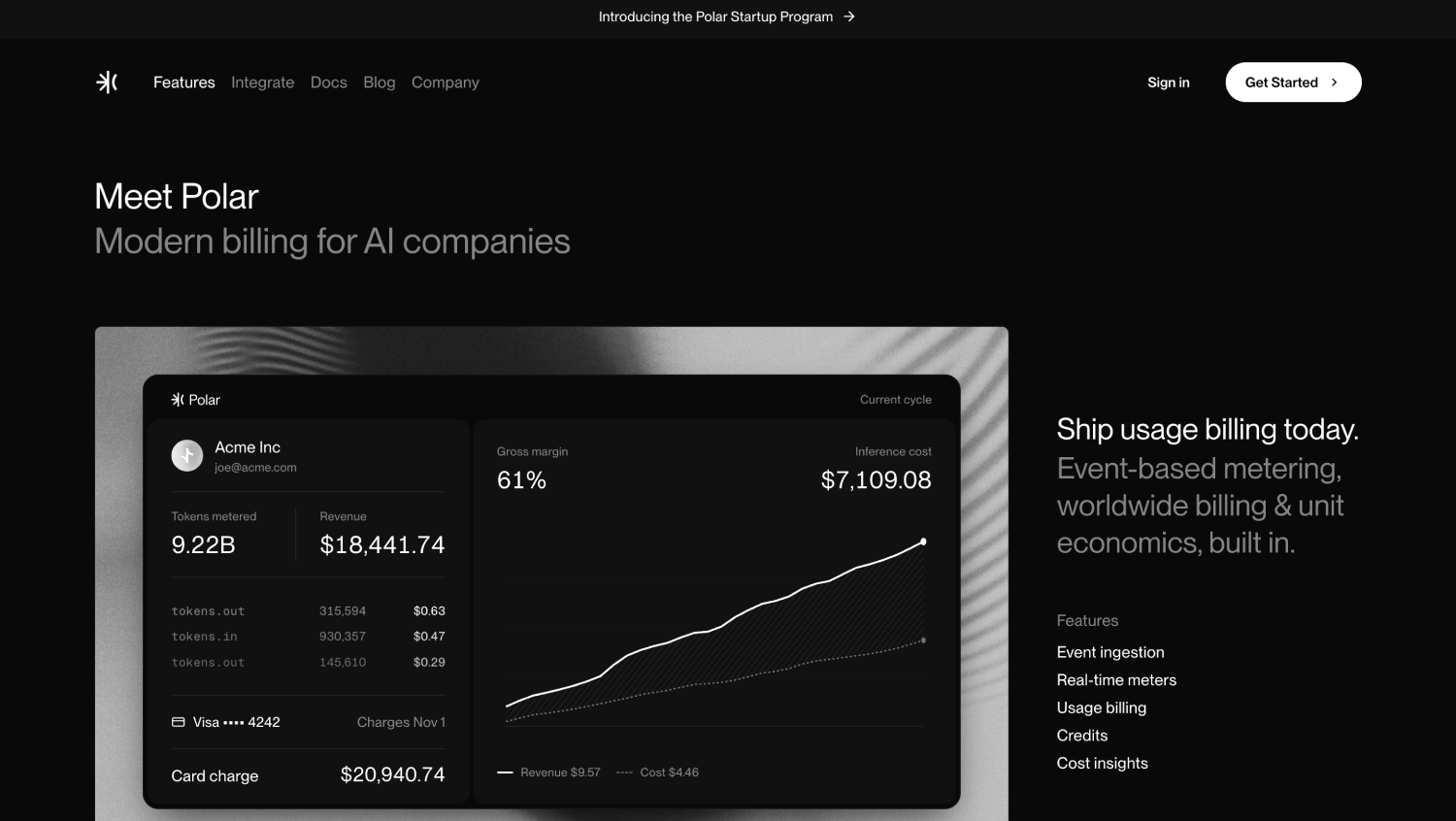
Polar’s pricing page lists two tiers: a free plan at 5% per transaction, and a paid Polar Pro plan at $25 per month with a 4% transaction fee. Polar’s public pricing page does not list a per-transaction fixed fee on either plan. For any meaningful volume, the math on Pro is straightforward. At $2,500 in monthly revenue, the 1% savings on transactions ($25) exactly offsets the platform fee. Above that threshold, Pro is cheaper per dollar processed.
Polar is the newest and leanest entrant on this list. It targets developer-first SaaS products and open-source maintainers. Enterprise invoicing, custom tax handling, and B2B PO flows are limited or absent compared to FastSpring. The fee structure is simple and transparent, which is genuinely useful when you are modeling costs early, but the platform’s feature ceiling matters for B2B teams expecting to issue net-30 invoices or manage complex EU VAT scenarios.
PayPro Global Pricing
PayPro Global does not publish a public per-transaction rate. The company uses a quote-based model, and its positioning targets software and SaaS businesses that need global reach with localized payment methods, including regional options less common on other platforms. PayPro Global handles VAT in EU, GST in applicable countries, and sales tax in US states as part of the MoR wrapper, which is standard for the category.
Without a published rate, PayPro Global functions like FastSpring for modeling purposes: you need a quote before you can do any meaningful fee math. That makes it harder to evaluate pre-demo, but it also means rates may have more room for negotiation at volume.
Side-by-Side Merchant of Record Fee Table
| Provider | Base Transaction Fee | Monthly Platform Fee | FX Conversion Policy | Volume Discounts | Pricing Model |
|---|---|---|---|---|---|
| Paddle | 5% + $0.50 | None | Not publicly disclosed | Not published | Public, self-serve |
| Lemon Squeezy | 5% + $0.50 | None | Not publicly disclosed | Not published | Public, self-serve |
| Polar | 5% (free) / 4% (Pro) | None (free) / $25/mo (Pro) | Not publicly disclosed | Built into Pro tier | Public, self-serve |
| FastSpring | Not published | Not published | Not publicly disclosed | Volume-based, negotiated | Quote-based |
| PayPro Global | Not published | Not published | Not publicly disclosed | Volume-based, negotiated | Quote-based |
All fees reflect publicly available information as of latest public pricing pages. Quote-based providers require direct contact for rate confirmation.
How Much Does a Merchant of Record Cost at $1M ARR?
The following is an illustrative scenario built to show how effective rates diverge at scale. It uses only publicly confirmed rates where available. Assumptions are stated explicitly.
Assumptions: $1,000,000 in annual revenue. Average transaction value of $99 (approximately 10,100 transactions per year). Buyer currency mix: 65% USD, 25% EUR, 10% other. Refund rate: 3% of transactions (illustrative assumption, not derived from industry benchmark data). No FX markup modeled for Paddle, Lemon Squeezy, or Polar since those spreads are not publicly confirmed (this understates their true cost for non-USD revenue).
| Provider | % Fee on $1M | Per-Transaction Fee (10,100 txns) | Annual Platform Fee | Modeled Annual Cost | Effective Rate |
|---|---|---|---|---|---|
| Paddle | $50,000 | $5,050 | $0 | $55,050 | 5.5% |
| Lemon Squeezy | $50,000 | $5,050 | $0 | $55,050 | 5.5% |
| Polar (Pro) | $40,000 | $0 (no per-txn fixed fee per public pricing page) | $300 | $40,300 | 4.0% |
| FastSpring | Not modelable without quote | Not modelable | Not modelable | Requires demo | Requires demo |
| PayPro Global | Not modelable without quote | Not modelable | Not modelable | Requires demo | Requires demo |
Note: Polar lists no per-transaction fixed fee on their public pricing page; this table reflects that as stated. Paddle and Lemon Squeezy’s FX markup on the 35% non-USD transactions is not modeled here because it is not publicly confirmed. A 2% FX spread on 35% of $1M adds $7,000, pushing their effective rate to roughly 6.2%. That is the number that matters most in this scenario, and it is the number neither provider publishes.
What Variables Swing Your Effective MoR Rate the Most?
Payout Currency Mix
If the majority of your buyers are in North America paying in USD, the headline rate is close to your real rate. If you have meaningful European, Australian, or Latin American revenue, every MoR in this category converts that currency before paying you out, and that conversion carries a spread. No provider in this comparison publicly discloses the exact spread they apply. This is the single largest unmodeled cost in most founder fee analyses, and it compounds directly with ARR growth.
Refund Rate and Chargeback Policy
MoRs handle chargebacks as part of the service, but refund policies vary. Some platforms retain the processing fee on refunded transactions, which means a 3% refund rate translates to losing roughly 5.5% of gross revenue on those transactions twice: once in the refund, once in the original fee. At $1M ARR with a 3% refund rate (used here as an illustrative assumption), that is $30,000 in refunded GMV. Whether you absorb the fee on those refunds or the MoR does is a contract detail worth reading before signing. None of the five providers above publish their refund fee policy in plain language on their public pricing pages.
Average Transaction Value
The $0.50 fixed fee on Paddle and Lemon Squeezy is relevant at low ACV. A $29/month plan paid monthly carries a $0.50 fixed fee, which is 1.72% of the transaction before the 5% rate is applied, bringing the true effective rate on that transaction to 6.72%. A $499/year plan paid annually carries a $0.50 fixed fee equal to 0.1%, making it negligible. Polar’s absence of a fixed per-transaction fee makes it structurally cheaper for low-ACV products at volume.
Volume and Negotiation Position
FastSpring and PayPro Global’s quote-based models exist specifically because volume produces lower rates. A SaaS business at $5M ARR has meaningfully more negotiating room than one at $200K ARR, and the gap between their negotiated rates and Paddle’s published rate can flip the cost comparison. Founders evaluating MoRs at growth stage should build a demo or negotiation cadence into their process, not just compare published rates. Our analysis of hidden costs killing fintech SaaS margins covers the broader pattern of how unpublished infrastructure fees accumulate silently at scale.
The FintechSpecs MoR Effective Rate Stack
Most fee comparisons treat MoR cost as a single number. The FintechSpecs MoR Effective Rate Stack is a four-layer model for calculating what you actually pay. Apply each layer in order to get to your real effective rate.
Layer 1: Base Rate. The published percentage fee on gross revenue. For Paddle and Lemon Squeezy, this is 5%. For Polar Pro, it is 4%. For FastSpring and PayPro Global, it is unknown until you have a quote.
Layer 2: Fixed Fee Load. Take your total annual transaction count and multiply by the per-transaction fee. Divide by gross revenue. For a $99 average ACV business processing 10,000 transactions annually on Paddle, this adds 0.5 percentage points to the effective rate. For a $499 ACV business with 2,000 annual transactions, it adds roughly 0.1 percentage points.
Layer 3: FX Spread Load. Estimate the share of revenue from non-USD buyers. Apply a conservative 1.5% spread assumption to that share. This is not a confirmed rate from any provider , it is a modeling floor based on what is structurally necessary to sustain a currency conversion business, used here as a planning assumption only. At 35% non-USD revenue, this adds approximately 0.5 percentage points to your effective rate.
Layer 4: Refund Fee Retention. Multiply your refund rate by your gross revenue and by your base rate. If the MoR retains the fee on refunded transactions, that revenue is lost twice. This layer uses a 3% refund rate as an illustrative assumption , substitute your own observed rate for a more accurate result. A 3% refund rate with a 5% base rate and fee retention adds approximately 0.15 percentage points to your effective rate annually.
Run all four layers before you compare providers. The difference between a 5.5% modeled rate and a 6.7% modeled rate is $12,000 per $1M ARR. At $5M ARR, that is $60,000 a year, which is meaningful even for a well-funded Series B team. For context on how these infrastructure choices compound into gross margin pressure, the breakdown of why fintech SaaS margins disappoint founders covers this pattern in detail.
Which Merchant of Record Is Cheapest for B2B SaaS at Different Revenue Stages?
At under $100K ARR, all five providers are functionally equivalent on price for a USD-heavy business. The fee differential in absolute dollars is too small to matter. Choose on product fit and checkout quality, not fee optimization.
Between $100K and $500K ARR with mostly USD revenue, Polar Pro has the lowest published effective rate at 4% plus the $300 annual platform fee. For a business at $300K ARR processing mostly subscriptions in USD, Polar Pro costs roughly $12,300 versus $16,500 on Paddle or Lemon Squeezy. That $4,200 difference is real, but feature gaps in B2B invoicing and tax edge cases may cost more to work around.
Between $500K and $2M ARR, the calculus shifts. FastSpring and PayPro Global become worth the demo investment, because their negotiated rates at this volume tier can land below 5% with features that justify the rate. If your buyer base includes European enterprise customers expecting formal invoices, VAT IDs on receipts, and net-30 payment options, FastSpring’s feature set starts to offset its pricing opacity. This is also the stage where the fintech SaaS scale checklist flags payment infrastructure as a decision that compounds, not a setting you revisit casually.
Above $2M ARR, no one should be on a published self-serve rate without attempting to negotiate. Paddle has a sales team, and Paddle Billing has different economics than the standard MoR product. A direct conversation is warranted at this revenue level regardless of which provider you are evaluating. Our comparison of MoR providers by SaaS growth stage covers how the decision evolves from first sale to enterprise.
Frequently Asked Questions About Merchant of Record Fees
How much does a merchant of record cost on average?
Published MoR rates range from 4% to 5% plus a per-transaction fixed fee of $0.50 for self-serve platforms, based on public pricing pages. Quote-based providers like FastSpring and PayPro Global do not disclose rates publicly. Effective rates including FX conversion spreads and refund handling typically run 0.5% to 1.5% higher than the headline percentage, depending on buyer geography and refund volume.
Does Paddle charge more than Lemon Squeezy?
At the published headline rate, Paddle and Lemon Squeezy charge identically: 5% plus $0.50 per transaction, with no monthly platform fee. The practical difference between them at the same revenue level comes down to platform features, checkout quality, and buyer geography, not published price. Neither discloses its FX conversion spread publicly, which is where real cost divergence can occur for non-USD revenue.
Is Polar cheaper than Paddle for SaaS?
On published rates, yes. Polar Pro charges 4% with no per-transaction fixed fee plus a $25 monthly platform fee. For any business generating more than $2,500 per month, the math on Polar Pro produces a lower effective rate than Paddle’s 5% plus $0.50. The trade-off is feature depth: Polar is less mature for B2B invoicing, enterprise tax handling, and complex subscription billing than Paddle.
Does FastSpring publish its pricing?
FastSpring does not publish a per-transaction rate. Pricing is negotiated based on volume, product type, and business profile. You need to contact their sales team or request a demo to get a rate quote. This opacity makes pre-demo cost modeling impossible, but it also means the rate has more room for negotiation at meaningful revenue volumes than a fixed public price would allow.
What fees does an MoR charge besides the percentage rate?
Beyond the base percentage and per-transaction fixed fee, merchants can face FX conversion markups on non-USD payouts (typically unstated in published pricing), retained processing fees on refunded transactions, and in some cases separate fees for features like affiliate management, advanced analytics, or enterprise invoicing. None of the five providers covered here disclose their full ancillary fee schedule on a public pricing page.
Can you negotiate merchant of record fees?
For FastSpring and PayPro Global, negotiation is built into the model since no rate is published. For Paddle and Lemon Squeezy, custom rates may be available at sufficient volume, but neither advertises this publicly. Polar’s pricing is structured as a fixed tier system with no published negotiation path. In practice, businesses above $1M ARR on any platform should attempt direct commercial conversations before assuming the public rate is final.
How to Model Your Effective MoR Rate Before Signing
Build a simple model with five inputs: gross annual revenue, average transaction value, percentage of non-USD transactions, annual refund rate, and whether you need the Pro or paid tier of your chosen platform. Run the FintechSpecs MoR Effective Rate Stack across each layer for each provider you are evaluating. Then add a 1.5% FX spread assumption to the non-USD share of revenue as a conservative planning floor, not a confirmed figure from any provider.
That model will give you a range, not a precise number, because FX spreads are not disclosed. The range is still more useful than comparing headline rates. A provider showing 4% in layer one and accumulating to 6.2% across all four layers is more expensive than one starting at 5% and landing at 5.7%. The four-layer model surfaces that difference; a headline comparison does not.
If you want to pressure-test the numbers further, our analysis of recurring fintech pricing strategy mistakes covers how founders systematically underestimate infrastructure cost and how that shows up in unit economics at Series A and Series B.
Frequently Asked Questions
Are MoR fees tax-deductible for SaaS companies?
MoR fees paid to process revenue are generally deductible as a cost of goods sold or a transaction cost for US-based companies, but tax treatment depends on your entity structure, accounting method, and jurisdiction. This is a question for your accountant or tax advisor. The MoR itself handles sales tax and VAT collection on the buyer side, which is separate from how you classify the MoR’s fees on your own books.
Does the MoR fee include VAT and sales tax handling?
For all five providers covered here, global VAT and US sales tax calculation, collection, and remittance are included in the MoR fee as part of the core value proposition. That is what distinguishes an MoR from a raw payment processor. However, some edge cases, such as B2B reverse-charge VAT, custom tax categories, or specific state exemptions, may require configuration that varies by platform.
What is the difference between a merchant of record fee and a payment processing fee?
A payment processing fee covers only the mechanics of moving money: card network fees, interchange, and the processor’s margin. A merchant of record fee is broader: it covers processing plus legal liability for the sale, tax collection and remittance, chargeback handling, and compliance with consumer protection laws in each market where you sell. The MoR absorbs regulatory complexity that would otherwise require you to register as a seller in each jurisdiction.